Marine Heatwave Conditions Off East Anglia
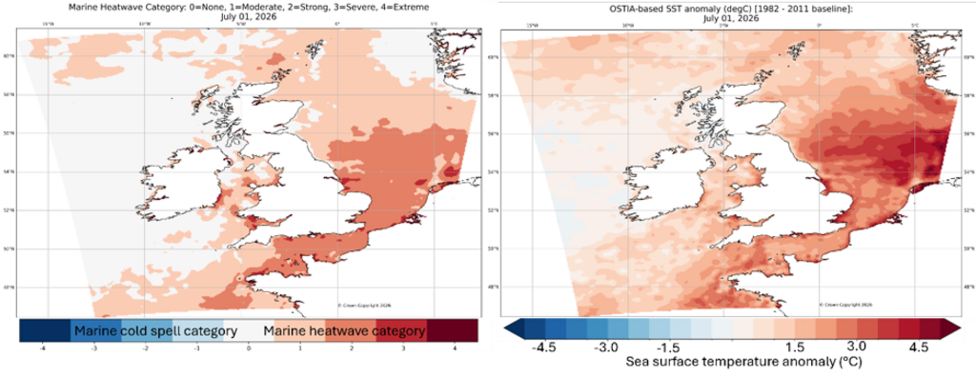
The sea off the coast of East Anglia is currently experiencing category two marine heatwave conditions, according to the Met Office. This marks the third marine heatwave of the year affecting the region, which includes the coastal areas of Norfolk, Suffolk, and Lincolnshire. Temperatures in the area are expected to rise above 30°C by midweek.
Category two marine heatwave status indicates that sea temperatures are typically between 1.5°C and 4°C above normal levels, the Met Office explained.
Impact on Marine Ecosystems and Wildlife
Professor John Pinnegar, principal scientist and lead adviser at the Centre for Environment, Fisheries and Aquaculture Science, highlighted the significant effects marine heatwaves have on ecosystems and wildlife.
"Marine heatwaves have significant impacts on ecosystems and wildlife."
He further noted that prolonged periods of unusually warm sea temperatures can lead to mass mortality events among certain marine species and can alter the distribution patterns of commercially important fish and shellfish.
Comparison to Previous Heatwaves
The Met Office stated that while the current heatwave is unlikely to be as extreme as the one experienced in late June—when temperatures peaked at 37.7°C—it is expected to persist for a longer duration.

Dr Ségolène Berthou, an air-sea interaction specialist at the Met Office, commented on the rapid development of marine heatwaves around the UK following recent atmospheric conditions.
"Marine heatwaves around the UK have developed rapidly following the recent heat dome, and we are now seeing widespread strong to locally severe conditions.
This is the third and most intense marine heatwave we have seen this year."
Environmental and Climatic Significance
Clare Brook, CEO of the ocean conservation charity Blue Marine Foundation, reported that by the end of June, parts of UK waters were up to 5°C warmer than usual. She explained that such temperature increases can cause fish to migrate to new areas and disrupt established food chains.
"The ocean is our best climate ally. Without the ocean, the earth would be 36 degrees hotter. Humanity wouldn't be possible.
It's the world's largest carbon sink, it absorbs almost half of the carbon we produce and it provides over half of the planet's oxygen, but the ocean can only provide these vital functions if it's full of life."
Additional Information
Residents and stakeholders are encouraged to share story suggestions related to Suffolk through the provided contact channels.
For ongoing updates, follow Suffolk news on , Facebook, Instagram, and X.
and Further Reading
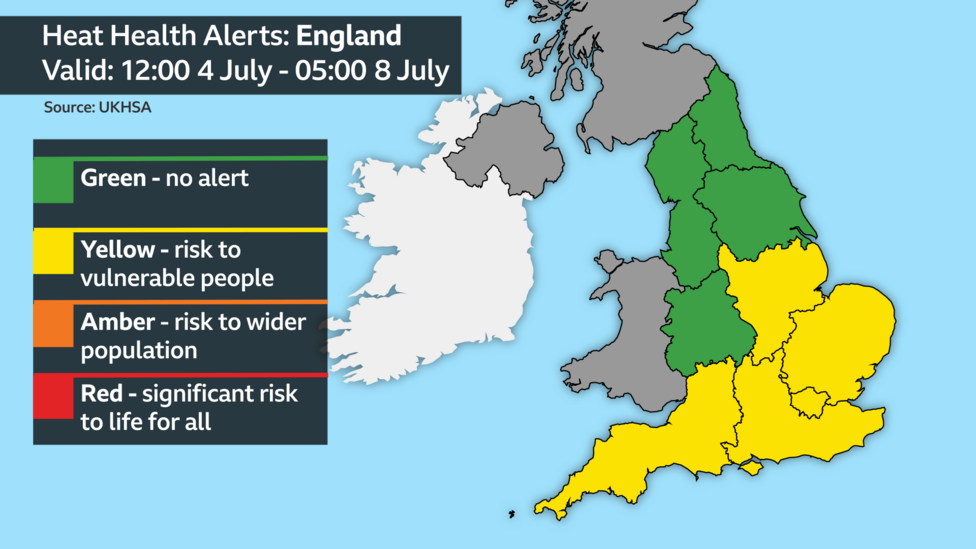
Additional coverage includes the impact of heat on ambulance services, which have been placed on the highest alert level due to the current weather conditions.