Contamination at Malkins Bank Golf Course and Surrounding Developments
Despite significant contamination at Malkins Bank in Cheshire, the site continues to be used as a golf course and now includes a children’s play area.
One morning in Sandbach, Graham Warner received an unexpected visit from a neighbour who handed him a large folder from an unidentified source.
“I think you’ll find this very interesting. Happy reading,”
she said.
Warner had been investigating a planned housing development behind his home, but the folder contained startling information not about the development but about the adjacent golf course, located approximately 100 metres (330 feet) away. The 18-hole course spans a narrow strip of land roughly two kilometres long and 400 metres wide, bordered by dairy pastures and the old Trent and Mersey canal. Notably, British golfing legend Ian Woosnam once trained young golfers at this location.
Concerns Raised by Leaseholder Tony Minshall
Tony Minshall, who leased the Malkins Bank golf course from 2011 to 2025, had growing concerns about what he initially believed was a straightforward old landfill beneath the greens. He recalls an incident in 2017 when one of the machines fell into a methane chamber.
“One of the machines fell into a methane chamber one day and I went down to look at it and all it was covered with was a piece of old hardboard and an old carpet. The smell was horrendous. At that time the council did come back and cap them, but it took them two and a half years. So we were left with fences in the middle of the golf course around 13 methane chambers.”
Minshall sought further action from the council but was informed that remediation would cost approximately £1.3 billion to remove all waste. This was the first time he learned the course had been officially classified as contaminated six years earlier, though he did not fully understand the implications or extent of the dumping.
“I didn’t know about contaminated land. I’m a golfer, I’m not a contaminated land expert.”
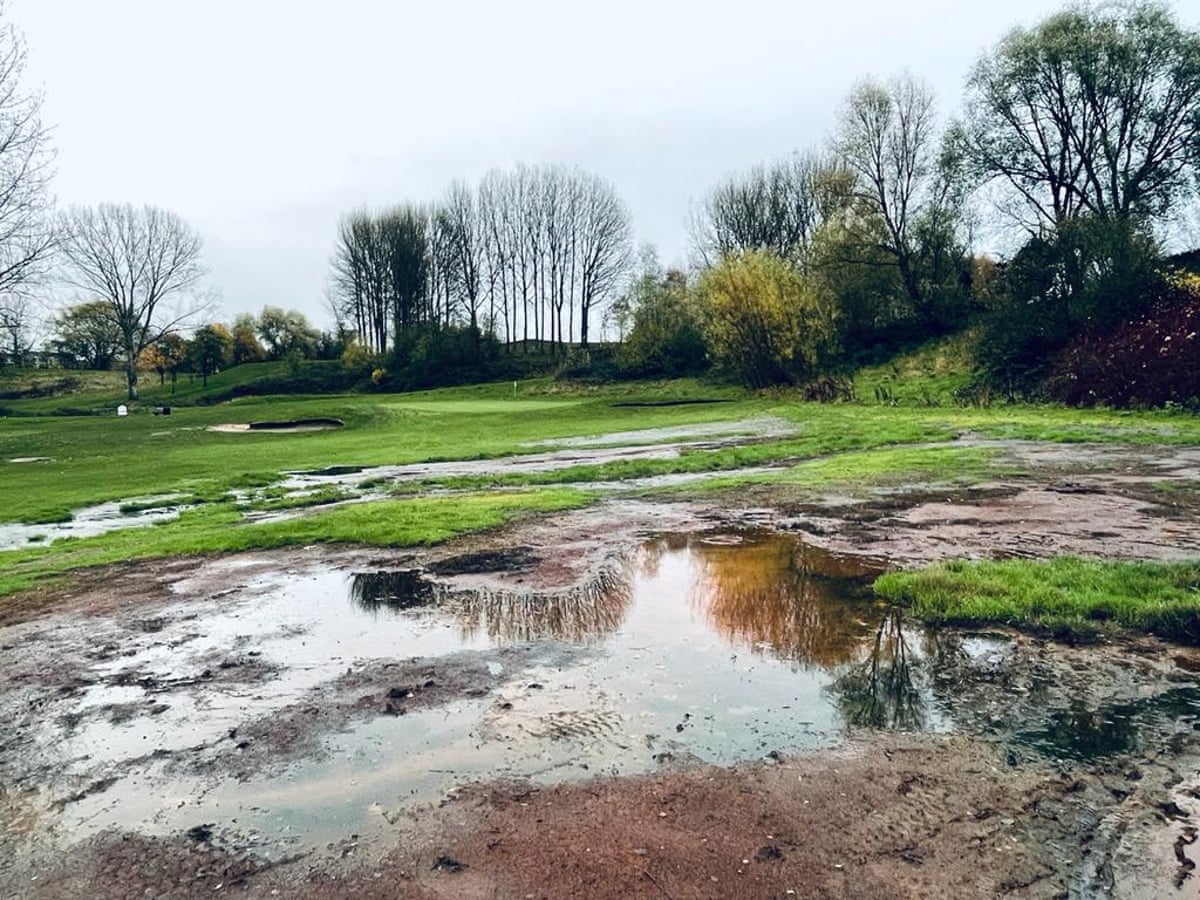
In November 2022, following heavy rainfall, foul-smelling substances surfaced, killing grass and some trees and spilling into the river. An Obsidian Environmental report attributed this to inadequate landfill capping and poor drainage, which allowed rainwater to penetrate the site and force leachate to the surface.
Industrial History and Toxic Waste Dumping
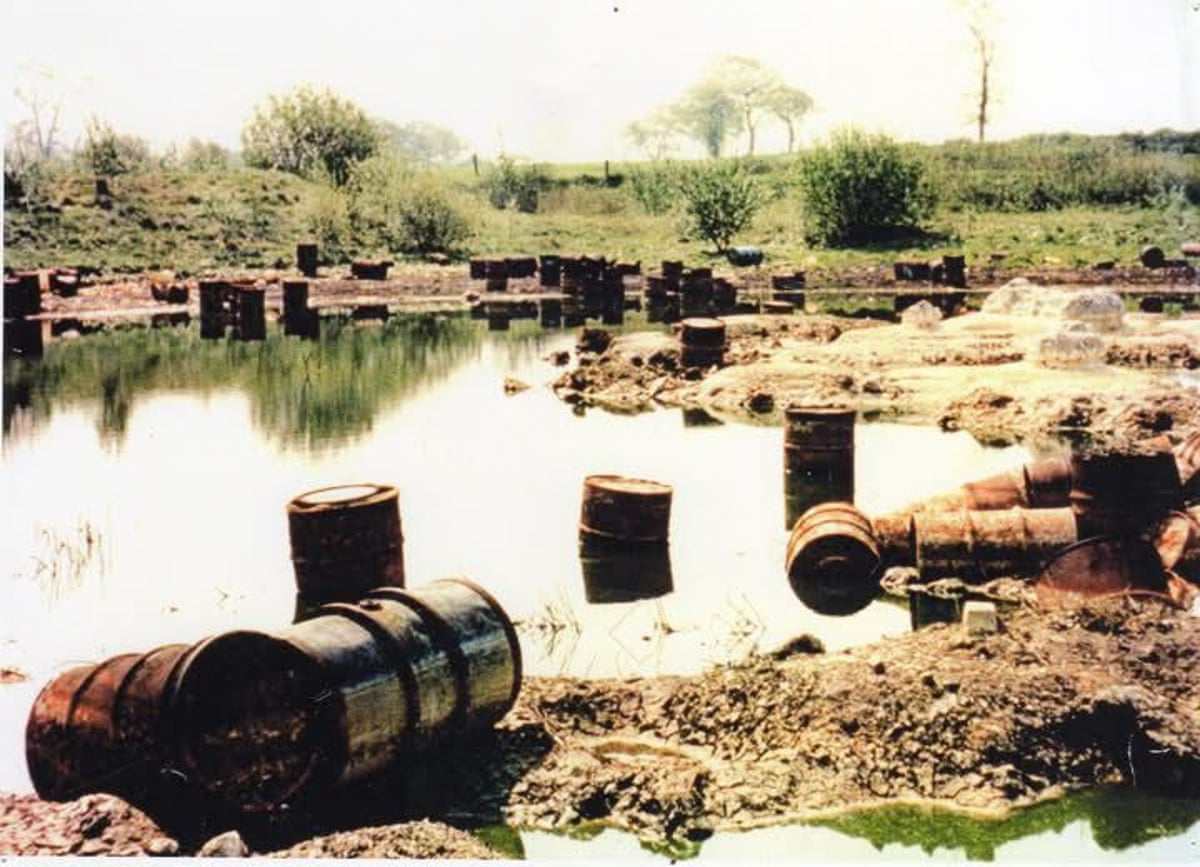
Documents reveal that beneath Malkins Bank lies not just an old landfill but thousands of barrels containing toxic chemicals that periodically seep to the surface. One report described the site as one of the most contaminated in Cheshire, possibly the UK.
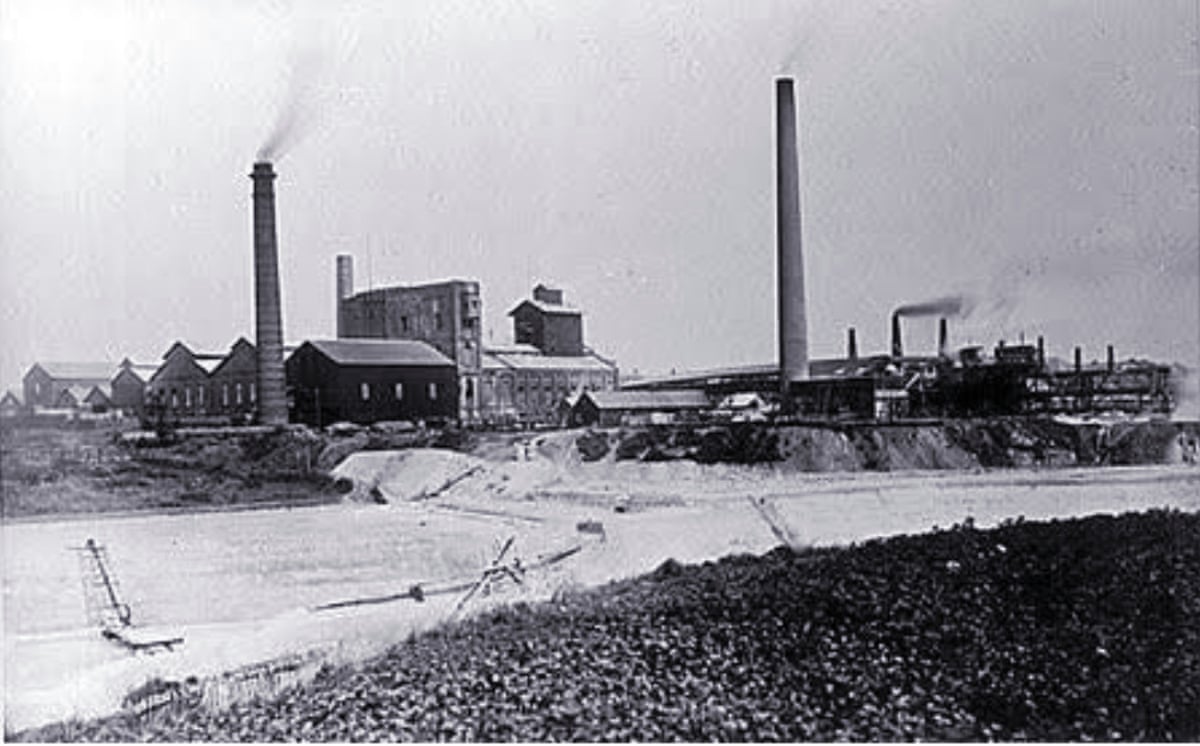
The land has a long industrial history. Around 1864, during the mid-Victorian era, it operated as a salt works extracting brine from underground shafts. Subsequently, it became an alkali works. According to correspondence between the Ministry of Defence and Defence Estates in 2004, evidence suggests the site produced ammonium nitrate for bombs during World War I, and munitions filling may also have occurred there. The site was converted into a waste tip in 1950. However, the most problematic period began in the 1960s with indiscriminate tipping, as documented in the folder.
A handwritten dump log from March 1968, presumably by a tip worker, records over 1,000 tonnes of waste dumped in a single month. The waste included lime, tannery waste, unspecified loose waste, and waste in drums from companies such as ICI and Shell. The Purle Group, also listed as a regular dumper, reportedly disposed of polychlorinated biphenyls (PCBs) in Cheshire during the 1970s—carcinogenic “forever chemicals” banned in the UK in the 1980s.
Dave Parry, a former Malkins Bank employee, recalls:
“My friend had a farm next to the golf course and it was common knowledge in the late 60s that ICI were coming at midnight and just getting rid of all the drums of acid on the golf course.”
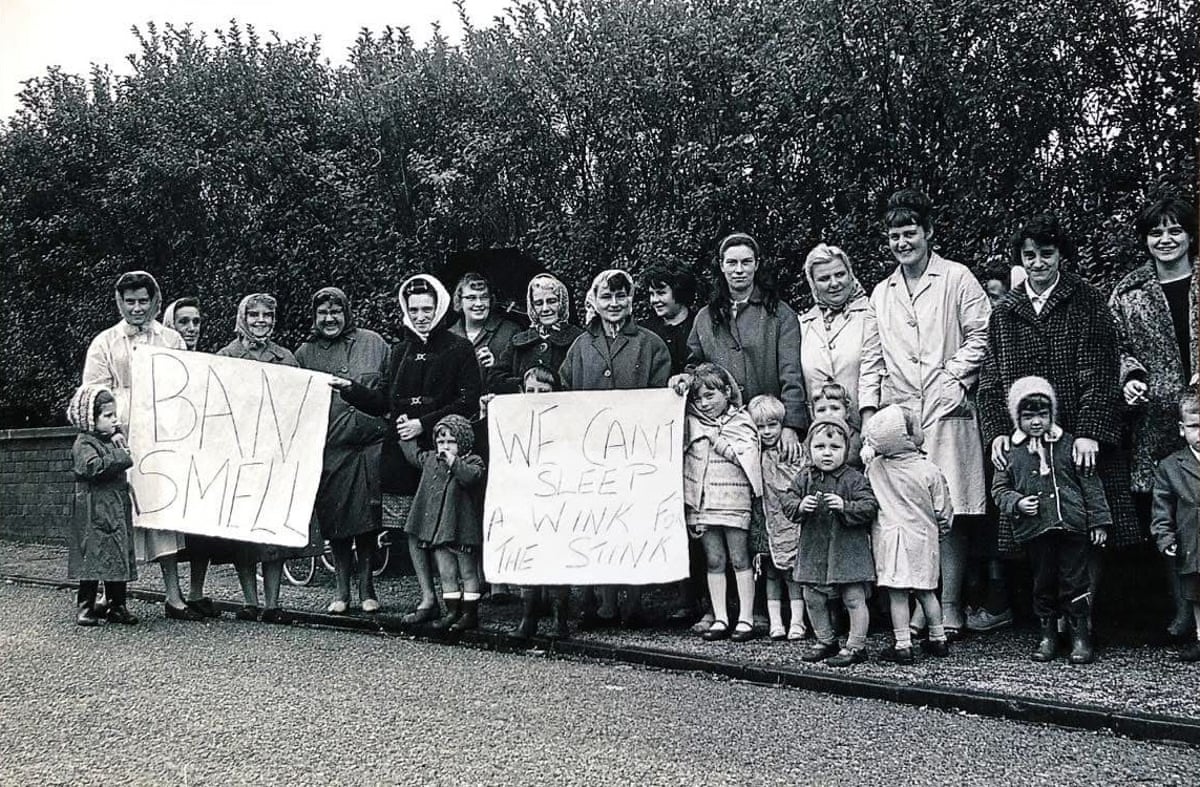
Residents living near the tip also reported night dumping and protested against persistent “tom cat” and “rotten eggs” odors. Despite these concerns, legal proceedings to close the tip were protracted, and the council recovered only £12,000 from the owner to cover a £5,000 legal bill and reclamation costs.
1973 Report and Hazardous Materials
A 1973 report by John Long, Cheshire’s assistant country planning director, described the 24-hectare (60-acre) site as:
“a heap of many thousands of drums containing a variety of toxic substances mixed among brine sludge … In the centre of the tip there are two shallow lakes which are heavily contaminated with chemicals waste and oil and into which considerable numbers of drums have been tipped, some filled with industrial waste which are likely to explode in certain conditions.”
Barrels containing hazardous sodium cyanide were believed to be present. Concerns were raised about waste leaking into the network of old salt caverns and brine runs beneath the site, which could potentially cause subsidence in the future.
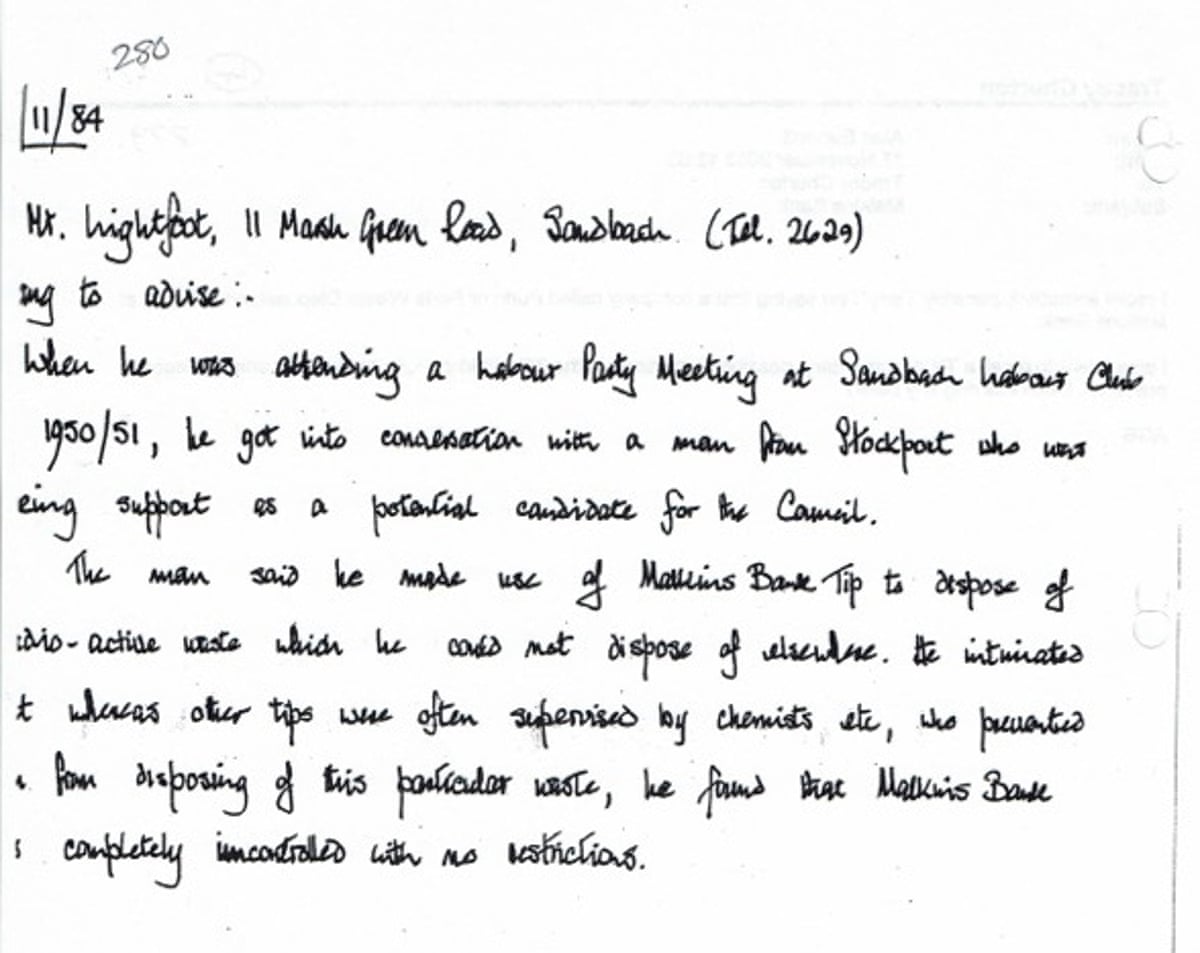
A handwritten note in the council file recounts a conversation with “a man from Stockport” who claimed to have used Malkins Bank Tip to dispose of radioactive waste that could not be disposed of elsewhere. Radiation surveys by the National Radiological Protection Board in 1985 and 2002 concluded:
“It is reasonably practicable to determine there is no additional risk to persons on the golf course arising from any past disposal of radioactive material.”
Conversion to Golf Course and Ongoing Issues
Despite the toxicity of the waste, the council determined the site’s “optimum afteruse” was as a golf course. Reclamation took four years, with workers reportedly having to stop regularly to wash chemical vapors from their eyes. The council-owned golf course opened in 1980.

Over the next 30 years, reports noted foul odors and leachate surfacing, killing grass. Tests repeatedly detected heavy metals and substances such as benzene and toluene at concentrations classified as serious contamination, typically requiring cleanup. By 2003, officials recommended further investigation.
In 2011, Cheshire East council officially designated the land as contaminated after pollution was found spreading through groundwater beneath the site. Remediation options were considered, but since the water was not used for drinking and human exposure was deemed minimal, the cost was judged disproportionate to the environmental benefit.
Discovery of Documents and Community Concerns
Fifteen years later, the full extent of the toxic legacy beneath the golf course has come to light, thanks to the documents Warner discovered. These had belonged to Vera Platt, a former councillor who had long been concerned about the lack of action and potential health impacts on the community. She had kept a copy of all evidence at her home. The documents have shocked and frustrated many who were unaware of the hazardous nature of Malkins Bank.
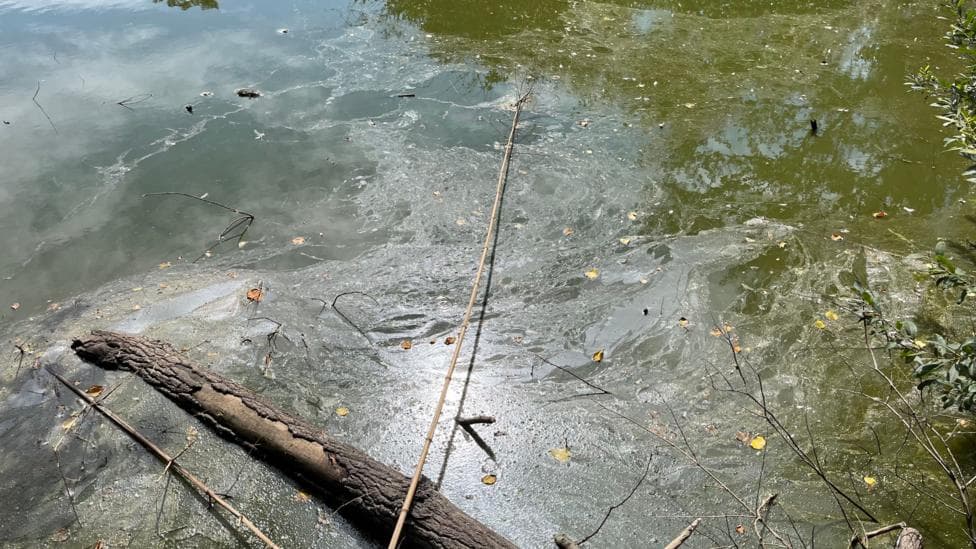
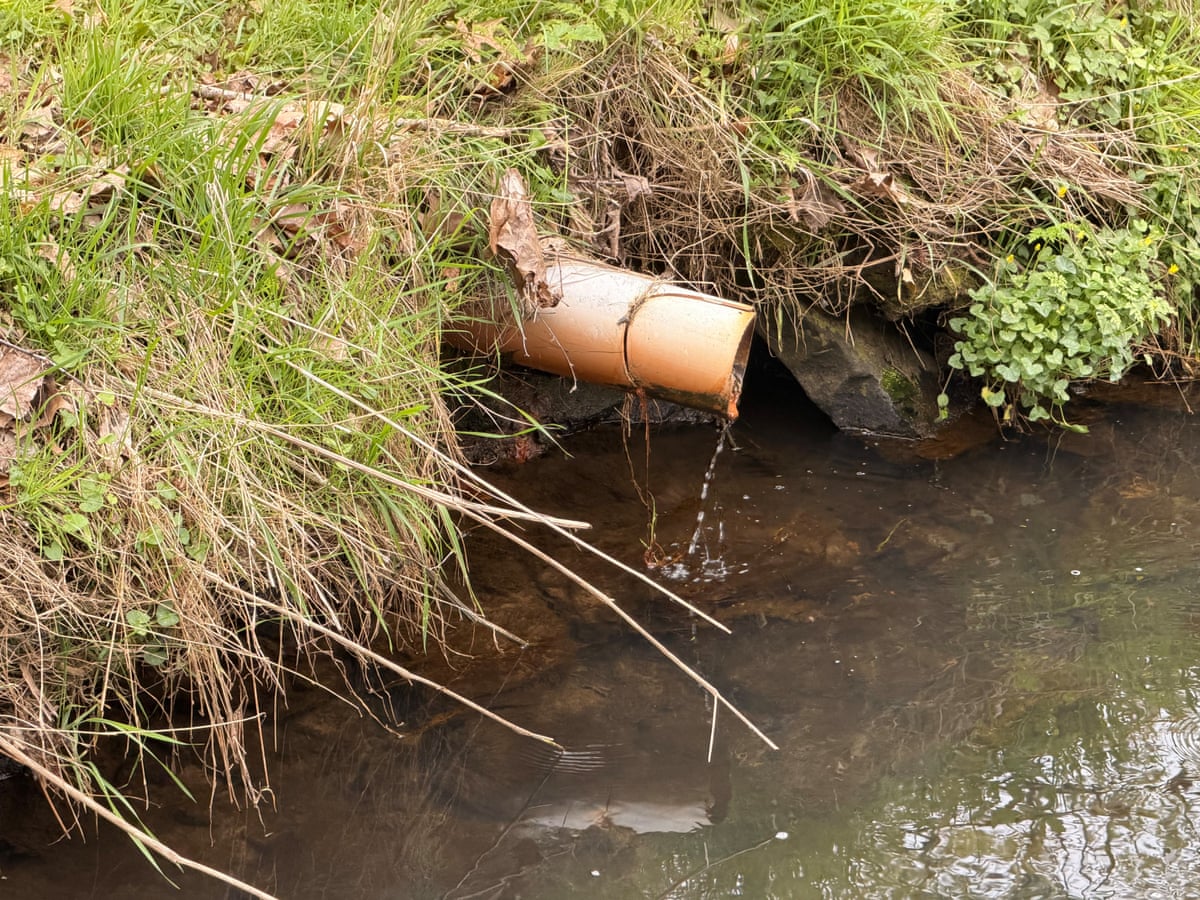
From the public footpath, pipes protrude from the 15th fairway into Birchenwood Brook, which runs through the landfill before joining the River Wheelock. The soil around the pipes is bright rust orange, slicked with an oily rainbow sheen. The area smells of hydrocarbons with a hint of rotten eggs.

Warner states:
“It’s a disaster waiting to happen.”
He recalls finding a fine rust-orange dust coating his basement a few years ago, which he believes was blown in with a pocket of landfill gas, indicating contamination is moving underground through brine runs.
Karen Mason, whose husband David played golf on the course for many years, expresses outrage:
“It’s like a big chemical soup underneath the grass. I’m utterly disgusted and I’m really outraged by it because they have endangered people recklessly for their own gain. Because they wanted money out of them. They knew they were endangering people, there’s loads of documents from the 90s, they knew it was contaminated and because they couldn’t get funding they ignored it.”
Leaseholder’s Experience and Impact
Minshall leased the land from the council in 2011, the day after it was designated contaminated. However, the council did not disclose this fact to him, nor was it mentioned in property searches.
“I didn’t know it was contaminated land. If I knew that I would never have touched it in a million years. It’s not fit for anyone to be on, let alone play golf on it,”
he says. His company has since gone into liquidation, and the experience has had devastating financial, emotional, and physical effects.
“The council don’t want to know. They don’t want to pay the remediation costs. But they have to live with what they’ve done to me and the people. My other businesses supported it for years because we thought we could get it back after the 2022 floods. This stuff was all over the fairway and it drove customers away. It killed the business. I lost my leg in 2021 and I think it had something to do with it.”
Broader Context and Expert Opinions
Defra records indicate approximately 100 historical landfills exist beneath golf courses in England and Wales, though documentation of this nature is rare.
Warner comments:
“The documents say what’s been dumped there will continue to be toxic for 100 years.”
A Cheshire East council spokesperson stated:
“The council has undertaken detailed investigation and ongoing management of the former Malkins Bank landfill site, which has operated as a golf course for several decades. The site was determined as contaminated land in 2011 due to risks to controlled waters. However, specialist investigations have concluded that it is suitable for its current use, with assessments consistently finding low risk to human health, including after flooding events. The council continues to monitor the site and is progressing a planning application to address drainage issues and improve site conditions. The council does not hold complete financial records for the site dating back to 1980. In the past five years, a previous tenancy ended due to insolvency, and no income has been received while discussions with potential sustainable new operators continue.”
The Environment Agency does not regulate the site but has supported Cheshire East council in managing emissions from the former waste area to reduce environmental risks. No pollution incidents have been recorded since June 2020.
Professor Kate Spencer, a landfill specialist at Queen Mary University of London, advises:
“The information provided is deeply concerning. The chemicals identified are persistent and potentially very harmful. As these sites age there is increasing likelihood that their capping will fail and that they will flood. A golf course was built here in the 1980s – almost 50 years ago. I would advise reappraising that use.”
She further notes that under current legislation, responsibility for these sites often falls to local authorities but emphasizes the need for mechanisms to hold polluters accountable.
Current Use and Historical Reflection
Under the current leaseholder, the golf course now features a zip line and bouncy castles for children. The leaseholders of Malkins Bank golf course did not respond to requests for comment.
Reflecting on the site’s history, John Long’s 1973 warning remains poignant:
“With hindsight one could say Malkin’s Bank Tip should never have happened. It’s an example of the inadequacy of legislation and opportunism on the part of industry … tomorrow’s generation will not lightly forgive us for such lethal eyesores in their environment.”