

Discovery of a Fungus Targeting Invasive Heath-Star Moss
A newly identified species of fungus in Britain, described as a "killer fungus," has been found to destroy an aggressively invasive plant species, offering potential for the restoration of native habitats that have been severely affected.
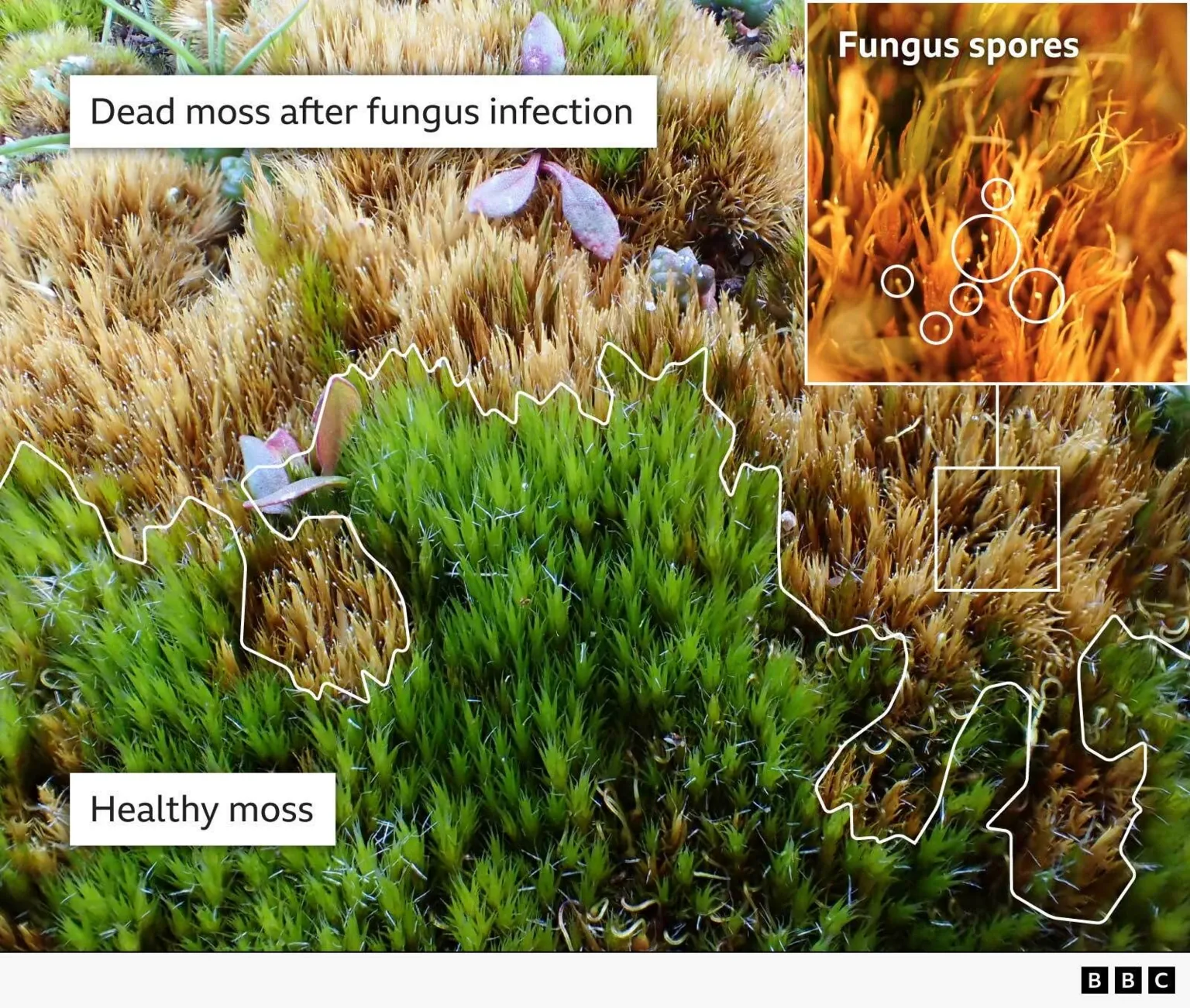
This fungus infects the heath-star moss, a plant that is causing ecological damage across the UK by outcompeting and displacing native species.
Scientists suggest this discovery could represent a rare natural countermeasure by the British environment against invasive species.
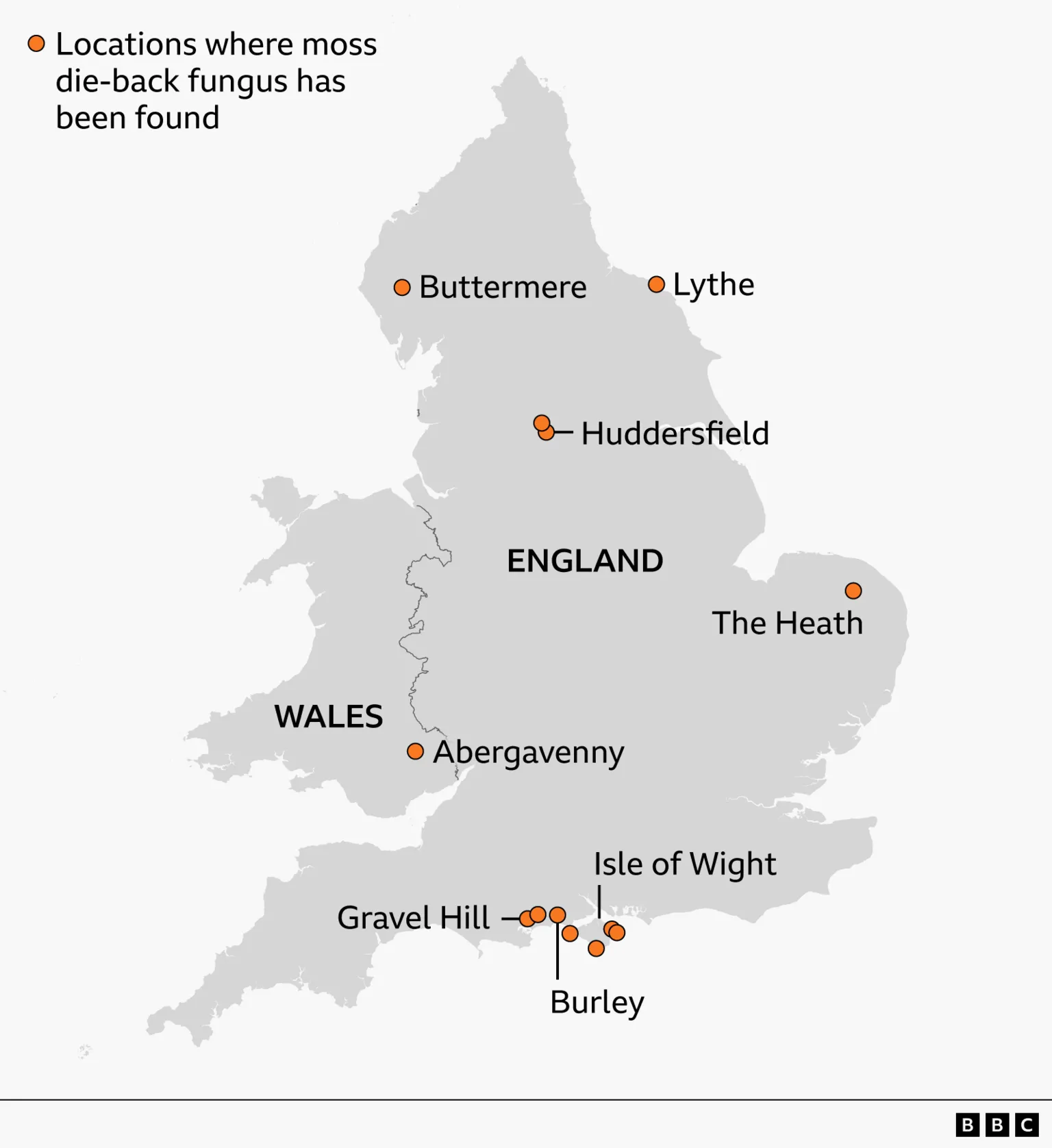
Dr George Greiff, 30, who has been monitoring the spread of this moss die-back fungus across the UK, took to observe its effects, known as "fairy rings of death," in south Wales.
Dr Greiff first discovered the fungus four years ago while walking on the Isle of Wight. He noticed dead patches of invasive moss on a cliffside and collected samples, though initially he could not identify the cause.
However, as he continued to observe more instances of moss decay, and collaborating with scientists in the UK and France, he was able to identify the pathogen.
The fungus, previously unknown to science, has been named moss die-back.
While fungi are often viewed negatively, this particular species is considered beneficial due to its impact on the invasive moss.
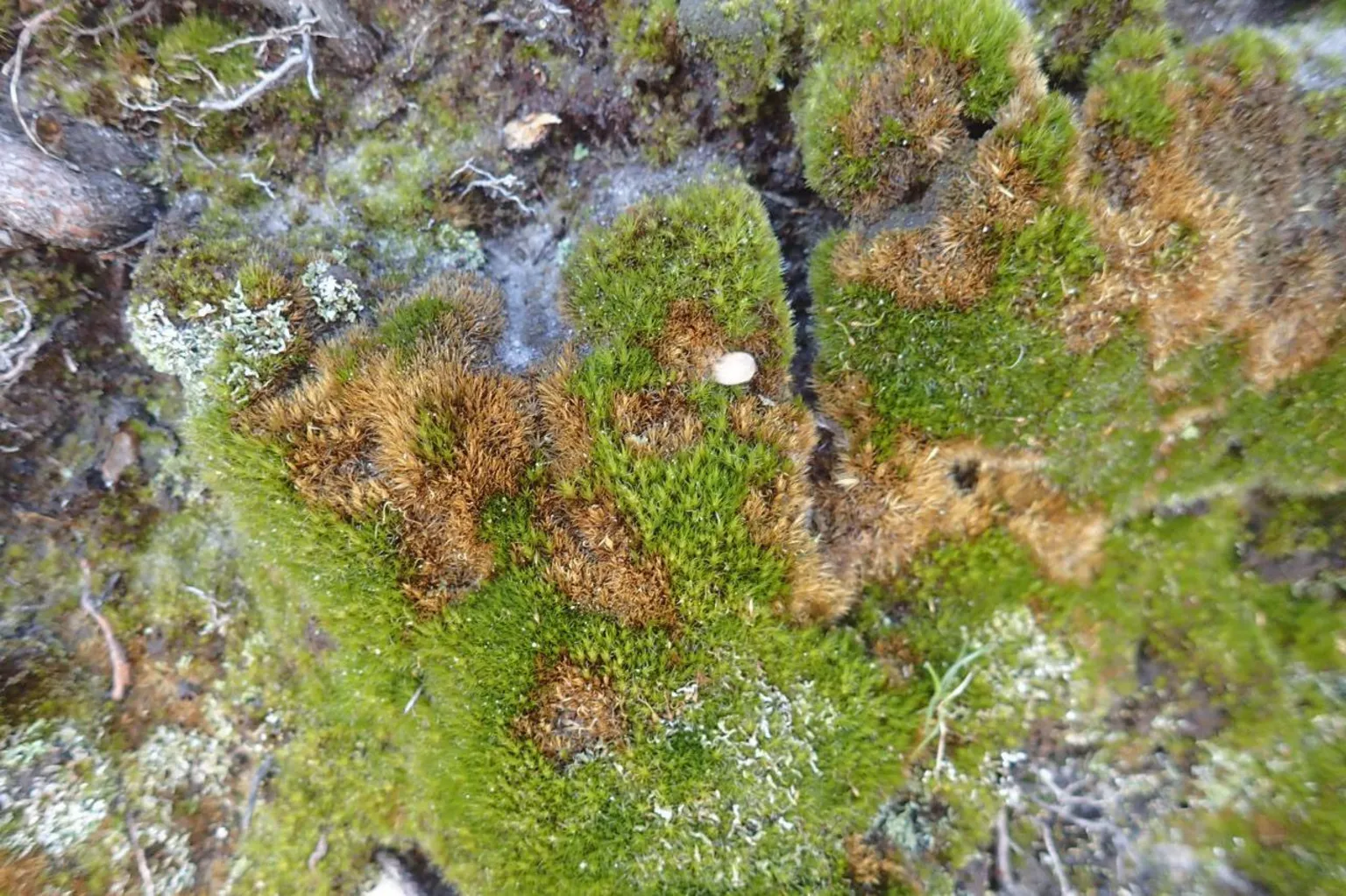
The heath-star moss is widespread throughout Britain, found on hillsides, sand dunes, and even garden fences.
"It's aggressive. I've even seen it growing in tarmac," says Greiff.
He acknowledges the moss's aesthetic appeal but emphasizes the ecological problems it causes.
"It is a pretty-looking thing," he says, plucking fragments from a green moss carpet. "But it's caused a lot of problems."

Impact of Invasive Species in Britain
Approximately 2,000 non-native plants and animals have been introduced to Britain, either accidentally or deliberately, from various parts of the world.
Some of these species have become dominant in local ecosystems. A well-known example is the North American grey squirrel, which has nearly eliminated native red squirrel populations.
Among invasive plants, Japanese knotweed and rhododendron are significant offenders, causing damage to homes and altering soil chemistry, respectively.
However, less is known about the heath-star moss. Scientists believe it arrived in Britain during the 1940s from the southern hemisphere and had spread extensively by 1990.
"This moss has just exploded. In the 1930s, native mosses would have been growing here instead," Greiff explains.
The UK is home to over 1,000 moss species, which are integral to valuable habitats such as temperate rainforests and peatlands that play a role in carbon storage. These habitats are threatened by invasive plants.

The heath-star moss reproduces rapidly by dispersing spores widely, contributing to its success as an invader.
"The first time I saw it, I had no idea what it was. I threw it in the bin," says Greiff, who works at Amgueddfa Cymru museum in Cardiff.
Observations in Bannau Brycheiniog National Park
Greiff guided a reporter along a path in Bannau Brycheiniog National Park near Abergavenny, south Wales.
"In heathlands like this one, native mosses have gone locally extinct or reduced significantly in their populations," he says.
He carefully scanned the ground for "patches of death," demonstrating his skill in observing plants that are only a few inches tall.
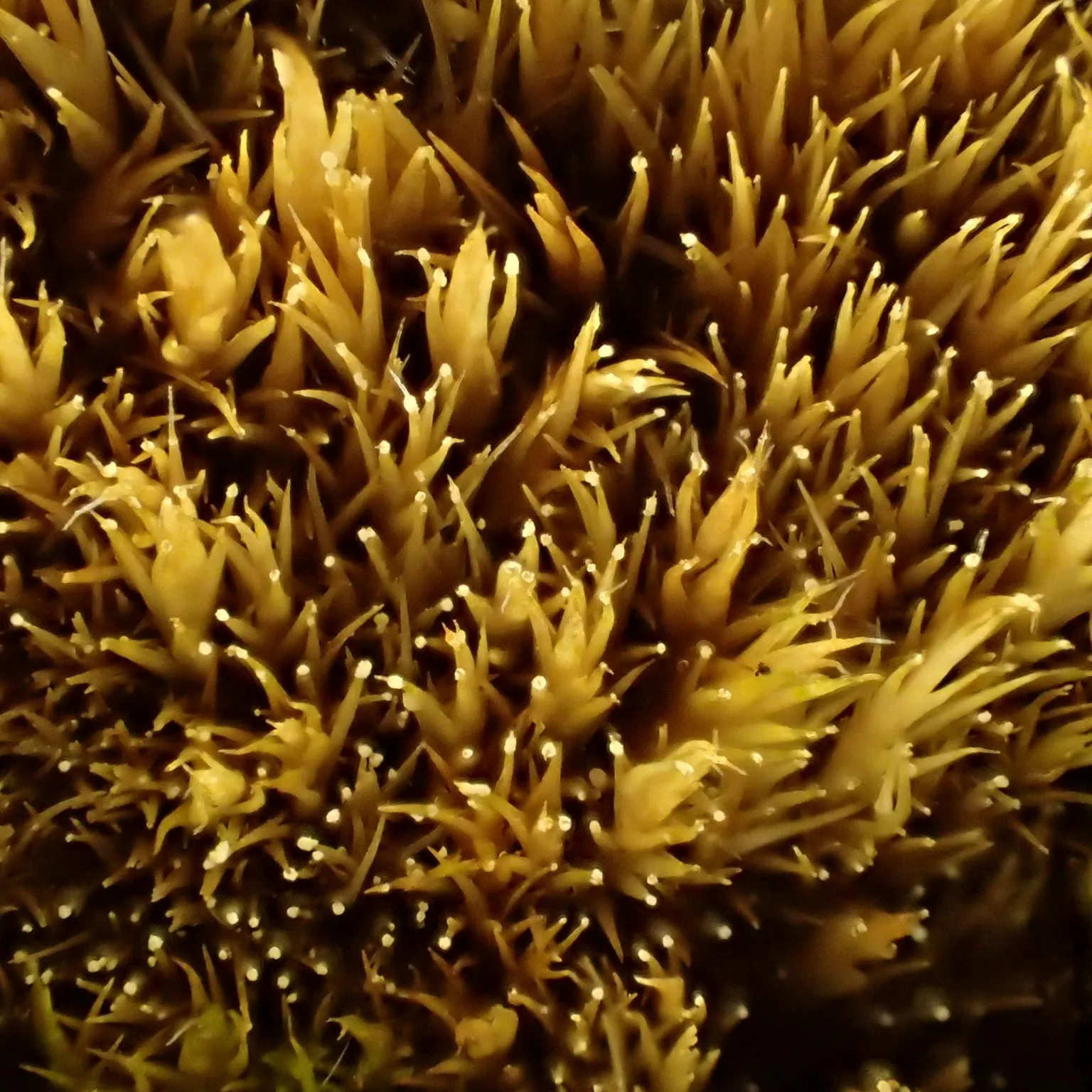
Within a few meters, Greiff located a brown ring of dead moss approximately the size of his hand.
Though the sight was less dramatic to the naked eye, a macro lens revealed white blobs on the moss tips, which are the fungus in action.
Nearby, baby heather plants were growing in the gaps left by the decayed moss.
Tracking and Identification of the Fungus
Now aware of the fungus's beneficial role, Greiff actively searches for it during his travels, joking that the map of its locations corresponds with his holiday destinations.
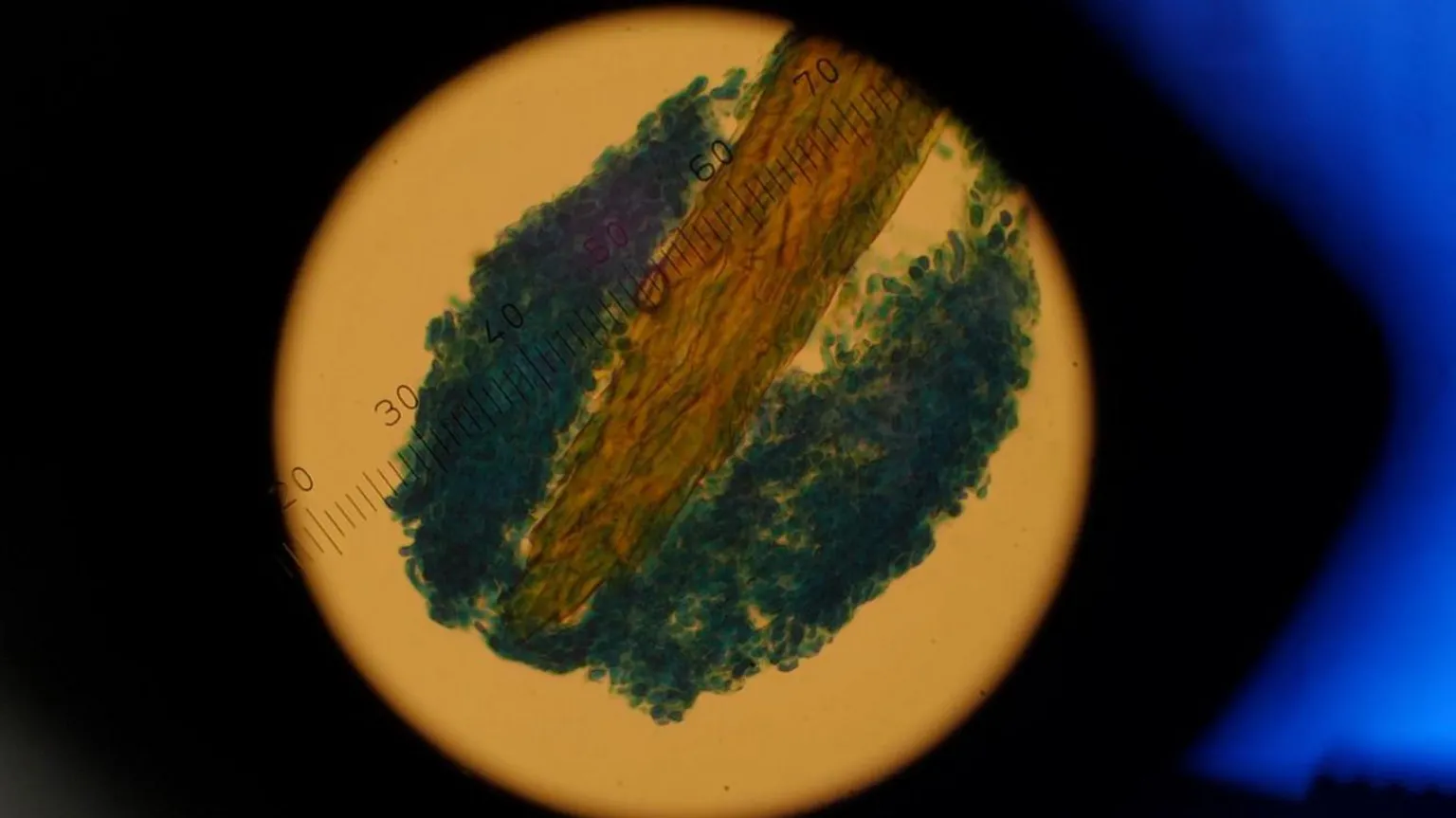
"It's taken a lot of DNA sequencing to fully identify this fungus," he says, showing samples under a microscope at Amgueddfa Cymru museum.
The fungus attaches to moss stems, expanding like candy floss around a stick, and has been observed penetrating moss cells.
Genetic analysis indicates it is closely related to the ash die-back fungus, responsible for killing up to 80 million ash trees in Britain.
Ecological Implications and Control Potential
Although a fungus that destroys plants might raise concerns about threats to biodiversity, Greiff's research suggests the fungus primarily affects the heath-star moss and possibly one other moss species, though further studies are required.
"I believe the origins of this fungus may be in a native species that has since adapted to kill the heath-star moss. This could be a rare example of the British environment fighting back," he says.
Typically, invasive species control involves human intervention, such as feeding contraceptives to grey squirrels.
"Some people might try to collect this moss to try and get rid of it, but it's not very effective. It would be very resource-intensive, very expensive," says Greiff.
"To have a natural biological control agent doing it for us is really valuable," he explains.
Historical Research and Conservation Prospects
At Amgueddfa Cymru museum, Dr Nathan Smith, Head of Plant and Earth Science, showed dried moss specimens dating back to the 1880s, stored in paper envelopes.
Scientists aim to examine these samples for evidence of the moss die-back fungus to determine its historical presence and origin.
"This fungus gives an opportunity to save these unique moss landscapes that are homes for insects, fungi, molluscs, other plants," explains Smith.
"It gives a real chance to preserve and present their uniqueness and beauty," he says.
Mosses form a critical component of Britain's biodiversity, which is among the most depleted globally, with one in six species at risk of extinction.
The discovery of a natural control agent for habitat destruction offers a hopeful prospect for conservation efforts.
"It's exciting in so many respects. Though I am the only one looking for the fungus. It would be nice if some other people did too," says Greiff.


