

Isle of Man's Potential for Temperate Rainforest
The Isle of Man's climate and geography render it nearly "100% suitable for temperate rainforest," according to the head of a wildlife charity. This statement follows a significant tree-planting initiative where volunteers contributed to planting tens of thousands of trees.
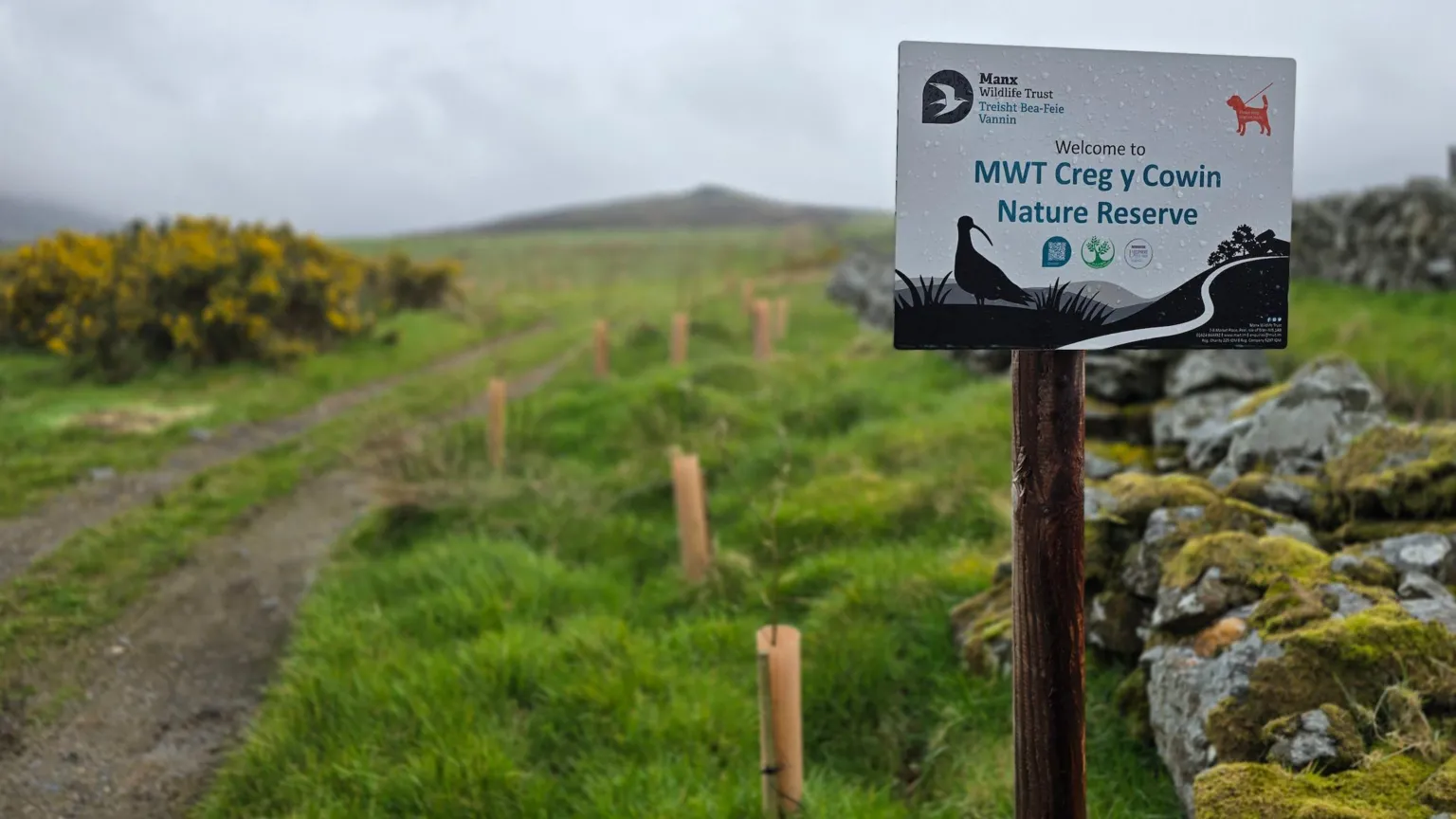
The Manx Wildlife Trust (MWT) led this project, planting 30,000 trees over three years at the Creg y Cowin reserve, a 105-acre (42-hectare) site acquired by the charity in 2023.
The land was previously used for low-grade grazing and is located between two rivers, with limited agricultural value. These factors identified it as an optimal location for rainforest restoration.
MWT chief executive Graham Makepeace-Warne emphasized that the project required two essential elements: "tree planting and time," and noted the involvement of hundreds of volunteers in supporting the effort.
Makepeace-Warne acknowledged that the woodland would take decades to fully establish but highlighted the high survival rates of the planted trees, reaching up to 98% in some areas.
Speaking at Creg y Cowin, he remarked that the island occupies a unique position within a band of rainforest-friendly conditions along the coasts of Britain and Ireland.
What Makes the Island Suitable?
Makepeace-Warne explained that the Isle of Man is "slap bang in the middle" of the temperate rainforest zone, situated between the western coasts of England, Scotland, and Wales, and the eastern coast of Ireland.
This location makes it particularly conducive to restoration efforts, with the island's consistently wet and mild weather being a key factor.
"Someone described temperate rainforests as plants growing on plants growing on plants," he said.
Early indicators such as mosses, lichens, and ferns growing on existing trees serve as "a really good indicator" of the site's suitability, he added.
"It takes a particular climate," added conservationist Carl Rowlinson, who has worked on similar projects in Cornwall.
Rowlinson described the region as a "Goldilocks zone" where it "never gets too cold, never gets too hot," with high rainfall supporting woodland growth.
How Significant Is the Project?
Makepeace-Warne stated that the Creg y Cowin area represents a large-scale development, but even larger goals are planned for the future.

He mentioned the recent acquisition of land at Glen Auldyn, describing it as similar but "on a massive scale."
The Creg y Cowin project operates under a 100-year framework, with trees expected to take 50 to 75 years to mature.
"Some of us won't be around then," he said, but added lasting environmental change depended on thinking long term.
He emphasized that for the project to succeed, "we've got to think like nature."
Why Aren't Temperate Rainforests Already Present?
Makepeace-Warne noted that although many might not associate the Isle of Man with vast and lush rainforests, such ecosystems once covered nearly the entire Celtic island.
However, centuries of tree loss have reduced woodland cover in some areas to less than 1%.
This loss is attributed to long-term human activities such as farming and timber use.
What Difference Will the Restoration Make?
Carl Rowlinson, who leads a woodland restoration project in Cornwall called Plant One, recently visited the Isle of Man to exchange knowledge and ideas.
He observed that conservation efforts have often treated habitats separately, isolating rivers, land, and marine environments.
"I want to promote conservation to restoration," he said, which involves linking "everything that's happening on the ground to everything that's happening out to ocean."
Rowlinson explained that restoring woodland could improve soil health, reduce flooding, and limit pollution entering waterways, with potential positive effects on marine ecosystems.
"They're all connected," he continued, adding: "It's kind of one ecosystem rather than a load of fragmented ecosystems."
The long-term goal at Creg y Cowin is to establish a functioning ecosystem that balances environmental and agricultural needs.
Once the trees are established, it is hoped that livestock can return to the land.
stories from the Isle of Man on the BBC, watch BBC North West Tonight on BBC , and follow BBC Isle of Man on Facebook and X.


