A Radical Plan for Global Wellbeing and Sustainability
Our plan is radical – but by transforming how we live on a finite planet, nearly everyone gains.
Imagine a future where everyone enjoys high levels of wellbeing; where 90% of the world’s population doubles their income while working half the hours we do today. A world in which the bottom half of humanity’s share of global wealth rises from 2% to 30%; a world where consumption is sufficient but no one over-consumes. And imagine achieving this on a planet that can comfortably sustain human life without its climate breaking down.
Against the bleak techno-authoritarian futures now being sold to us, a radical new vision for global progress in the 21st century feels urgently needed. The most credible vision is one in which the habitability of the planet is a precondition for human development and equality.
Conditions for a Sustainable and Equitable Future
Our new report examines the conditions required for the world to progress towards this ambition on an economically and ecologically compatible path by the end of the century.
Its conclusion? A global transformation that reconciles planetary habitability and high standards of wellbeing for all is possible – as long as three conditions are simultaneously met. Fast decarbonisation of energy systems is necessary. But we also need a major shift towards “sufficiency.” This would involve a sharp reduction in labour hours and the use of raw materials, along with significant changes in consumption patterns, food habits, land use, and forest cover. Financing and politically sustaining decarbonisation and sufficiency will require a drastic reduction in inequality of income, wealth, and power, both between countries and within them. This reduction of global inequality is not optional; indeed, it is a necessary condition for shared prosperity on a finite planet.
A Fully Quantified Plan for Transition
The report is the first attempt to propose a fully quantified plan for this transition. It combines four dimensions that today’s debates often treat separately: redistribution at the world scale; a deep reform of the international financial and economic order; a radical transformation of energy systems; and substantial shifts in consumption patterns. Compared with most climate scenarios (including those of the Intergovernmental Panel on Climate Change), the main novelty is that we model all four dimensions together – and place inequality and sufficiency at the centre of the analysis.
What the Transition Would Deliver
At its heart is convergence between countries. Average per capita national income, today separated by a 16-fold gap between the poorest (€290 a month in sub-Saharan Africa) and richest (€4,590 in North America/Oceania) regions of the world, would rise towards a common level of about €5,000 a month in all countries by 2100.
But this convergence is not just monetary. Annual working hours per employed person would fall from roughly 2,100 to about 1,000, continuing the long shift towards shorter working time; while the share of global working hours devoted to education and health would rise from 11% to 43%. Women and men would converge on equal pay and on an equal share of economic and domestic labour.

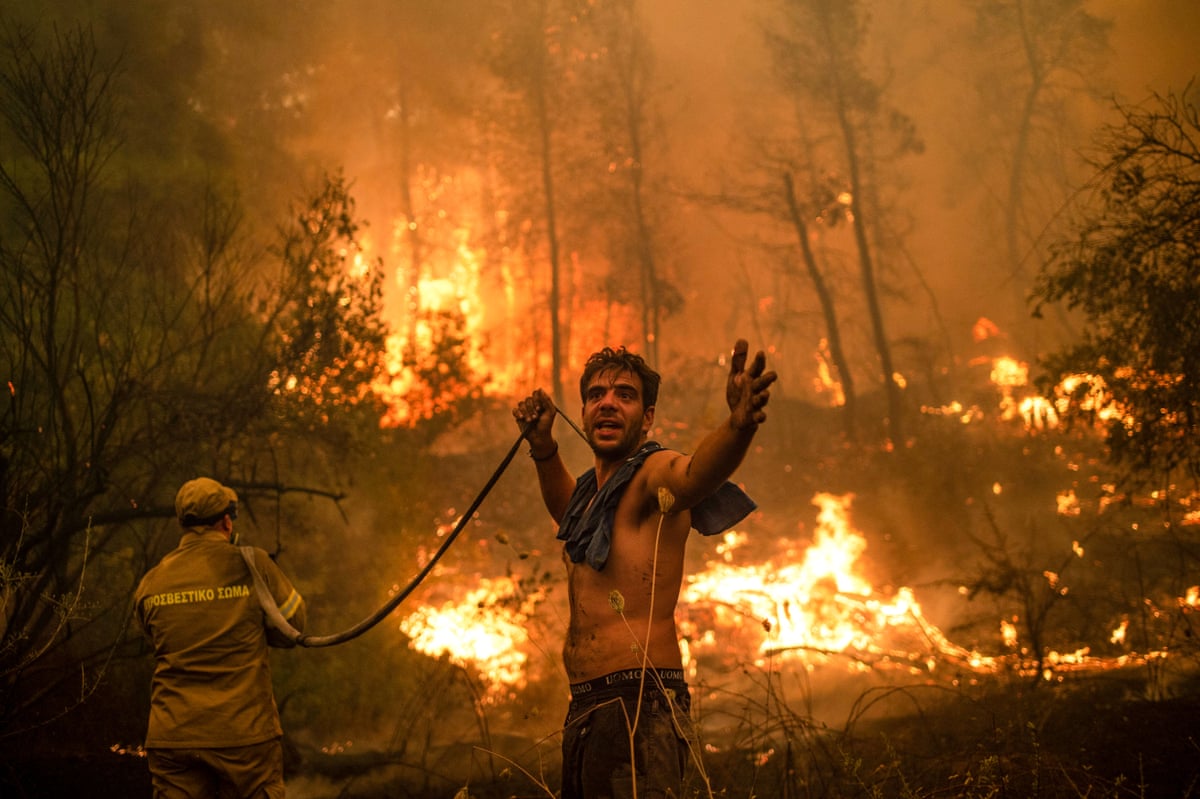
All of this would unfold within a habitable climate. Thanks to sustainable convergence and fast decarbonisation, global heating would reach 1.8°C, compared to more than 4°C on current trends.
Reducing Inequality as a Core Requirement
None of this will be possible without a drastic reduction in inequality. The income scale between individuals would narrow to a ratio of one to five and the wealth scale to one to 10, continuing what western and Nordic Europe achieved over the 20th century. The share of global wealth held by the poorest half of humanity would rise from 2% to 30%, while the share held by the billionaire class would fall from 6% to 0.05%.
Financing and Governance Through New Institutions
These shifts would be financed and governed through new institutions. A global justice fund would spend an average of 10% of world GDP a year from 2026 to 2060 on country dividends and investment, compared to less than 0.4% that aid and the combined budgets of the UN, the International Monetary Fund (IMF), and the World Bank represent today. Its resources would come from a world sovereign fund holding 10% of the world capital stock, a global wealth tax rising to 20% a year on billionaires, and a global income tax rising to 90% at the very top, each touching about 1% of the world’s population.
A Gain for Almost Everyone
The result is not a transfer from many to few but a gain for almost everyone. Close to 90% of the world’s population would double their income between 2026 and 2100, and once leisure and a habitable planet are counted, more than 99% come out ahead. The plan also redistributes power. Today, the richest regions hold four times as many votes in the IMF and World Bank as their share of the world’s population would dictate; in the new order, every inhabitant would have equal voice, backed by an international clearing union and a new international currency to end the exorbitant privileges of the dominant powers and to address global trade imbalances.
Context Within Broader International Agendas
Our report is part of a broader international agenda for planetary habitability, social justice, and reform of the global financial architecture – including the Bridgetown Initiative launched by Barbados in 2022, the Sevilla Commitment on development finance, the UN Financing for Development process, and G20 initiatives led by India and South Africa on global inequality. The main contribution of this report is to place these proposals within a quantified institutional framework, modelling socioeconomic convergence, temperature change, and distributional trajectories up to the year 2100.
Material Possibility and Political Choice
A habitable, equal, and prosperous 21st century is materially possible. The carbon budget allows it and history offers precedents at comparable scales: universal suffrage, the universalisation of healthcare and education, the halving of working hours, and the sharp compression of inequality over the 20th century. Technical impossibility is not what is standing in the way, but rather the absence of a shared vision of social progress, at once concrete and radical. What it will take instead is political choice, and the hard work of coalition-building behind it.
About the Authors
Thomas Piketty is a professor of economics at the Paris School of Economics and co-director of the World Inequality Lab; Lucas Chancel is professor of economics at Sciences Po Paris and co-director of the World Inequality Lab; Cornelia Mohren is environmental coordinator at the World Inequality Lab; Rowaida Moshrif is co-director at the World Inequality Lab; Moritz Odersky is an economist at the World Inequality Lab; Anmol Somanchi is global justice coordinator at the World Inequality Lab.
This article is based on the conclusions of their report.