Bad Bunny’s Super Bowl Half-Time Show: A Cultural and Political Moment
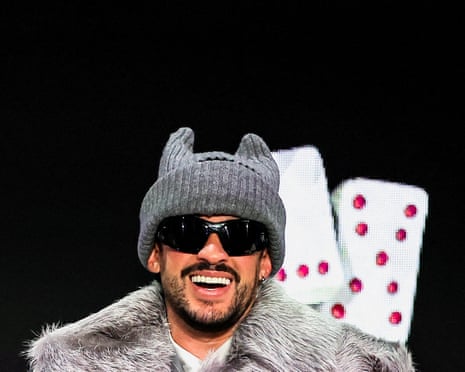
For 13 minutes on Sunday night, Levi’s Stadium in Santa Clara will resonate with reggaeton, Latin trap, and Caribbean rhythms as Puerto Rican superstar Bad Bunny headlines a historic Super Bowl halftime show, performed primarily—or possibly entirely—in Spanish. Known for blending música urbana with political resistance, Bad Bunny has promised a “huge party” for the event.
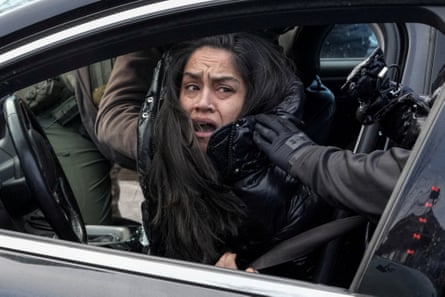
His performance arrives amid a backdrop of aggressive immigration enforcement, with masked federal agents conducting raids across American cities targeting immigrants, legal residents, and even U.S. citizens. Bad Bunny’s presence on such a prominent stage offers a stark contrast: a vibrant celebration of Latino pride and solidarity.
“Bad bunny is much more than his music,”said Vanessa Díaz, co-author of P FKN R: How Bad Bunny Became the Global Voice of Puerto Rican Resistance.
“He carries the weight of the history of Puerto Rico.”
Díaz emphasized that Bad Bunny’s genre-defying and politically charged artistry reflects Puerto Rico’s tradition of “music as resistance and dance as joy,” noting that his
“most significant protest songs are also party songs.”
Last weekend, Bad Bunny earned three Grammys, including a historic Album of the Year award for Un Verano Sin Ti, the first Spanish-language album to receive the industry’s top honor.
Accepting the trophy for Best Música Urbana, he declared,
“Before I say thanks to God, I’m going to say ‘ICE out’. We’re not savages, we’re not animals, we’re not aliens. We are humans and we are Americans.”
One week later, the reigning King of Latin Trap will perform at the Super Bowl, an event steeped in American patriotism and ritual. Tens of millions of viewers are expected to watch—and dance, as Bad Bunny hopes—while he performs his chart-topping hits. However, even before the show began, supporters of former President Donald Trump seized on Bad Bunny’s appearance, framing it as a new front in the ongoing culture wars.
Performing in Spanish at the Super Bowl is not an FCC violation. Yet, outside the stadium, speaking Spanish can provoke suspicion or even federal scrutiny regarding immigration status in Trump’s America.
“To perform in Spanish is an ‘extremely political’ act,”Díaz said, especially in the current climate.
Trump’s political rise began over a decade ago with a promise to protect the homeland from foreign criminals and invaders. Returning to power last year, he pursued an even more aggressive deportation campaign, aiming to conduct the largest in U.S. history.
As immigration enforcement intensified, citizens began carrying identification documents to avoid detention. Some shop for relatives with limited English proficiency, while undocumented parents, fearful of leaving their homes, send their children to school with neighbors, hoping they will remain safe.
In Minneapolis, the crackdown sparked community resistance that tragically resulted in the deaths of U.S. citizens Renee Good, a mother and poet, and Alex Pretti, an ICU nurse, at the hands of federal agents.
Also in Minneapolis, the image of five-year-old Liam Conejo Ramos, detained with his father outside their home while wearing a blue knit hat with bunny ears, became a powerful symbol of the administration’s enforcement campaign’s perceived cruelty. Although a judge ordered his release from a Texas detention center, his future in the United States remains uncertain.
“This is a time when we really need a loud and proud voice in the face of the terrorizing of our Latino and migrant communities,”Díaz said.
“And we need that voice to be in Spanish.”
The NFL’s decision to feature a Puerto Rican pop star who does not sing in English, sometimes wears skirts, and openly criticizes Trump’s immigration policies predictably provoked MAGA supporters’ ire.
Conservatives mocked Bad Bunny as
“not American”and demanded an English-only performance. Right-wing commentator Tomi Lahren criticized the choice, despite Puerto Ricans being U.S. citizens, albeit without congressional representation or presidential voting rights.
Turning Point USA, founded by the late conservative activist Charlie Kirk, announced it would broadcast an alternative halftime show featuring Kid Rock and country singers. Kid Rock stated,
“We plan to play great songs for folks who love America.”
On Capitol Hill, House Speaker Mike Johnson told the immigration-focused newsletter Border Report that he would have preferred an entertainer representing
“traditional American values,”such as 83-year-old Lee Greenwood, whose song God Bless the USA is Trump’s walkout music.
Department of Homeland Security Secretary Kristi Noem warned in October that ICE would be present at the game. California Governor Gavin Newsom later assured that there would be
“no immigration enforcement tied to the game.”
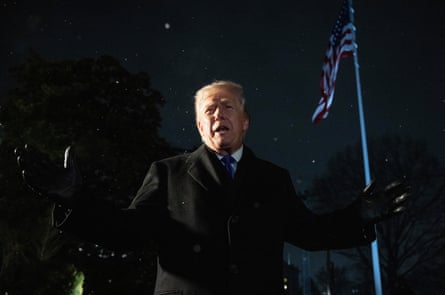
Meanwhile, Trump, who often embraces major sporting events, announced he would skip the Super Bowl, calling Bad Bunny’s selection
“a terrible choice”that
“only sows hatred.”
Many Americans disagree. An October poll found nearly half of Americans approved of the NFL’s decision, with 29% disapproving. Support varied sharply by party, age, and race, with Democrats, younger voters, and Hispanic adults more likely to approve.
Last year, Trump became the first sitting president to attend the Super Bowl, watching rapper Kendrick Lamar headline the halftime show in New Orleans. That performance drew more viewers than the game itself and exceeded the number of voters in the midterm elections four years prior.
This year, however, Trump will not watch halftime, according to White House Press Secretary Karoline Leavitt, who said the president
“would much prefer a Kid Rock performance over Bad Bunny.”
In contrast, the NFL is betting on a future that resembles Bad Bunny’s style, actively courting Latino audiences domestically and in Latin America. NFL Commissioner Roger Goodell praised Bad Bunny on Monday as
“one of the greatest artists in the world”who
“understands”the platform.
Scholars and fans note that the right-wing backlash against Bad Bunny taps into a longstanding debate about belonging in America, especially for residents of U.S. territories where colonial legacies influence identity and history.
Since Trump’s return to office, his administration has sought to redefine American identity by restricting legal immigration and attempting to end birthright citizenship. Simultaneously, his foreign policy reflects territorial ambitions, asserting
“This is OUR hemisphere,”following U.S. military intervention in Venezuela, and threatening to seize Greenland.
At the Grammys, when host Trevor Noah asked if Bad Bunny might move to Puerto Rico if conditions worsened in the U.S., the artist corrected him:

“Trevor, I have some news for you. Puerto Rico is,”he said, using air quotes,
“part of America.”
By the numbers, Bad Bunny exemplifies American cultural achievement—a journey from grocery store bagger to global superstar challenging Trump’s America First ideology. At 31, he has broken streaming records and become the world’s most listened-to artist without translating his music to English or diluting his political messages.
“I wasn’t looking for album of the year. I wasn’t looking to perform at the Super Bowl half-time show,”Bad Bunny said Thursday.
“I was just trying to connect with my roots, connect with my people, connect with myself.”
Born Benito Antonio Martínez Ocasio, Bad Bunny grew up in Vega Baja, a working-class coastal town in Puerto Rico. He belongs to the island’s “crisis generation,” shaped by economic recession, public debt, austerity, mass migration, and natural disasters.
In 2017, Hurricane Maria devastated Puerto Rico, plunging the island into darkness and causing catastrophic damage. When Trump visited belatedly, he threw paper towels into a crowd of survivors, a moment widely seen as symbolic of colonial neglect.
Bad Bunny incorporated these struggles into his art and politics, said José Meléndez-Badillo, associate professor of Latin American and Caribbean history at the University of Wisconsin-Madison, who collaborated with the artist on historical visualizers for his 2025 album.
A vocal advocate for Puerto Rican independence, Bad Bunny paused a European tour to join mass protests in San Juan that led to Governor Ricardo Rosselló’s resignation. His music, rooted in reggaeton, trap, and traditional Puerto Rican rhythms, explores the island’s history and identity.
“He inhabits that sort of porosity of what it means to be American – not in a US sense but in a broader hemispheric sense,”Meléndez-Badillo said. This explains why Bad Bunny’s music resonates across the global south, including with indigenous activists, Venezuelan migrants, and others.
His outspoken opposition to Trump’s immigration policies has gained him new admirers in the U.S., some of whom have begun learning Spanish ahead of Sunday’s show.
On July 4 last year, Bad Bunny released the music video t0 NUEVAYoL, a love letter to the Puerto Rican diaspora featuring an AI-generated voice of Trump apologizing to immigrants.
When launching his world tour last year, Bad Bunny avoided the continental U.S., fearing ICE agents might be present at his concerts. Instead, he staged a landmark 31-show residency in San Juan titled No me quiero ir de aquí (“I don’t want to leave here”), attracting hundreds of thousands of attendees and significant media attention.
“He did not need the United States, which is the biggest market for pop consumption in the world, to do a sold-out tour,”Meléndez-Badillo said.
“That changes the political conversation at a mainstream level.”
Following Trump’s unexpected political comeback, many on the left believed they had lost the cultural battle, with Trump capturing grievance and spectacle while liberals defended institutions and the status quo.
In 2024, Latino voters from Miami-Dade to the Rio Grande Valley to East Los Angeles supported Trump’s re-election campaign, largely driven by economic concerns. However, this coalition has proven fragile.
A year into his second term, Latinos have expressed declining approval of Trump’s economic management, and his aggressive immigration enforcement—once a signature issue—has alienated many Americans uncomfortable with its scale and severity. Ahead of the midterm elections, both parties are competing for Latino support.
Bad Bunny is not a Democratic emissary, but his global success suggests that Trump’s MAGA movement may be the cultural sideshow.
“Latinos have lost every possible policy war since I’ve been in DC,”said Pablo Manríquez, a Washington-based reporter at Migrant Insider, listing socioeconomic disparities largely unaddressed by Congress.
“But culturally, we’re winning. Bad Bunny is performing at the Super Bowl.”
For many fans, Sunday’s show—dedicated to
“all Latinos and Latinas around the world and here in the United States”—is an act of resistance with hopes it will resonate beyond the arena in California.
Governor Newsom, a frequent Trump critic, declared Sunday “Bad Bunny Day.” Across the country, the progressive Working Families Party is hosting “Bad Bunny Bowl” halftime watch parties. Nelini Stamp, the group’s director of strategy and a New York-born Puerto Rican, said the events aim to give fans, especially Latinos, something
“beautiful”to celebrate.
“I’ll be damned if I let fear take my joy away,”she said.
Anticipation has grown ahead of Bad Bunny’s performance, with speculation about his song choices, stage presence, and attire.
Will he address the Minneapolis crackdown? Will he invite another Latin star, as he did in 2020 when he appeared during the halftime show headlined by Shakira and Jennifer Lopez in Miami? That show included children in cages, interpreted by some as a critique of the Trump administration’s zero-tolerance immigration policy. Lopez also wore a cape that transformed from an American flag to a Puerto Rican flag.
Bad Bunny has declined to reveal details but has signaled a message of unity. In a teaser released last month, he dances with partners of diverse ages and backgrounds, promising:
“The world will dance.”
No matter the specifics of his performance, Bad Bunny’s presence at Levi’s Stadium—a venue named after an iconic American denim brand symbolizing westward expansion—during the nation’s most-watched sporting event is itself a political statement.
“He’s a colonial subject at the heart of empire,”Meléndez-Badillo said.