Ancient Burial Site and Iron Age Structures Discovered During Sewer Upgrade
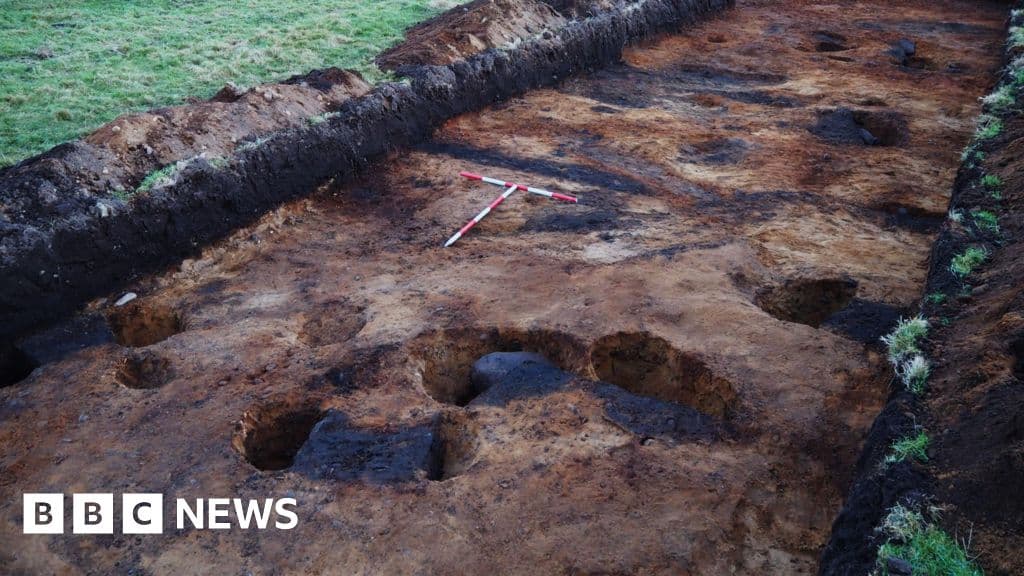
A 6th Century burial ground along with two Iron Age roundhouses have been uncovered during a Scottish Water sewer upgrade project in the Highlands.
During the construction of a new sewer at Windhill, near Muir of Ord, remnants of the roundhouses, metalworking furnaces, and bone fragments from a burial monument were found.
According to Scottish Water, stone tools and decorated clay daub from the walls of the roundhouses were also discovered.
The bone fragments are currently undergoing carbon-dating to establish the age of the individual within the burial monument.
Scottish Water stated that the two roundhouses are estimated to be up to 3,000 years old.
A variety of stone tools were recovered from the roundhouses, including fragments of rotary querns used for grinding grain, a quern rubber, and a hammerstone.
Clay daub from the roundhouse walls was also found, some featuring decoration in the form of applied chevron designs, which is considered a rare find.
However, Scottish Water noted that no pottery was recovered, which aligns with the broader understanding that during the Iron Age in this region, inhabitants did not use clay pots but rather wooden vessels.
Among the roundhouse remnants were two well-preserved smelting furnaces, constructed against a large flat-topped boulder.
Experts believe these furnaces were located in structures outside the roundhouses, as the furnaces likely produced significant heat and fumes.
These external structures were probably temporary and built more shallowly than the roundhouses themselves.
Within the 90-metre trench, three round burial mounds, known as barrows, were also identified, each measuring approximately 10 metres in diameter.
Scottish Water indicated that radiocarbon dating, isotope analysis, and DNA testing of the bone fragments could provide insights into the people who inhabited the area.
Expert Commentary and Project Management
Archaeologist Steven Birch, from West Coast Archaeological Services, described the discoveries as a "complex suite of archaeological features."
"Full analysis of the samples, finds and other materials will provide additional information relating to a snapshot into the early history of the area, adding to a growing core of evidence to suggest that the area around the Beauly Firth provided a suitable locale for settlement, industrial and funerary practices," he said.
Project manager Scott Henry commented that there had been some prior indication that archaeological material might be present in the area, but the discovery was still "such an amazing discovery."
"We always follow the correct procedures and ensure archaeologists are present when they need to be to ensure discoveries are protected and recorded from our sewer upgrade works."