

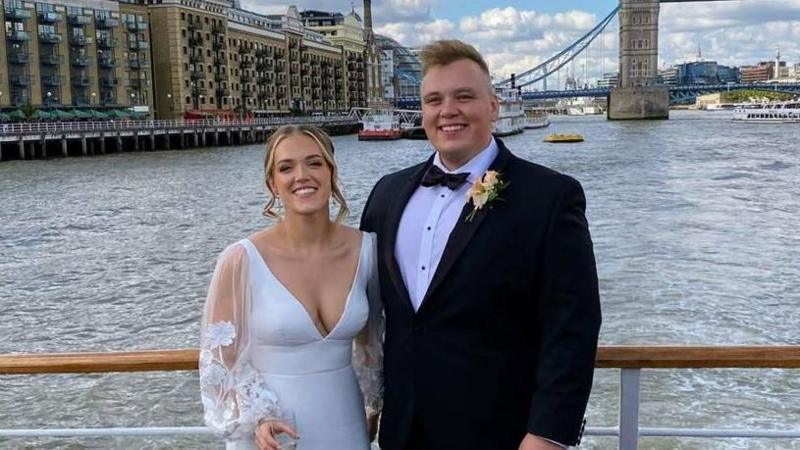
Hannah and Max have always split their money equally, even when one has earned considerably more than the other. Their salaries are paid into one joint account, and all household costs, including their mortgage, bills, food and petrol, come out of it.
"We've always wanted to do things 50/50," Max, 31, says. "We made a commitment to each other that what's mine is yours, and vice versa."
The couple got married after two years together, when Max was earning £70,000 a year working in tech and Hannah, who works in the charity sector, was earning considerably less. Each month, they take the same amount for personal spending, while also separating money into different pots for savings and predictable costs such as haircuts.
If one of them wants to buy clothes, make-up or go to the pub, they can do so without feeling watched. Max says this also means they are not accountable to each other for those purchases.
Their salaries go into a joint account and their mortgage, bills, food, petrol and other household costs are paid out of this. They also divide money into different pots, including savings and smaller funds for predictable spending like haircuts.
Hannah and Max have had a joint account since they got married in 2022
How did their different attitudes to money shape the relationship?
The pair entered the relationship with very different views on money. Hannah's family discuss finances openly, while for Max, money was taboo.
"Money was taboo in my family"
"We never spoke about money so as an adult I was left without any knowledge of things like what's a good salary or how to negotiate my pay," he says.
When they came to buy a home together, they had to be honest about how much they earned, how much they had for a deposit and what they could realistically afford. Hannah says that, as first-time buyers, there were costs they had not expected, including stamp duty and solicitor fees, so it was important they both knew exactly how much money they had.
"As first-time buyers, there are costs you don't think about, like stamp duty and solicitor fees, so it was important we both knew exactly how much money we had," Hannah says.
Now Hannah and Max say money is an everyday conversation in their relationship. Hannah says that, just that morning, they had been talking about what they could do to help improve their financial situation in the future.
"Just this morning we were talking about what we can do to help improve our financial situation in the future," Hannah says.
Research from wealth manager Quilter suggests almost half of couples do not share financial planning equally, with 46% acting alone in some way and more than one in 10 leaving one partner solely responsible. Relationship expert Karen Doherty has three pieces of advice when it comes to starting the conversation around financial planning.
How did they manage when Max lost his job?
The couple kept the same approach even when Max was made redundant last year and they had to rely on Hannah's salary of between £40,000 and £60,000.

"There was shock and panic initially," Hannah, who did not want to disclose her precise salary, says. "But we sat down and really looked through where we could cut things out."
They cancelled gym memberships and Sky TV and reviewed their finances to make sure they could cover their mortgage and bills on a lower income.
Max had trained at culinary school instead of doing A-levels and university, but had moved away from hospitality because he felt it would not pay enough. When he was made redundant, he wanted to use the opportunity to create his own business in something he genuinely enjoyed, but Hannah had reservations.
"At first I told him to set this up alongside getting another job but we quickly realised the business would take a lot of time and energy," she says.
"We ran the numbers and decided that this was the right moment to take the risk given we don't have kids and no one else is depending on us."
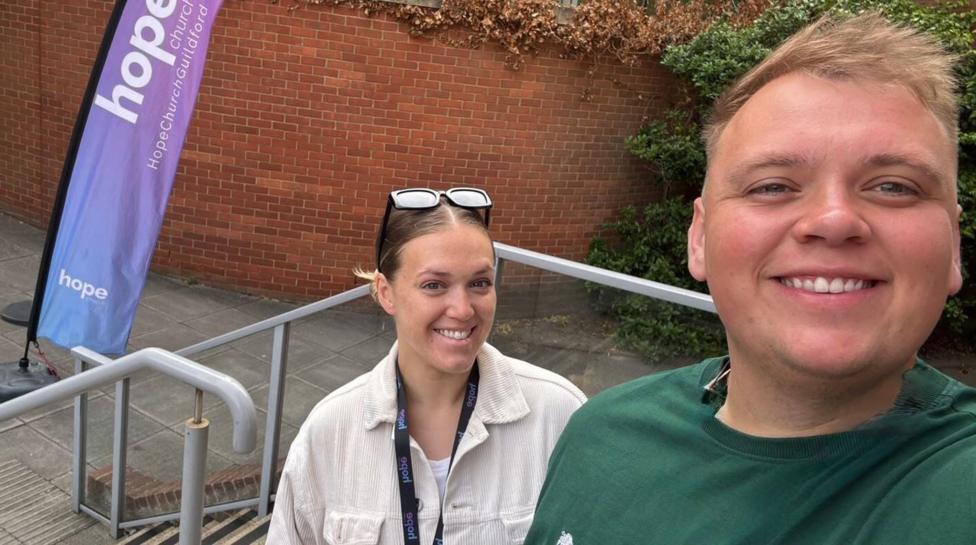
Max spent £20,000 from his redundancy package buying and converting a horsebox trailer into a pizza truck, which now caters for weddings, parties and pop-ups.
He says the money he invested was their agreed limit for making the business work, and that if it failed he would find another job rather than putting in more. The business now brings in between £4,000 and £6,000 a month in revenue, and Max pays himself a salary that covers the mortgage.
The couple put £20,000 into Max's business idea last year
What are their hopes for the future?
For Max, the hope is that the pizza business grows and the doer-upper house they bought increases in value. Hannah says her advice to other couples is to start talking about money before a big decision forces the conversation.
"Start with the small things like your salaries or how much you spend on different things as that will help the bigger discussions feel more natural."
Get in touch
Tell us your experience of combining finances and managing money as a couple.
I wouldn't marry him until he paid off his debt, now I'm in charge of our money
My friends always want to split the bill equally, how do I say no?
'I'd be put off if he asked to split it': Who should pay on a first date?



