

Analysts Warn Energy Crisis Persists Despite Ceasefire in Strait of Hormuz
Experts indicate that uncertainties surrounding the durability of the ceasefire and damage to production infrastructure suggest the energy crisis remains unresolved.
If the US-Israeli ceasefire agreement holds, it may represent the most promising opportunity to alleviate the energy crisis since Iran’s Revolutionary Guards took control of the Strait of Hormuz 40 days ago.
However, the agreement appears fragile as Iran contested the ceasefire late Wednesday, with state media reporting the waterway had been closed again.
Even if the temporary truce between the White House and Tehran endures and hundreds of tankers stranded in the Gulf resume transit, analysts caution that this will not suffice to restore the flow of oil, gas, chemicals, and other essential goods to pre-crisis volumes.
How many ships remain in the Gulf?
According to the United Nations, approximately 2,000 vessels, carrying around 20,000 seafarers, have been immobilized in the Gulf since the conflict began. These include oil and gas tankers, bulk carriers, cargo ships, and six tourist cruise liners.
Unable to navigate through the strait to continue their voyages, most vessels have remained anchored for nearly six weeks, with some crews facing dwindling food and water supplies.
When will ship transits through the Strait of Hormuz resume?
Following the ceasefire announcement, there was no immediate rise in vessel traffic through the strait.
Only a handful of ships have passed through in recent weeks—typically single digits daily—representing a minuscule fraction of the average 140 ships that transited each day before the conflict.
Shipping analysts and vessel owners have warned that even a temporary ceasefire does not guarantee safe passage, especially since Iran’s foreign minister has stated that transit will be managed by Iranian military forces.
What needs to happen for more ships to start using the strait?
Shipowners and captains face numerous uncertainties regarding safety.
Iran has indicated its intention to maintain the traffic control system established in the strait over recent weeks. This system includes granting clearance to "non-hostile vessels"—defined as those without links to the US or Israel—and requires extensive sharing of information about ship ownership, operators, cargo, and prior voyages.
As part of a clearance process described by analysts as "fairly unsophisticated," Iranian officials stationed on Larak Island in the northern strait have used binoculars to verify ship names and grant permission to proceed.
To facilitate visual verification, Tehran has attempted to reroute ships along a more northerly corridor close to its coastline, diverging from traditional shipping lanes. This alternative route imposes additional constraints on an already congested waterway and may limit the number of ships able to pass.
A successful ceasefire could also enable Iran and Oman to impose fees up to $2 million (£1.5 million) per ship for passage through the strait. Shipping analysts at Lloyd’s List have referred to this as "Tehran’s tollbooth." This would allow Iran to maintain control, but it remains uncertain whether all shipowners would agree to pay.
Fully loaded vessels are expected to be among the first to depart, rather than empty ships that have yet to reload.

Shipping analysts predict that operators will gain confidence once a ship owned by a major European company has safely navigated the strait. However, they caution that it is a separate challenge for empty ships to decide to enter the strait to load cargo at regional ports, and the timeline for this remains unclear.
What does this mean for global energy supplies?
Energy markets have declined sharply on hopes that millions of barrels of crude oil and gas trapped in the Gulf could soon alleviate a crisis deemed "more serious" than previous disruptions, according to the International Energy Agency.
However, the disruption has been exacerbated by forced shutdowns of oil and gas production across the Gulf as storage facilities reached capacity. Additionally, numerous key energy production sites have sustained damage from drone attacks.
Experts have stated that it may take months or even years to fully restore the Gulf’s energy production. Qatar reported that significant damage to its main liquefied natural gas (LNG) production hub at Ras Laffan, caused by an Iranian strike, has reduced its capacity by 17%. Officials estimate repairs could require three to five years.
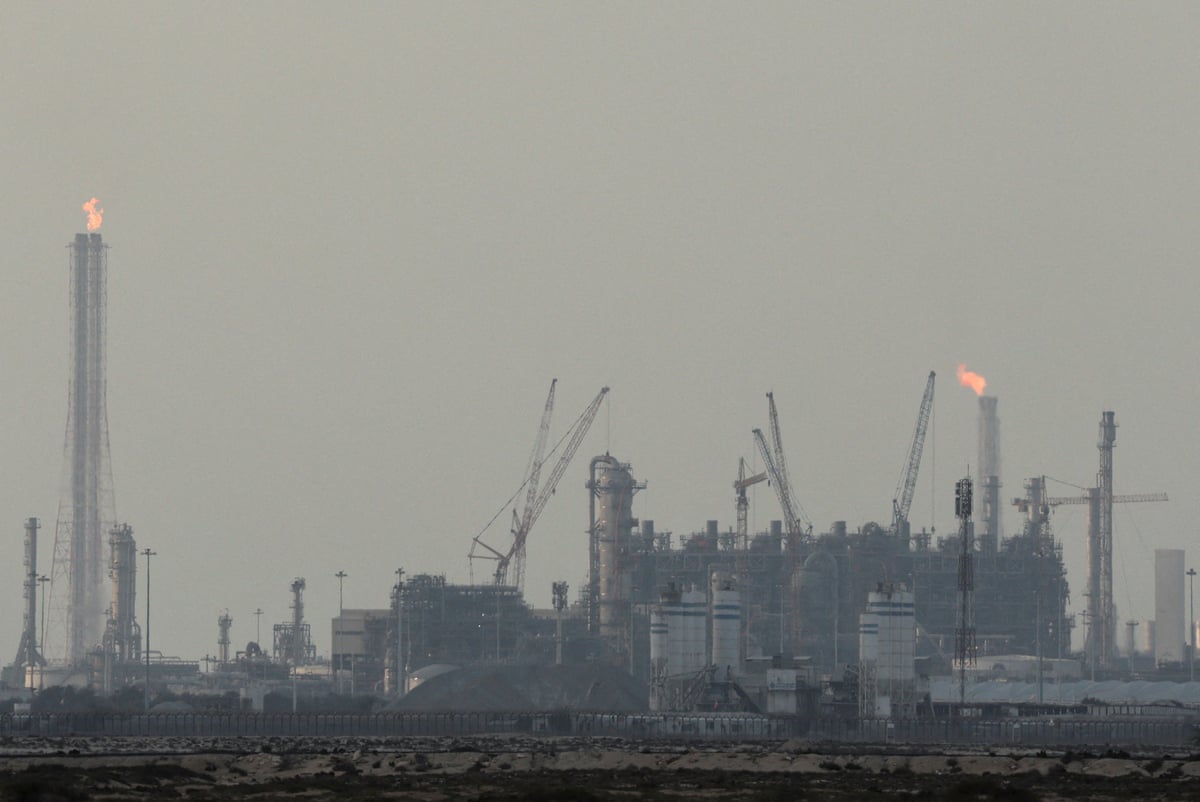
Wood Mackenzie, an international oil consultancy, projects that if Qatar begins restarting its remaining LNG capacity next month, it would take until the end of August for undamaged capacity to return to service. Tom Marzec-Manser, a gas analyst at the company, noted,
"It is unclear if QatarEnergy would consider doing this during a ceasefire, however."
Gulf refineries supplying over half of Europe’s jet fuel have also been damaged and may require months to resume normal operations.
Willie Walsh, director general of the International Air Transport Association (IATA), which represents the airline industry, stated in Singapore,
"Even if the Strait of Hormuz were to remain open, it will still take a period of months to get back to where supply needs to be, given the disruption to the refining capacity in the Middle East."
So can we expect energy market prices to fall?
Price reductions are contingent on the ceasefire holding, and even then, decreases may be limited and temporary. Oil and gas markets reacted with a sharp decline in global wholesale prices. However, analysts predict prices could begin rising again as the global energy supply squeeze intensifies in May and June.
The international crude benchmark opened just below $95 (£71) per barrel on Wednesday morning, down from approximately $110 per barrel the previous day. European gas prices opened nearly 20% lower at under €43 (£37) per megawatt-hour. Despite these declines, prices remain well above pre-crisis levels, implying higher costs for the global economy. Jet fuel prices, which typically correlate with oil prices, have more than doubled since the Iran conflict began.
Traders are expected to continue factoring in a "geopolitical risk premium" reflecting uncertainty over the ceasefire’s durability or potential conflict resumption. This will sustain energy prices "significantly higher than before the conflict," according to Tamas Varga, an analyst at PVM Oil, part of the Icap group. He stated,
"Consequently, a return to sub-$70 levels is highly improbable, at least over the next year or two."
When will the Gulf’s oil and gas exports return to normal?
Normalization may never fully occur. Even if the strait remains open and production and refining capacities are restored, many countries are reconsidering their energy strategies due to the crisis.
In Asia particularly, the Gulf crisis has highlighted the risks of overdependence on a single region for energy supplies, prompting many nations to diversify their sources going forward.
For countries reliant on Gulf energy, costs may increase if Iran imposes transit fees on tankers long-term, alongside a higher risk premium to compensate tanker operators for using this route. This could lead to reduced Gulf imports in favor of oil and gas producers in the Americas.
There is also likely to be heightened interest in nuclear power and renewable energy sources, which, combined with shifts toward electrified transport and greener industry, could reduce dependence on fossil fuels altogether.
Shipping analysts caution that maritime companies often require significant time to regain confidence in returning to hazardous routes. For example, few commercial shipping operators had resumed passage through the Red Sea by January, a year after Houthi rebels in Yemen declared they would cease targeting ships. Instead, they preferred the longer, more expensive, but more predictable route around the Cape of Good Hope at Africa’s southern tip.


