Dallas's Financial Ambitions Rise with Major Bank Expansions
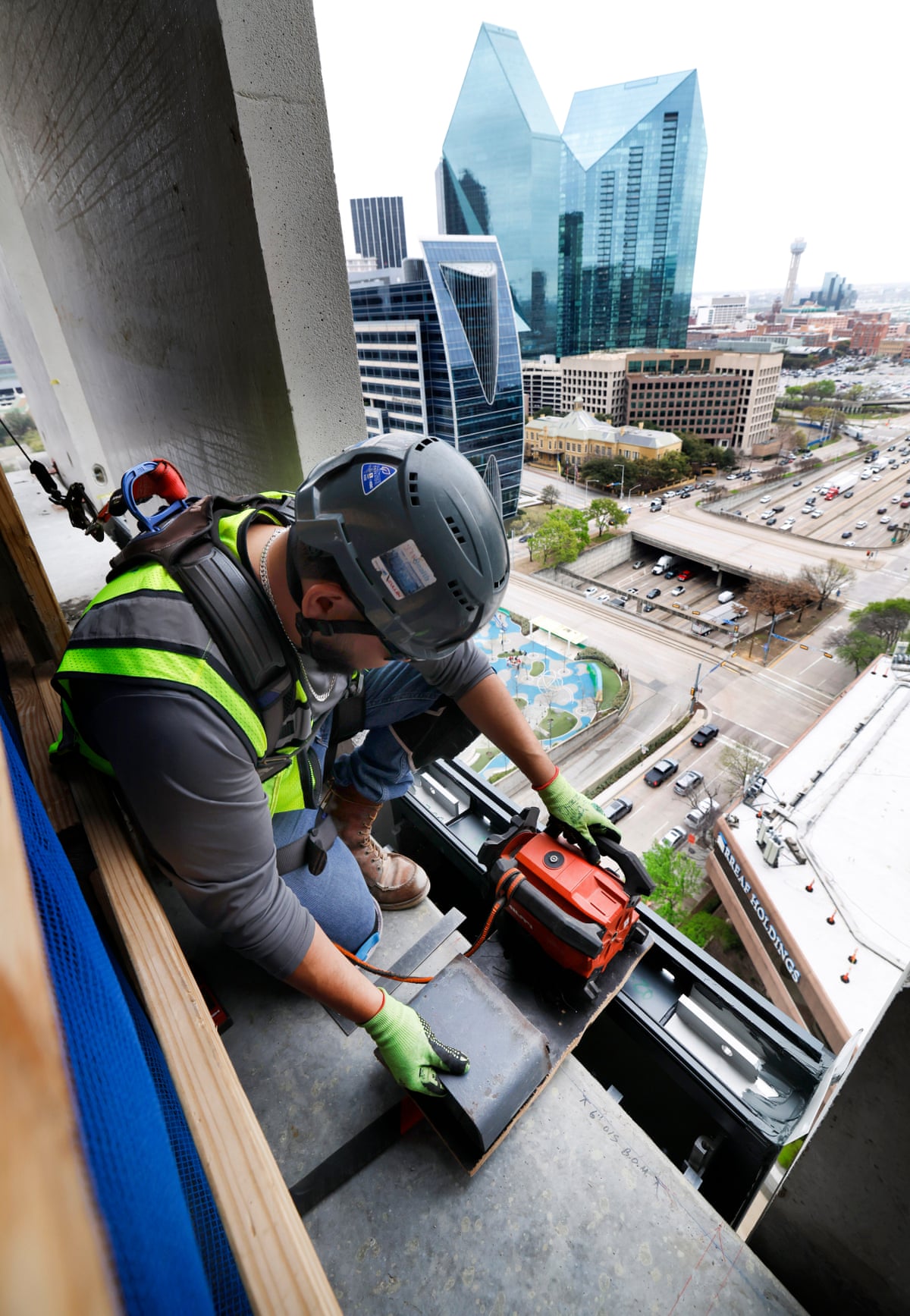
As the sun rises over the Dallas skyline, vehicles speed past a construction site that symbolizes the city’s expansive financial aspirations. Situated among towers occupied by Bank of America and JP Morgan, Goldman Sachs is developing an 800,000 square foot campus designed to accommodate over 5,000 employees. This $700 million project is more than a regional expansion; it represents a significant achievement for advocates of Dallas’s "Y’all Street" initiative, aimed at challenging New York’s dominance in finance.
Growth of Dallas-Fort Worth Financial Sector
The Dallas-Fort Worth metropolitan area, once merely a transient stop for bankers, has experienced a 40% increase in its financial workforce over the past decade, now employing approximately 386,000 individuals. Financial institutions and investment firms are attracted not only by Texas’s strong fossil-fuel industry and burgeoning technology and AI sectors but also by substantial subsidies, expedited business courts, and the absence of state corporate and personal income taxes.
In the last year, incentives including $2.7 million in grants persuaded Canadian lender Scotiabank to relocate from North Carolina, bringing 1,000 jobs to Texas. Additionally, both the Nasdaq and the New York Stock Exchange (NYSE) have established branches in Dallas to attract potential listings.
Emergence of Texas Stock Exchange and Marketing Efforts
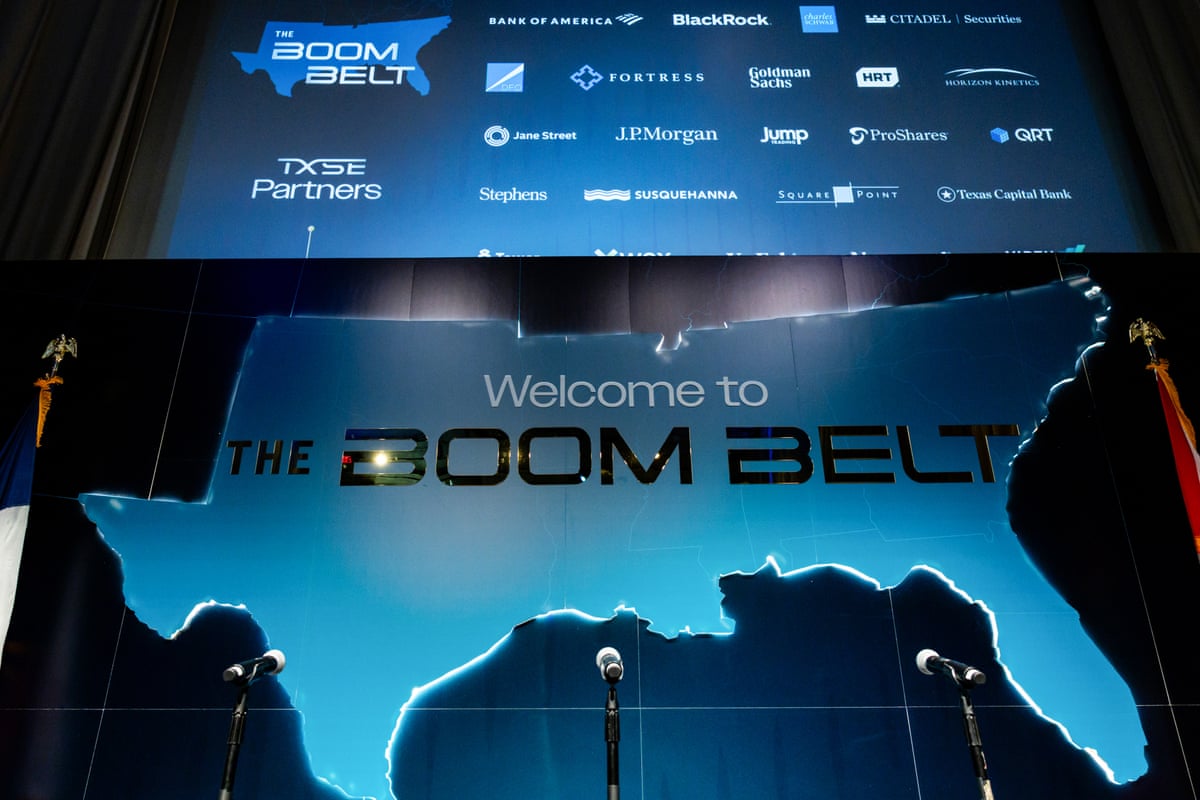
Furthering this momentum, the Texas Stock Exchange (TXSE) is set to launch later this year, offering more lenient listing requirements that appeal to conservative executives. Notably, TXSE has eschewed diversity mandates that Nasdaq previously implemented to increase representation of women and minorities on corporate boards. TXSE’s marketing includes a television advertisement depicting a Texas longhorn breaking Wall Street’s iconic bull statue, accompanied by the slogan, "Welcome to the real bull market."
Political Climate and Dallas’s Strategy
Dallas’s mayor, Eric Johnson, affirms the city’s commitment to attracting finance jobs from New York.
"We’re very serious about it,"Johnson said, emphasizing Dallas’s appeal amid the country’s evolving political landscape. His administration targets firms dissuaded by progressive policies in cities like New York, led by Mayor Zohran Mamdani, whose social democratic agenda includes government-subsidized childcare, groceries, and increased corporate taxes. Johnson criticized these policies as detrimental to key employers, contrasting them with Dallas’s pro-business stance.
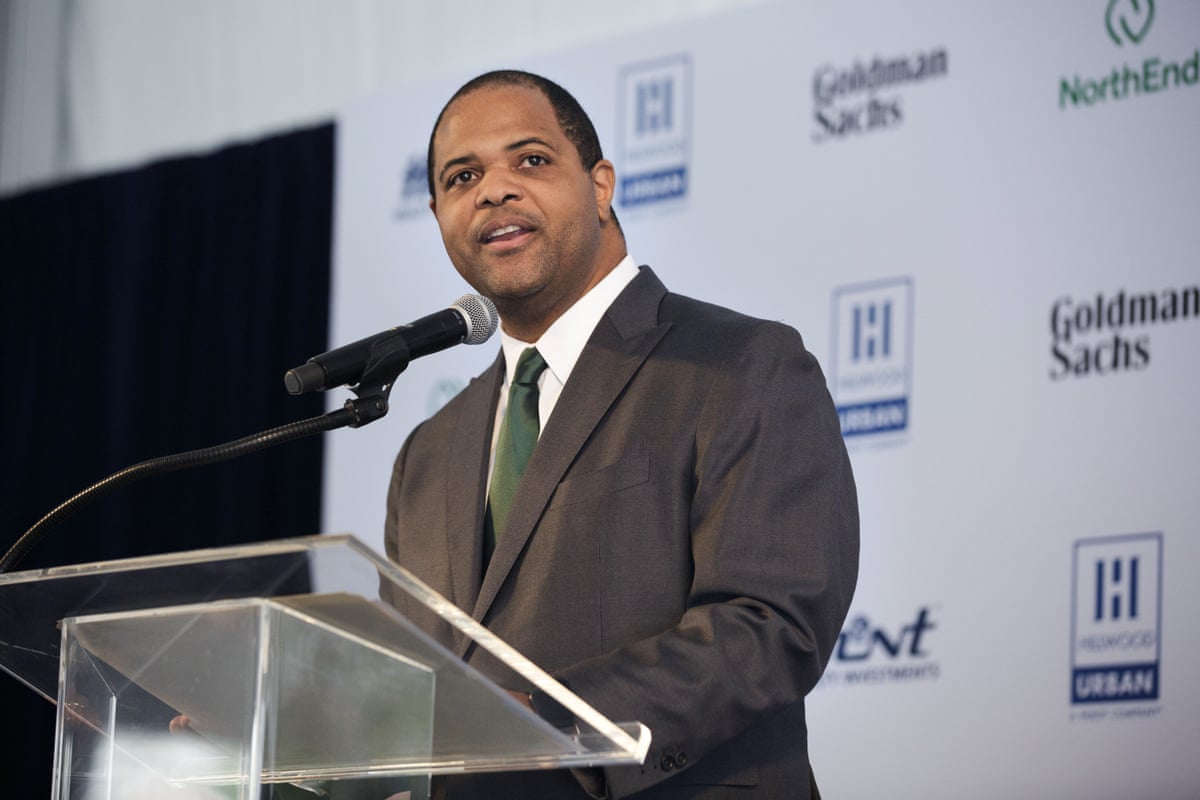
Johnson recently dispatched a 10-person delegation to New York to engage Wall Street executives about relocating or expanding operations in Dallas.
"My office, certainly, is in touch with folks across the country about relocating their corporate headquarters here, or expanding operations. And we don’t plan to stop any time soon."
International Outreach and Business Relocation
Dallas is also positioning itself as a global financial hub. Mike Rosa, senior vice-president of the Dallas Regional Chamber, noted that international banks moving headquarters or establishing significant operations in Dallas is a tangible possibility.
"We travel internationally and we talk to international companies,"Rosa said.
"The idea of an international bank … completely moving their headquarters to Dallas, that happens. The idea of establishing Dallas as a hub for that bank so it can be more successful, that’s very real."
Corporate Migration to Texas
Part of Dallas’s appeal lies in proximity to major corporate clients and tech firms increasingly relocating to Texas. During the 2020s, Texas surpassed California as the state hosting the most NYSE-listed and Fortune 500 company headquarters. Notable relocations include Oracle’s move from Silicon Valley to Austin in 2020 and Elon Musk’s companies—Tesla, X, and SpaceX—relocating from California in recent years. ExxonMobil announced its move from New Jersey to Texas last month.
Population Growth and Demographic Shifts
The Dallas-Fort Worth area has experienced the fastest population growth among the United States’ 385 metropolitan areas since 2010, reaching 8.5 million residents. Economist Cullum Clark of the George W. Bush Presidential Center at Southern Methodist University (SMU) attributed this growth largely to domestic migration from cities such as New York, Los Angeles, Chicago, and San Francisco, which have seen net population outflows. Clark also noted that some migration reflects political self-selection, with conservative-leaning individuals leaving liberal states.

Recruitment and Infrastructure Advantages
Businesses benefit from improved recruitment opportunities. Aasem Khalil, head of Goldman Sachs’s Dallas office, recalled a 2016 call from CEO David Solomon inviting him to move to Dallas, which then had a 900-person office. Khalil, a lifelong New Yorker, initially found the idea surprising but recognized Dallas’s connectivity as a strategic advantage. The city serves as a gateway to Latin America and offers direct flights to diverse destinations such as Fargo, North Dakota, and Seoul, facilitating global business travel. Local universities like SMU and the University of Texas have increased their output of qualified business and finance graduates.
"Not everyone wants to be in New York,"Khalil said, acknowledging New York’s challenges as a place to live, even for affluent bankers.
"For a lot of people, Dallas is more their cup of tea."
Economic Growth and Social Challenges
While the influx of high-paying jobs is broadly welcomed, concerns exist about the impact on lower-income residents. Economist Cullum Clark described growth as a "good problem to have" but acknowledged it imposes strains on infrastructure and services, potentially disadvantaging some populations.
Rental prices have surged over the past 15 years, disproportionately affecting lower-income families, many of whom now spend over half their income on rent. Clark highlighted this as a significant hardship affecting hundreds of thousands, not only the poorest. Data from the Child Poverty Action Lab (CPAL) indicate that from 2013 to 2023, Dallas households earning over $100,000 increased by 87,000, while those earning less than $35,000 decreased by 61,000. This trend likely reflects displacement of low-income workers to distant suburbs.
Limited public transportation and increased traffic congestion have lengthened commutes, forcing some workers to accept lower-paying jobs closer to home, further straining finances. Ann Baddour, director of the Fair Financial Services Project at Texas Appleseed, noted that the population boom intensifies competition for housing and resources, reducing the purchasing power of already financially vulnerable residents.
Rising Debt and Homelessness
Financial stress is evident in an 81% rise in debt-collection claims in Dallas between 2022 and 2025, a leading indicator of economic distress. Baddour explained that individuals often incur debt to maintain living standards until they can no longer sustain it.
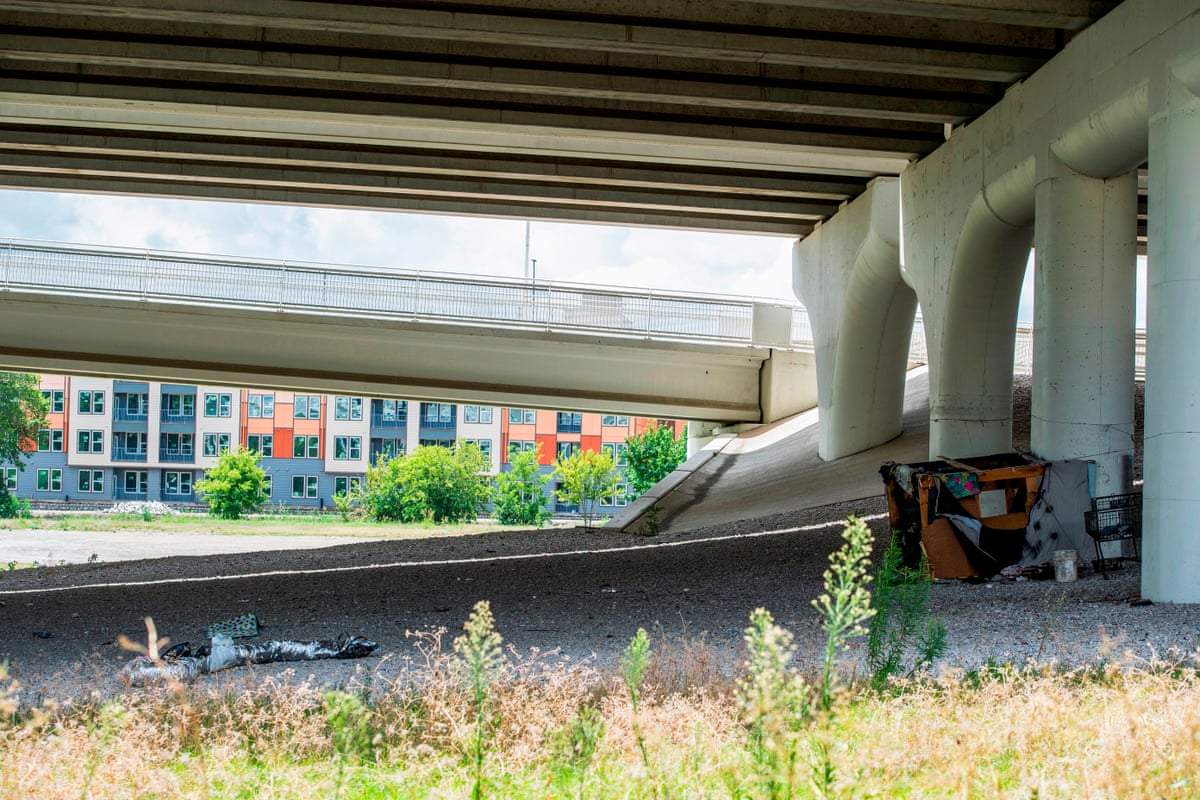
Dallas also faces persistent homelessness, including encampments in the downtown business district. The nonprofit Housing Forward reported that since 2021, the city has connected 22,939 individuals to housing and committed to avoiding merely relocating homeless populations within the city. Although homelessness remains visible, numbers have declined for four consecutive years.
Urban Planning and Housing Market Pressures
Dallas is actively addressing growth-related challenges. Last year, the city updated zoning laws to facilitate new developments and revised building regulations to accelerate construction. However, economist Clark warned that Dallas currently lacks a comprehensive plan to manage rapid population growth and housing demand.
Competition is intense even among affluent bankers in the housing market. Linda McMahon, former JP Morgan banker and head of the Dallas Economic Development Corporation, recounted a private equity executive who purchased and demolished a home in the upscale Highland Park neighborhood to rebuild, spending double the original cost. McMahon noted that compared to California, Dallas’s real estate prices remain relatively affordable, attracting high-end buyers.
Concerns Over Growing Inequality
Advocates like Baddour caution that without targeted interventions, economic disparities in Dallas and the wider Fort Worth metro area may widen.
"There has to be a deliberate choice, and deliberate effort, to ensure that this doesn’t just reinforce some of the dynamics that have created a little bit of a two-tiered economy: those who have access to money, to markets, to resources, and those who don’t."She emphasized the necessity of intentional policies to bridge this divide.