

AI Firms Should Face 'Minimum Wage for Robots' to Limit Job Cuts, Says Tech Boss
A technology entrepreneur has cautioned that policymakers are not adequately prepared for the effects of artificial intelligence (AI) on employment and suggested that imposing charges on companies using AI could help reduce job losses.
Charles Radclyffe, whose Wales-based company has developed software capable of completing office tasks within seconds, stated that government officials have not fully understood the rapid pace and magnitude of the AI challenge.
He proposed the introduction of a tax on AI deployment—a "minimum wage" for robots—or a regulatory mechanism that the government could activate when businesses seek to implement AI and automation technologies.
The UK government has indicated it will "monitor" AI's impact and "act quickly as the economy changes."
Numerous political parties contesting the Senedd election on 7 May support the responsible use of AI.
Radclyffe's company specializes in automating office and administrative tasks such as form filling, executing work much faster and more cost-effectively than human employees.
"Every time we bill [for a month's AI work], that is a job from the economy gone and moved into a data centre,"
he explained.
Tasks involving data-entry and spreadsheets, which previously took up to two weeks to complete manually, are now accomplished in approximately twenty seconds.
"For big companies, you might even have a department of people whose job would be to intercept these requests and then they'll have a task list and they would just churn through it,"Radclyffe said.
He described these tasks as a "perfect paradigm" for AI, resulting in a "much shorter, much less painful process" once the technology is implemented.
When questioned about political responses to the rapid changes, he expressed confusion over the absence of a prepared plan to address potentially severe outcomes.
"It is mystifying how we don't have a plan, ready to go, in case some of the worst prophecies come true,"he remarked.
Currently, companies employing AI are not necessarily reducing existing jobs but are hiring fewer new employees, raising concerns about a future where some individuals may remain unemployed indefinitely.
Radclyffe advocates for a tax on AI usage to decelerate its adoption by companies and enable government intervention if the impact on human employment becomes significantly disruptive.
"A tax on robotic and digital AI employees or a 'minimum wage for robots' to manage the transition would give the ability to 'throttle the adoption of AI and create a more level playing field',"he stated.
He warned that without prompt measures, regions such as south Wales could experience industrial upheavals similar to those in the past.
"If you really look at the individuals who are facing this transition now, and I would say white-collar workers in places like Cardiff are absolutely in firing line of AI, then I think this is a really serious problem,"Radclyffe added.

A Treasury spokesperson affirmed the government's commitment to ensuring working people benefit from AI and announced the establishment of a new AI Economics Institute to monitor impacts and enable swift action as economic conditions evolve.
AI and Automation in Welsh Manufacturing
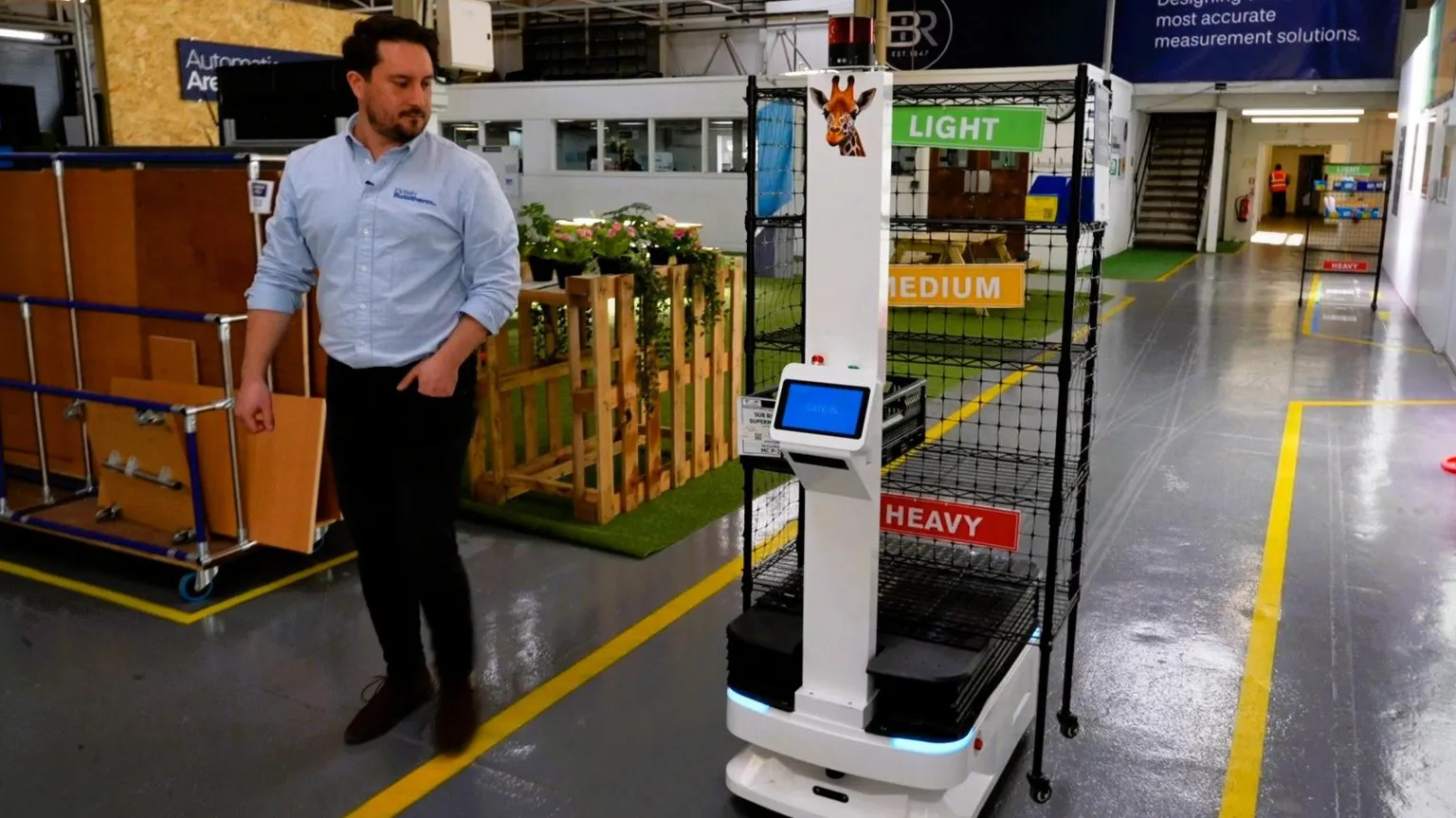
At British Rototherm, a manufacturer of industrial sensors located on the Kenfig Industrial Estate near Port Talbot, AI and automation are already transforming work processes.

"We started small... experimented, built confidence and then scaled up step by step,"said Oliver Conger, managing director.
The company designs and manufactures precision instruments that measure temperature, pressure, level, and flow, supplying customers in approximately 90 countries worldwide.
Conger described his facility as an "Alien Dreadnought Factory," where "AI and automation [work] hand-in-hand with our human team members."
The integration of AI has resulted in significant productivity gains, with an increase exceeding 20% over the past two years and further improvements anticipated.
"The focus was not on replacing workers,"he emphasized,
"but changing roles."
He noted that the company refers to AI systems as "AI employees" rather than bots, highlighting the evolving nature of job functions and the company's commitment to supporting its workforce through these changes.
Some employees whose tasks have been automated have been retrained to work in other areas within the business.
Regarding the broader discussion on AI regulation, Conger expressed a more cautious perspective compared to others in the sector.
"While acknowledging the broader discussion around taxing automation, I don't think it's time to put anything into policy. We're at the very early stages. Let's encourage the use of it,"he said.
He argued that governments should focus on facilitating AI adoption and enhancing productivity.
Conger added that AI technology could "absolutely transform Welsh manufacturing in the next two or three years" but emphasized the need for political support to manage this transition effectively.

Political Parties' Positions on AI
Welsh Labour is concentrating on leveraging AI to reduce bureaucracy within the public sector and developing "digital infrastructure," citing the establishment of new "AI Growth Zones" in Wales to encourage wider adoption.
The party plans to fund innovation through a dedicated grant scheme and aims to position Wales as a leader in "ethical AI" by introducing a Responsible AI Charter.
Plaid Cymru also emphasizes growth and productivity but places greater focus on skills development, worker participation, and industrial strategy.
Its proposal to create a national development agency would support digital skills growth and ensure AI adoption is "worker led" while safeguarding rights.
The Welsh Conservatives highlight AI's potential to drive economic growth, particularly by modernizing the NHS and enhancing services.
Regarding safeguards, the party advocates that AI should "enhance rather than replace human work" and be utilized in ways that protect jobs and skills.
Reform UK adopts a more cautious approach, suggesting AI could improve digital systems in Wales' public services only if it is "proven to be safe and effective."
The Welsh Liberal Democrats and Wales' Green Party have been invited to comment.



