Industry Faces Crisis Amid Major Musical and Opera Cancellations
Within a single week, two prominent musicals, Waitress and Beetlejuice, along with a $20 million opera production, were compelled to cancel shows due to escalating costs, resulting in hundreds of job losses across Australia’s theatre sector.
Experts have urged the federal government to implement tax reforms to sustain the theatre industry, following these cancellations attributed to soaring expenses and declining box office sales.
The Broadway musical Waitress, featuring Rob Mills and Natalie Bassingthwaighte, announced on Sunday that its Melbourne season would conclude on 19 July, with the planned Sydney tour in August subsequently cancelled.
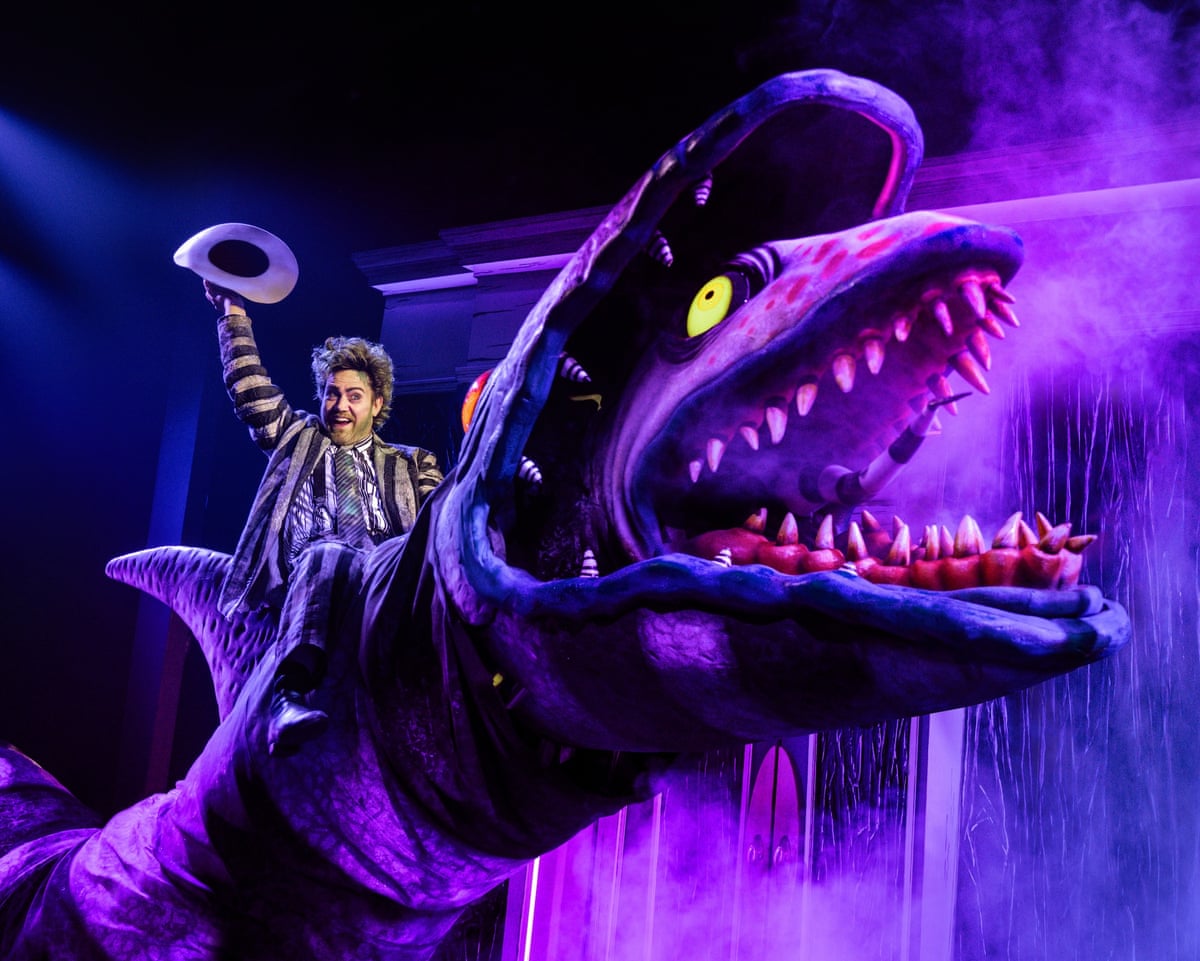
Beetlejuice, penned by Australian performer Eddie Perfect and previously staged on Broadway and the West End, declared on 20 June the early termination of its Australian tour, ending three weeks ahead in Brisbane. The tour was initially scheduled to continue with three weeks in Perth, two in Adelaide, and seven in Sydney.
Both productions cited multiple challenges, including rising production and touring costs, cost-of-living pressures such as interest rate hikes affecting consumer spending, and diminished confidence impacting ticket purchases.
"Whilst audience enthusiasm for our work remained strong, attendance levels and box office have not been sufficient to support the cost of the production,"said John Frost, chief executive of Crossroads Live Australia and producer of Waitress.
The Michael Cassel Group, producer of Beetlejuice, stated,
"For a production of this scale, the current logistical realities of touring across vast distances between Australian cities have created increasing cost pressures that ultimately made continuing the run unsustainable. While audience enthusiasm for the show has been encouraging, a more cautious consumer environment combined with the economics of moving a production of this magnitude could not be justified. It is a difficult decision, and not one we made lightly."
Additionally, the Italian opera Aida announced on Friday it would cancel its Adelaide season in February 2027 despite having sold 17,000 tickets, citing significant increases in production and touring costs exacerbated by geopolitical tensions such as the Iran-US conflict.
TEG Live’s head of touring revealed the company absorbed a $2 million loss and five years of preparation by cancelling Aida. He explained,
"Bringing 400 people and 28 containers became totally untenable. If we sold every single ticket to the show with the increased freight costs and travel costs, we would be at a loss."
Impact on Employment and Venues
Graeme Kearns, CEO of Foundation Theatres which operates Sydney’s Capitol Theatre (intended venue for Beetlejuice) and the Lyric Theatre (planned for Waitress), told that the cancellations would likely leave these theatres dark for 30 of the next 40 weeks. This situation threatens employment for hundreds, including performers, musicians, wardrobe and makeup teams, stage technicians, administrators, ushers, and bar staff.
"It will be a very difficult six months ahead of us all. We will of course try to find alternatives for the theatres, but with short lead times and tough economic conditions, that will be very difficult to achieve,"Kearns said.
He added,
"Buying a ticket for a show, no matter how good the show is, is at the very apex of discretionary expenditure … Encouraging patrons to buy a ticket to something they are unfamiliar with is more difficult than I have ever seen."
Some theatre enthusiasts expressed regret online for delaying ticket purchases. Suzanne Jones, CEO of Jones Theatrical Group, which is currently producing Pretty Woman and Book of Mormon in Australia and plans to stage Mrs Doubtfire in late 2026, emphasized that major musicals require more than just ticket sales to be viable.
"The market is there, but the costs are rising faster than the ticket prices are, and that’s just a squish,"Jones said.
"Freight costs, labour costs – all of those things are going up at a greater rate than ticket sales are."
Other musicals such as Back to the Future and Dear Evan Hansen have also curtailed their tours recently, with Dear Evan Hansen cancelling its Canberra and Adelaide performances due to weak ticket sales.

Calls for UK-Style Tax Incentives
Jones and other industry experts are advocating for tax concessions akin to those granted to other cultural sectors. Currently, Australian films benefit from up to 40% tax offsets on production costs, while the games and television industries receive 30%.
"Musicals cost tens of millions of dollars to get on the stage – the Wickeds and the Hamiltons didn’t get written on a Saturday and put on on a Monday,"Jones explained.
"Reform would help a lot."
In 2014, the UK introduced "Theatre Tax Relief" (TTR), providing theatre companies with substantial tax deductions: 45% for touring productions and 40% for non-touring. Analysis showed that £38 million of TTR in one year led to significant industry growth.
"The UK has demonstrated that theatre tax relief creates production, creates jobs, attracts investments and strengthens the entire industry. We should be having that conversation here,"Jones said.
"I don’t think taxpayers should support commercial musicals simply because they’re musicals, as much as I love them. I think government should support industries that create jobs, attract investment, generate tourism and deliver a return to the economy. And commercial theatre does all of those things.
The UK doesn’t have theatre tax relief because it’s culturally valuable. It has it because the government decided it was economically valuable."
Jones noted she receives weekly inquiries from international productions interested in touring Australia, but many withdraw upon learning of the absence of tax incentives.
Research conducted in 2024 indicated that a similar Australian tax offset of 25-40% would be self-funding by stimulating additional economic activity, creating approximately 4,650 new jobs, and increasing new productions by up to 73%.

Union Response and Government Engagement
The Media Entertainment and Arts Alliance (MEAA), assisting cast, crew, and musicians affected by the Waitress and Beetlejuice cancellations, described the situation as
"completely devastating for everyone involved."
While supporting tax reform, the MEAA also highlighted the need to address financial barriers for audiences. It is advocating for a "cultural pass" program to provide young Australians with government-funded vouchers up to $200 for theatre tickets.
MEAA CEO Erin Madeley stated,
"When Beetlejuice fell over, they said, ‘If we had the tax incentive, the show could have kept going’ – which [would be] great, obviously we want our members in work. But I think there’s a bigger issue that goes to access and ticket pricing.
For a family of four, it can be between $500 and $1,000. We’ve got to do something to stimulate audience participation and get more bums on seats."
The MEAA recently met with Arts Minister Tony Burke to discuss the forthcoming national cultural policy. Representatives from Live Performance Australia are scheduled to engage with the minister this week.
Burke told Australia,
"Consultation and development on the next National Cultural Policy couldn’t be happening at a more important time.
Cost of living pressure always has a particular impact on ticket buying in the arts. The impact on live theatre needs to be fully appreciated."