

Introduction to Backrooms and Its Premise
In the new thriller Backrooms, viewers are taken on an enigmatic journey through liminal spaces, continuing the trend of films that transform architecture into a source of horror. The story follows Clark, an architect turned furniture store owner, who discovers a portal to a mysterious realm known as the “backrooms” located in the basement of his showroom. Clark struggles to articulate this experience to his therapist, Dr Mary Kline.
“I found a place”becomes a haunting phrase that encapsulates the unsettling atmosphere conjured in Backrooms, the latest thriller that immerses audiences in liminal spaces such as offices, dead malls, and other eerie environments that exist in a state of in-betweenness.
Kane Parsons, the 20-year-old director and the youngest to collaborate with the studio, initially created a series of short films titled Backrooms using free 3D software Blender and Adobe After Effects. This series has since been expanded into a feature-length film, maintaining its distinctive visual style and conceptual approach.
Understanding Liminal Spaces
Liminal spaces refer to locations that seem transitional or abandoned by society. Philosopher Marc Augé described such spaces as “non-places,” defined as spaces that lack relational, historical, or identity-based significance. Architect Rem Koolhaas termed them “junkspace.” These spaces are remnants of advanced modernism, characterized by uniformity and the erosion of distinct place identity, exemplified by airports and department stores.
“We have been trending for a few centuries into a spiral of industrialism,” Parsons explained during an interview. “We’re kind of getting stuck in this monoculture.”
The concept of “backrooms” as a liminal space has gained traction online, particularly through Parsons’s YouTube series, which expands on the cultural fascination with dead malls from the early 2000s. The first widely circulated image that sparked online discussion about liminal spaces was posted in 2003 and depicted a renovation of a big box store. As these retail spaces decline, they become increasingly alienated from their surroundings and devoid of human presence. The mall, once a symbol of urban modernization, becomes “junkspace,” and its abandoned counterpart embodies liminality.
“There is probably no better symbol for that kind of monoculture than a drop ceiling,” Parsons remarked.
The film constructs an entire world based on this unsettling environment. The fluorescent-lit rooms with drop ceilings endlessly replicate, pulling Clark and Dr Kline deeper into the mystery as they attempt to understand the origin and control of this realm.

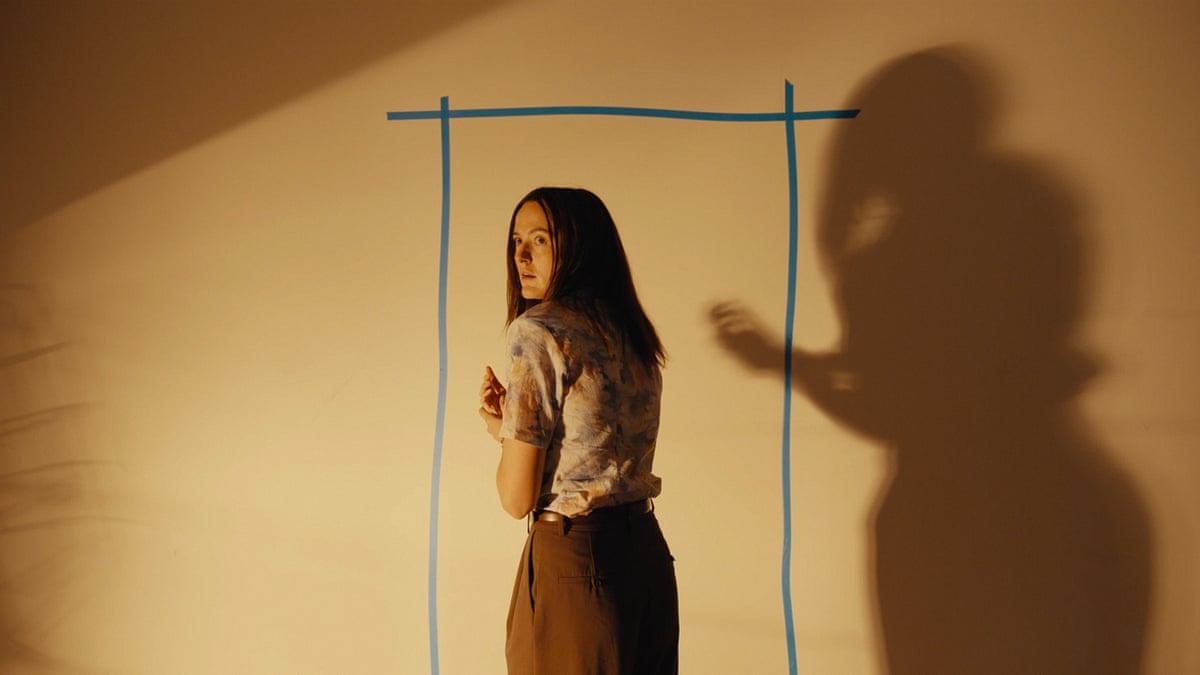
Thematic Exploration and Cinematic Influences
Parsons’s interest extends to exploring “the laws of the universe that resulted in our consciousness being the way it is,” aiming to depict the sensation of infinite bureaucracy on screen. Similar to how liminal spaces emphasize absence, Backrooms evokes fear by focusing on what is omitted: the unknown entities governing the endless space, the unseen events beyond the visible, and the enigmatic rules that govern this world.
This form of terror is reminiscent of the work of Italian filmmaker Dario Argento, notably his films Suspiria and Inferno, where buildings themselves become monstrous entities. In these films, as in Backrooms, the setting consists of nondescript rooms forming labyrinthine structures. The mental maps viewers typically create to navigate spaces become disoriented. Clark’s futile attempts to map the backrooms contribute to the film’s suspense and sense of confusion.
The interplay of the eerie and the mundane is central to the horror in Backrooms. Similar television shows like Dark and Stranger Things feature portals to worlds governed by unclear rules and overseen by ambiguous forces. Questions arise: Is the strange world controlled by a government operation, interdimensional beings, corporations with secret technology, or is it related to time travel or UFO programs? The enigmatic Asych company provides Clark with little explanation.
Concepts of Banality and Protocol Art
Architect Damjan Jovanovic describes this banality of everyday life as “bureaucratic space,” an aesthetic that captures the sensation of living in a world shaped more by paperwork than by narratives. Artists Mat Dryhurst and Holly Herndon have introduced the term “protocol art,” which engages with the underlying systems—algorithms, artificial intelligence models, computer protocols, platforms, and technological infrastructures—that govern cultural production and perception in the digital era.
The film’s use of drop ceilings, wallpaper, and yellow-tinged lighting evokes feelings of absence, in-betweenness, nostalgia, and bureaucratic sterility. Drawing parallels to Fritz Lang’s 1927 classic Metropolis, Backrooms attempts to interpret the impact of a rapidly dehumanized built environment on the human psyche.
“The artistic stages of architecture are ... primarily mental spaces,” architect Juhani Pallasmaa noted in reference to Alfred Hitchcock’s work. “Architecture, too, leads our imagination to another reality.”
Backrooms constructs an on-screen “building” that encapsulates these feelings of liminality and invites the audience into this unsettling world.
Conclusion: The Intersection of Horror and Architecture
In Backrooms, the journey becomes tangible as the audience follows Clark deeper into the mysterious construction beneath his store. The film transforms the infinite liminal space concept popularized on the internet into a cinematic experience, continuing the longstanding relationship between horror and architecture.
Backrooms is currently available in cinemas.


