Encountering the Bosnian Brown Bear in Perućica Forest
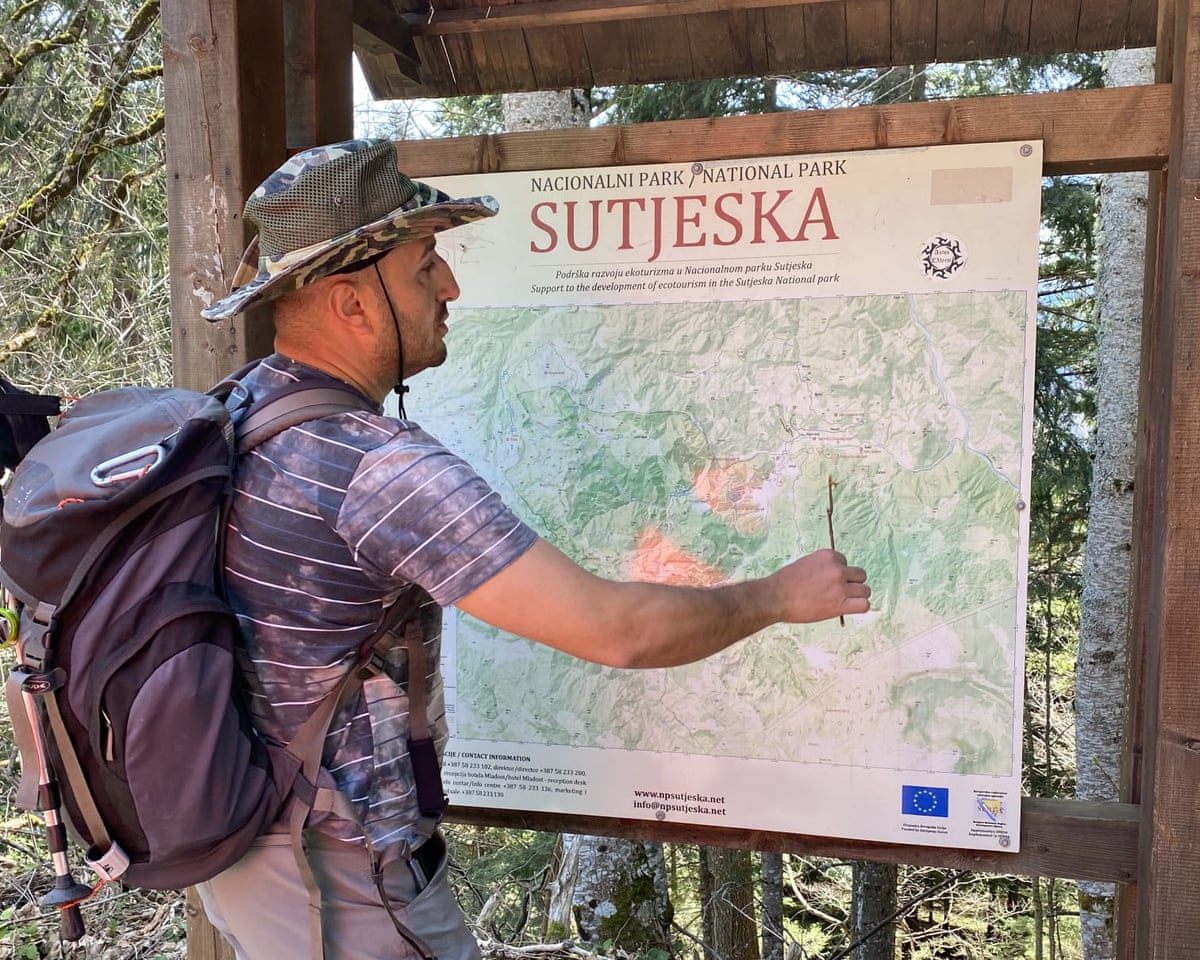
‘I know this bear. He knows me. We’ve met several times.”Our guide for the day points to a damaged sign in Sutjeska National Park, located at the start of the trail descending into the Perućica forest in south-east Bosnia. The wooden post bears scratches from large claws.
“Bears are the sharks of the land, because they have the keenest sense of smell on the mountain. They are highly intelligent. I’m deeply persuaded that they know who is a friend and who is a foe. I come often to the forest, so this guy knows my smell. But there was one incident, a hunter who came here to kill, and a bear peeled off his face like an orange.”
Dejan Elez, our guide, is a Bosnian Serb with a law degree who became a ranger and now works as a mountain guide. He is an engaging storyteller. My travel companion, Chris, and I listen intently as he recounts the famous 1943 battle nearby, when Yugoslav partisans broke through a German encirclement during a violent storm.
“The wind was rising and the lightning was like a strobe.”However, Dejan’s narrative soon shifts further back in time, delving into the ancient depths of one of Europe’s oldest forests.
Perućica: A Primeval Wildwood Preserved for Millennia
Scientists estimate that Perućica, spanning the slopes of a canyon in Republika Srpska—the autonomous Serb-majority region of Bosnia and Herzegovina—has grown without human interference for approximately 20,000 years. Alongside Białowieża, which lies on the border of Poland and Belarus, it is considered one of the last true remnants of the primeval wildwood that once covered Europe. According to Dejan, Perućica is even better preserved, having never been inhabited. Its rugged terrain and steep slopes have protected the trees from logging. The forest covers 1,434 hectares (3,543 acres) and is strictly protected; entry is only permitted with a guide. The significance of the site is officially recognized.
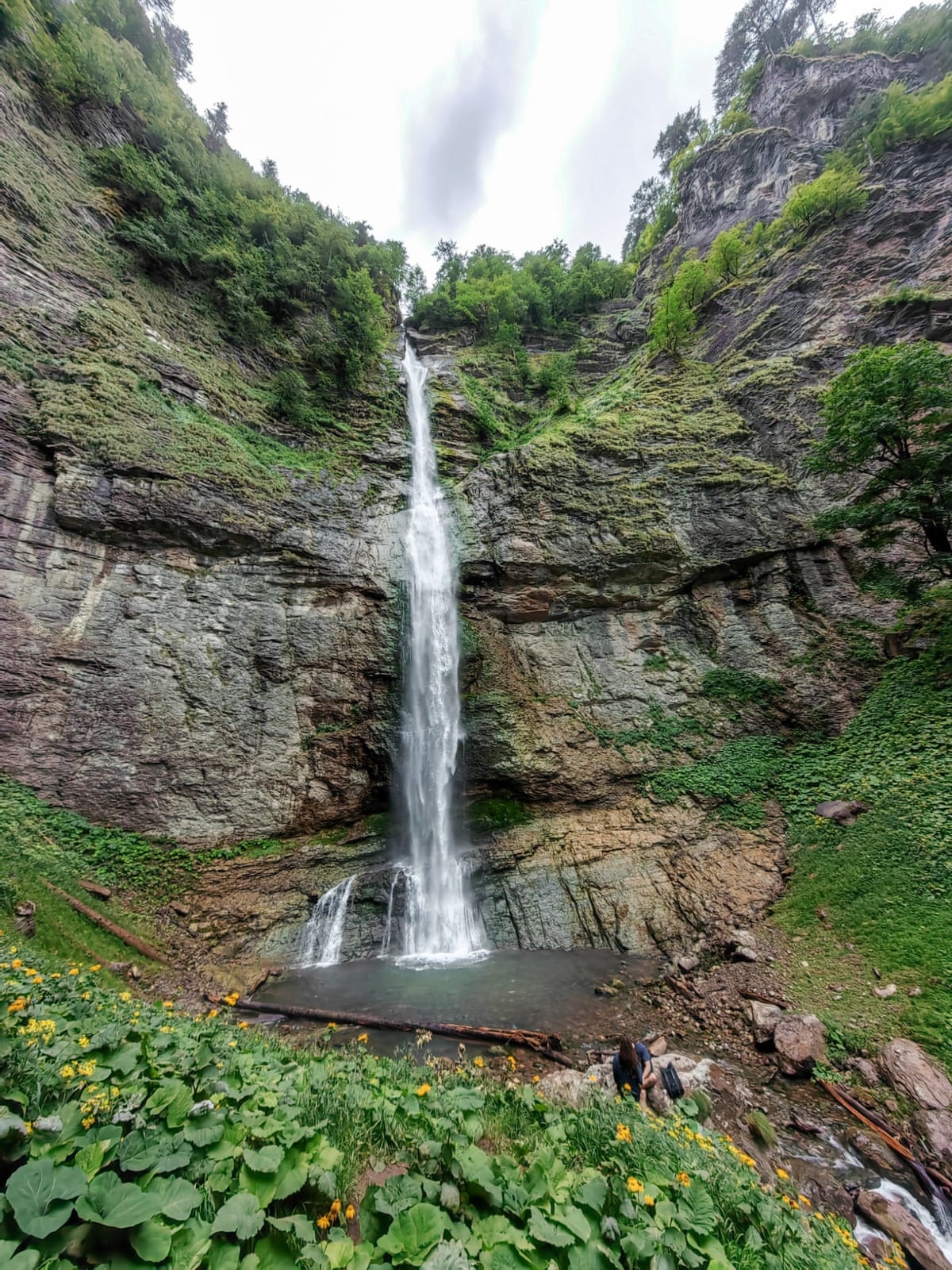
From a rocky ridge viewpoint, dense greenery extends below, clinging to the sheer canyon walls above a river. This river is fed by Skakavac, a 75-metre waterfall that crashes into a mist of spray. Above, the white summit of a mountain gleams. Originally, Chris and I had planned to climb Maglić, Bosnia’s highest peak at 2,386 metres, but recent snowfall and warnings about early spring conditions have postponed that plan. Today, our journey leads downward.
Tracking Wildlife Through the Forest
Dejan leads us along a winding trail through groves of mixed beech, fir, spruce, pine, and maple trees. While he admits not knowing all the tree species by name, he is intimately familiar with animal tracks. He describes the forest as “legible,” reading it like a book. Circular patches where humus has been disturbed indicate chamois foraging for roots. Roe deer create similar holes, but theirs are more precise and deeper.
“Look,”Dejan points to a wet log,
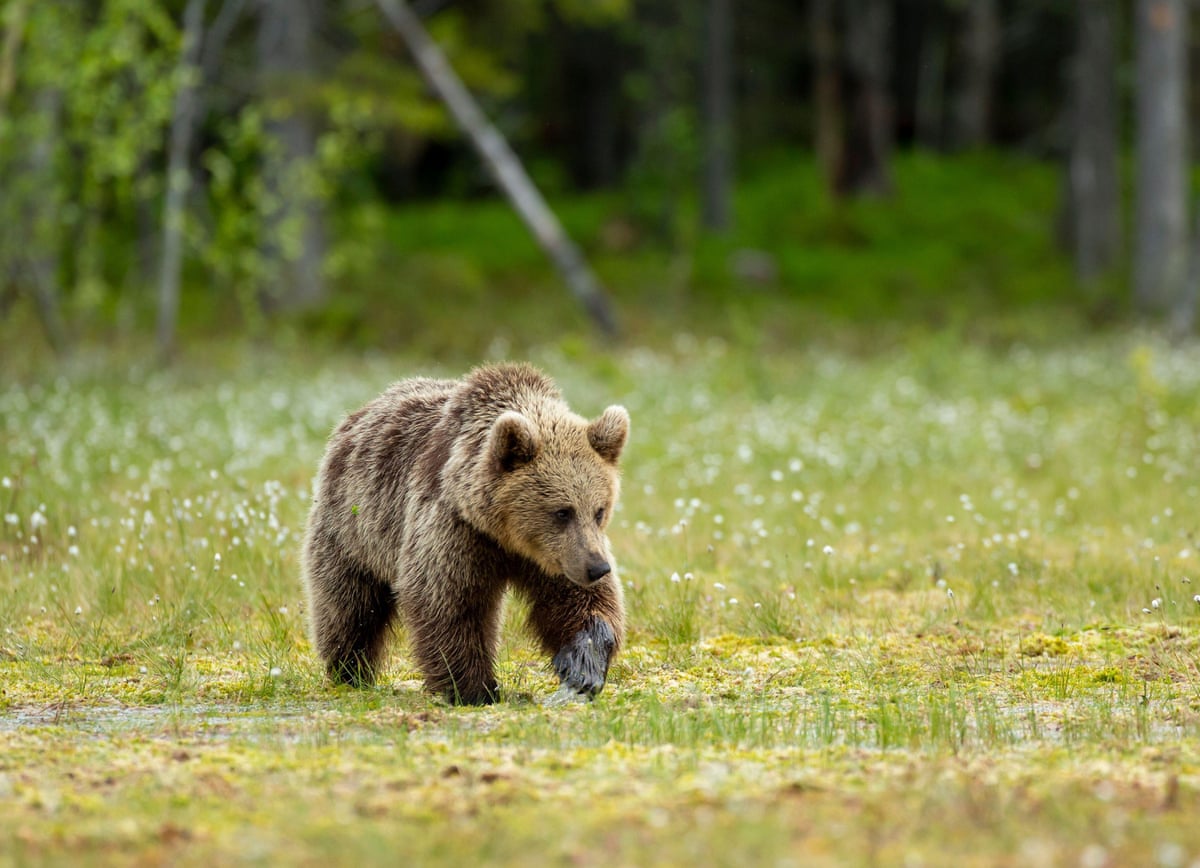
“those scratch marks were made by a canine, either fox or wolf. But there, on the same log, something even more exciting.”The wider, deeper scratches were made by a passing brown bear. Nearby, a larger hole shows where a bear has raided a honeybee hive. Sightings are never guaranteed, but they are more likely in spring when bears emerge from hibernation to feed on wild garlic, known in many Balkan languages as “bear’s garlic.”
“If I stop, you stop! Now we are in stealth mode.”
The Forest’s Rich Biodiversity and Ancient Origins
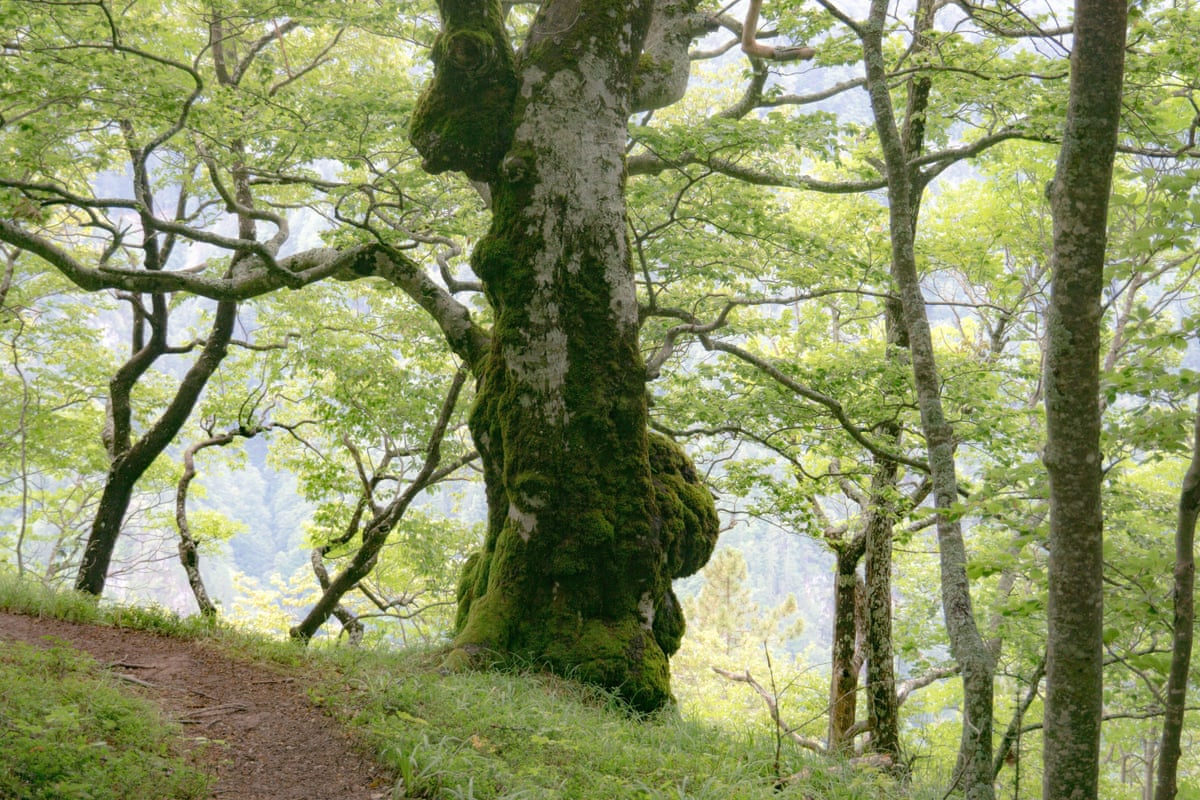
As we descend, the temperate rainforest grows taller and more tangled. Deadwood lies scattered throughout, paradoxically indicating forest health. Lichen, moss, and fungi hang from branches. The remarkable biodiversity protects Perućica from epidemics such as the spruce bark beetle infestations that have devastated other old-growth forests. With approximately 170 species of trees and shrubs and over 1,000 plant species, it is unsurprising that even our guide cannot identify them all.

During the last ice age, Perućica served as a refugium, an isolated area where many species survived. After the ice age thawed, trees expanded northward from this forest. Dejan believes the forest’s name is linked to Perun, the pre-Christian and pre-Islamic Slavic god of lightning. The atmosphere indeed feels sacred, as if wandering through a temple.
A Moment of Reflection by the Waterfall
Dejan has brought sandwiches—cheese and ham in thick white buns—which we eat on a grassy ledge overlooking the waterfall. Chamois also frequent this spot, evident from their droppings. Although we do not see the herd, nor the wildcats, lynx, or wolves that inhabit the forest, knowing they are nearby evokes a profound sense of reverence. We fall silent, awed by the surroundings. As Maglić and other mountains disappear behind white clouds, rain begins to fall. The wetness does not diminish the experience.
Conservation Challenges and Responsible Tourism
With his legal background, Dejan is candid about the threats facing the forest. While the ancient core remains protected, hunters frequent the broader national park, and rangers are sometimes bribed to overlook illegal activities. Most visitors to Sutjeska stay in Tjentište, a village with guesthouses and modest restaurants along the main road. However, encroachment at the park’s borders is increasing. Even our timber-frame cabin near the entrance gate is, in Dejan’s opinion, too close.
“It’s not that people shouldn’t come here,”he explains as we walk back up.
“What matters is how they come, as respectful guests. We are not the owners of the forest, not even the owners of this trail, which is walked by and shared with many other feet.”He stoops to brush aside leaves and points out flecks of bone passed through a wolf’s digestive tract, then further along, wolf excrement filled with chamois hair.
“This was left on the trail deliberately to tell us it’s their territory. They don’t do anything by accident. Everything has a meaning.”
Leaving the Forest and Its Lasting Impression
After nearly five hours, we emerge onto the gravel road leading toward Tjentište. The absence of the forest’s tangled life is striking. Both Chris and I feel transformed by our glimpse into Europe’s wild past, and perhaps even subtly changed biologically. Dejan tells us at parting:
“You two gentlemen have been exposed to a universe of micro-organisms you will never find in England. This forest gets inside you.”Perućica remains with us as we leave the national park and drive two and a half hours north to Sarajevo, retracing the path trees once took after the ice age.
Visitor Information
Guided tours of Perućica are available with local operators such as Outdoor Bosnia or Riding Hood from approximately £50 per person. Accommodation in Tjentište includes a timber-frame cabin sleeping two from £44 per night, or a guesthouse also sleeping two from £47 per night.