Teenage Talents Unite in Doubles Before Miami Open Showdown
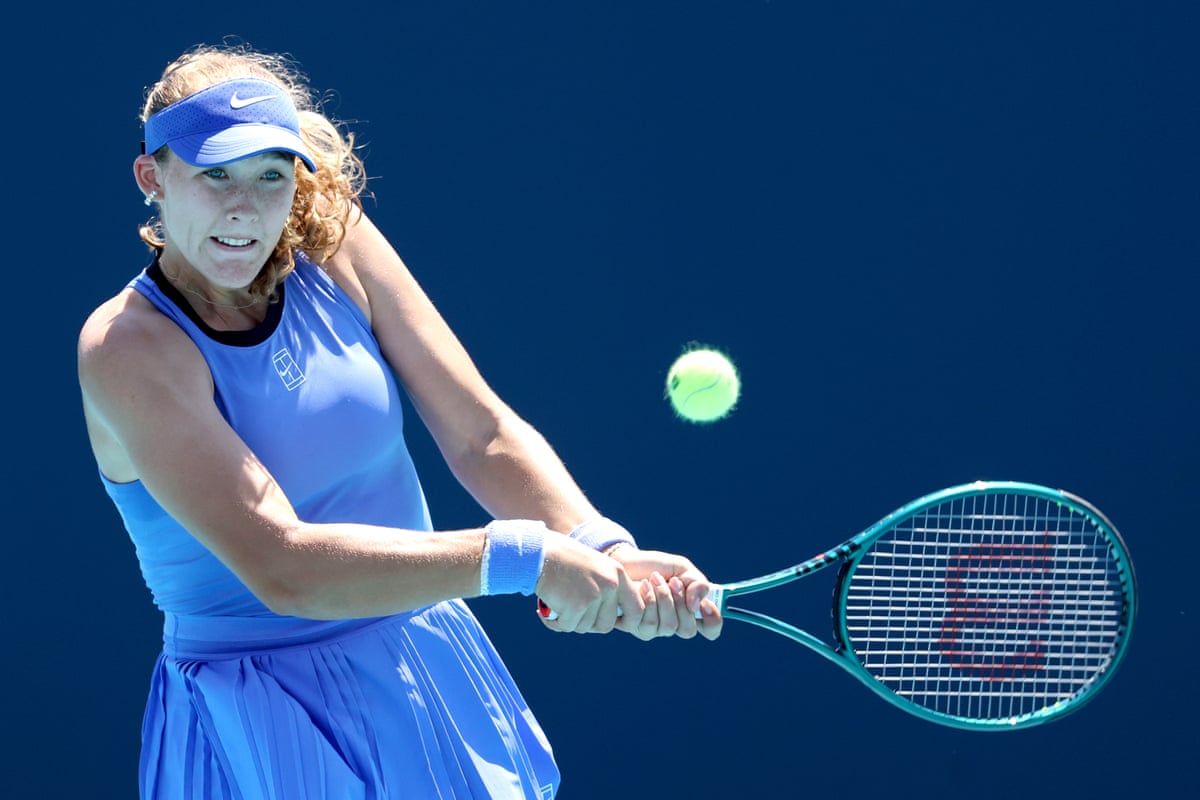
Victoria Mboko and Mirra Andreeva, currently the two highest-ranked teenagers in women’s tennis, approached their highly anticipated Miami Open fourth-round match in an unconventional way. Beyond being emerging rivals, they share a strong friendship, which led them to team up and compete together in doubles the day before facing off against each other.
The pair took advantage of a relaxed afternoon on one of Miami’s smaller courts, enjoying some lighthearted moments. However, their rankings at No. 9 and No. 10 respectively reflect their serious competitive nature. Despite trailing 0-5 against the eighth-seeded duo of Demi Schuurs and Ellen Perez in the opening set and facing eight set points, Mboko and Andreeva demonstrated resilience and determination, ultimately securing a straight-sets victory.
A New Wave of Young Talent in Women’s Tennis
Their success and developing rivalry highlight significant trends in women’s tennis as of 2026. While teenagers have long been prominent in the sport, dating back to icons like Chris Evert, the recent landscape was marked by a scarcity of teenage talent at the top. In March 2023, Coco Gauff was the only teenager ranked within the top 50.
Today, the scenario has shifted considerably. Mboko and Andreeva are part of a robust cohort of players aged 20 and under who are steadily climbing the rankings and motivating one another. Not far behind them is 18-year-old American Iva Jovic, ranked No. 17, who recently reached the third round of the Miami Open. Australia’s Maya Joint, at 19, has established herself near the top 30. Alexandra Eala, the first elite player from the Philippines, has drawn significant attention at various tournaments, sometimes attracting larger crowds than established stars like Carlos Alcaraz and Novak Djokovic.
Friendship and Support Among Emerging Players
Perhaps most notable is the camaraderie among this emerging generation. Despite their on-court rivalries, these young players maintain supportive and friendly relationships off the court. Alexandra Eala, reflecting on her recent loss to Karolina Muchova, expressed enthusiasm about these connections.

“I think it’s super healthy that we have these friendships off the court and we’re able to balance that professional life and still separate it from our actual relationships,”
“The relationships are able to foster because at the end of the day you spend so much time with these girls and you spend so much time on tour that I think it’s very important. I am super fortunate and super grateful to have these girls on tour.”
Changing Dynamics Compared to Previous Eras
While collegial behavior among players is not unusual, the current atmosphere marks a departure from previous eras of women’s tennis, which were often characterized by tension and rivalry with little warmth between top competitors. Historically, visible unease and conflict between players were common and even considered a selling point for the sport. Fans often appreciated the candidness and intensity female players brought to their rivalries, contrasting with the sometimes perceived insincerity of camaraderie among men’s players.
Women’s tennis has seen notable rivalries and alliances over the years. For instance, Martina Hingis and Lindsay Davenport formed a strategic partnership to challenge the dominance of the Williams sisters around the turn of the century. Justine Henin was known for her intense gamesmanship, which evoked strong emotions alongside admiration for her skill. Maria Sharapova and Victoria Azarenka, following the footsteps of Steffi Graf and the Williams sisters, openly declared their competitive intentions early in their careers, emphasizing that friendship was secondary to competition.
In contrast, the current generation exhibits a more balanced approach. Aryna Sabalenka regularly trains with top players such as Iga Swiatek, Coco Gauff, and Elena Rybakina, reflecting a mutual understanding that friendships can coexist with fierce competition on court.
Mboko and Andreeva’s Miami Open Clash
Following their doubles success, Andreeva and Mboko met on the Butch Buchholz court for their third encounter in 2026. The match was intense and demanding, with Mboko ultimately prevailing 7-6(4), 4-6, 6-0, securing her first quarter-final berth at the Miami Open.
The match also highlighted the challenges of maintaining friendships amid high-stakes competition. Andreeva, trailing for much of the match, appeared to experience pain in the second set and requested a medical timeout for a hip issue while trailing 6-7, 4-3. After the break, she rallied to win two of the next three games, forcing a decisive final set.
Despite her injury, Andreeva’s performance waned in the third set. Medical timeouts often spark debate, but after the match, Andreeva apologized to Mboko as they embraced warmly. Having competed fiercely for over two hours, they left the court as friends, with plans to partner again in future doubles matches.