Players Demand Greater Respect and Revenue Share
Jannik Sinner, a four-time Grand Slam champion, has expressed that players are not receiving the respect they deserve in discussions about Grand Slam prize money. While he finds it "tough to say" whether he would ever boycott a Grand Slam over prize money disputes, Sinner emphasized the broader issue of respect for players.
World number one Aryna Sabalenka recently stated that she believes players will "at some point" boycott one of the majors. Top 10 players from both the men's and women's tours are seeking a higher percentage of revenue generated by the four Grand Slams, along with benefit contributions and increased influence over scheduling decisions.
Speaking in Rome ahead of his bid for a sixth consecutive Masters 1,000 title at the Italian Open, Sinner said:
"It's more about respect. I think we give much more than what we are getting back. It's not only for the top players - it's for all of us players, from men's and women's side.
"The top 10 men and top 10 women, we wrote a letter and it's not nice that after one year we are not even close to a conclusion for what we would like to have.
"Talking in other sports, if the top athletes, they send important letters, I truly believe that within 48 hours you have not only a response but you also have a meeting.
"Of course we talk about money. The most important is respect, and we just don't feel it."
Despite meetings between players and Grand Slam representatives, progress has been limited. Players have not secured benefit contributions and have rejected proposals to form a Grand Slam player council.
Sinner voiced disappointment over the 9.5% prize money increase offered by this year's French Open, as players believe the total prize pool remains significantly below the 22% of tournament revenue they consider fair.
Last year’s US Open prize money increased by 20%, while the Australian Open saw a nearly 16% rise year on year.
"I think in the next couple of weeks we know also the prize money we're going to have in Wimbledon," Sinner added.
"We truly hope that it's going to be better. Then, of course, US Open. So I do understand players talking about boycott because it's somewhere we also need to start. It has been a very long time with this."
However, Sinner stopped short of committing to a boycott:
"Of course, it's tough to say. I cannot predict the future in a way.
"It's the first time that I feel like the players are all in the same scenario and in the same point of view.
"I think it's also right because without the players, they are not going to happen, any tournaments. In the same time we also know and we respect the tournaments because they make us bigger as athletes."
Players Will Boycott a Slam 'At Some Point' - Sabalenka
The top players' demands for increased prize money and influence raise questions about the reasonableness of their requests.

Does Boycotting Work?
World number four Coco Gauff, who has been active in the players' campaign, indicated she could participate in a boycott "if everyone were to move as one and collaborate."
Collective action has historical precedent in tennis. In 1973, 81 top men's players, including defending Wimbledon champion Stan Smith, boycotted the tournament due to the suspension of Yugoslav player Nikola Pilic by his national association for allegedly refusing to participate in a Davis Cup tie.
The newly formed ATP at the time declared that none of its members should compete if Pilic was banned. This led to 13 of the 16 men's seeds withdrawing, resulting in 29 qualifiers and 50 lucky losers entering the main draw. This event was a rare display of unity in men's tennis supporting a single player.
The ATP also threatened a Wimbledon boycott in 2004 over revenue distribution disagreements, and women's players considered strike action in 2006 over prize money at Wimbledon.
Novak Djokovic attended a screening of a film about Nikola Pilic (right) in 2024.
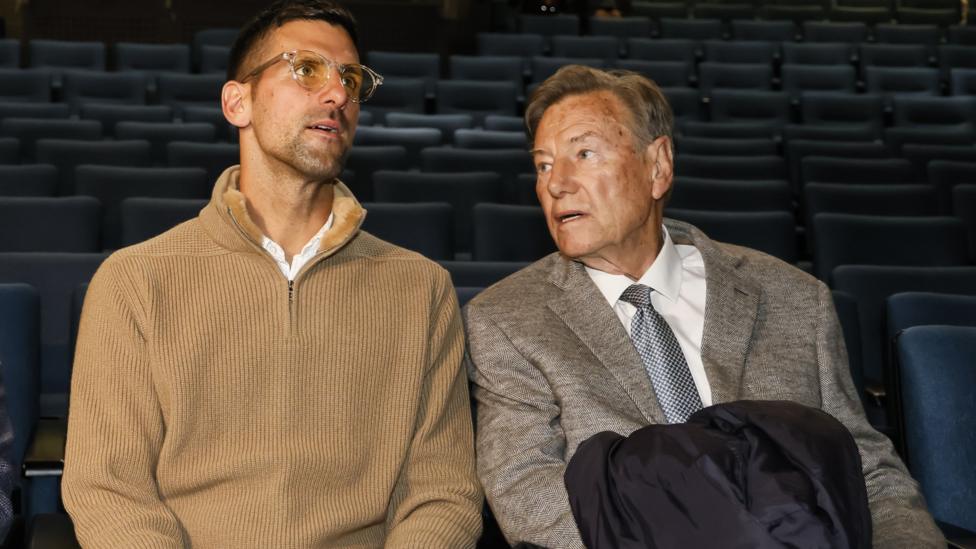
Gauff referenced collective action by WNBA players, who delayed negotiations on a new collective bargaining agreement for 17 months, ultimately securing salary increases and a deal to receive 20% of the league's revenue.
Boycotts have also occurred in other sports for political reasons. For example, the England men's cricket team boycotted their 2003 World Cup match against Zimbabwe due to opposition to Robert Mugabe's regime. Additionally, 67 of 147 nations boycotted the 1980 Moscow Olympics following the Soviet invasion of Afghanistan, and the Soviet Union and its allies responded by boycotting the 1984 Los Angeles Olympics.
How Likely Is a Boycott?
While the possibility of the world's leading players boycotting a Grand Slam remains distant, Sabalenka's comments have reignited a debate that had largely stalled.
Achieving the level of solidarity seen at Wimbledon in 1973 would be challenging, as some players might cross a metaphorical picket line. Reasons for this include disagreement with the boycott or the opportunity to advance in the tournament and gain recognition.
Winning public support for a boycott may also be difficult. Although players' demands for a larger share of Grand Slam revenues are valid despite inflation-driven prize money increases, the argument is complicated by recent substantial prize money rises, such as the US Open's 20% increase and $5 million awarded to last year's singles champions.
Wimbledon prize money has doubled over the past decade, with show court ticket prices also doubling. Inflation in the UK over the same period was approximately 38%.
- Live scores, results and order of play
- Get tennis news sent straight to your phone