Djokovic Overpowers Tsitsipas in Straight Sets
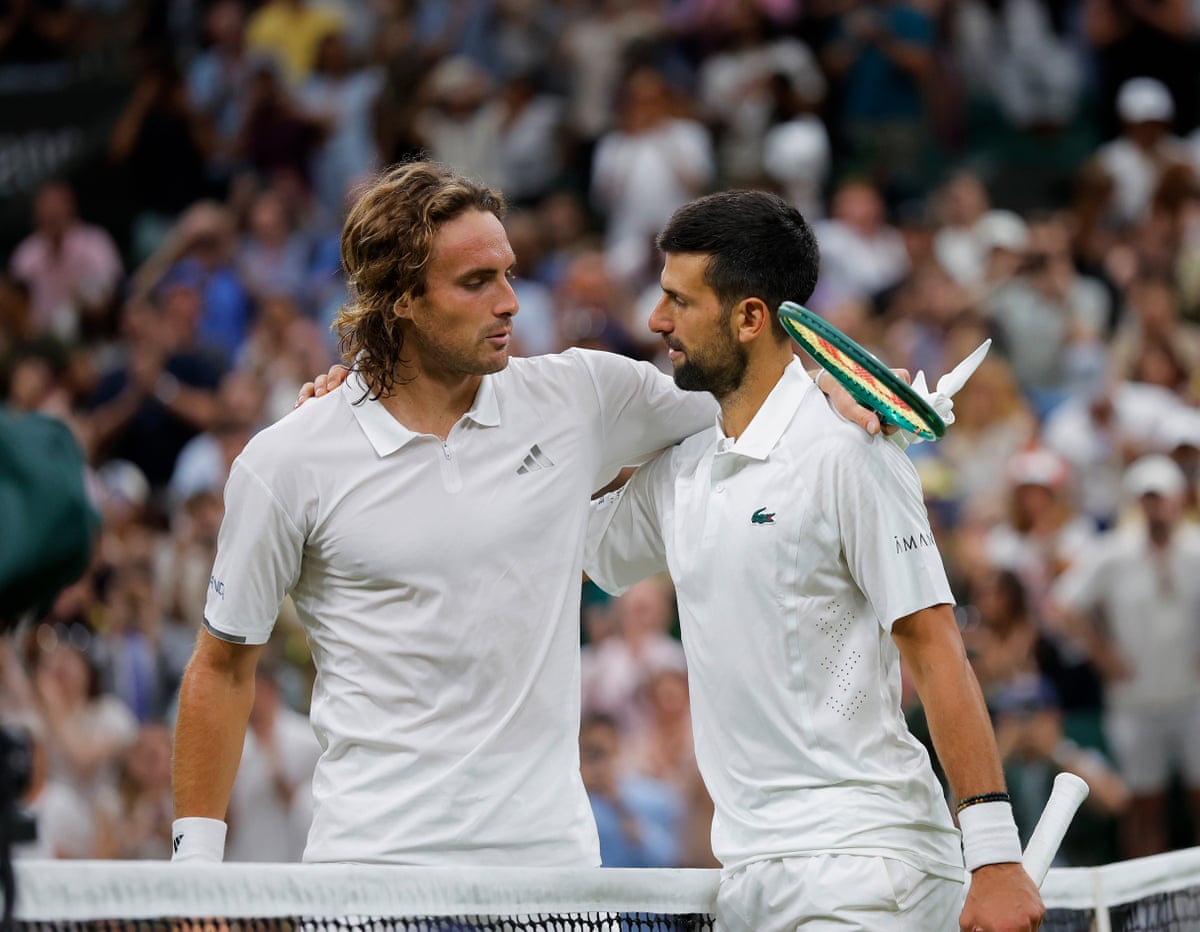
Novak Djokovic, seeded seventh, secured a commanding 6-3, 6-4, 6-2 victory over Stefanos Tsitsipas to advance to the third round at Wimbledon. Djokovic will next face the 25th seed, Arthur Rinderknech.
Not long ago, Djokovic and Tsitsipas met on some of tennis’s grandest stages. Djokovic was Tsitsipas’s opponent in both of the Greek player’s Grand Slam finals, including at the French Open and the Australian Open. In Paris, Tsitsipas even held a two-set lead against Djokovic.
Despite never overcoming Djokovic in a major final, Tsitsipas had hoped to remain competitive as Djokovic aged. However, recent years have seen Tsitsipas’s ranking decline, and he entered this second-round match as a significant underdog against the 39-year-old Djokovic. The veteran Serbian dominated the match with an exceptional performance to win in straight sets.
Djokovic’s Strategy and Performance
At Djokovic’s age, numerous factors must align for him to contend for a 25th Grand Slam title in the tournament’s later rounds. While his tennis quality remains high, the key for the seventh seed is to minimize time on court to conserve energy and manage his aging body.
This match was a prime example of that approach. Coming off a physically demanding four-set win over Wu Yibing two days earlier, where Djokovic spent considerable time managing his sore body, he delivered a brilliant performance under Centre Court. He served exceptionally well from the outset, consistently holding his service games and narrowly missing the line on crucial points.
“You feel very happy and satisfied and joyful on the court when you’re playing this way,” Djokovic said.
Tsitsipas also served strongly in the first half, but Djokovic systematically dismantled the Greek’s second serve. He excelled on key points, converting four of five break points. By the match’s conclusion, Djokovic was striking the ball with remarkable clarity and precision from the baseline, finishing with 33 winners and only seven unforced errors.

“I feel great. I’ve said this so many times before. I try not to take these moments for granted, playing on Centre Court, the childhood dream tournament,” Djokovic said. “I have always been saying that. I feel very privileged to be walking out on the court at age 30-plus. I don’t think it’s a cliche, I actually believe it’s true, age is just a number.”
Post-Match Interaction and Upcoming Challenge
After the match, Djokovic expressed gratitude to Rory McIlroy, who was watching from the royal box, for staying late. Djokovic humorously offered to trade his own decorative blazer for McIlroy’s Masters green jacket and proposed a tennis match to decide who should keep the jacket—a challenge unlikely to be accepted given Djokovic’s current form.
Next, Djokovic will face France’s 25th seed Arthur Rinderknech as he aims to continue his progression in the tournament.
Tsitsipas’s Current Challenges
While Djokovic advanced, Tsitsipas is experiencing the most difficult phase of his career, with his ranking at 87—the lowest since January 2018. His struggles have been partly due to physical issues, including a chronic back problem that sidelined him late last season. However, much of his decline is attributed to weaknesses in his game and external factors.
Tsitsipas’s one-handed backhand and return of serve have become significant vulnerabilities, which Djokovic and many others have exploited effectively.
Earlier this week, Tsitsipas addressed a long-standing issue that has hindered his progress: his professional relationship with his father, Apostolos, who coached him from youth through most of his career. Their relationship has been fraught with conflict, including multiple hirings and firings and mutual accusations.
Tsitsipas announced this week, amid some skepticism, that he has ended his coaching relationship with his father for good and will not rehire him. The path back to the top of the sport is notoriously challenging, but should Tsitsipas succeed, it is likely Djokovic will still be competing at a high level.