

Russell Secures Victory in Australian Grand Prix
George Russell became the first Mercedes driver to win in Australia since Valtteri Bottas in 2019, delivering a commanding performance at the Australian Grand Prix, marking the beginning of a new era in Formula 1. After an intense early battle with Ferrari's Charles Leclerc, Russell pulled away to secure a comfortable victory.
The initial ten laps featured a close contest between Russell and Leclerc, with frequent lead exchanges. However, Ferrari's strategic choice to remain on track during a virtual safety car (VSC) period ultimately removed them from contention for the win.
Russell finished ahead of his Mercedes teammate Kimi Antonelli, while Leclerc settled for third place on the podium, followed by his teammate Lewis Hamilton.
"I'm feeling incredible, it was a hell of a fight at the beginning. We knew it was going to be challenging and I got on the grid and I saw my battery level had nothing in the tank," said Russell.
"I made a bad start and obviously some really tight battles with Charles, so I was really glad to cross the finish line."
McLaren's world champion Lando Norris finished fifth, successfully defending his position in the closing laps against Red Bull's Max Verstappen, who recovered impressively from 20th on the grid to finish sixth.
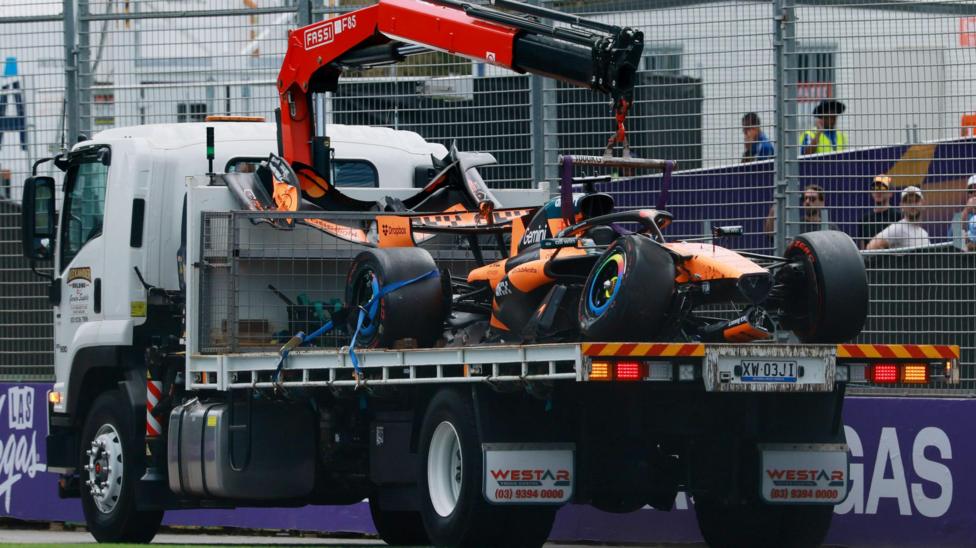
Oscar Piastri, Norris' teammate, crashed on his way to the grid during his home race after losing control over a kerb and experiencing a sudden surge of power that caused him to spin into the wall.
Arvid Lindblad, aged 18, became the youngest British driver to compete in Formula 1 and impressed on his debut by finishing eighth, just behind fellow Briton Oliver Bearman in the Haas.
The race's key narratives included Mercedes' dominant return to the front after four challenging years, ongoing questions regarding Ferrari's strategy, and debates about whether the event was genuine racing or primarily energy management.
How Russell Won
Russell's pole position, achieved with a margin of 0.8 seconds over the fastest non-Mercedes car, surprised many in the paddock on Saturday. However, the race itself was initially much closer than qualifying suggested.
Both Ferrari drivers made strong electric starts, with Leclerc jumping from fourth on the grid to take the lead at the first corner.
Russell reclaimed the lead on lap two between Turns 10 and 11 by utilizing additional electrical energy.
Leclerc responded promptly, overtaking Russell again on the run to Turn Nine on lap three.
Russell closely followed Leclerc and challenged for the lead at Turn One on lap nine, but Leclerc defended successfully. Meanwhile, Russell had to fend off Lewis Hamilton, who had joined the leading group.
Antonelli, who initially dropped to seventh at the start, fought back past Norris, Lindblad, and Red Bull's Isack Hadjar to join the leading group of four cars after 10 laps. They circulated together until Hadjar retired on lap 12.
The French driver, running fifth, pulled off on the back straight, triggering a virtual safety car. This situation typically prompts teams to pit to minimize time loss compared to pitting under normal racing conditions.
While Russell and Antonelli pitted during the VSC, Leclerc and Hamilton chose to stay out. Hamilton questioned this decision over the radio, stating, "At least one of us should have pitted." Both Ferrari drivers adhered to their pre-race one-stop strategy.
Leclerc eventually pitted on lap 25, with Russell trailing by only five seconds. However, the Ferrari rejoined the track 14 seconds behind the Mercedes leader.
Despite fresher tyres, Leclerc was unable to close the gap to Russell, effectively ending the battle for the lead.

Did Ferrari Mess Up?
At the time of the virtual safety car, Leclerc was approaching the pit lane entry. There was just enough time for the team to call him in if they had reacted swiftly, which arguably they should have been prepared for given Hadjar's car position.
Stopping Hamilton during the VSC would have been more straightforward, but Ferrari opted not to pit either driver. They could have pitted on the next lap while the VSC was still active, but both Ferraris remained on track.
Perhaps Ferrari believed Mercedes would struggle to complete the race with a single stop, but this proved unfounded. Questions remain whether Ferrari should have committed more aggressively to staying in contention, as they appeared capable of matching Mercedes at the time.
Leclerc stated he did not believe victory was possible and that third place was the best achievable result.
Although Leclerc did not gain ground on the Mercedes cars, he also did not lose significant distance, suggesting Ferrari may be competitive in upcoming races.
Hamilton, who pitted three laps later than Leclerc after requesting to stay out longer, challenged Russell in the closing stages.
Was It Racing?
The early position swaps between Russell and Leclerc appeared exciting but were primarily due to differing battery energy levels, which may not satisfy all fans.
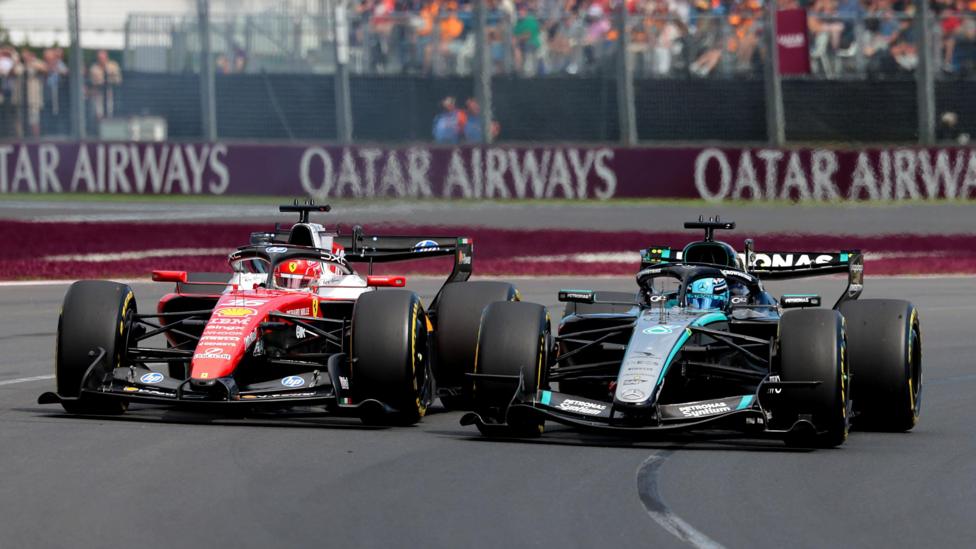
The overtakes were not traditional, involving late braking or faster corner exits, but rather strategic energy deployment. It remains to be seen how Formula 1 audiences will respond to this style.
Drivers have expressed concerns about the new regulations. The sport's management plans to observe the first three races before considering adjustments to reduce energy constraints and electronic management, which some view as excessive.
The gap between the top four drivers and the rest was substantial; Norris finished 35 seconds behind Hamilton. Verstappen's potential remains uncertain after a qualifying crash.
The four-time world champion started on hard tyres with an alternative strategy. He stayed out during Hadjar's VSC but pitted just under a second after Valtteri Bottas' Cadillac stopped at the pit lane entry on lap 17.
Switching to medium tyres meant Verstappen was likely to pit again, compromising his race alongside the earlier qualifying crash. He will have an opportunity to demonstrate his capabilities in the Chinese Grand Prix next weekend.
Lindblad delivered an impressive performance, building on a strong weekend. He lost position to Bearman in the race's second half and defended against Gabriel Bortoleto's Audi in the final laps, ultimately securing points on his debut. Alpine's Pierre Gasly claimed the final point in tenth place.
Fernando Alonso was among six retirements in the Aston Martin team. He made a rapid start, briefly running tenth from 17th, but soon fell back due to the car's lack of pace.
Alonso was called into the pits mid-race after the team detected a problem, sent back out ten laps later to gather data, and then retired after a second pit stop.
His teammate Lance Stroll also had multiple pit stops but managed to finish the race, albeit last and 15 laps behind.
Andrew Benson Q&A: Send us your questions
Listen to Back at Base on


