

Mercedes Prepare Major Upgrades for Canadian Grand Prix
Four races into a season marked by rapid changes and adaptation, Formula 1 teams and drivers continue to adjust to new cars and regulations. The upcoming Canadian Grand Prix in Montreal offers a glimpse of future form and championship prospects, though it remains somewhat of an outlier on the calendar.
The spotlight in Montreal is primarily on Mercedes, the team that has dominated the early season by securing all four pole positions and race victories. With 2026’s new regulations providing significant opportunities for development, a fierce technical battle is expected throughout the year. While McLaren, Red Bull, and Ferrari introduced their first major upgrades at the Miami Grand Prix, Mercedes plans to unveil their initial significant package in Quebec.
Rival Teams Make Gains as Mercedes Respond
At the Miami race, Red Bull and particularly McLaren made notable progress. McLaren is bringing further upgrades to Canada, including a new front wing, which is a critical element in the aerodynamic development war. Andrea Stella, McLaren’s team principal, estimated that Mercedes still held approximately a tenth of a second advantage over McLaren in Miami. However, with the new carbon fibre parts in place, the revised competitive hierarchy should become clearer at the Circuit Gilles Villeneuve.
Should Mercedes have matched or exceeded the development strides made by their rivals in Miami, they are expected to maintain their advantage. This would likely intensify the championship battle between their drivers, Kimi Antonelli and George Russell.
Drivers’ Championship Battle Intensifies
The 19-year-old Antonelli, in only his second Formula 1 season, has impressed by winning the last three consecutive races and currently leads the world championship by 20 points over his more experienced teammate. Russell, the pre-season favorite who finished fourth in Miami, addressed questions in Canada about whether he felt pressure from Antonelli’s strong start.
“It’s been a turbulent start but the truth is Miami felt like the first tough race of the season,” Russell said. “It’s still so early days and I know how to deal with it. It’s not the first time in my career that I’ve had a bad race or two but in this sport it does change so quickly: one week you have a tough race and the next week you come back and everything goes back to normal.”
Russell has a strong record in Canada, having taken pole position in the last two events and winning last year.
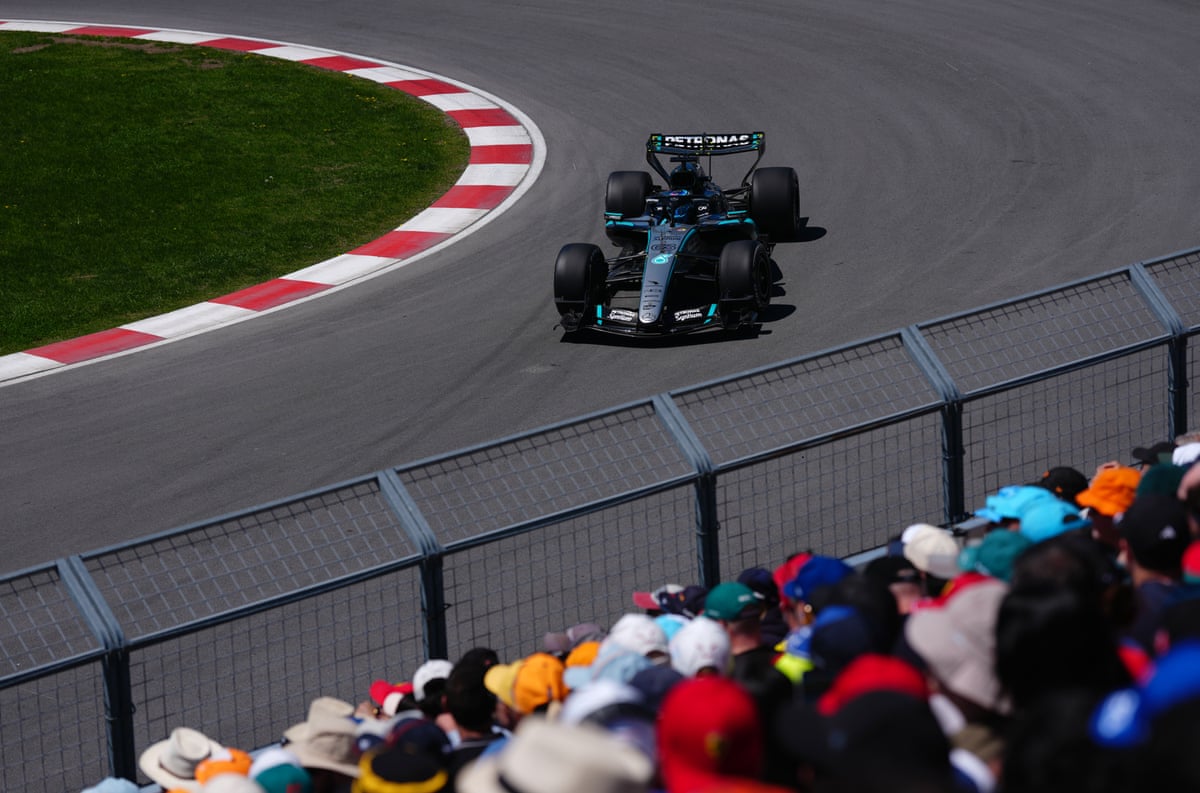
While he acknowledges there are still 17 races remaining, Russell is keen to reassert himself against his precociously talented teammate.
Unique Challenges of the Montreal Circuit
The Canadian Grand Prix weekend is a sprint format, limiting time for teams to evaluate and adjust upgrades with only one practice session. The Circuit Gilles Villeneuve is characterized by an absence of high-speed corners, which are typically where aerodynamic improvements have the greatest effect.

The track features long straights interrupted by short, stop-start chicanes and two hairpin turns at each end. This layout presents a technical challenge favored by drivers but is not optimized for car design improvements. It shares similarities with the upcoming Monaco circuit, which is also low-speed, suggesting that the full impact of this weekend’s upgrades may not be realized until the Barcelona-Catalunya race in June.
Additionally, the rescheduling of the Canada race to occur three weeks earlier, adjacent to Miami rather than between European events, has complicated preparations. Cooler temperatures, potentially as low as 11°C on race day, will influence tire performance and car behavior.
Weather and Wet Conditions Could Impact the Weekend
Rain is forecast for the weekend, which would mark the first competitive wet session for the new cars. These vehicles have higher power output but reduced downforce and grip compared to recent models, making wet conditions a significant challenge.
Pierre Gasly, who recently completed a two-day wet tire test at Magny Cours, warned drivers about the difficulty of handling the new cars in the wet.
“I’m glad I’ve done these two days. You guys? Yeah, it’s going to be interesting for you guys,” Gasly said during a Thursday press conference.
The prospect of wet racing adds an intriguing element as the new technical regulations continue to shape the sport on the Île Notre-Dame.
Ongoing Discussions on Engine Regulation Changes
Off the track, the new regulations remain under scrutiny. Behind-the-scenes talks are underway in Montreal to reach consensus on modifying engine regulations. The proposed change aims to alter the power distribution in cars from a 50-50 split between combustion and electric power to a 60-40 split. This adjustment seeks to address driver dissatisfaction with the current level of energy management required.
Max Verstappen, who had previously expressed dissatisfaction to the point of threatening to leave the sport, welcomed the proposed change.
“It was a positive move but the minimum I was hoping for,” Verstappen said in Montreal.
However, there is a division among manufacturers regarding the timeline for implementation. Some advocate for introducing the change in 2027, while others prefer to delay until 2028. This split may not satisfy Verstappen or many other drivers.


