

Russell Dominates Australian Grand Prix for Mercedes One-Two Finish
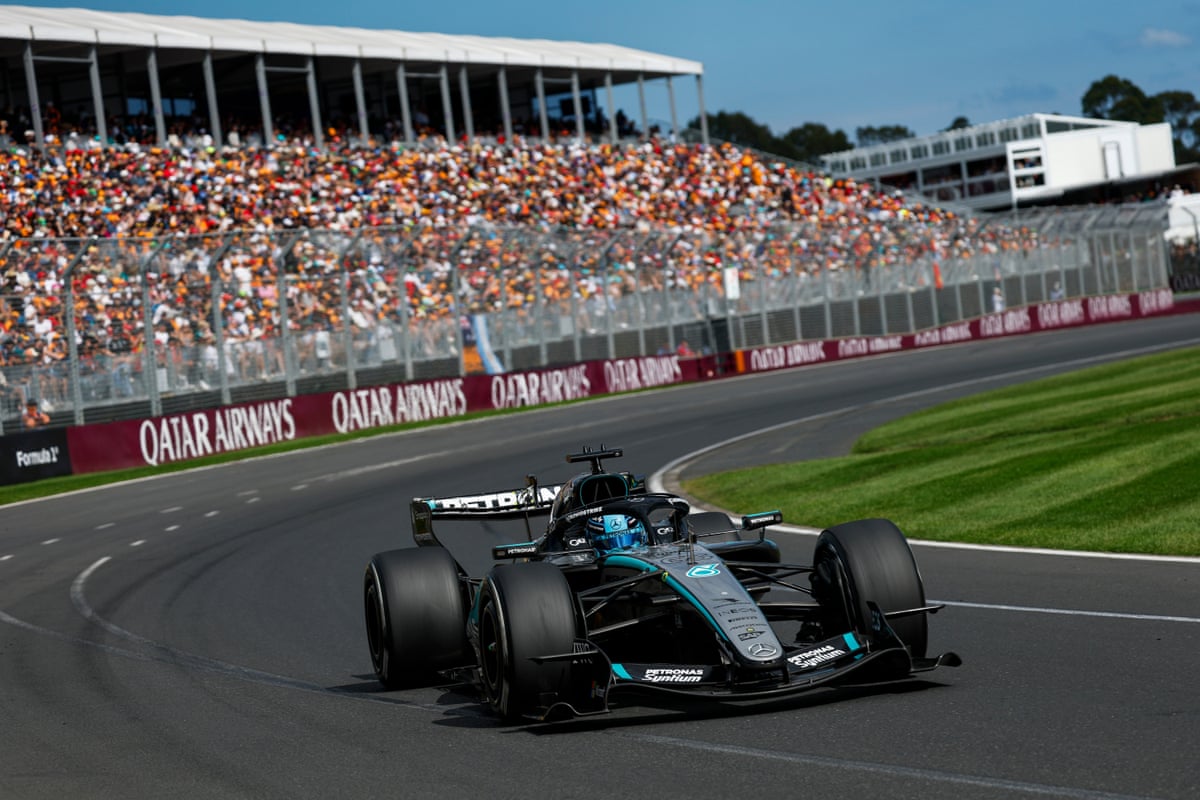
George Russell claimed victory at the Australian Grand Prix with a commanding performance from pole position, leading his Mercedes teammate Kimi Antonelli to a second-place finish, securing a strong one-two result for the team.
Russell maintained control throughout the first round of the new Formula One season in Melbourne on Sunday, despite a fierce and thrilling battle in the early stages involving Ferrari drivers Charles Leclerc and Lewis Hamilton, who finished third and fourth respectively for the Scuderia.
Home town favorite Oscar Piastri suffered heartbreak for local fans when he crashed out on the formation lap. The Melbourne-born McLaren driver clipped the kerb at turn four, was caught off guard by the power delivery when accelerating, and spun into the wall. The incident elicited a collective gasp from the Albert Park crowd. Piastri acknowledged the mishap as part of the learning process with the new cars' behavior.
Race Highlights and Key Performances
Max Verstappen delivered a determined recovery drive to finish sixth for Red Bull after starting 20th on the grid. British rookie Arvid Lindblad impressed on his Formula One debut, securing eighth place for Racing Bulls and earning points.
Mercedes confirmed their status as early-season favorites, with Russell crossing the finish line three seconds ahead of Antonelli, while Leclerc was a full 15 seconds behind. The race's opening laps featured blistering starts from Leclerc and Hamilton, with the Monegasque driver taking the lead and matching Russell's pace in a competitive duel. Mercedes capitalized on an early Virtual Safety Car (VSC) period, utilizing clean air and fresh tires to leverage their superior pace once out of direct competition. Ferrari may regret not adopting a similar strategy for one of their cars.
Mercedes' Technical Edge and Race Strategy
Following a dominant qualifying session where Russell outpaced rivals by nearly a second, the Mercedes car demonstrated it is currently the best on the grid. The power unit delivers strong performance while excelling in energy management, a critical aspect under current regulations. The car's handling has improved significantly compared to the previous ground-effect era, with Mercedes leveraging their engine expertise to optimize performance. Notably, McLaren, which uses the same engine, has yet to match Mercedes' pace and balance.

Russell faced early pressure from Leclerc, who refused to concede the lead. The British driver maintained composure and capitalized on his early pit stop. Leclerc executed an exceptional start, moving from fourth to first by the first corner, showcasing Ferrari's strong off-the-line performance demonstrated during testing. Russell reclaimed the lead by lap two, with Hamilton advancing to third.
Leclerc retook the lead on lap three as energy deployment strategies influenced position changes, while Hamilton closed the gap. Ferrari's race pace kept them competitive with Mercedes, resulting in intense battles over several laps. On lap eight, Russell attempted to overtake again using his energy advantage, but Leclerc responded aggressively, with the two drivers exchanging positions multiple times by lap nine. Despite criticism from some drivers, the new regulations contributed to a dramatic and engaging contest.
Critical Moments and Pit Strategies
Isack Hadjar retired on lap 12 due to an apparent engine failure, prompting a Virtual Safety Car. Mercedes pitted both drivers on the following lap to gain clear track space, while Ferrari opted to keep their cars out, despite Hamilton's suggestion that a stop was necessary. This strategic decision proved pivotal, as Russell and Antonelli maintained the lead and were uncatchable thereafter.
Russell's victory in Australia marks his first at this venue and the sixth of his career. It is also Mercedes' first win in Melbourne since Valtteri Bottas' triumph in 2019.
Implications for the Season and Team Performances
Russell's strong start sends a clear message of intent, reinforcing his status as a title contender. His composed driving and the team's evident performance advantage suggest he will be a formidable competitor if Mercedes sustain this level of competitiveness. Ferrari, however, can take encouragement from their ability to challenge Mercedes closely in wheel-to-wheel racing.
Cadillac achieved a significant milestone by finishing the race with Sergio Pérez in 16th place. Having established the team from scratch in just over a year, this accomplishment provides a solid foundation despite being three laps behind the leader. Audi also made a notable debut, manufacturing their own engines and taking over the former Sauber team, with Gabriel Bortoleto scoring points in ninth place.


