Third Test Day Two: New Zealand 438; England 223-2
Duckett’s Century Fuels England’s Response at Trent Bridge
Prior to the commencement of the decisive third Test against New Zealand, Brendon McCullum was overheard remarking that he was about to gain significant insight into the England team. Following a Lord’s pitch that heavily favored seamers and a semi-skimmed XI selection at the Oval, uncertainty prevailed regarding whether a flat surface would revive England’s aggressive batting style of recent years or if inconsistent leadership had dampened their intent.
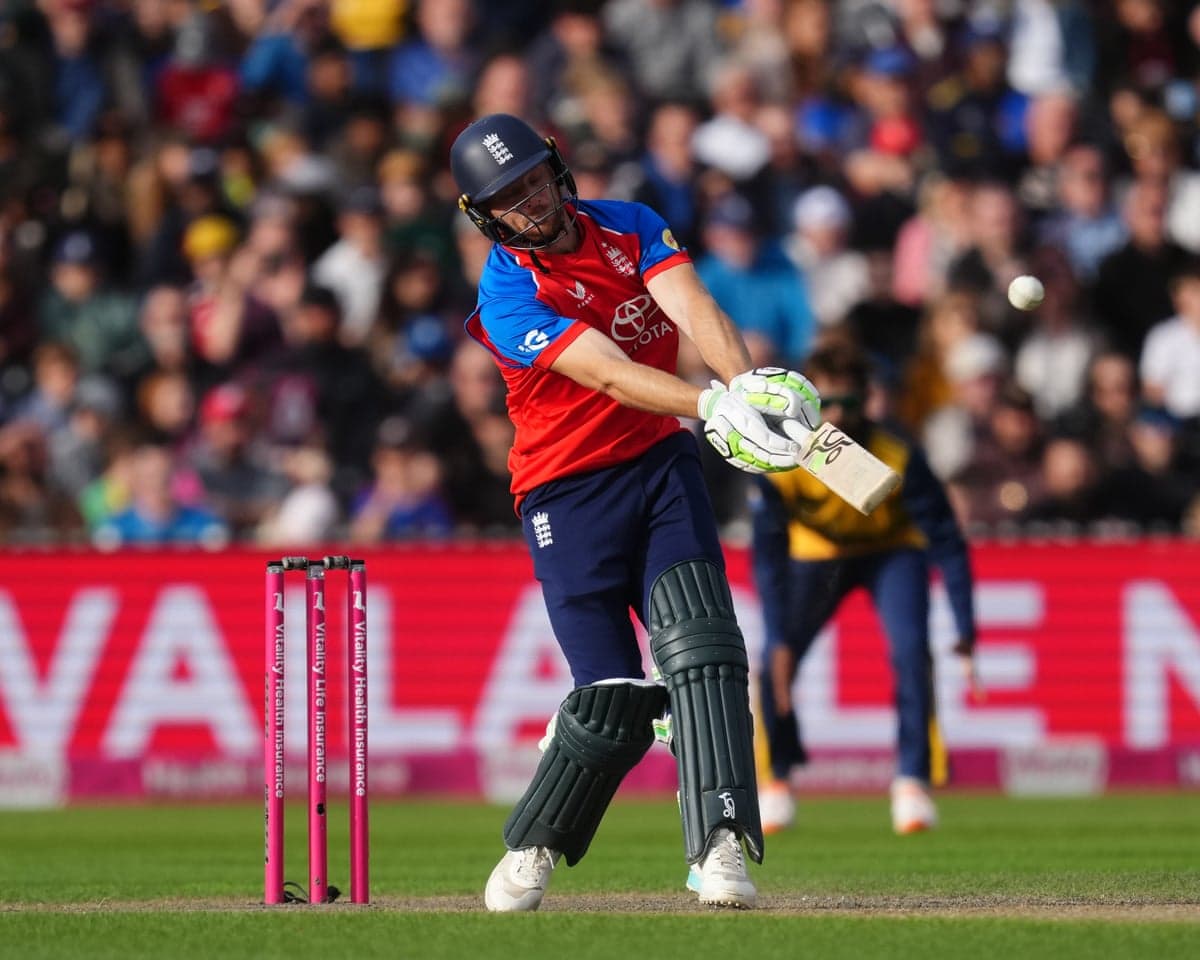
On the second day in the sweltering conditions of West Bridgford, after Ben Stokes orchestrated a formidable fightback to restrict New Zealand to 438 all out, Ben Duckett provided a compelling answer. His rapid 113, combined with an unbeaten 74 from Jacob Bethell, propelled England to 223 for two after 45 overs. Despite trailing by 215 runs overnight, England established a solid foundation that allows them to pursue an ambitious target.
There was unanimous agreement among the sun-drenched spectators regarding the day’s pivotal moment. At 5 pm, having nudged Mitchell Santner into the on-side for a single, Duckett celebrated his seventh Test century off just 88 balls, marking his first in nearly a year. His jubilant gestures reflected a player unburdened and possibly vindicated by his early-season transition.
Duckett had initially planned to participate in the Indian Premier League but, following a disappointing Ashes series and time spent in Noosa, he opted to focus on regaining his red-ball form with Nottinghamshire. Peter Moores, the former England coach who invested considerable effort in Duckett’s development, likely took satisfaction in witnessing his opener’s resurgence.
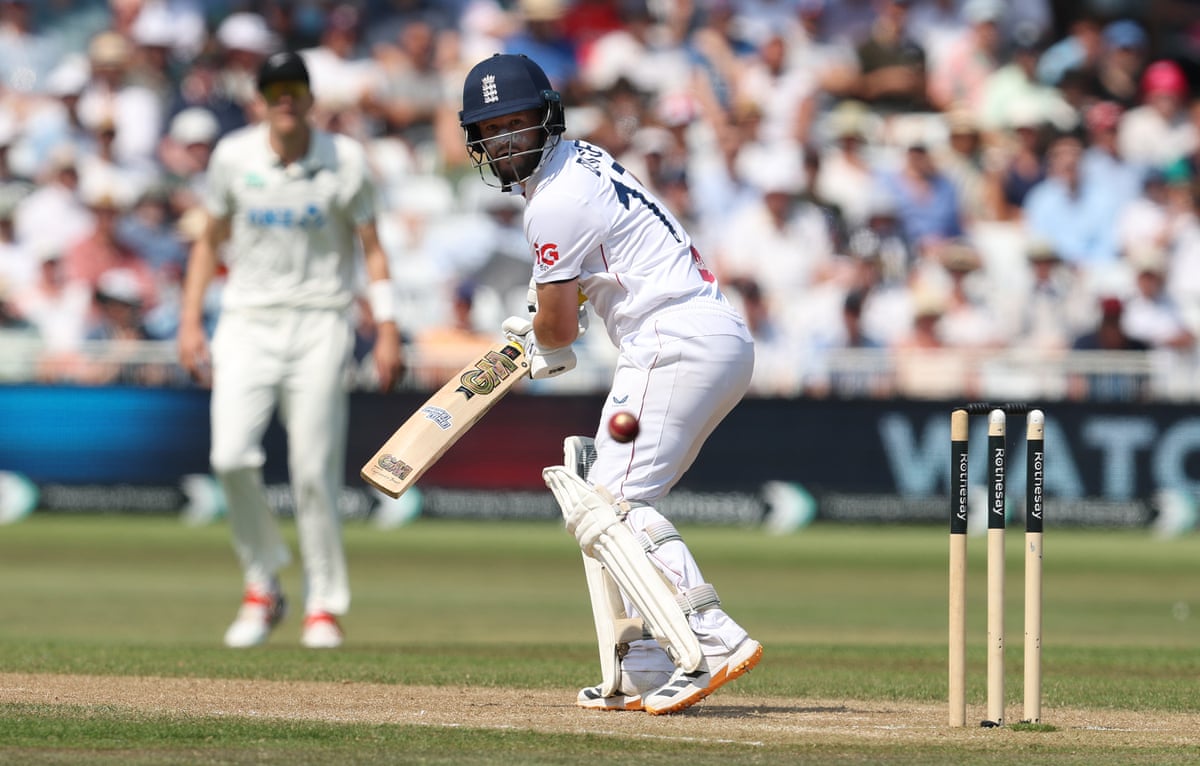
Several factors favored England on day two. Had Henry Nicholls secured a routine catch at third slip instead of awkwardly missing it, Duckett would have joined his opening partner, Emilio Gay, in the dressing room before England reached double figures. Additionally, Blair Tickner’s dizziness following a blow from Jofra Archer further weakened an already depleted New Zealand bowling attack, which was missing Matt Henry and Kyle Jamieson. This led to Zak Foulkes, the last seamer available, entering the field as a concussion substitute.
Despite these circumstances, after Gay was dismissed leg before wicket by Will O’Rourke for a duck and Duckett’s fortunate reprieve, the innings gained momentum. Duckett’s first ball from Nathan Smith was driven through extra cover for four, and he proceeded to regularly find gaps in the infield, reaching his half-century off 40 balls.
This was reminiscent of the Duckett from earlier in his career—before facing Mitchell Starc—transforming Trent Bridge into his domain. Mitchell Santner struggled against Duckett’s sweep shots, with boundary fielders unable to contain him. Having performed well at the Oval before being dismissed due to a rash single by Gay, the reprieve offered by Nicholls may have been the catalyst Duckett needed.

At the opposite end, Bethell initially adopted a cautious approach, partly due to O’Rourke’s pace and angle and his own efforts to avoid front-foot no-balls. However, he soon settled, and the two left-handers compiled a 179-run partnership off 179 balls before Nathan Smith finally dismissed Duckett, who edged onto his stumps.
Following Duckett’s dismissal and Joe Root’s arrival, England’s scoring rate slowed slightly. New Zealand’s tactic of keeping the wicket-keeper up to the stumps, which had troubled England at the Oval, contributed to this. Nevertheless, Bethell and Root remained resolute until the close, with Bethell achieving his first Test half-century in the innings. New Zealand now face a challenging task.
England’s fightback was particularly impressive given the heat and the hard surface. After New Zealand’s strong start of 317 without loss on day one, England claimed 10 wickets for 121 runs.
Stokes’ Bowling Inspires England’s Comeback
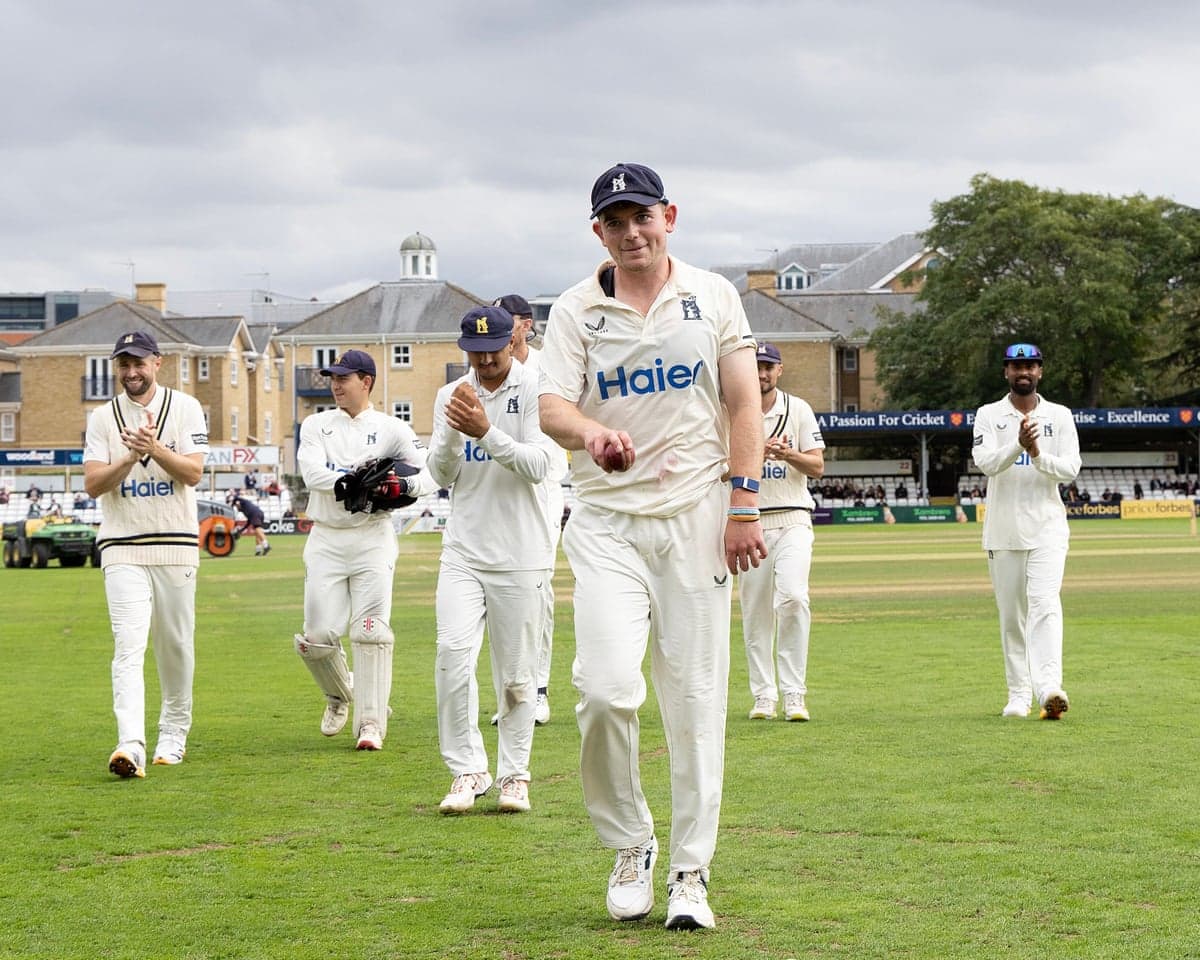
Ben Stokes was instrumental in England’s resurgence. His bowling figures of 8 overs, 4 maidens, 80 runs, and 4 wickets, including a spell of 8 overs for 3 wickets for 13 runs before lunch, exemplified leadership by example. Bowling with energy and varying his angles, Stokes ended a 50-minute wait for the first breakthrough. Daryl Mitchell appeared to believe he had not edged the ball on 11, but a successful review confirmed a faint edge behind the stumps.
After dismissing nightwatchman Will O’Rourke, who had batted for over an hour and scored a career-best 19, Stokes delivered a sharp short ball to remove Santner. While there was speculation that the ball had struck Santner’s arm guard, the TV umpire, Adrian Holdstock, determined it had contacted the wristband of his glove.
New Zealand had made limited progress, adding 57 runs for the loss of three wickets before lunch. Shoaib Bashir and Jofra Archer then secured further wickets after the interval. Bashir trapped Tom Blundell lbw for 33 with a delivery from around the wicket and caught a return catch off Nathan Smith.
Despite Archer receiving a reprimand from Stokes for not participating in a wicket celebration, England appear united in their effort to support their returning captain.