Sarah Taylor's Return to Cricket Coaching
Sarah Taylor, who played 226 times for England before retiring early due to anxiety, has made a significant return to cricket at the highest level. Recently, while stuck in traffic heading south, she received a call from Ed Barney, the ECB’s performance director, inviting her to join the England Lions tour in South Africa. Having just completed two days of coaching wicketkeepers Matty Hurst from Lancashire and James Rew from Somerset at Loughborough, Taylor accepted the offer despite feeling internally petrified, especially as she had not flown for several years.
“Internally I was absolutely petrified,”she recalls.
“I hadn’t flown for quite a few years. But what came out my mouth was: ‘Absolutely, when are we leaving?’ And that was the start of it.”
Her journey back to embracing opportunities like this has not been easy. Previously, even boarding a flight would have been unimaginable due to performance-based anxiety and agoraphobia that troubled the final days of her playing career. Taylor candidly describes her conflicted feelings about cricket during that period:
“Oh, I absolutely wanted to bin the game off. I was so bitter about it. Stupid game. And it is a stupid game. But that’s what makes it lovable.”
Leaving playing behind brought her peace and a new perspective. The chance to work with the England Lions came at an ideal time. Taylor reflects on the significance of accepting the opportunity:
“The opportunity was there and I felt if I’d said no to that opportunity, then one: I wouldn’t be where I am today. And two: like, you’re genuinely an idiot if you say no to this. I didn’t know where it was going to lead, but I knew it was going to be a great experience, no matter what. I’ve genuinely loved it.”
Experience with the England Lions and Andrew Flintoff
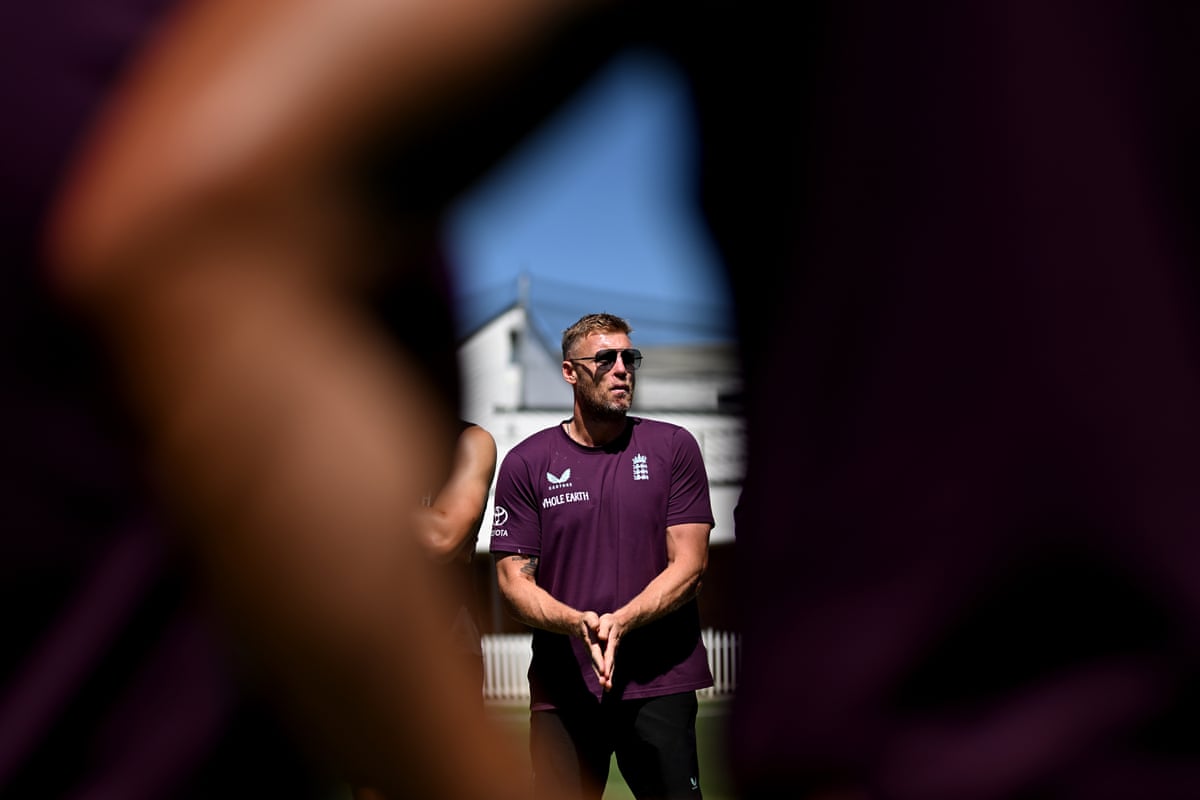
Most recently, Taylor was with the England Lions squad in Abu Dhabi during a tense period marked by frequent sirens and explosions. The team was confined to a secure location for four days before being evacuated. While many players were anxious or panicked, Andrew Flintoff, the Lions’ coach, provided calm leadership. Taylor and Flintoff have developed a strong working relationship, with Taylor focusing on wicketkeeping and fielding coaching. Their collaboration is set to continue through the summer.
“If Fred speaks, you do not want to be the person speaking afterwards,”Taylor says.
“He’s so genuine, just such a lovely, lovely guy. He cares so much about the guys and how they do, he probably cares in equal parts about them as people, and wants to get the best out of them, but also to make sure they’re OK.”
Flintoff’s return to English cricket, viewed through the eyes of younger players who admire him, appears to be a strategic and beneficial move rather than a mere favor.
Transition from Player to Coach
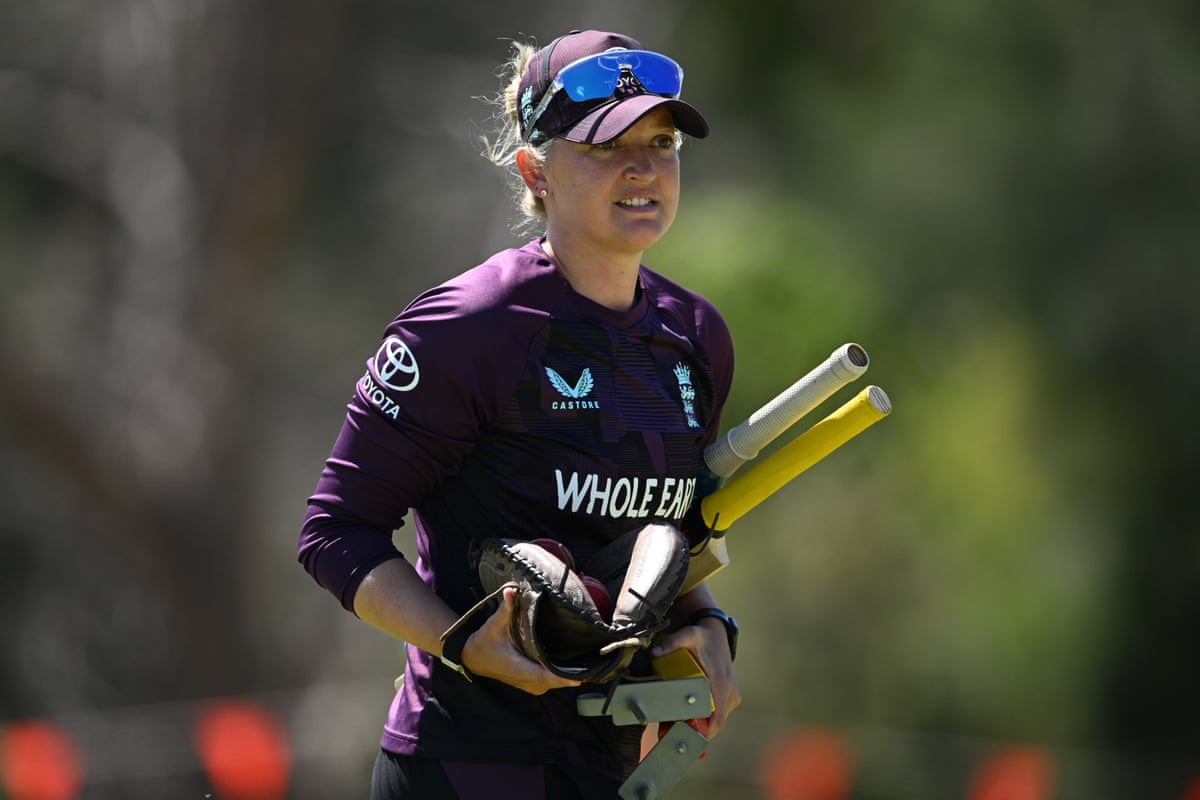
When Taylor spoke to us six years ago, she was cautiously exploring coaching but uncertain if she could maintain a healthy relationship with cricket. She began with sessions at Bede’s School in Sussex and then worked with the Sussex men’s squad wicketkeepers. Despite initial nerves and impostor syndrome in a male-dominated environment, the support from coaches Ian Salisbury, James Kirtley, and Grant Flower helped her realize her expertise was highly valued. Adam Gilchrist, a renowned wicketkeeper, had previously called her the best wicketkeeper in the world in 2018.
Taylor emphasizes the universality of wicketkeeping skills:
“Doesn’t matter who I’m working with. I’m still looking at exactly the same things – the skills to be able to either help or manoeuvre or work out a technique that works for that player. Sure, the ball will be thrown a lot harder in the men’s game. Doesn’t mean that the girls don’t throw it hard too.”
Regarding gender differences in cricket environments, Taylor notes:
“There’s pros and cons with absolutely everything. And girls are better at handling things more factually, the more professional the game gets – though I don’t think I was that professional when it came to my emotions! And the guys could probably open up a little bit more – that would be my only thing.
“But across the board, as soon as you get to know the individual, then you deal with that individual. Because there will be some guys that are more emotional, and some girls that aren’t. It’s not like a one-size-fits-all. There’s a generalisation that women are more emotional, but men are probably equally as emotional, just in a different way.”
While Taylor has generally been welcomed into coaching roles, she acknowledges the persistence of some sexism. She suspects that resistance from a prominent young player she worked with this winter was partly due to her gender.
Throughout her coaching career, Taylor has worked with numerous male coaches, apologizing for any omissions when listing them. She remains unique as one of the few female coaches deeply embedded in men’s cricket culture, much like during her playing days. Even at her peak, she was described by an England colleague as “super-charming but unknowable,” combining essential skill with enigmatic personality traits.
Recent Experiences and Reflections
After leaving Abu Dhabi, Taylor attended the Manchester Super Giants auction in London, where she participated alongside coaches for both the women’s and men’s teams. She describes the experience as a milestone reflecting the progress of women’s cricket, noting the substantial sums involved in the women’s auction.

“It was one of those: this is how far the game has come, how far the game has moved on. It was an amazing thing to sit there and think about. The first day was the women’s auction. We’re paying £210,000 for players! And it was like, ‘Wow, this is insane’. And then I’m like, ‘How good is this?’”
Though initially expected to focus on the women’s auction, Taylor also contributed to the men’s auction, enjoying the opportunity to engage with prominent figures such as Meg Lanning, Matthew Mott, Justin Langer, and Tom Moody.
Asked if she regrets not playing in a later era with greater financial rewards, Taylor responds thoughtfully:
“I genuinely don’t, because I went through the stresses of playing. I went through my own journey with it and I don’t want to do it again. I was really happy with my career. I had a lot of downs and I had a lot of ups, but I’m OK with that. I’ve made my peace with that.”
Early Career and Challenges with Anxiety
Taylor began her international career at 17, entering a cricket world where players largely paid their own way and played for enjoyment. Her first England match was at Lord’s in August 2006 against India, attended by a small group of family and spectators. Eleven years later, she lifted the World Cup at a packed Lord’s against the same opposition, supported by a dressing room that protected her during difficult times.
Up to a year before that World Cup, Taylor struggled with panic attacks and a form of agoraphobia. She clarifies misconceptions about the condition:
“I thought agoraphobia was when you can’t leave your house. Actually, it just means you’re always looking for escape, or you’re stuck in your safe place, which at one point was my car.”
She attributes her anxiety to cricket-related performance pressures:
“It absolutely did. There was a performance element that I really struggled with. Like, I need to perform, otherwise I’ll get abuse here, or the girls won’t like me. There were all these ridiculous thoughts that won every time.”
Being at the top increased her anxiety, as she felt the only direction was down. Taylor contrasts her past mindset with her current outlook:
“I’d rather have been somebody who was just hiding,”she says.
“Because when you’re at the top, you’ve only got down, right? Rather than going, let’s see how far I can go here.”
She describes how anxiety affected her daily life and performance, including panic attacks on planes during the 2016 World Cup in India:
“But back then it was: ‘Don’t be in the limelight. Don’t be different. Don’t do that interview.’ It was ridiculous how tired I was and I hadn’t even stepped on a pitch. Then that anxiety manifested in having a panic attack on a plane.”
Despite these challenges, Taylor performed admirably during the 2017 season before retiring at age 30, feeling she had paved the way for future players.
Managing Anxiety and Moving Forward
Currently, Taylor reports that she is managing her anxiety well. She acknowledges that she still experiences good and bad days but has overcome previous limitations such as avoiding public transport. She reflects on her progress:
“I have good days and bad days, like everyone else, but I couldn’t get on trains, coaches, buses, nothing – taxis, no good. I was the driver all the time, in control, and then I blink and I’m in Abu Dhabi on a coach, or I’m in India and the ground’s an hour away, and I don’t even think twice about getting on the bus, whereas before that would have been unthinkable. This is the part of the game, Sarah, this is life, crack on. Like I say, it has its challenges. But to anyone listening to this who did suffer, oh my God, it gets better.”