

1. Draws Are No Draw
First-class cricket is often praised for its strategic and tactical depth, with captains wielding significant influence over match outcomes, arguably more than in many other sports. Despite this, all four Division One matches this week concluded as draws, with none approaching a decisive result, even in the absence of notable weather disruptions.
Several factors contribute to this outcome, including pitch preparation, player availability, coaching, and skill execution—such as the rarity of reverse swing in contemporary play. Two key considerations appear to dominate captains’ decision-making. Firstly, the eight-point reward for a drawn game, especially after accumulating first-innings bonus points, incentivizes teams to defend for a draw. Instead of reverting to five points for a stalemate as in 2023, increasing the winning team’s points from 16 to 20 could better reflect the objective of securing a positive result.
Secondly, criticism of "contrived results" or "declaration bowling" may be unwarranted. Is a brief, intense session of aggressive batting followed by a challenging chase preferable to extended periods where set batters accumulate runs passively while the fielding side manages over rates and injury risks?
2. Bears Go Top as Crowd Hibernates
Somerset enjoyed a successful round despite not playing, maintaining their position near the top of the table, narrowly trailing Warwickshire by a single point, who have played one additional match.
In the match involving Warwickshire and Nottinghamshire, after Ed Barnard, Chris Woakes, and Michael Booth elevated the visitors’ first innings from 179/6 to 459, Warwickshire’s bowlers dismissed Nottinghamshire for 279, establishing a 180-run lead. However, captain Barnard, himself a bowler, might have considered the significant workload of 81.1 overs bowled by his attack.
After 166 overs, Nottinghamshire’s batsmen, including centuries from Haseeb Hameed and Kyle Verreynne and solid contributions from Ben Duckett and Joe Clarke, secured a draw. Eight Warwickshire bowlers delivered 16 or more overs each in the second innings, indicating the physical demands on the team, which will likely benefit from the upcoming week off before their next fixture.
3. Bashir Might Have Staunched the Bashings
Several high innings totals—520, 691, 263/4, 409, 472, and 302/2—have been recorded without resulting in victories. Rory Burns and Surrey’s management are experienced in navigating championship seasons, but the consistently high scores on their home pitches may warrant a discussion with the groundsman. Surrey’s longstanding strategy of not employing a specialist spinner, while successful in securing titles, remains unconventional and is rarely adopted by other counties.
Shoaib Bashir’s move to Derbyshire in Division Two during the close season was somewhat surprising. Although he has yet to make a significant impact, Bashir has demonstrated the ability to dismiss well-set batsmen and would be bowling behind attacking fields in south London, potentially adding value to Surrey’s bowling attack.

4. Crocombe Flying High
Evaluating players for England selection often relies on batting statistics, which are more straightforward than assessing bowlers. Subjective attributes such as delivering a "heavy ball," late movement in the air, or effectiveness against left-handers can now be supported by data, but it is typically easier to justify excluding a bowler than selecting one, with common criticisms including inconsistency, loss of pace, or unsuitability for Test cricket.
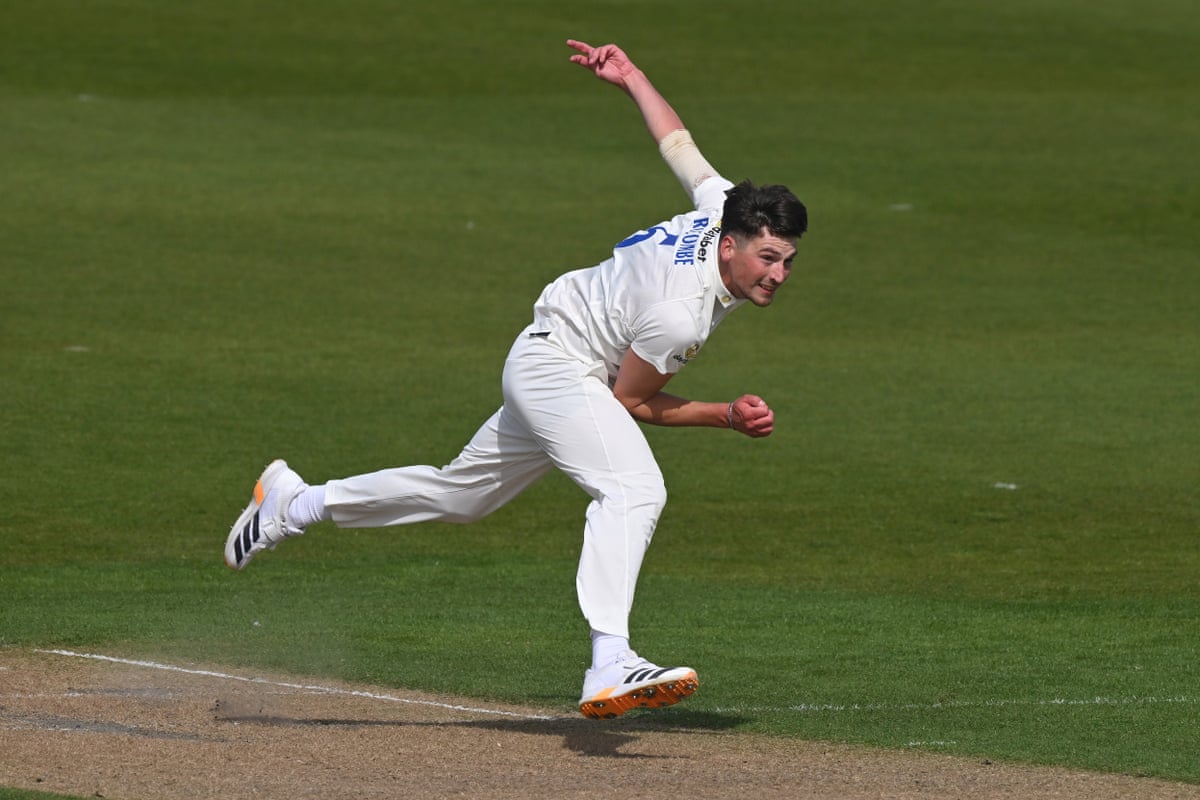
Henry Crocombe stands out by taking wickets when many other bowlers, aside from experienced veterans, are not. The Sussex pacer has claimed 16 wickets at an average below 18. Last week, he had the opportunity to bowl to Joe Root, which likely enhanced his credentials, especially after dismissing Root for 96.
5. Oh Dear, Lanky, Lanky
The new substitute rule introduced this season, currently under review, was highlighted during a match where wicketkeeper-batsman George Bell and opening bowler Tom Bailey resorted to bowling off-spin on a Sunday afternoon. This situation arose because the spin-bowling all-rounder Arav Shetty was not permitted to be replaced by another spin-bowling all-rounder, Tom Hartley. This incident did not showcase county cricket in the best light, and the video coverage was inadequate, potentially disappointing rs.
Despite this subplot, Durham found themselves more than 200 runs behind and eight wickets down in their first innings. However, late-order runs demonstrated resilience, with James Anderson and his teammates unable to complete the innings, and Matthew Potts continued to show his all-rounder potential.
Potts then took three wickets early in Lancashire’s innings, reducing them to 41-5. Nevertheless, a century from former Durham player Paul Coughlin, alongside Keaton Jennings, allowed Lancashire to declare and set a target of 336 runs in a single day.
With Anderson performing well and Lancashire slightly short of bowling resources, they were favored to win. However, on a deteriorating pitch, Emilio Gay and David Bedingham compiled an unbeaten partnership of 290 runs to secure victory, positioning Lancashire three points behind their opponents, who remain atop Division Two with a game in hand.
6. Kent Just Can’t
Kent’s struggles continue as they finished bottom of Division One in 2024, bottom of Division Two in 2025, and after an innings defeat at New Road, find themselves at the bottom once again.
Contrary to expectations of a team composed of inexperienced players and veterans on final contracts, Kent fielded a mix of seasoned professionals and promising talent. Despite this, they were unable to compete effectively against Worcestershire, who handed them an innings defeat. Worcestershire’s Tom Taylor led the attack with a five-wicket haul in the second innings, supported by four other seamers who each took wickets in both innings. Kent’s batting was notably weak, with the highest score from a top-six batsman being Zak Crawley’s 31.
Kent will face Derbyshire, who have also struggled, at the St Lawrence Ground on Friday. A loss there would extend an already difficult season for the team.


