Root Returns to Captaincy Amid Team Challenges
There was a moment late in the day that encapsulated the value of captaincy: Ben Stokes chose to position Emilio Gay at short leg, Kane Williamson edged the ball onto his pad and into the air, and without glancing at the outcome Ollie Robinson rushed into his captain’s embrace. The role is high-pressure, sometimes unbearably so, but it carries its own rewards.
The first day of the second Test, however, was quite different, especially since England’s team sheet had undergone extensive changes in the interim. The sun shone, the pitch played true, and the occasion felt considerably more sober—perhaps fitting given England’s recent habit of self-inflicted turmoil.
Root’s Return to Leadership
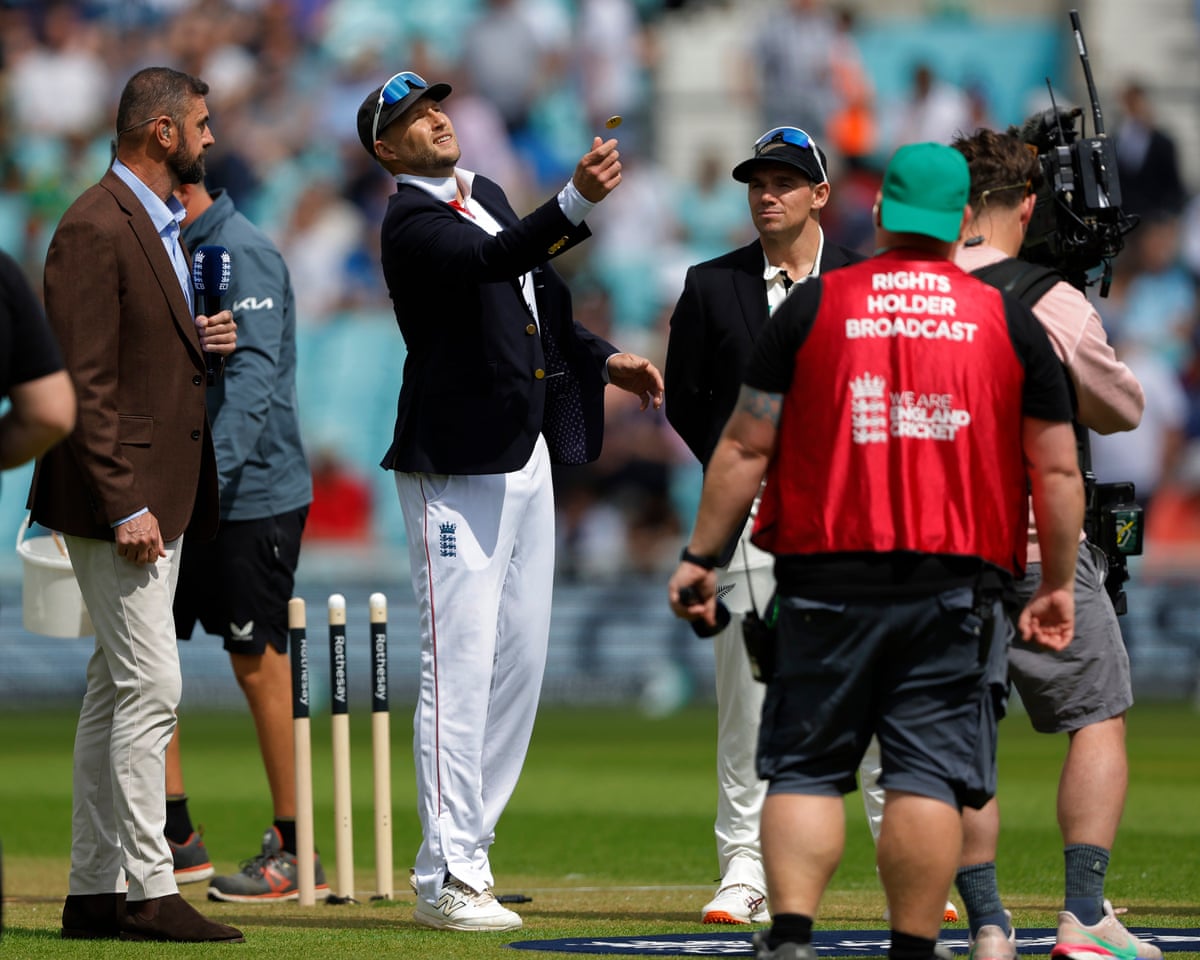
At the heart of this was Joe Root, back at the venue of his last home Test as England’s full-time captain against India nearly five years ago. That match marked the midpoint of a troubling run of one win in 17 games—eight before and eight after—during which both the team and Root’s enthusiasm for leadership deteriorated. Reflecting on his initial captaincy experience, Root said on Tuesday:
“I ended up being so consumed with everything I wasn’t the person I wanted to be.”
And now, once again, he found himself consumed by the role.
Would this be the Root who led and often carried the team between 2017 and 2022, or a Root reshaped by four years working alongside Brendon McCullum? Or would he, as Stokes’s stand-in, feel compelled to imitate?
Root had promised a “different way of looking at the game than the last time I captained,” and this was evident in his reluctance to use defensive fields, his occasional deployment of multiple leg slips, and his experiment with bowling Harry Brook while all but one fielder was positioned for catches.

He appeared inclined to inject some enjoyment into the game. Yet the team’s inexperience imposed a unique burden on him. Before play, Sonny Baker, the 23-year-old Hampshire seamer making his Test debut, spoke on Sky about how much he had learned from Kyle Abbott, the South African veteran who turns 39 on Thursday, standing at mid-off when he bowls for his county.
In this match, that role was generally filled by Matt Fisher, who is five years older than Baker but has only one more Test cap. If England’s inexperienced bowlers needed to draw on seasoned experience, it was Root who had to provide it—though he was stationed elsewhere.
Root’s Active Leadership on the Field
Cricket is a sport rich with statistics, but one unknown is how Root’s step count compared to that of Brook, who spent much of the day beside him at second slip. The numbers would likely be far apart. At the end of nearly every over, while Brook and James Rew, the debutant wicketkeeper, casually jogged to the other end, Root would break off for discussions with the incoming bowler and occasionally with fielders.
However, the moment that most clearly illustrated the difference in their movements occurred about an hour into the second session. Baker bowled to Rachin Ravindra, the left-hander deliberately guided the ball toward gully, and Jacob Bethell took the catch.
Of the three men behind the stumps, Brook and Rew naturally followed the ball’s flight to their left and joined Bethell in celebration. Root, however, could not let instinct override responsibility and moved to his right, where Baker was marking his first Test wicket with solo leaps and air punches.
Root held back, allowing others to reach the scene first. Perhaps he did not want to overshadow a young player’s moment of glory. Maybe he was already thinking about the incoming Tom Blundell and the next challenge to solve.
The Balance of Leadership and Presence
The essence of playing sport, and of witnessing its greatest moments, is to be fully present in each moment, to exist entirely in the now. The burden of leadership, however, is the constant need to think ahead. Yet perhaps in this role, Root can find a middle ground: after all, he is England’s captain, for now.