

Many Scottish athletes will dream of enjoying success like the bronze medal-winning women's 4 x 400m relay team in 2022
The return of the Commonwealth Games to Glasgow is imminent.
Following a challenging period when the event's future was uncertain, focus across multiple sports will shift to Scotland's largest city later this month.
Tickets are now available to the general public, with all venues and sports confirmed.
Below is BBC Scotland's comprehensive guide to the event.
When are the Commonwealth Games taking place?
The Games are scheduled from 23 July to 2 August 2026.
The opening ceremony will take place on 23 July at the OVO Hydro in Glasgow.
Sporting competitions commence the following day, featuring basketball, bowling, and swimming among the initial events.
The first medal awarded will be in para-powerlifting.
The Games will conclude on 2 August, with medals presented in sports such as netball and cycling, followed by the closing ceremony.
The 2026 edition marks the 23rd occurrence of the Commonwealth Games, which began in 1930.
Where is the Commonwealth Games being held?
The Games will be hosted in Glasgow.
This marks the city's second time hosting the competition, having previously welcomed athletes and spectators in 2014.
Glasgow stepped in after the Australian state of Victoria withdrew from hosting due to cost concerns, casting doubt on the Games' future.
After extensive discussions, Glasgow was confirmed as the new host city in September 2024, with a scaled-down version of the event planned.
Scotland also hosted the Games in 1970 and 1986, both times in Edinburgh.
What sports will be included at Glasgow 2026?
The 2026 Games will feature 10 sports, a reduction from the 17 sports included in the 2014 edition.
This reduction reflects a more cost-effective strategy, aiming to reduce expenses by limiting the number of sports.
The 10 sports selected are:
- Athletics and para-athletics (track and field only)
- Track cycling and para-track cycling
- Weightlifting and para-powerlifting
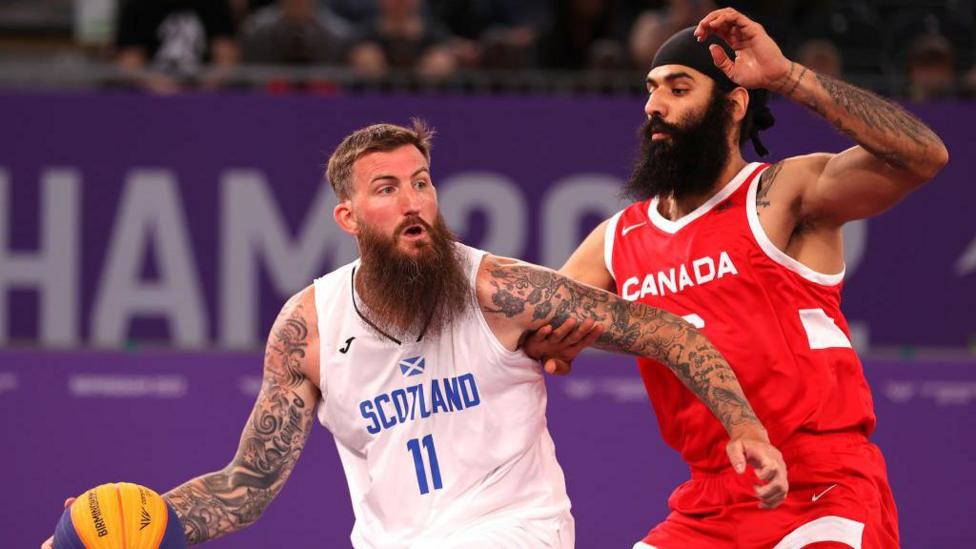
- 3x3 basketball and 3x3 wheelchair basketball
Several sports were excluded, causing disappointment among their communities. Notably, hockey was omitted despite Glasgow having a National Hockey Centre, as were all racquet sports.
What venues are being used in Glasgow in 2026?
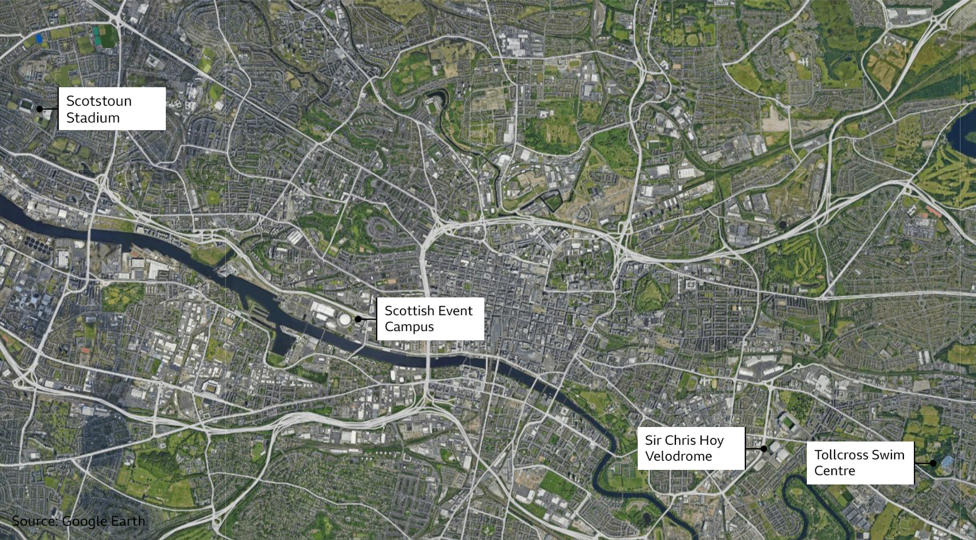
Four venues will host the Games:
- Tollcross International Swimming Centre will host swimming and para-swimming events.
- Scotstoun Stadium will host athletics and para-athletics.
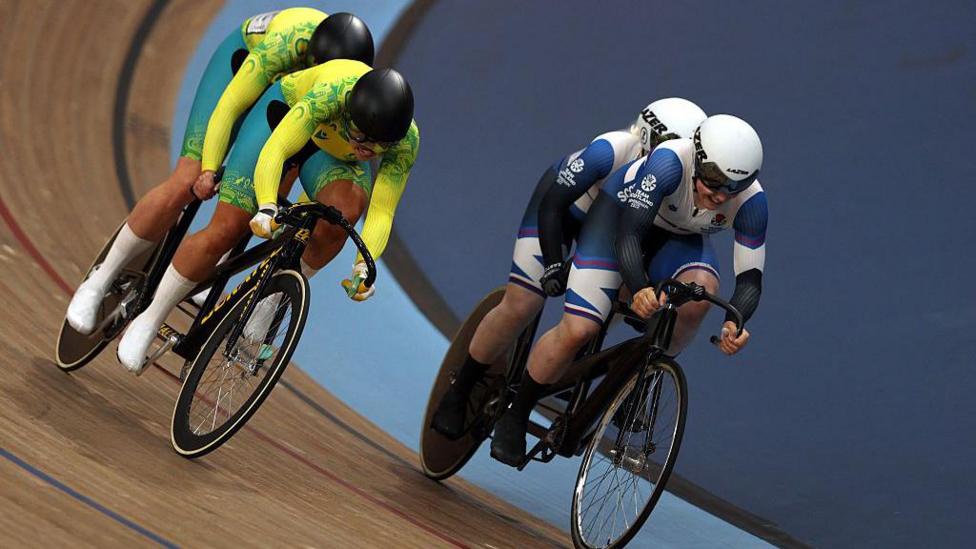
- The Sir Chris Hoy Velodrome and Arena will host track cycling and para-track cycling.
- The Scottish Event Campus (SEC) will host the remaining sports across various buildings.
The OVO Hydro, Glasgow's largest music venue, will be repurposed for netball competitions and the opening ceremony.
The SEC Armadillo concert hall will accommodate weightlifting and powerlifting events.
The SEC Centre will host 3x3 basketball and 3x3 wheelchair basketball, bowls and para-bowls, boxing, and judo.
A significant change from 2014 is that athletics, traditionally the Games' most popular sport, will be held at the smaller Scotstoun Stadium rather than Hampden Park, which has a capacity nearing 52,000.
Scotstoun is expected to hold approximately 11,000 spectators, even with additional seating installed. Consequently, athletics events are anticipated to be the most sought-after tickets during the competition.
Will there be an opening ceremony for the Commonwealth Games in Glasgow?
Yes, both opening and closing ceremonies are planned for Glasgow 2026.
The opening ceremony will take place at the OVO Hydro on 23 July, featuring performances by major international artists, emerging talent, and a cast of volunteers.
Approximately 600 volunteers are involved in the ceremonies.
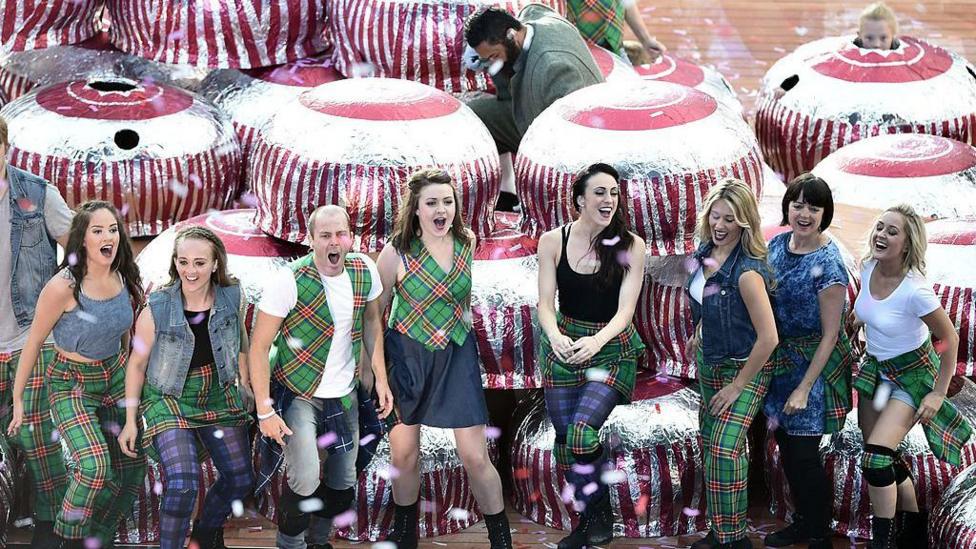
The 2014 opening ceremony, held at Celtic Park, included memorable moments such as dancing Tunnock's tea cakes, performances by Rod Stewart and Susan Boyle, and an unintentional comedic moment when Prince Imran, the Commonwealth Games Federation president, struggled to open the Queen's baton to present it to her.
The King's baton relay is already underway; Sir Chris Hoy was the first runner, carrying the baton in Port of Spain, Trinidad and Tobago, in March.
Traditionally, a single baton travels through all 74 Commonwealth nations and territories, but this year, each competing team received its own baton to decorate.
The baton will be carried across more than 50 events in Scotland before arriving at the Hydro.
How much are tickets for Glasgow 2026?
Ticket prices vary significantly.
Organisers have emphasized that tickets start at £17 for non-medal sessions and £26 for medal events.
However, these represent the lowest price categories, and costs can reach into three figures for popular sports such as athletics and cycling.
This pricing structure led to complaints when tickets first went on sale, with many Glaswegians contacting BBC Scotland News expressing concerns that prices were too high.
The high prices are partly due to demand and venue size; Scotstoun's limited capacity combined with the popularity of athletics means cheaper tickets are likely to sell out quickly, leaving only higher-priced options available.
Sports with more sessions, like netball, tend to have lower prices and more availability.
Organisers reported to BBC Scotland News that there has been "incredible enthusiasm" and "strong demand" during ticket pre-sales.
"It's clear there's a huge amount of passion and excitement about the Games returning to Glasgow."
Tickets can be purchased via the official Games website.
When will my Commonwealth Games tickets arrive?
There is no fixed timeframe for ticket delivery.
Organisers state that all tickets will be issued digitally to the purchaser's registered email address, either as a PDF download or through a digital wallet.

As with many major sporting events or concerts, e-tickets are often sent just days before the event, so a similar timeline is expected for the Games.
How many medals are at the Commonwealth Games?
There will be 215 gold medals awarded during the Games.
Despite the scaled-back program, the Games will feature the largest ever swimming, cycling, and 3x3 basketball competitions.
Additionally, there will be more Para-sport events than at any previous Games.
The medals' design is inspired by Glasgow, incorporating an inclusive design featuring braille.
Militsa Milenkova, an award-winning artist and designer, created the medals, which integrate the Finnieston Crane and Glasgow's industrial heritage, along with the city's coat of arms.
Who's taking part in the Commonwealth Games?
Seventy-four nations will compete, an increase of two from the 2022 Games, with Gabon and Togo joining.
Delegation sizes will vary; at Birmingham 2022, England sent 438 athletes, while Montserrat had five participants. Scotland's delegation numbered 254 that year.
Due to fewer sports in Glasgow, delegation sizes are expected to be smaller, but many athletes will still aspire to achieve success.
Notable athletes include runner Jake Wightman, a World Championship silver medallist, competing in the Commonwealth Mile, which returns for the first time since 1966, replacing the 1500m event.
Megan Keith will debut in the 10,000m, and Neil Gourley will join Wightman in the Commonwealth Mile, expressing his determination to compete regardless of obstacles.
Sarah Adlington, the first athlete to win two Commonwealth Games gold medals in judo, aims for a third gold to conclude her career.
In swimming, Duncan Scott and Angharad Evans will lead alongside three other 2024 Olympians: Katie Shanahan, Keanna MacInnes, and Lucy Hope.
Internationally, five-time Olympic champion Elaine Thompson-Herah will defend her Commonwealth 100m and 200m titles.
English Olympic gold medallist Adam Ramsay-Peaty will make his fourth Games appearance, with 2020 Olympic champion Tom Dean also included in the squad.
Notable absences include cyclists Jack Carlin and Katie Archibald, both of whom retired in 2025 and early 2026 respectively, and athletics star Keely Hodgkinson, who opted to focus on the upcoming European Championships.
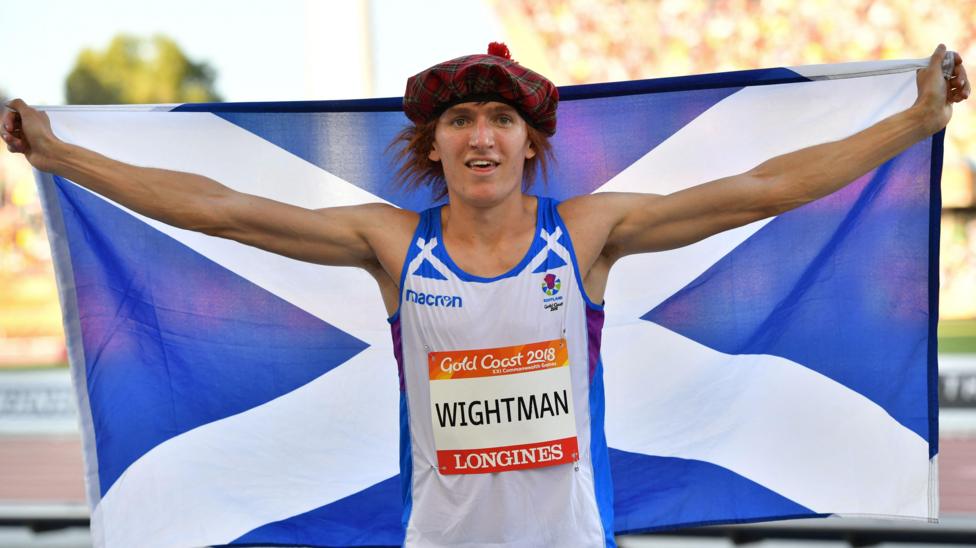 " alt="Jake Wightman holds up a Scotland flag while wearing a See You Jimmy hat after success on the athletics track." />
How to watch the Commonwealth Games?
The Games have a new broadcast partner for 2026.
Subscription channel TNT Sports outbid the BBC, which had been the primary broadcaster since 1954, covering 18 consecutive Games with free-to-air coverage.
TNT Sports announced that every event will be streamed via the HBO Max platform, offering over 600 hours of live coverage in a "re-imagining" of the Games.
The BBC stated it was "unable to match" TNT's bid.
This means viewers wishing to watch live will need a TNT subscription, starting at £4.99 for packages with adverts, with more expensive options providing advert-free viewing.
Some free-to-air coverage will be available; Channel 5 will broadcast daily highlights programs, and BBC ALBA has secured rights to air live action and highlights every evening, also available via BBC .
What happened when Glasgow hosted the 2014 Commonwealth Games?
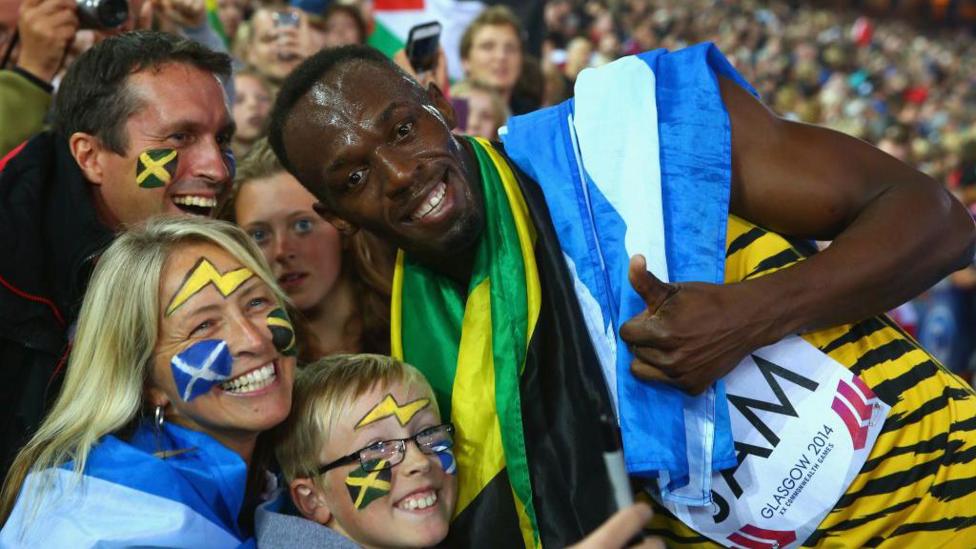
The 2014 Games were widely regarded as a major success, described by organisers as "the standout Games in the history of the movement."
Scotland finished fourth in the medal table, achieving a record 19 gold medals and a total of 53 medals, its best ever.
England topped the table for the first time in 28 years, ahead of Australia and Canada.
Highlights included Usain Bolt anchoring Jamaica to 4x100m relay gold and engaging with the crowd, Chad Le Clos winning a record-equalling seven medals, and Nicola Adams securing the first-ever gold medal in women's boxing.
Homegrown successes featured swimmer Ross Murdoch winning 200m breaststroke gold and postman Charlie Flynn capturing lightweight boxing gold.
Beyond medals, the event was well attended and benefited from mostly sunny, warm weather.
Additional activities such as fan zones and free concerts contributed to a festive atmosphere throughout Glasgow.
Concerns about replicating the success of 2014 influenced the Scottish government's cautious approach to hosting the 2026 Games.
Who's the mascot for the Commonwealth Games?
The previous mascot, the thistle named Clyde, has retired from overall duties but remains Team Scotland's mascot.
The new official mascot for the Games is a unicorn named Finnie, distinguished by a traffic cone for a horn.
Finnie was unveiled at Glasgow's iconic Finnieston Crane and was designed with input from school children across the city.
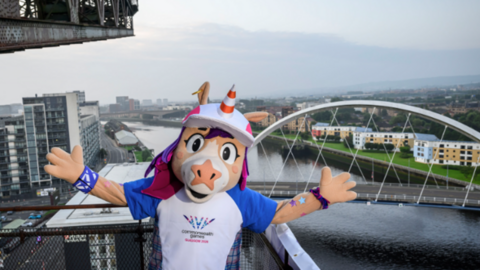 " alt="A anthropomorphic unicorn, with a traffic cone for a horn and wearing blue and white Scotland top for the Commonwealth Games. The mascot is posing with a view of Glasgow and the river Clyde stretching behind them." />
Who pulled out of holding the Commonwealth Games?
The Australian state of Victoria was originally appointed host in 2022 after difficulties finding volunteers for other locations.
However, a year later, Victoria withdrew, with Premier Daniel Andrews citing that projected costs had tripled and become "well and truly too much" for the state to bear.
Other potential hosts, including Malaysia and Singapore, declined to take on the event.
Consequently, Glasgow stepped in after the Scottish government negotiated additional funding with Australian authorities.
What's the future of the Commonwealth Games after Glasgow 2026?
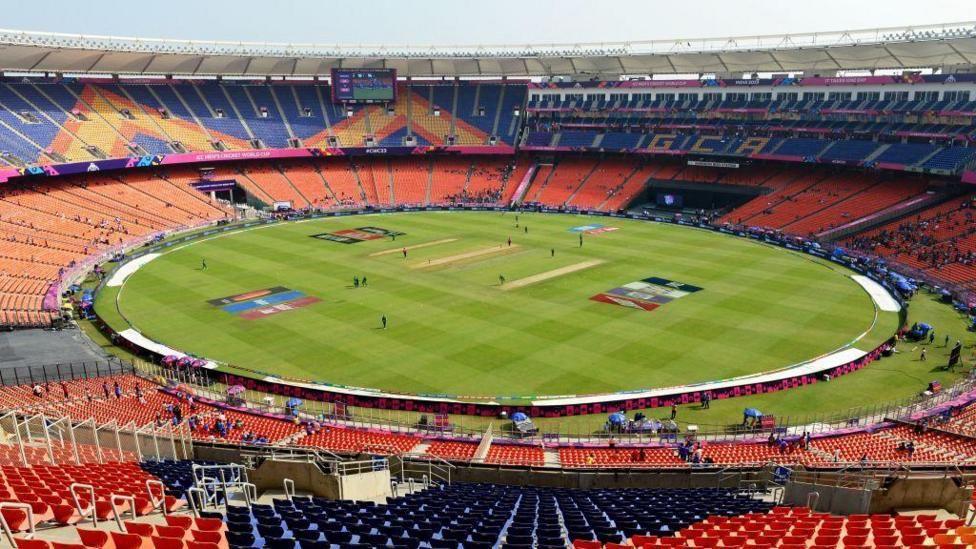
Following Victoria's withdrawal, the future of the Games for 2026 and beyond was uncertain.
Durban had previously abandoned plans to host the 2022 Games, leading Birmingham to take over, and the high costs amid financial pressures have deterred many countries from bidding.
The scaled-back program of Glasgow 2026 is hoped to serve as a model for future Games, with fewer sports and venues making hosting more affordable.
Early signs are positive; Ahmedabad in western India has been confirmed as the host for the centenary Commonwealth Games in 2030, and Nigeria has also submitted a bid.
Organisers remain optimistic about securing the Games' long-term future.
- Anger at Commonwealth Games ticket sales problems
- Glasgow 2026 will award 215 golds over 10 days
- Reimagined Glasgow Games will have 'wow factor'


