

Canada Selects German Consortium for Major Submarine Contract
Canada has chosen a German consortium to construct twelve advanced submarines in one of its largest defence contracts, a move that will strengthen its ties with Nato ahead of a significant summit this week.
On Monday, the prime minister announced the winner of a closely contested competition for the government contract to replace the country’s aging fleet of secondhand submarines, most of which are currently undergoing maintenance.
Competition Between TKMS and Hanwha Ocean
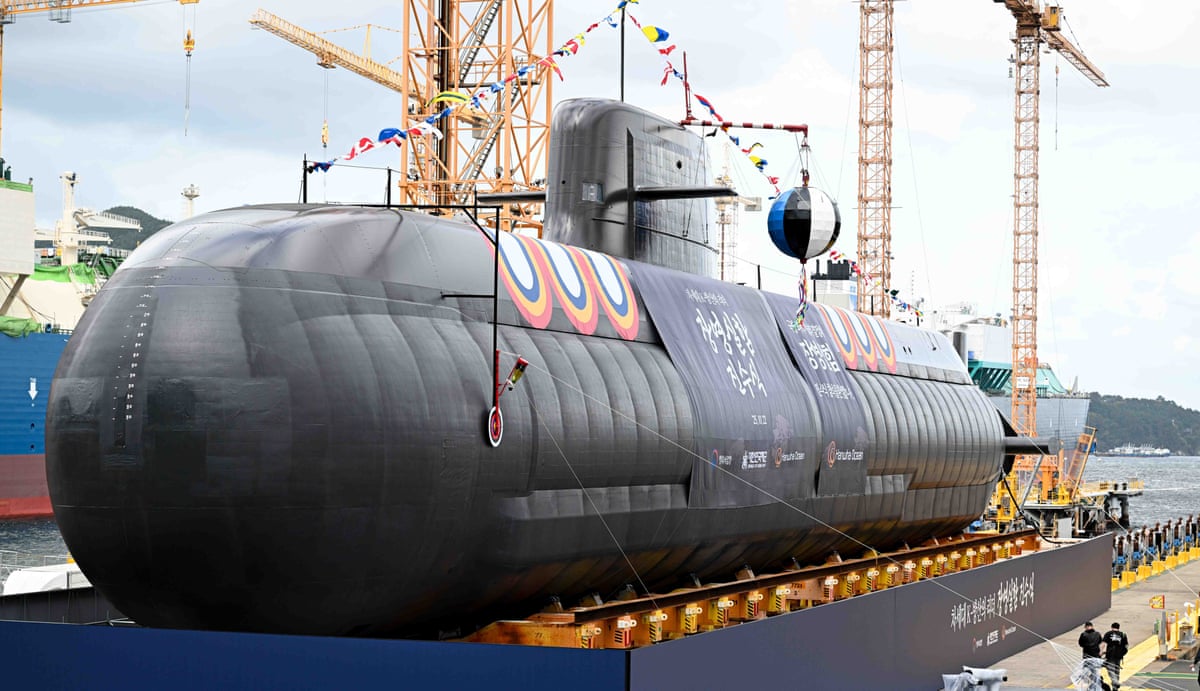
For several months, both ThyssenKrupp Marine Systems (TKMS) and South Korean shipbuilder Hanwha Ocean have proposed technologically advanced submarines along with economic benefits for Canada.
The winning bidder, TKMS, is the largest manufacturer of non-nuclear submarines and a key supplier to Nato’s fleet. Canada had previously indicated that both companies’ diesel-electric submarine models—the 212CD from TKMS and Hanwha’s KSS-III Batch-II—met its military requirements.
Significance of the Submarine Order
This order for twelve submarines marks the first time Canada will acquire brand-new vessels. Currently, the Royal Canadian Navy operates four submarines purchased secondhand from Britain in 1998. Of these four Victoria-class submarines, three are undergoing maintenance.
Strategic Use and Capabilities of New Submarines
The new submarines are expected to enhance Canada’s presence in the Arctic. TKMS’s vessels are designed with modern stealth technology to operate in contested environments with minimal detection and will be capable of conducting extended surveillance missions along critical Arctic routes, including the Northwest Passage. Hanwha’s submarines are significantly larger, and both the company and industry analysts have stated that they would provide Canada with greater capacity to deploy powerful weapons and conduct long-range ocean patrols.
Contract Value and Maintenance Commitment
The submarine contract is estimated to be worth over US$12 billion (£9 billion). However, the agreement also includes approximately fifty years of maintenance, which could increase the total cost to more than US$70 billion.

Canada’s federal government and TKMS must still engage in negotiations to finalize the contract, a process that may take several years.
Official Visits and Economic Considerations
Last year, the prime minister led a delegation of senior cabinet ministers to visit TKMS’s shipbuilding facility in Kiel, Germany, and toured a newly constructed submarine at Hanwha’s facility in Geoje, South Korea.
Senior officials from both Germany and South Korea also traveled to Canada to promote the broader economic advantages of their respective proposals. German officials emphasized compatibility with Nato, and reports indicate that TKMS aimed to include potential investments in sectors such as rare earths, mining, artificial intelligence, and battery production for the automotive industry.
Although South Korea is not a Nato member, Hanwha representatives stated that the company would use steel from Algoma’s plant in Sault Ste Marie, Ontario, to manufacture armoured weaponized military vehicles in Canada. Hanwha also invested millions in a Canadian subsidiary, including efforts to highlight the benefits of its KSS-III submarine.
Canada’s Defence Spending and Procurement Strategy
The prime minister’s Liberal party has pledged to significantly increase government defence spending, aiming to allocate 5% of gross domestic product (GDP) by 2035. Canada has already reached the longstanding Nato target of 2% of GDP.
Canada has also indicated openness to making larger defence purchases from European contractors as part of a broader strategy to reduce reliance on the United States. The country has committed to acquiring 18 American-made Lockheed Martin F-35 Lightning II jets, a fighter aircraft favored by the Royal Canadian Air Force for interoperability with the North American Aerospace Defense Command, the joint military organisation shared between Canada and the US. However, recent developments have encouraged Ottawa to consider other suppliers to modernize its air force.
Canada is currently evaluating the purchase of 72 Saab-made Gripen fighter jets. The Sweden-based company has stated that if Canada procures its latest-generation fighter aircraft, along with six GlobalEye surveillance aircraft, the deal would generate up to 12,600 jobs in Canada, representing another significant defence industrial project for the country.
Nato’s Perspective on Defence Contracts
On Monday, Nato Secretary General Jens Stoltenberg told reporters that alliance members were about to announce billions in new defence contracts, describing them as the
“crucial kit we need to deter and defend.”


