

Where are the astronauts now?
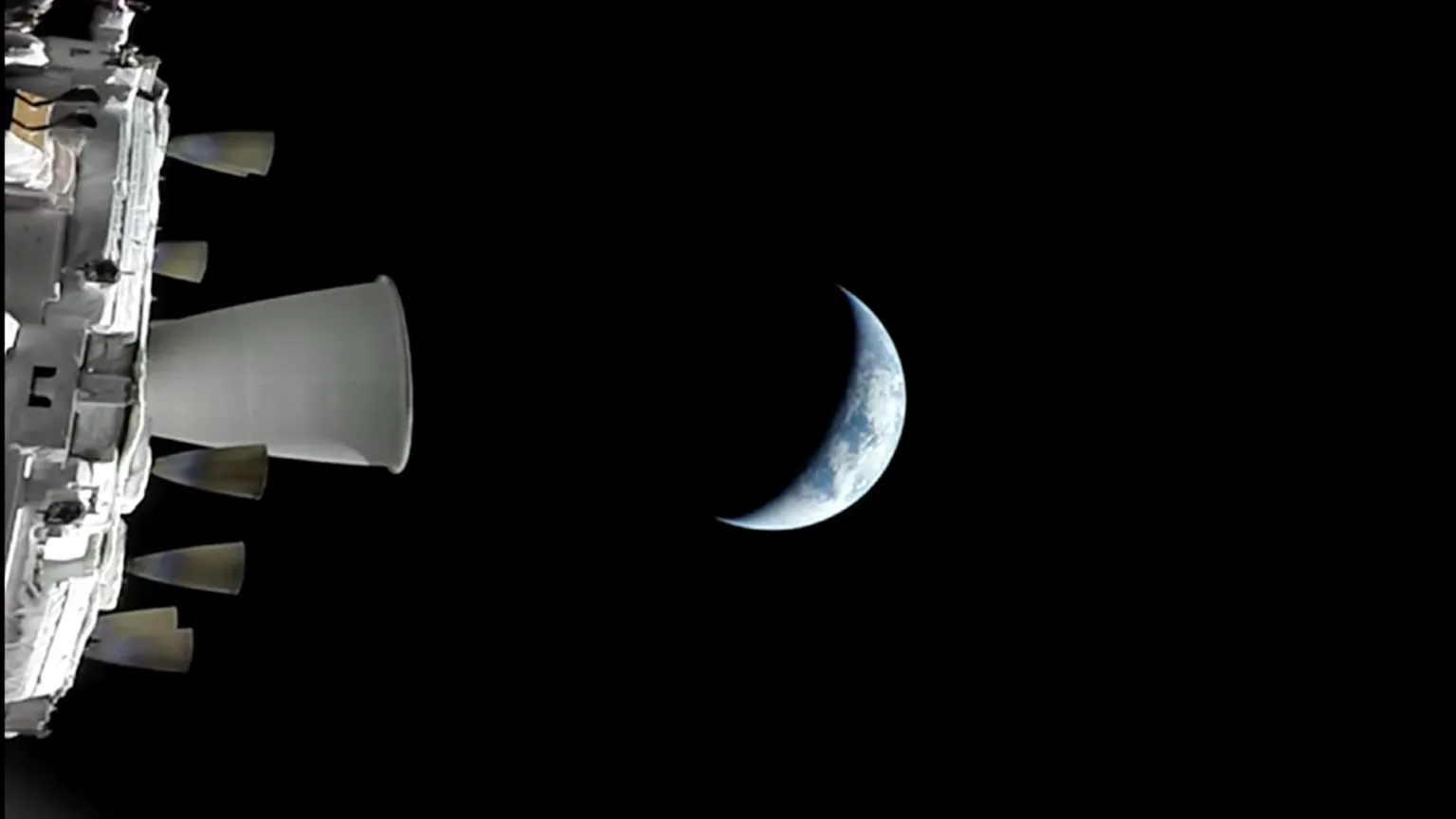
Commander Reid Wiseman, Victor Glover, Christina Koch, and Jeremy Hansen are currently orbiting Earth approximately 42,500 miles away, conducting tests on the Orion spacecraft. Shortly after launch, the spacecraft’s solar arrays fully deployed, providing the necessary power to sustain the mission.
About the size of a minibus, Orion has never before been crewed in space, so pilot Victor Glover is rigorously testing its systems throughout the day. NASA aims to confirm that Orion is fully capable of deep space travel before the crew proceeds further, where returning to Earth would be more complex.
The life support systems are also under evaluation. In the event of an emergency, the astronauts are equipped with specially designed suits that can sustain them for up to six days.
What are the crew doing?
Unlike the Apollo missions of the 1960s and 1970s, much of this mission is accessible to the public through NASA’s live broadcasts. Cameras positioned above the astronauts’ heads show them monitoring instruments, using mobile devices, and operating controls.
Approximately eight hours after launch, the crew was permitted their first sleep period onboard. During communications with mission control, Commander Reid Wiseman inquired about the location of the crew’s sleepwear, referring to them as “comfort garments,” before the astronauts entered the sleeping quarters for about four hours.
"Where are the team's pyjamas?"
Mission schedules in space are meticulously planned, with every minute accounted for by Mission Control. The crew is allowed to sleep in two four-hour intervals within a 24-hour period. Sleeping in microgravity can be challenging, as astronauts must secure themselves to prevent drifting, and some experience difficulty falling asleep while adjusting to weightlessness. However, others report experiencing their best sleep in space.
The astronauts have strict instructions to exercise for 30 minutes daily to maintain muscle and bone density in the absence of gravity. Reid Wiseman and Victor Glover were the first to use Orion’s flywheel exercise device, which is roughly the size of a carry-on suitcase.
Christina Koch and Jeremy Hansen were scheduled to exercise later, performing activities such as rowing, squats, and deadlifts using the same equipment.

The crew has likely consumed their initial meals from NASA’s specially prepared Artemis II menu. Since Orion lacks refrigeration, much of the food is freeze-dried and rehydrated with water from an onboard tap. Astronauts selected their meals in advance, which include options like macaroni and cheese, beef brisket, and five varieties of hot sauce.
They are permitted two drinks daily, including coffee or a chocolate-flavored breakfast beverage.
Importantly, the onboard toilet is reported to be operational. During launch, the toilet malfunctioned, raising concerns about the crew spending 10 days without a functioning facility. After astronaut Christina Koch received instructions on repairing the system, Mission Control confirmed:
"Happy to report that toilet is go for use.... We do recommend letting the system get to operating speed before donating fluid."
When do they go to the Moon?
The mission is progressing toward the "trans-lunar injection" burn, a critical maneuver that will propel the spacecraft out of Earth’s orbit and set it on a trajectory toward the Moon. This burn is scheduled for Thursday night UK time but could be delayed or cancelled if issues arise.
A cancellation would represent a significant setback for NASA and the United States, which aims to be the first nation to return humans to the lunar surface by 2028.
If successful, the burn will last approximately six minutes, placing the spacecraft on a path around the Moon that utilizes lunar gravity to slingshot it back to Earth.
The crew is expected to travel about 6,400 miles (10,299 km) beyond the Moon’s far side, the hemisphere that permanently faces away from Earth. This milestone is anticipated on Monday, 6 April. The astronauts will be the first humans to observe certain regions of the far side, although robotic probes from countries such as India and China have previously mapped this area.
During this phase, the crew will capture photographs and conduct observations to enhance scientific understanding of this relatively unexplored lunar region.


