Artemis II Crew Reflects on Mission's Impact
The four astronauts of Artemis II expressed that their mission instilled a sense of hope and unity globally during a period when such sentiments are scarce.
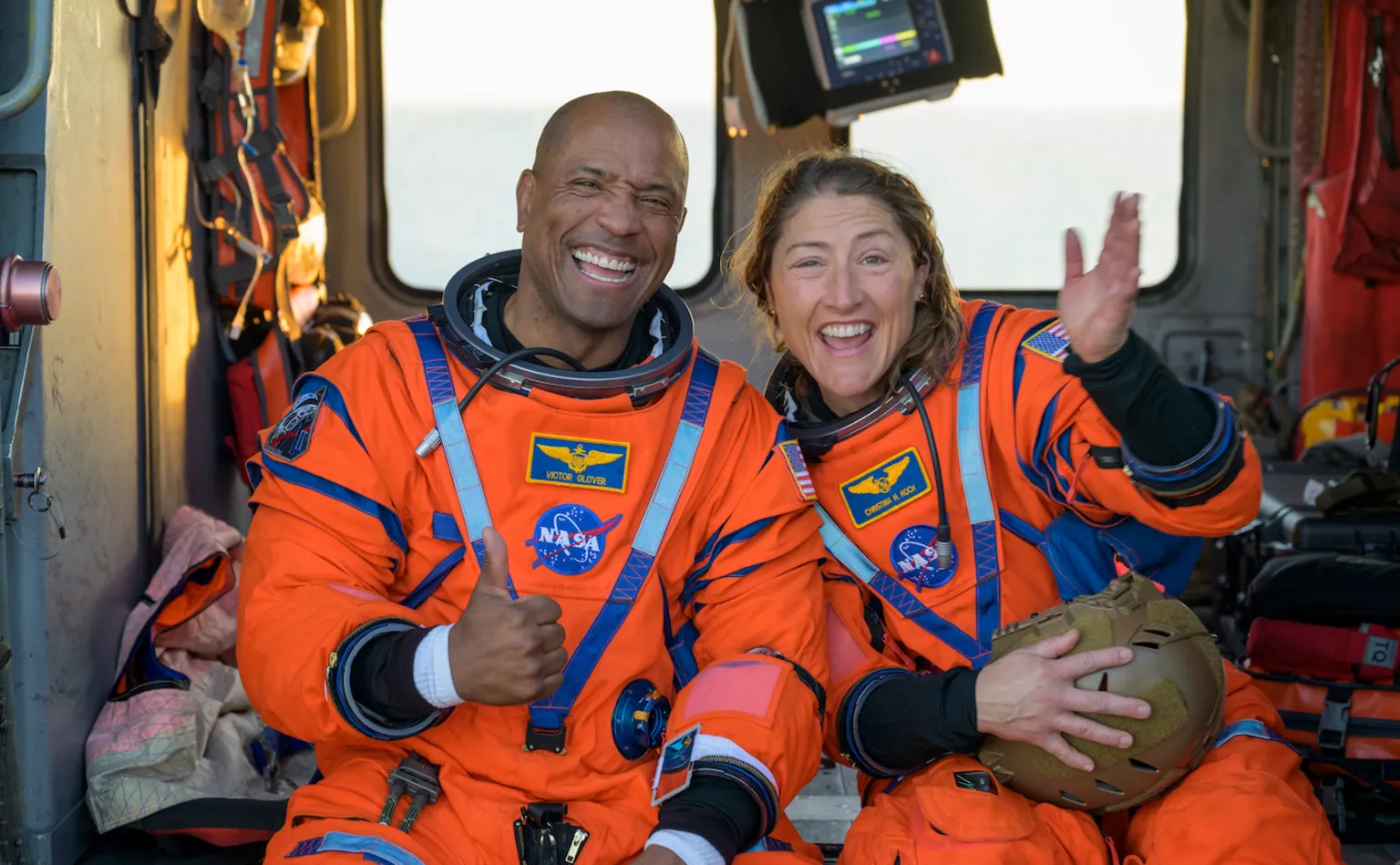
During their first NASA news conference since their return last Friday, Reid Wiseman, Victor Glover, Christina Koch, and Jeremy Hansen shared that they departed as friends and returned with an even stronger bond, shaped by an experience beyond the scope of any earthly language.
Beyond the technical achievements, the mission highlighted fundamental human experiences: laughter, joy, tears, and an innate connection that transcends national boundaries.
Their message was unequivocal: reaching the Moon is no longer a distant aspiration.
"We wanted to go out and try to do something that would bring the world together, to unite the world," Wiseman told reporters at NASA's Johnson Space Center in Houston.
"We were certainly hooked on this mission, but when we came home, we were shocked at the global outpouring of support, of pride, of ownership of this mission... we want to thank the world. Thank you for tuning in."
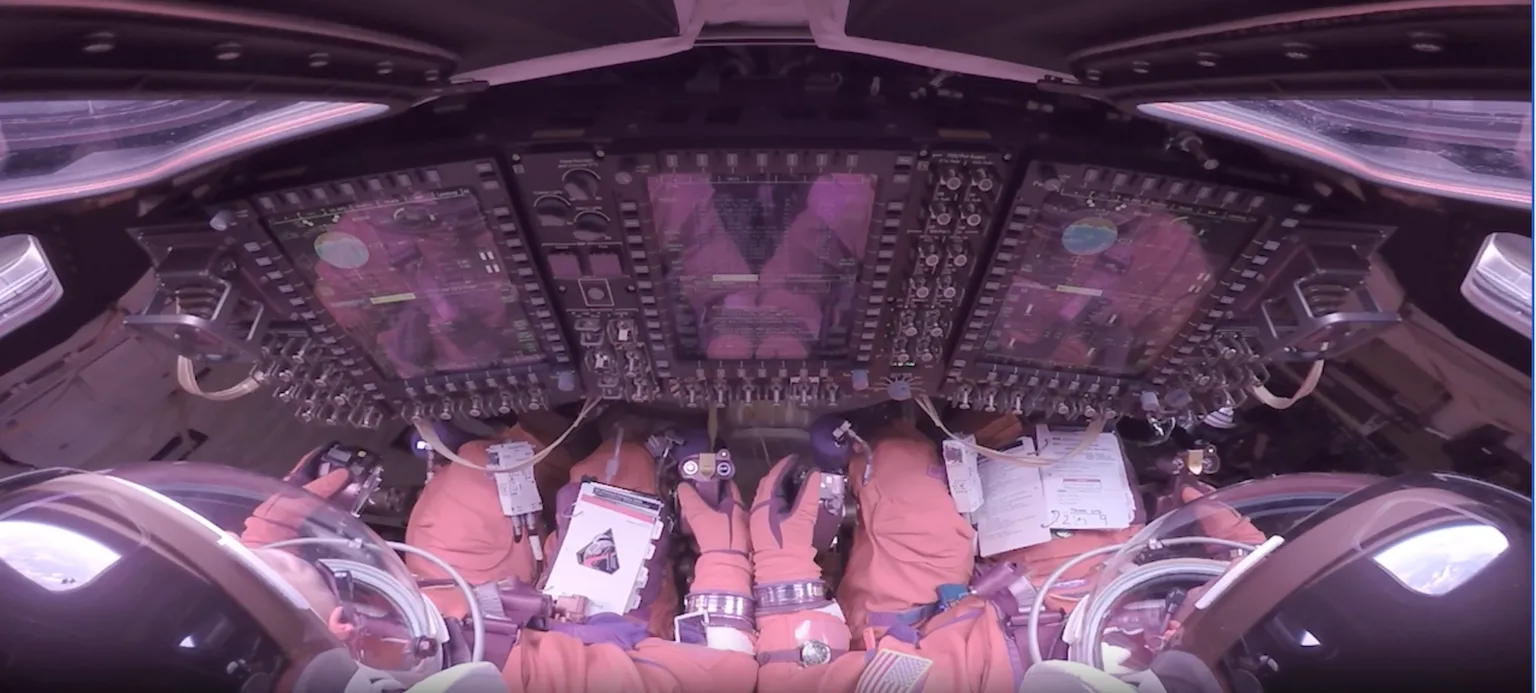
He highlighted the Orion spacecraft, named Integrity, and the Space Launch System as exemplars of what international collaboration can achieve.
"Thank you to every single person that had a hand in building that machine," he said, "because it was a magnificent machine."
Artemis II took its crew farther from Earth than any humans before, completing a journey around the far side of the Moon in just over nine days. Victor Glover became the first Black astronaut to reach deep space; Christina Koch the first woman; and Jeremy Hansen the first Canadian.
Personal Reflections and Global Impact
For Koch, the magnitude of their achievement became evident through the perspectives of others, particularly when her husband told her via video call that the mission had bridged divisions and united people worldwide. This deeply moved her.
"When my husband looked me in the eye on that video call and said, 'No, really, you've made a difference'," she told reporters, "it brought tears to my eyes, and I said, that's all we ever wanted."
Glover spoke about the shared nature of the experience across the globe.
"I think something that we all feel and we try to share is how much we want to reflect back to you all how we did this, not we as a crew, we as countries and as humans did this," he said.
Reflecting on this, he recalled "the picture of the Earth as we started to go farther" during their journey near the Moon and how they discussed "looking at you and how beautiful Earth is."

Hansen noted that returning to Earth strengthened his belief in humanity.
"We don't always do great things. We're not always in our integrity, but our default is to be good and to be good to one another," he said. "What I've seen has brought me more joy, but more hope for our future."
Profound Experiences Beyond Words
Certain experiences defy rational explanation. Wiseman described the moment the Sun passed behind the Moon—an eclipse observed from 250,000 miles away—as overwhelming to the human mind.
Upon returning to the recovery ship, he sought the chaplain to find a way to articulate what he had experienced, something science alone could not convey.
"I'm not really a religious person," he said, "but there was just no other avenue for me to explain anything or to experience anything. So I asked for the chaplain on the Navy ship... and I broke down in tears.
"I don't think humanity has evolved to the point of being able to comprehend what we're looking at right now, because it was otherworldly."
In addition to the emotional impact, the visual spectacle was remarkable. Hansen found himself captivated by the vastness of space, as if seeing it anew.
"We just saw so many amazing things," he said. "I kept seeing this depth to the galaxy that I just had never experienced before."
He described feeling "infinitesimally small, but yet this very powerful feeling as a human being, like as a group."
Human Moments and Technical Challenges
As the news conference progressed, moments of levity emerged. Koch recounted how she was so accustomed to weightlessness that upon returning to Earth, she dropped a shirt expecting it to float, only to be surprised when it fell.
"I put a shirt in the air and it went - it actually surprised me," she said.
The crew also candidly discussed a persistent issue with the spacecraft's toilet, noting that the primary vent line became "clogged up."
Despite this, the Orion capsule impressed the crew deeply. Wiseman, reflecting on their proximity to the lunar surface, made a statement that will resonate within NASA's planning circles.
"If we had a first flight lander on board that thing," he said, "I know at least three of my crewmates would have been in it, trying to land on the Moon."
He carefully chose his words, perhaps deliberately omitting "giant" in homage to the first words spoken on the lunar surface.
"It is not the leap I thought it was," he said. "Once we're around the Moon, in the vacuum of space, we've got a vehicle that's handling great. If you had given us two keys to the lander, we would have taken it down and landed on that Moon."
Human Connection and Legacy
Missions of great significance often humanize the cosmos, allowing those on Earth to feel part of the journey. Artemis II achieved this through four astronauts willing to share their emotions openly, laugh about small moments, and convey that their discovery was hope.
President John F. Kennedy once said America chose to go to the Moon "not because it was easy but because it was hard." This crew embodies that Apollo legacy.
"All of the what-ifs," said Koch, "all of the just coming up with every possible operational workaround for anything you might encounter - accomplishing the near impossible is exactly what we do, and what we just showed that we can do."