University Course Value Perception Rises
Recent research indicates an increasing number of undergraduates perceive their courses as offering good value for money. This year, over 40% of students rated their course value as "good" or "very good," marking the highest level in more than a decade.
However, questions remain about the financial returns after graduation. Specifically, whether graduates earn enough to offset the costs of their degree.
Tuition Fee Increases in England and Wales
As of August last year, the annual tuition fee for undergraduate degrees in England and Wales rose to £9,535. This fee is scheduled to increase further to £9,790 in August 2026.
Universities have raised concerns over funding pressures, noting that fees had been frozen at £9,250 since 2017. Inflation has reduced the real value of these fees, and a decline in international student numbers has contributed to financial shortfalls.
In October 2025, the government announced that from 2026, tuition fees in England will increase annually in line with inflation, measured by the Retail Price Index minus mortgage payment interest (RPIx).
Tuition Fees in Northern Ireland and Scotland
In Northern Ireland, the maximum annual undergraduate fee is £4,855 for Northern Irish students and £9,535 for other UK students, with increases to £4,985 and £9,790 respectively planned for 2026-27.
Scottish students generally do not pay tuition fees for undergraduate courses, while other UK students pay £9,535, rising to £9,790 in 2026-27.
Understanding Student Loans
Student loans consist of two parts: tuition fee loans, which cover course costs, and maintenance loans, which are means-tested based on family income and may not cover all living expenses.
From 2026, the maximum maintenance loan for English students will increase annually with inflation. For instance, the maximum loan for students living away from home outside London will rise to £10,830 in 2026-27, up from £10,544 the previous year.
Interest accrues on the total loan from the time it is taken out, but repayments begin only once the borrower's income surpasses a certain threshold. Repayments cover both tuition and maintenance loans.
Repayment terms vary across the UK. England updated its repayment rules in 2023, resulting in current and future students likely paying more over a longer period than earlier cohorts.
Money saving expert Martin Lewis said the extended repayment period would increase "costs by thousands" for lower and mid-earners.
Graduates in England who began repayments in April 2025 had an average debt of £53,000, according to the Student Loans Company.
Student Accommodation Costs Across the UK
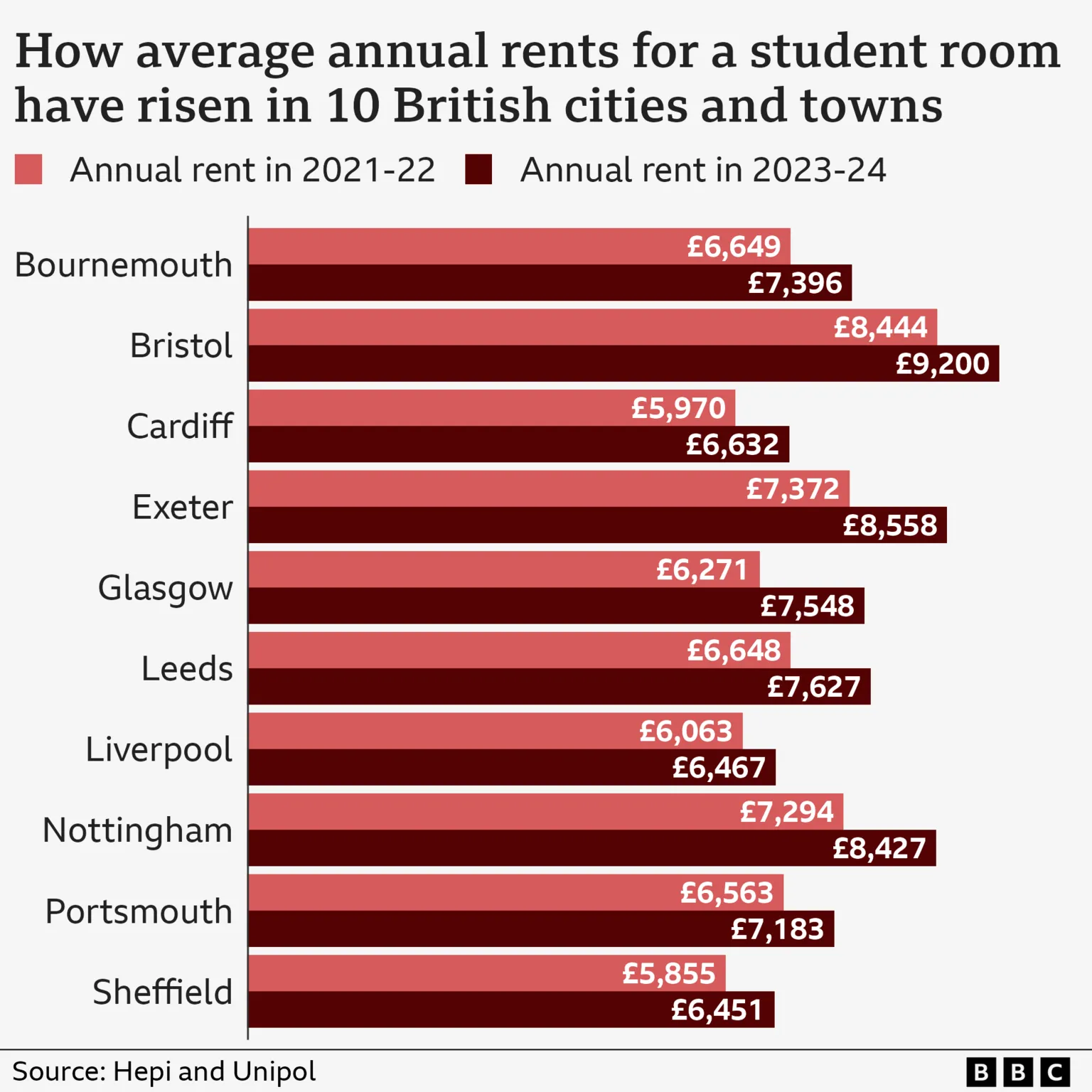
Student rents have risen significantly in recent years, alongside other living expenses.
The Higher Education Policy Institute (Hepi) reported that in 2023-24, average weekly costs for first-year students were £260 excluding rent and £418 including rent.
Average annual rent across ten university towns and cities (excluding London and Edinburgh) increased from £6,520 in 2021-22 to £7,475 in 2023-24.
In London, average rent for purpose-built student accommodation was £13,595 in 2024-25.
Hepi stated in 2023 that students require £61,000 over a three-year degree to maintain a "minimum socially acceptable standard of living," excluding tuition fees. In London, this figure rises to £77,000.
The 2026 Hepi student survey found that 65% of full-time undergraduates were employed during term time, a slight decrease from the previous year but significantly higher than the 45% reported in 2022.

Additional Financial Support for Students
Students in Wales and Northern Ireland may be eligible for maintenance grants that do not require repayment.
Full-time undergraduates normally resident in Wales receive at least £1,000, increasing to £1,020 in 2026-27. Students from low-income backgrounds studying in London can receive up to £10,124, rising to £10,325.
In Northern Ireland, the maximum grant is £3,475, increasing to £3,569 in 2026-27.
England plans to reintroduce maintenance grants of up to £1,000 annually for students from lower-income households enrolled in courses aligned with the Industrial Strategy, starting in 2028. The list of eligible courses is still being finalized.
The Scottish government provides financial support to specific student groups, such as those with dependants.
Across the UK, students facing financial hardship can apply for hardship funds and may receive assistance from charitable organizations.
Graduate Earnings and Degree Value
Research by Hepi and AdvanceHE indicates that 45% of undergraduates rate their course value as "good" or "very good," up from 37% the previous year and the highest in over ten years.
The decision on whether university is "worth it" varies individually, depending on personal goals.
Financially, graduates must consider that loan repayments can extend up to 40 years once earnings exceed a threshold. An inquiry by MPs into student loans in England was launched in 2024 amid widespread dissatisfaction with repayment terms.
Government data from 2024 shows graduates generally earn more than non-graduates, with median salaries of £42,000 compared to £30,500 for non-graduates. However, this data does not adjust for factors such as prior academic achievement.
The Higher Education Statistics Agency (HESA) reports that graduate wages have declined in real terms when adjusted for inflation, with the extent varying by occupation.
Compared to 2015 prices, graduates surveyed in 2022 earned £448 less annually on average than those who graduated three years earlier.
Earnings also vary by subject and university attended.
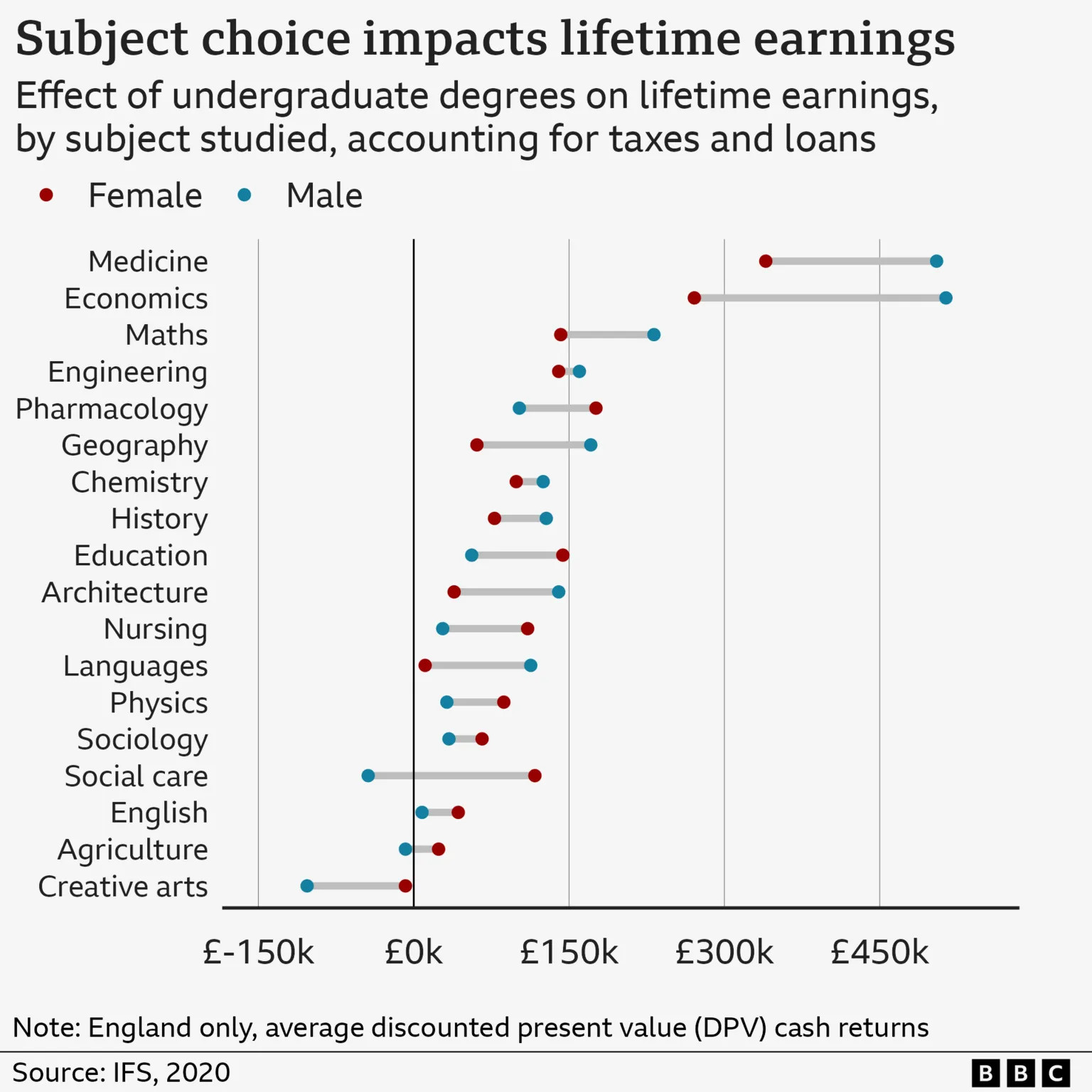
Research published in 2020 by the Institute for Fiscal Studies (IFS) in England found that women with degrees in creative arts and languages earn similar lifetime incomes to those without degrees.
Conversely, women studying law, economics, or medicine earn over £250,000 more during their careers compared to non-degree holders.
Men who studied creative arts tend to earn less over their lifetimes than non-graduates, while male graduates in medicine or economics earn approximately £500,000 more.
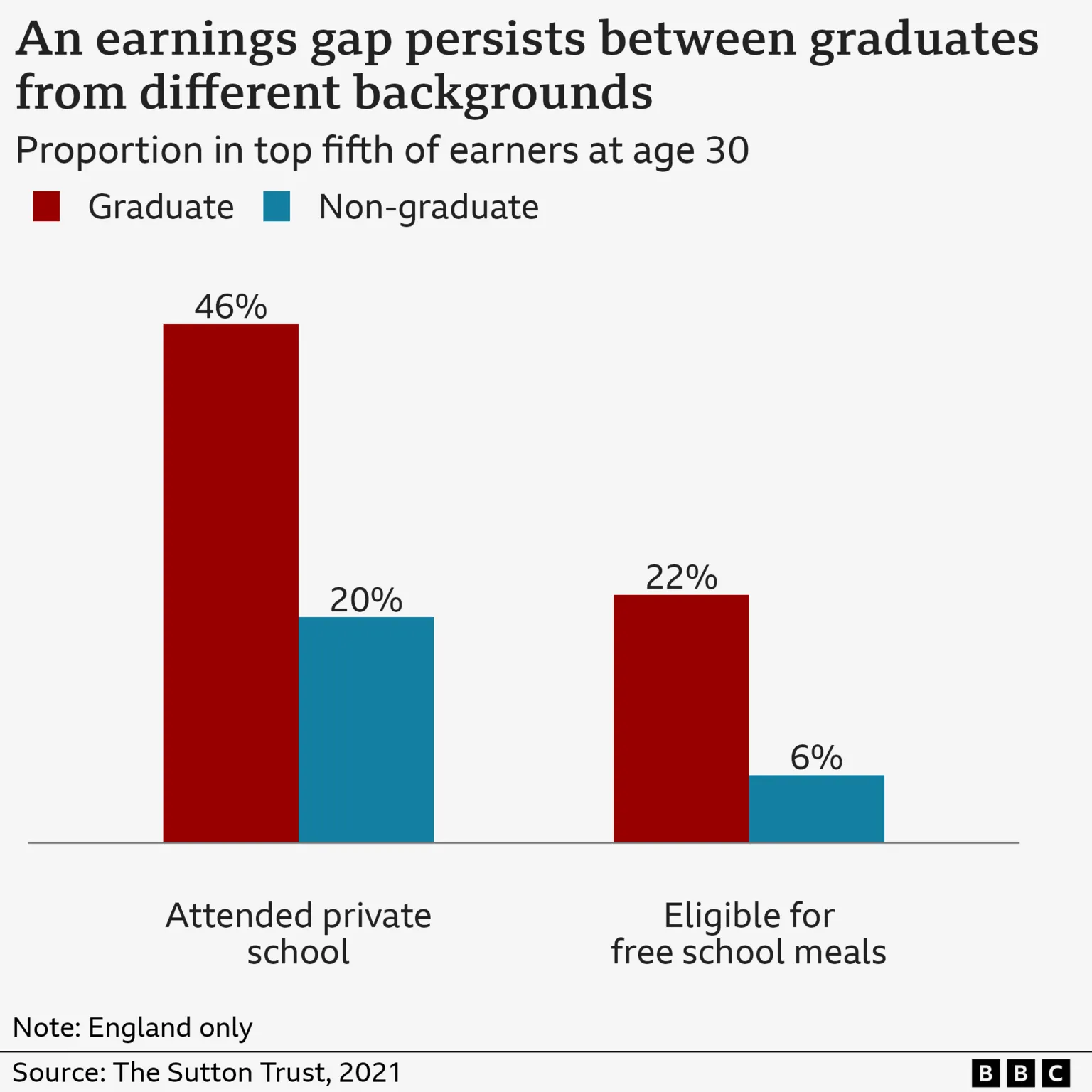
University attendance can enhance social mobility for students from disadvantaged backgrounds. A 2021 study by the Sutton Trust in England found that graduates from lower-income families often earn more than their parents.
However, only 20% of graduates eligible for free school meals reached the top 20% of earners, compared to nearly 50% of graduates from private schools.
The Sutton Trust emphasizes that attending selective universities, such as those in the Russell Group, offers the best opportunity for social mobility.