

Repayment Reprieve for Students Affected by Loan and Grant Errors
Approximately 22,000 university students who were informed they must urgently repay maintenance loans and childcare grants mistakenly awarded to them have received a reprieve.
The government has declared that the loans in question will be repaid through the standard student finance system, while repayments on the grants will be suspended until "at least" September.
This development follows controversy after weekend students were notified that their courses were never eligible for student finance and should have been classified as distance learning instead.
The National Union of Students (NUS) described the decision as a "huge relief," emphasizing that the delay in repayment commencement will alleviate "pressure off their mental health."
Background of the Loan and Grant Repayment Issue
Only weeks prior, students, including those enrolled in nursing and teaching programs, were abruptly told they were not entitled to maintenance loans and childcare grants and would have to repay these funds on an "accelerated timescale."
The Student Loans Company (SLC) had been directed by government ministers to clarify to universities that courses conducted on weekends, some incorporating online elements, should be categorized as distance learning.
The government stated these regulations have been effective since 2011 and attributed the confusion to universities, citing either "incompetence or abuse of the system" for failing to communicate clearly.
Government and Parliamentary Response
In the House of Commons, MP Josh MacAlister announced that the government instructed the Student Loans Company to "collect any over-payments through normal student finance repayments, and to pause recoveries of overpaid grants until at least September."
Some students faced the prospect of repaying tens of thousands of pounds. The government emphasized that universities and their franchise colleges bear responsibility for ensuring that no student suffers financial hardship due to this situation.
Concerns from the National Union of Students
Amira Campbell, president of the National Union of Students, expressed that uncertainty remains for students currently enrolled in affected courses regarding whether to continue their studies.
"The government is still refusing to provide the future funding that all students are eligible for, meaning that many of these students have been considering dropping out mid-way through the degrees they have worked so hard for," she said.
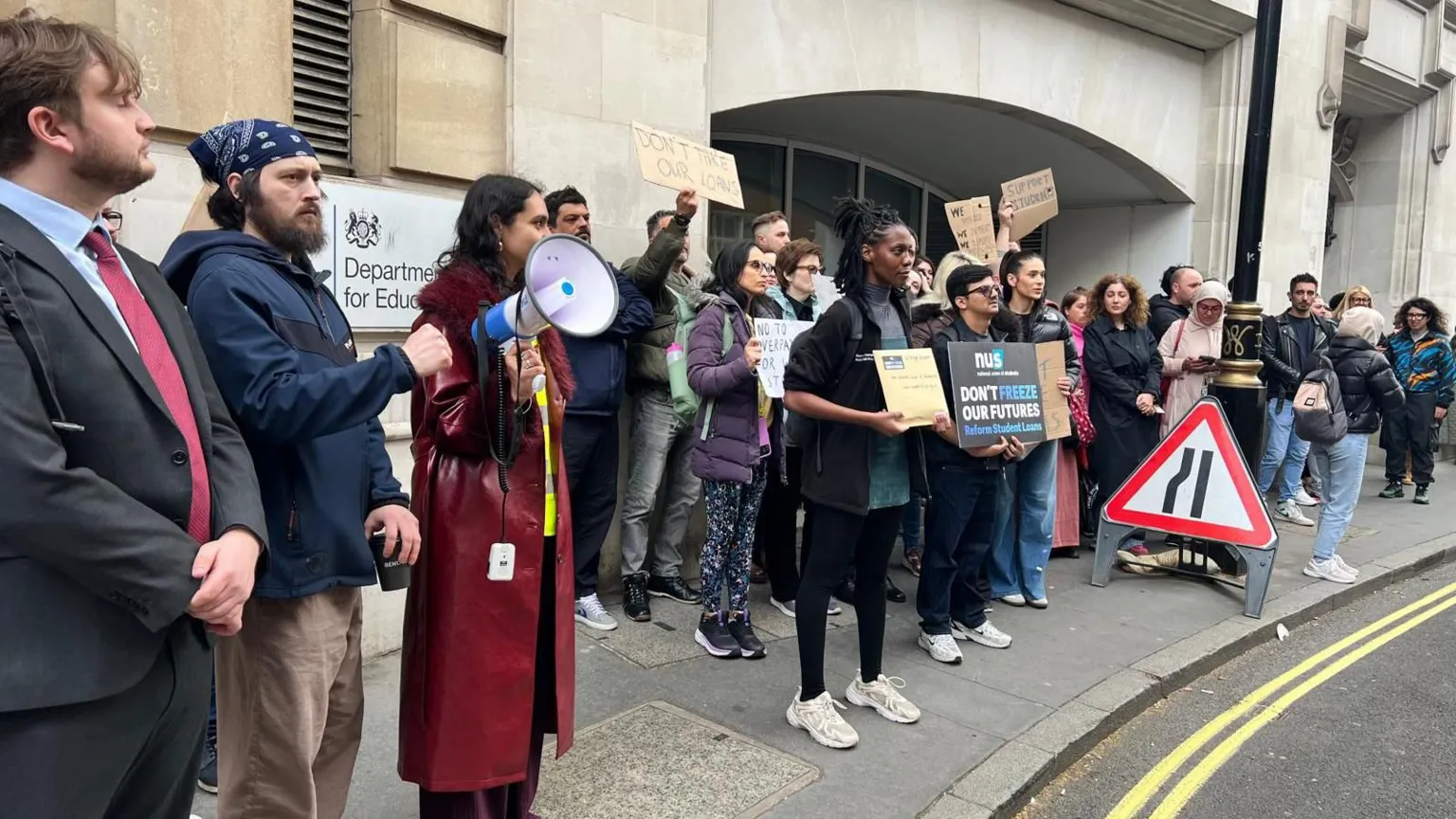
Last week, the NUS submitted a petition signed by 13,000 students urging the government to reverse its decision.
The BBC reported that ministers grew concerned that support was not being delivered as consistently or urgently as required.
Legal Actions and University Responses
Nine universities involved initiated preliminary legal action last week, criticizing the "abrupt" government decision, which they argued unfairly penalizes mature students on low incomes seeking to improve their qualifications.
Some of the disputed courses are offered by private companies partnering with universities to deliver degrees, often at locations hundreds of miles from the main campus.
Government's Regulatory Concerns and Future Measures
The government expressed apprehension that this franchise model is vulnerable to exploitation. It announced plans to tighten regulations, requiring any franchise providers with more than 300 students to register with the higher education regulator, the Office for Students.


