

Keir Starmer Commits to Delivering Hillsborough Law
Keir Starmer began by reaffirming his commitment to delivering a Hillsborough law.
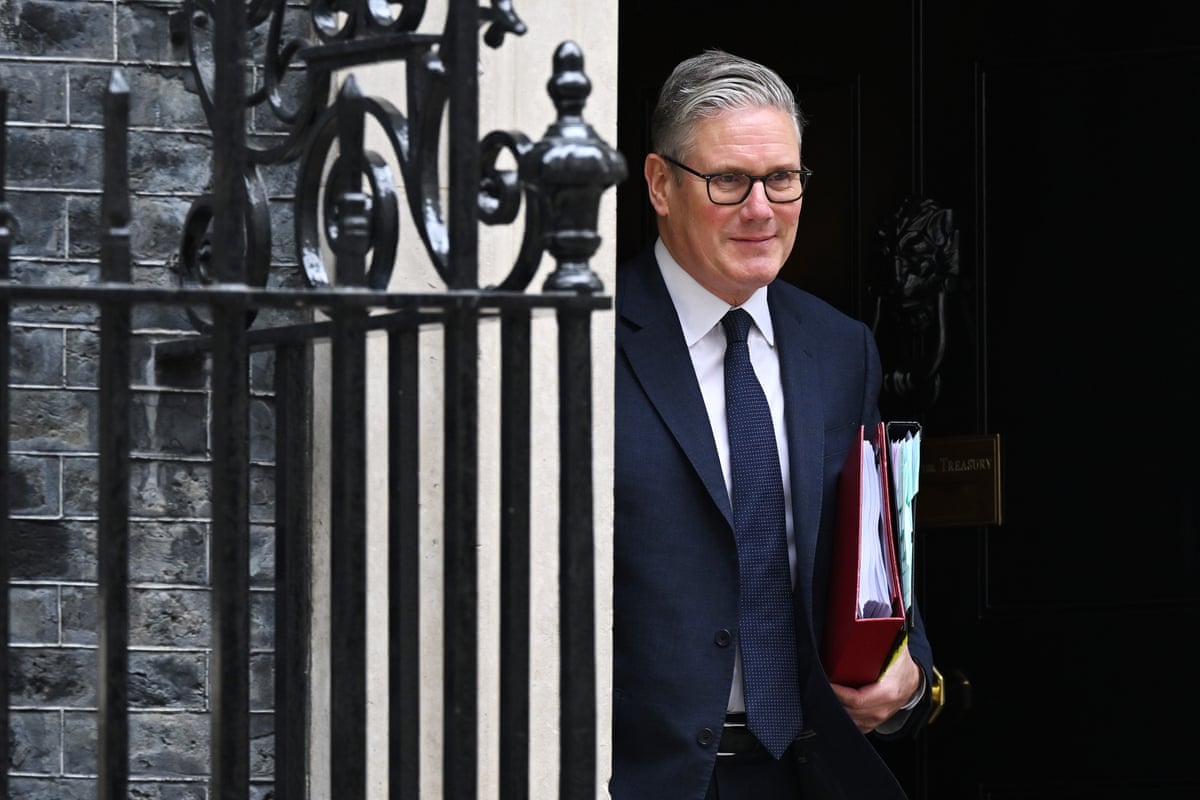
Balancing UK’s Welfare and Defence Spending ‘Not Zero-Sum Game’, Minister Says
James Murray, chief secretary to the Treasury, stated that balancing welfare and defence spending is "not a zero-sum game" amid warnings that the UK must increase its military budget to ensure national security during global volatility. Pippa Crerar reports.
Starmer Faces Badenoch at PMQs
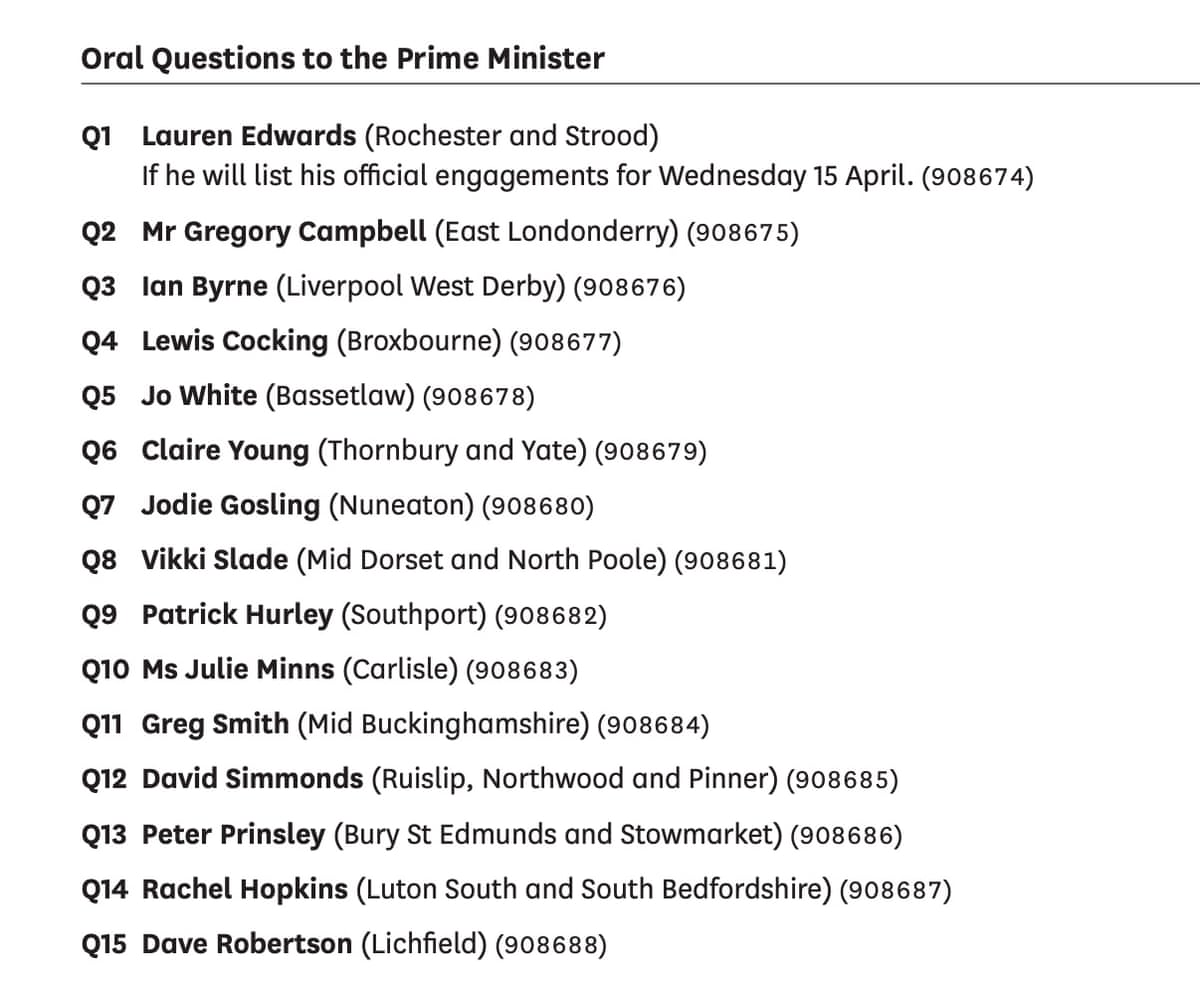
The list of MPs scheduled to ask questions at Prime Minister’s Questions (PMQs) was released.
Streeting on Mandelson’s Links with Epstein
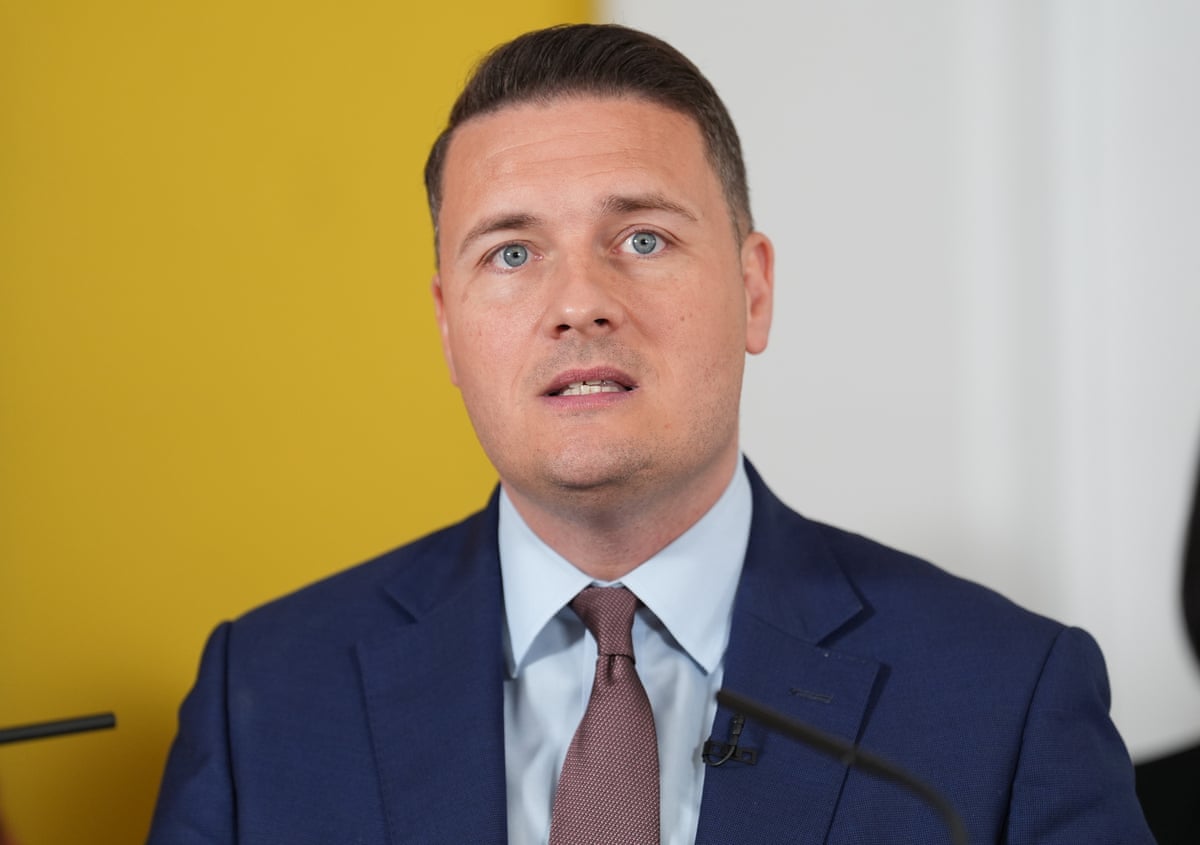
Wes Streeting, the health secretary, revealed that until recently he believed stories about Peter Mandelson maintaining a relationship with Jeffrey Epstein after Epstein’s first conviction for child sex offences were "overblown".
In an interview with Woman’s Hour, Streeting said he had not read reports stating that Mandelson stayed in Epstein’s New York residence while Epstein was in jail in 2009. When he encountered such claims on social media, he dismissed them as trolling.
Streeting noted that Mandelson hosted a podcast for The Times until his appointment as ambassador to the US and argued that the media should have scrutinised Mandelson more thoroughly.
Previously regarded as friends and allies, Streeting distanced himself from Mandelson following the release of Epstein files earlier this year, which led to Mandelson’s arrest over allegations of leaking confidential government information to Epstein.
To prevent the Mandelson connection from affecting a potential Labour leadership contest, Streeting pre-emptively published WhatsApp messages exchanged with Mandelson ahead of their official release due to a Commons humble address vote. He also stated:
"Contrary to what has been widely reported, I was not a close friend of Peter Mandelson."
On Woman’s Hour, presenter Nuala McGovern asked how Streeting could have been unaware of the extent of Mandelson’s relationship with Epstein beyond the initial conviction. Streeting replied he had not seen the 2023 reports and said:
"I’ll be honest, when people would pop up on social media laying those sorts of charges, they tended to be the sort of people who appear in your timeline trolling. And I just didn’t think it could be credible that [Mandelson] would have had that kind of relationship."
He explained that the original report was not a major story at the time and that he had not read it. He added that this reflected a lack of accountability for Mandelson:
"So, the FT did a report, but I don’t remember seeing it in other newspapers. Mandelson still had a podcast. He was appearing regularly on really big news programmes. And so, to be honest, the only time I remember seeing stuff, Mandelson/Epstein, you just think, ‘I haven’t seen that from a credible news source, he hasn’t been questioned, I think that must be overblown’."
When asked if he questioned his judgment, Streeting responded:
"Of course, absolutely."
He attributed the failure to fully question Mandelson to both political and media shortcomings, stating:
"It is also, I think, a media failure."
Linking to the broader issue of victims’ experiences, Streeting concluded:
"I think it stems from the same root cause, which is those women [Epstein’s victims], those girls, not being taken seriously enough, their experiences not mattering enough and being prioritised. And that is exactly the sort of sexism and misogyny at the root of the issue, I’m afraid. And I think all of us have to take responsibility for that."
Defence Spending Debate Ahead of PMQs
Following comments from George Robertson, who led Labour’s strategic defence review, it is likely Kemi Badenoch will raise the issue of defence spending at PMQs.
Rachel Reeves, the chancellor, is reportedly proposing to increase defence spending by less than £10 billion over the next four years.
Steven Swinford and Larisa Brown report:
"The State of It political podcast from The Times and The Sunday Times has been told that Reeves is unwilling to break her fiscal rules or increase taxes to boost defence spending.
John Healey, the defence secretary, is pressing for a bigger increase as there are concerns that £10bn will not be enough, given the increasing likelihood that British forces will be deployed to Ukraine and the Middle East.
The internal rows over defence spending have led to more than six months of delays to the publication of the defence investment plan, which is supposed to set out the blueprint for funding over the next decade."
supports Reeves’s position over Robertson’s. Our editorial states:
"Lord Robertson produced his first SDR as Tony Blair’s defence secretary in 1998, and the historian David Edgerton noted then that Britain was committing itself ‘to acting primarily with the USA in a wide-ranging programme of global policing’. The structure of the armed forces is designed not for autonomous defence but because ‘the composition … is what allows Britain to be the USA’s principal partner’. Only 15% to 20% of spending, Prof Edgerton reckoned, related to purely national defence. In that sense, the model Lord Robertson now defends was never primarily about defending the UK at all. It was about plugging into a US system and piggybacking on its arms industry base.
The Treasury is right to question prioritising defence now. Cutting welfare would hit demand and weaken growth. As Khem Rogaly of the Common Wealth thinktank argues, defence spending provides a weak economic stimulus compared with public investment – and is even worse as a job creator. Moreover, the UK is not using higher defence spending to build its own independent military, but to reshape its armed forces around a US-style venture capital and tech ecosystem. With Mr Trump in office, there is no better time to ask: whose security are we funding – Britain’s or America’s?"
Women’s Health Strategy and Medical Misogyny
Wes Streeting, the health secretary, is currently taking questions on Radio 4’s Woman’s Hour about the government’s women’s health strategy. You can listen live.
He explained the reasons for reissuing the strategy:
"In part, the failure to deliver timely access to care for women can be explained by the generally poor performance we saw in the NHS, which was declining year on year [before Labour took office].
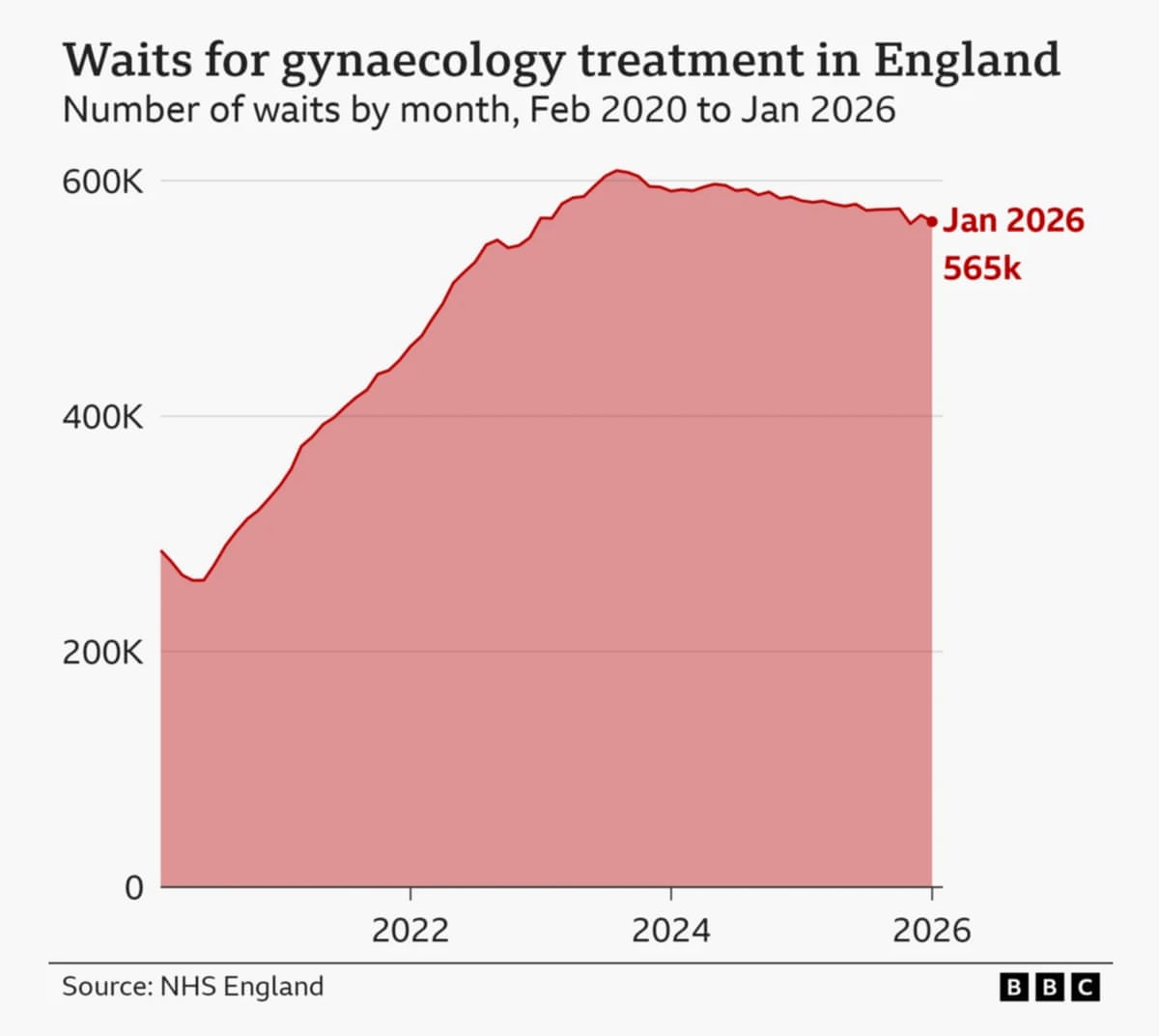
We started to arrest that decline. Waiting lists are now falling but – and the BBC’s data and report today shows this really clearly – while it is true to say that waiting lists rose for the general population, they rose even faster and higher in women’s health care, particularly around the [gynaecology] waiting list, for example.
And I think that is a symptom of a deeper culture … which is a culture of medical misogyny, sexism in the NHS, both conscious and unconscious bias, which means even in an NHS that’s getting worse or was getting worse for everyone, it was getting disproportionately worse for women."
JL Partners Poll and Local Elections
JL Partners has yet to publish full details of its May elections poll featured in The Telegraph’s splash. Tony Diver reports:
"The Telegraph’s projection shows that Plaid will be the largest party in Wales for the first time, winning 33 of the 96 seats, followed by Reform with 29 and Labour with 17.
Of the 136 English local authorities facing elections, Labour currently controls or is the coalition leader in 83.
The party could suffer its worst night in local election history – winning just 42 authorities – with almost half of that total in London.
The expected Green surge in the capital will split the Left vote, but Zack Polanski’s party is set to gain control of just two of London’s 32 boroughs.
However, it will come second in many of the other 19 London councils Labour is on course to hold.
At the highest end of predicted results, Nigel Farage’s party would gain control of up to 69 councils – half of the number voting this year – by gaining support from Labour voters in the Red Wall and Conservatives in the East of England.
Even on a more modest prediction, it would net 56 councils, compared with 42 for Labour, 17 for the Liberal Democrats and 15 for the Conservatives.
Kemi Badenoch’s Blue Wall of shire councils across the south of England is also set to crumble.
Reform is on course to seize Essex, the county council including Mrs Badenoch’s own constituency, along with Suffolk and Norfolk.
The Tories are also on course to lose East Sussex, West Sussex and Hampshire, finishing second or third behind either the Lib Dems or Reform. The Tories’ vote share could fall as low as 15 per cent in East Sussex …
With new boundaries in the Tory stronghold of Surrey, the Conservatives are also set to lose both East and West Surrey, slumping from an overall vote share of 42 per cent in the county five years ago to 24 per cent."
UPDATE: The JL Partners polling is now available.
War Against Iran Helping Putin, Starmer Says
There appears to be growing candour within government regarding the war against Iran. After Rachel Reeves described Donald Trump’s war as “folly,” Keir Starmer emphasized that it was benefiting Vladimir Putin.
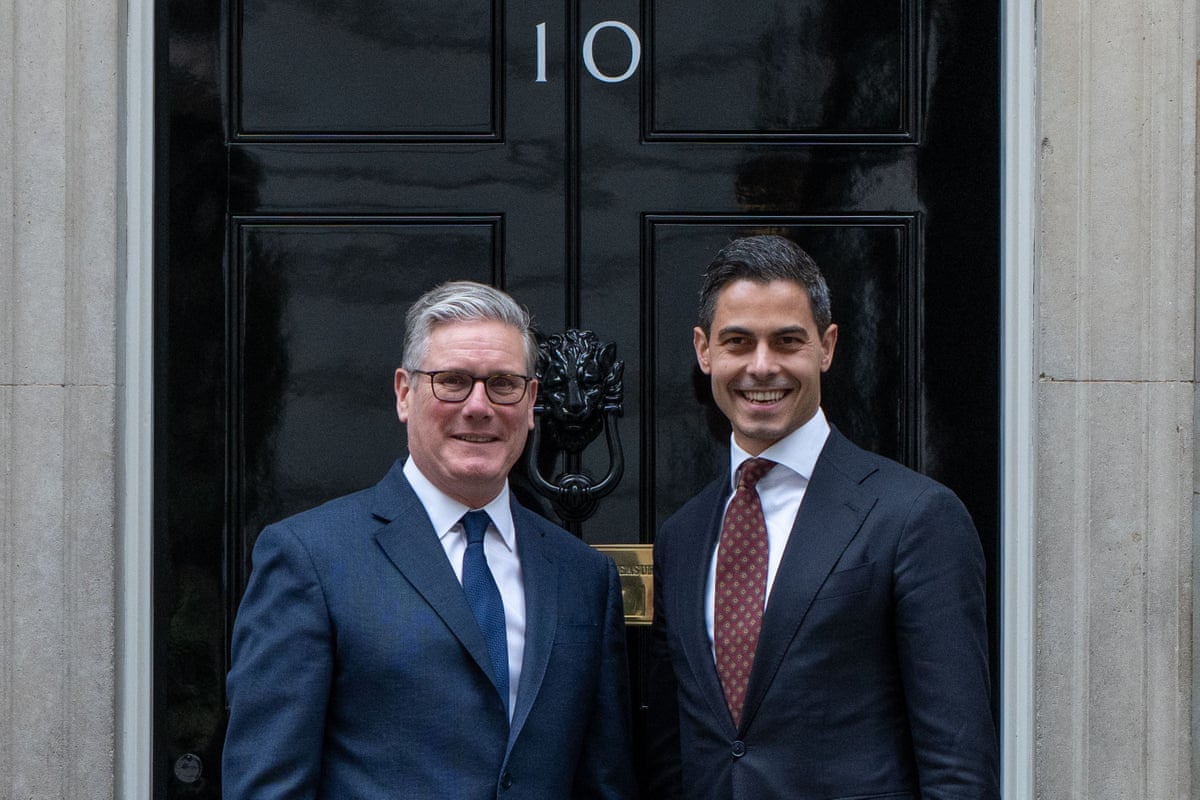
This statement was included in the Downing Street readout of Starmer’s meeting yesterday with Dutch Prime Minister Rob Jetten. Typically bland, this readout notably included a line about who benefits most from Trump’s actions.
"Turning to recent events in the Middle East, the prime ministers updated on their recent diplomatic meetings, including Prime Minister Starmer’s visit to the Gulf, and Prime Minister Jetten’s meetings in Washington.
The summit on the strait of Hormuz on Friday would be a vital moment to continue to drive diplomatic, military and economic work, the leaders underlined.
Both also reiterated their deep concern at the situation in Lebanon and the need for deescalation. On Ukraine, the prime minister thanked Prime Minister Jetten for The Netherlands’ unwavering support and reflected on Ukraine’s momentum on the battlefield.
Putin was benefiting from the events in the Gulf, and it was vital partners looked at how they could step up pressure on Russia to mitigate that, the prime minister added."
Simon Goodley’s article last week explains why Russia is profiting from the war.
Reeves to Meet US Treasury Secretary After His Comments on Iran War
Rachel Reeves, the chancellor, is in Washington and will meet US Treasury Secretary Scott Bessent. Bessent recently defended the war against Iran, stating that a "small bit of economic pain" was worth the long-term security benefits. He said:
"I wonder what the hit to global GDP would be if a nuclear weapon hit London... I am saying that I am less concerned about short-term forecasts, for long-term security."
Reeves, responsible for an economy expected to suffer more than any other G7 country due to the war, is unlikely to agree. She described the war as “folly.”
Graeme Wearden provides further details on his business live blog.
Labour Criticizes Reform UK on Women’s Rights as Poll Predicts Farage’s Gains
Wes Streeting is publishing a revised women’s health strategy for England today. Andrew Gregory reports that the strategy acknowledges that women have been underserved by a predominantly male medical establishment.
Labour is using this announcement to criticize Reform UK ahead of the English local elections, claiming Nigel Farage’s party cannot be trusted to protect women’s rights.
Labour HQ circulated a briefing listing ten reasons why Reform UK is not supportive of women’s interests:
1. Reform want to reopen the debate on abortion limits Nigel Farage has described the current 24-week abortion limit as “utterly ludicrous” and called for Parliament to revisit it, raising concerns about rolling back reproductive rights.
2. Reform figures have questioned women’s bodily autonomy Senior Reform figure Danny Kruger MP argued that women do not have an “absolute right” over their own bodies regarding abortion.
3. Reform would scrap the Equality Act Suella Braverman MP, Reform’s equalities spokeswoman, pledged to repeal the Equality Act, removing legal protections against sex discrimination.
4. Reform have links to anti-abortion campaigns Farage accepted payment to speak at events linked to anti-abortion groups, and candidates with similar views stand for the party.
5. Reform would roll back workplace protections Plans to scrap the Employment Rights Act threaten maternity leave, workplace discrimination protections, and job security.
6. Reform would bring back the two-child benefit limit This policy disproportionately affects women, especially single mothers, increasing poverty risk.
7. Reform figures have made regressive comments about women at work Farage supported claims that employers avoid hiring women due to maternity rights.
8. Reform figures have criticised breastfeeding in public Farage suggested women should avoid "openly ostentatious" breastfeeding, policing women’s behaviour.
9. Reform has platformed and defended controversial figures Farage described Andrew Tate as an “important voice for men,” despite concerns about misogyny.
10. Reform’s record on violence against women raises concerns The party is considering bringing back former MP James McMurdock, jailed for assaulting his then-girlfriend.
Anna Turley, Labour chair, commented:
"Today Labour is taking action to fix a system that has too often ignored women - cutting waiting lists, improving care and putting women’s voices at the centre.
But Reform’s record speaks for itself. From attacking reproductive rights to undermining protections at work, they simply can’t be trusted to stand up for women."
Reform UK was approached for comment; any response will be posted.
Meanwhile, Nigel Farage appears focused on the poll by JL Partners, which predicts significant losses for Labour and Conservatives and gains for Reform UK in England and Wales.
James Johnson, JL Partners co-founder, said:
"If these results come to pass, we will be looking at a major political earthquake across Britain.
It could be the worst local election ever for Labour in England, a collapse for the Conservatives in their historic Blue Wall heartlands, and a brutal third place for Starmer’s party in Wales.
One cannot overstate how seismic that result in Wales would be – it is a place that has stayed Labour even in the party’s darkest days. Plaid Cymru, the SNP, and the Greens are all contributing to this, but it is Reform that looks set to be the real story, potentially moving into opposition in Wales and securing England councils across the country."
Agenda for the Day
- 9.30am: Russell Findlay, Scottish Tory leader, holds a campaign event on postal voting.
- 10am: Anas Sarwar, Scottish Labour leader, holds an event on maternity services.
- 10am: Wes Streeting appears on Radio 4’s Woman’s Hour to discuss the women’s health strategy, followed by a formal launch at 11am.
- 11am: Zack Polanski, Green party leader, speaks at a Green event on ending the “normalisation” of food bank use.
- Noon: Keir Starmer faces MPs at PMQs.
- 3.15pm (UK time): Rachel Reeves speaks at a CNBC event in Washington during IMF spring summit meetings and meets US Treasury Secretary Scott Bessent.
- 3.45pm (UK time): John Healey, defence secretary, expected to speak at a press conference in Berlin after a Ukraine Defence Contact Group meeting.
Readers can contact the author via comments below the line when open (10am-3pm) or on social media. Messages containing "Andrew" are more likely to be noticed. For urgent matters, social media is preferred. The author’s Bluesky handle is @andrewsparrowgdn.bsky.social and Twitter is @AndrewSparrow.
Corrections and questions from readers are welcomed and appreciated.


