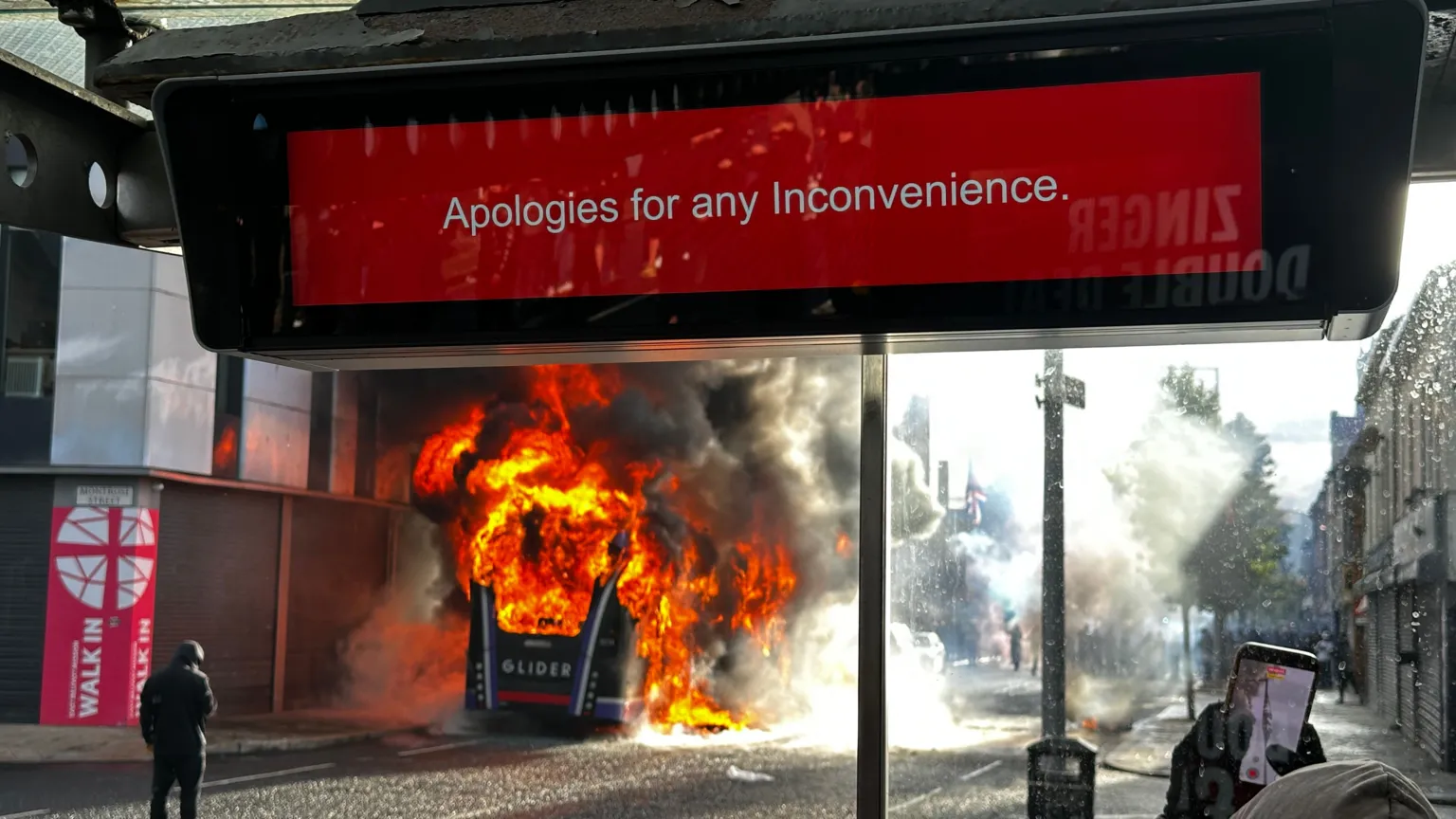
Violence Erupts in North Belfast Amid Anti-Immigration Protests
Dozens of young individuals, masked and clad in black, set bins ablaze in the streets, sending thick black smoke into the air.
The increasing sound of sirens signals the arrival of fire crews and ambulances.
A woman shouts through a letterbox to friends inside a house:
"The pastor is here, I promise you it is safe."
This scene unfolded on a rainy Tuesday night in north Belfast, amid widespread chaos.
Similar incidents occurred across Northern Ireland, where anti-immigration protests took place. While many protests remained peaceful, some were overtaken by individuals intent on violence and destruction.
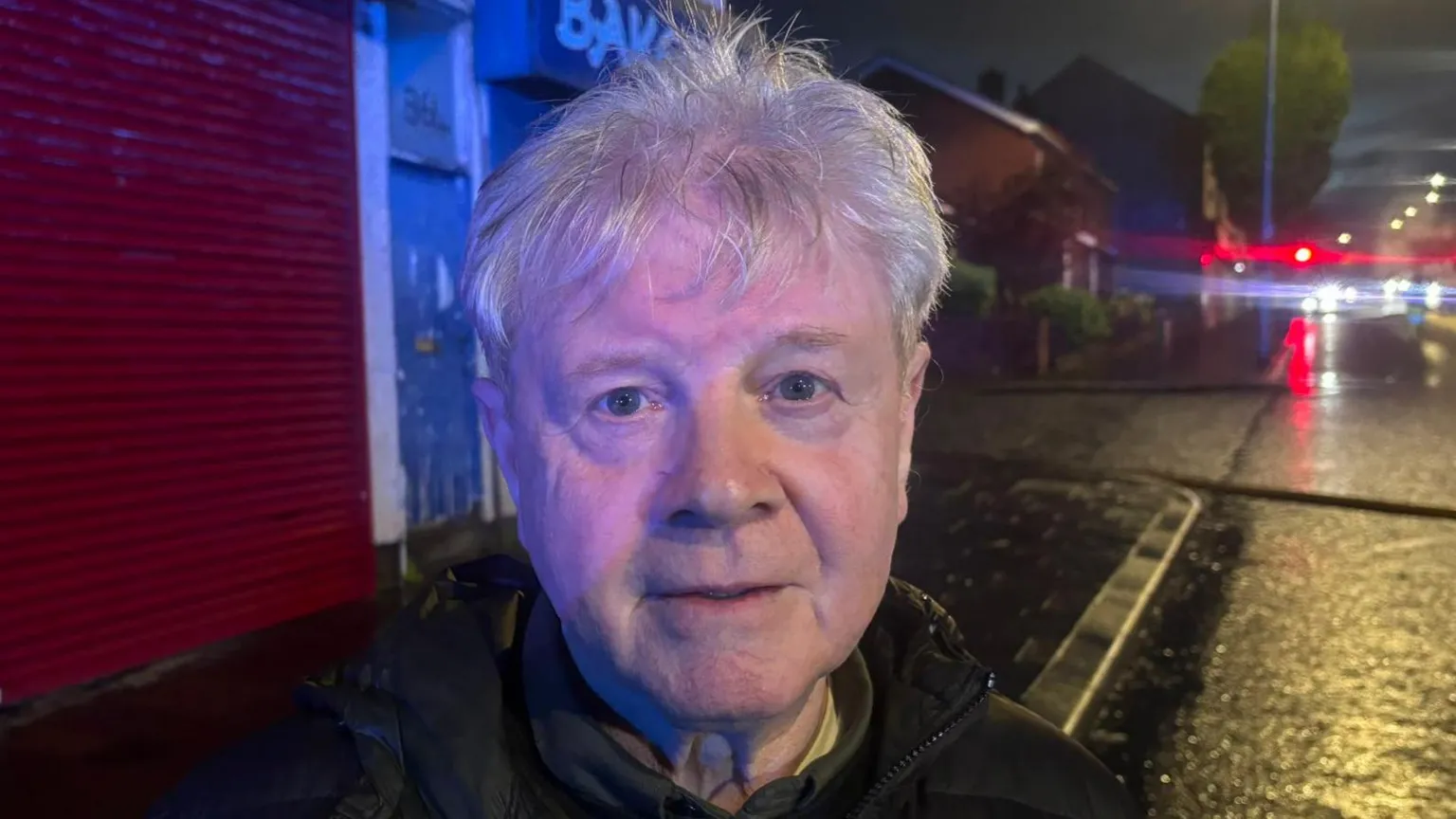
Reporting from the Crumlin Road
I was part of the reporting team dispatched to the Crumlin Road, a predominantly loyalist and working-class area of Belfast, to cover the unrest.
Upon arrival, police maintained a cautious distance, observing but avoiding becoming targets themselves.
We initially refrained from approaching the disturbances, having been warned at the far end of the road to
"leave, or you'll be next."
As a BBC journalist, such warnings during heightened tensions are not unfamiliar.
We moved closer to two streets of terraced houses that had become the epicenter of the disorder.
Two vehicles were set on fire, and several homes were burning, raising serious concerns about injuries and the risk of a gas explosion.
The heavy rain caused many gathered individuals to disperse.
Our team carefully navigated the scene, stepping over fire hoses and avoiding debris and broken glass.
Fire officers urged us to maintain distance, but documenting the events on Belfast's streets was imperative.
I spoke with the woman shouting through the letterbox of a house with shattered windows. She explained that her friends were trapped inside, terrified, as the house behind theirs was ablaze.
A group of African women were escorted to safety; one collapsed into the arms of firefighters, visibly exhausted from the ordeal. She was placed into a waiting vehicle, while the others walked to it.
Pastor Jack McKee, from the nearby New Life City Church, participated in the rescue efforts. While assisting members of his congregation to safety, I spoke with him. He expressed deep anger.
"These members have been with us for 20 years. They've been put out of their home,"he said.
"They are good Christian people and they are getting put out just because they are black.
"You are hurting innocent people here. There are men, women, and children living in fear.
"I am angry. I am disappointed that this is the response of people in our community."
McKee does not anticipate those displaced will return to their long-standing homes.
Historical Context and New Developments
Having covered unrest in Northern Ireland for over a decade, including last summer's riots in Ballymena, I have witnessed police under attack, a leisure centre set on fire, and racist language from individuals of all ages.

This week marked the first time I observed people fleeing their homes due to targeting based on ethnicity.
The disorder was triggered after footage of a knife attack in north Belfast on Monday night circulated widely on social media.
Hadi Alodid, a 30-year-old originally from Sudan, appeared in court on Wednesday charged with attempted murder related to the attack, which left victim Stephen Ogilvie seriously injured.
I also covered protests in Antrim and Ballymena this week, which notably remained peaceful.
The unrest was confined to certain areas of Belfast and other towns, yet the entire region experienced disruptions, with schools and shops closing early and public transport services suspended.
Aftermath on Crumlin Road
Returning to Crumlin Road on Wednesday, the area was quieter, but the air remained heavy with smoke from the fires.
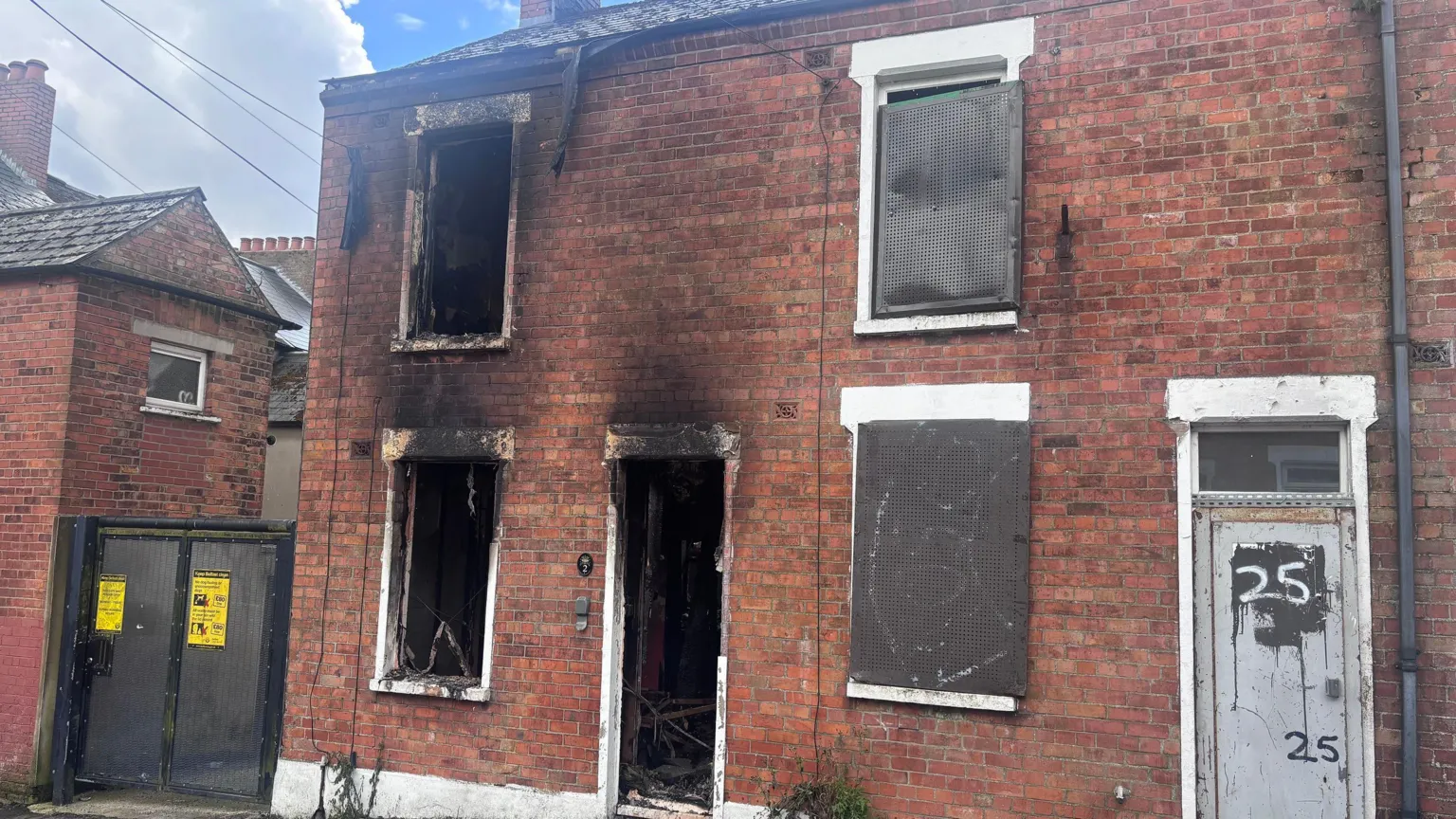
An end-of-terrace home was completely gutted, its ceiling collapsed, and water could be heard running through the remains.
It became evident that only specific houses on these north Belfast streets were targeted for arson and criminal damage.
Reports from colleagues indicated that masked men had gone door to door, deliberately targeting residents they believed to be from other countries.
I was invited into the home of an Indian man who has lived in the UK for 25 years, including the last four in Northern Ireland.
He apologized for the disorder inside as he packed to leave, requesting anonymity due to fear.
His car had been targeted, and he admitted he did not sleep on Tuesday night.
"It was horrible, it was like a war zone. Everything was burning,"he said.
"I work full-time. I pay my taxes. I do everything for this country. I am British."
In the short term, he is uncertain about his next steps. Staying risks further attacks, but fleeing also poses dangers.
"We are trying to leave Northern Ireland, to take the ferry to the mainland and hopefully we are safe there as we have friends and family there,"he added.
"I have never, ever experienced this."
Community Impact and Responses
Over the past week, schools reported lower attendance as families from ethnic minority communities kept children at home.
Healthcare workers have faced threats; one nurse was confronted and chased by masked men while walking to work.
Her union stated she had done nothing wrong aside from having a
"different colour of skin"than most Northern Ireland residents.
Despite this, the union praised her for continuing her hospital shift
"bravely."
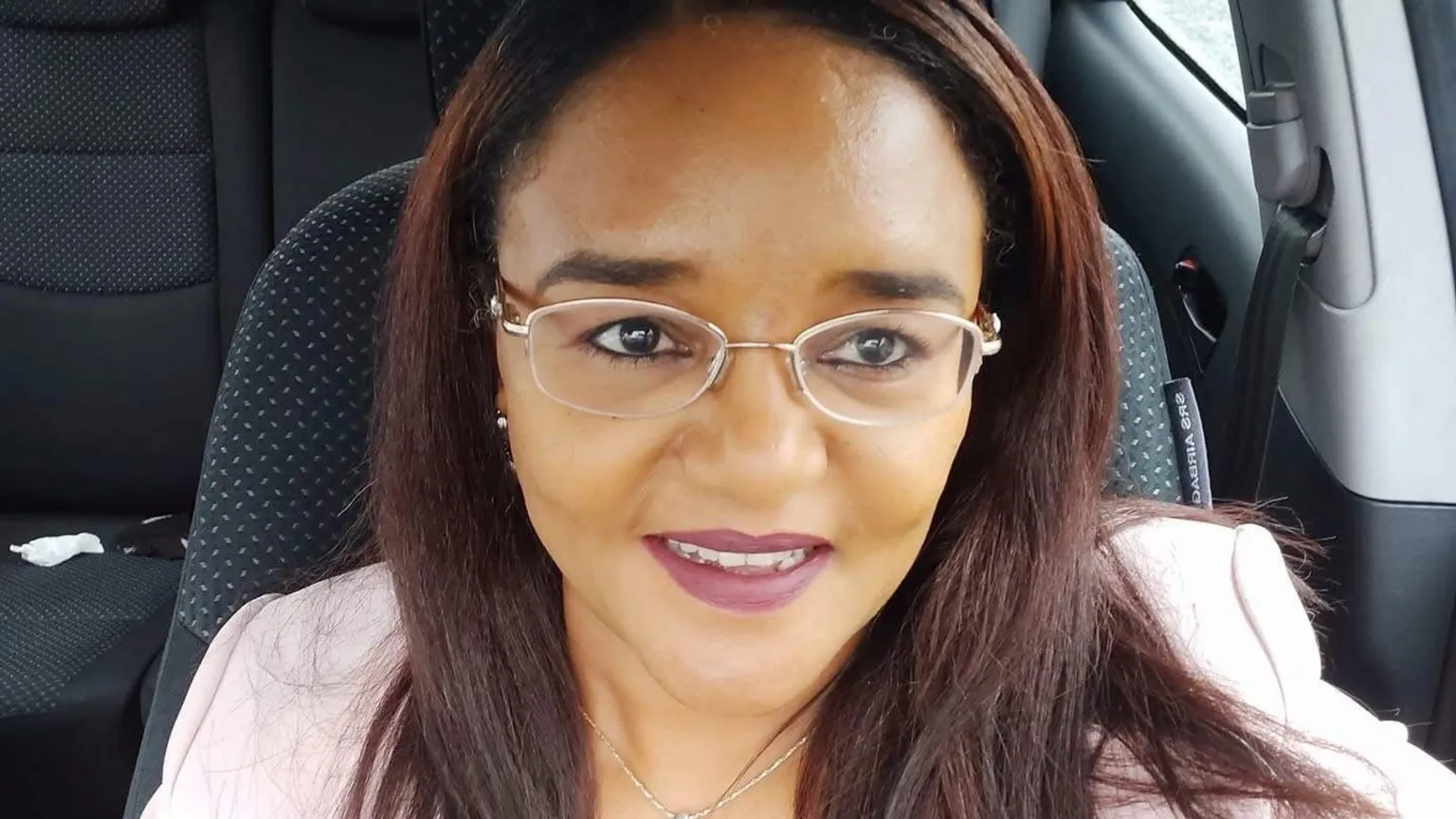
Twasul Mohammed, a Sudanese refugee who arrived in Northern Ireland in 2016, described her community as
"terrified."
She and others have assisted families forced from their homes.
"When the attack happened on Monday night, we knew this would be coming,"she said.
"Everyone is terrified, we are keeping our kids at home. I haven't sent my kids to school since it happened and everyone is worried and tearful."
Uncertain Future for Displaced Residents
Those responsible for instigating fear and displacing residents may now be in their own homes, while victims without shelter this weekend face uncertainty about their next steps.