

Parents Raise Concerns Over Bullying Policies Favoring Bullies
Lesley is among a group of parents who believe current school guidelines on bullying are insufficient.
In late 2024, Lesley received a call from her eight-year-old son's primary school informing her that he had been kicked on the head while on the ground.
Over the following year, the bullying intensified, Lesley told the BBC.
"There were numerous physical assaults, kicking him in the head, putting his head against the wall and throwing him on the ground," she said.
"Then the solution became to restrict my son.
"He wasn't allowed to go to the toilet on his own. I had to pick him up from the school office.
"Why is it not the bullies that are getting those restrictions?"
Lesley added,
"The rights of the bullies were protected at all costs because of the inclusion policy."
The concept of inclusion has been embraced by the educational system since the early 2000s.
In practice, it means teachers emphasize emotional regulation and understanding a child's needs rather than immediate disciplinary actions.
Since the adoption of inclusion policies, permanent school exclusions have become very rare, with none recorded in 2024/25.
Additionally, the number of suspensions has decreased by 75% over the past two decades.
Respect for All
Scotland's anti-bullying policy, Respect for All, has been in place since 2010; however, councils and schools are not mandated to follow its guidance.
The policy states that schools should establish clear expectations regarding acceptable and unacceptable behaviour and outline responses, including consequences.
Nevertheless, Lesley is part of a group of parents advocating for stronger measures, including legislation to ensure all schools uniformly address bullying.
She believes her son's situation would have been managed differently if such a law existed.
"There would not have been a year of him feeling unsafe at school, getting physically attacked, being terrified to go to school, me getting phone calls almost daily,"
"He wouldn't have ultimately had to move school. I wouldn't have to change the hours of my work.
"I think at the minute, in my opinion, the inclusion policy is overriding everything else and that's not how it should be."
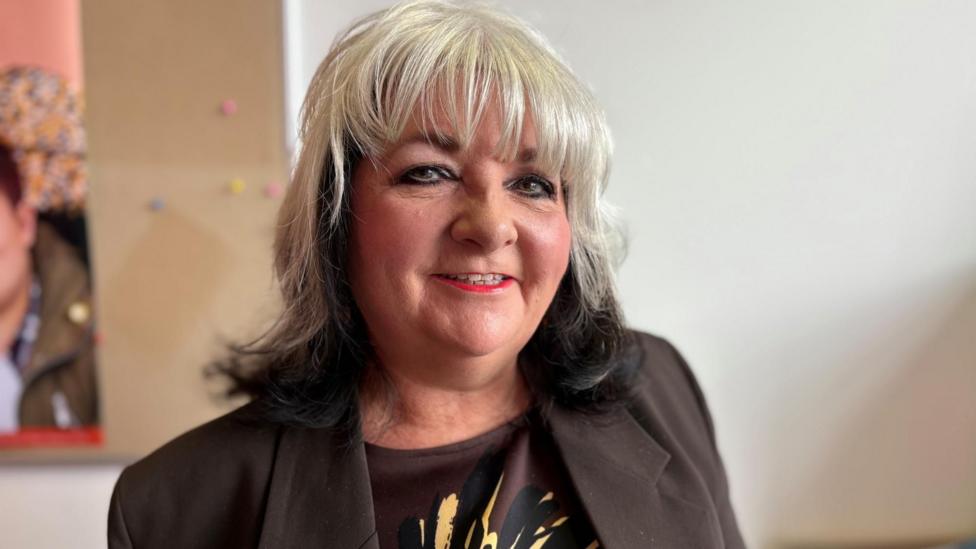
Lorraine Glass, director of Respect Me, Scotland's national anti-bullying service, stated that several laws already exist to protect children in Scotland.
She emphasized that effective responses to bullying are not necessarily punitive.
"It's not an effective response for that type of behaviour," she said.
"A more relational, inclusive approach and having a conversation with the young person about what's lying behind that behaviour, what's driving it?"
Glass noted,
"There are consequences available to teachers and then exclusion, while it's a last resort, is still an option to keep everyone in the school safe."
However, she acknowledged that current guidance is "not designed to respond to some of the types of extreme violence that we do see happening between children and young people."
Stuart Brown, assistant general secretary of the EIS teaching union, warned that introducing new legislation could increase pressure and bureaucracy in schools without addressing the root causes of bullying.
He said,

"Schools already face significant pressures from reduced staffing, increased levels of ASN (Additional Support Needs).
"There's a risk that if there are more statutory duties in the classroom then schools will have to move away from the early intervention measures that we know work."
Ashley's Campaign for Consistent Bullying Procedures
Ashley's experience motivated her to investigate the rules available to teachers.
She is campaigning for legislative change to ensure councils implement consistent bullying procedures nationwide.
Her seven-year-old son, Josh, had to spend playtime and intervals inside the classroom to avoid a child who bullied him at a primary school in East Ayrshire.
"It was just to keep him away from the bullying, which I felt wasn't really the right answer," she said.
Ashley reported that Josh became a "shadow of himself" as the bullying persisted and even set his alarm in the middle of the night to feign illness and avoid school.
During school hours, Josh shared a classroom with the bully and was physically hit by him despite being separated at break times.
"I don't think they're allowed to send kids out of the classroom," Ashley said.
"I think because of inclusion policies they can't do what they used to be able to do.
"The teacher I was speaking to was amazing. I genuinely thought she'd done everything she could," she added.
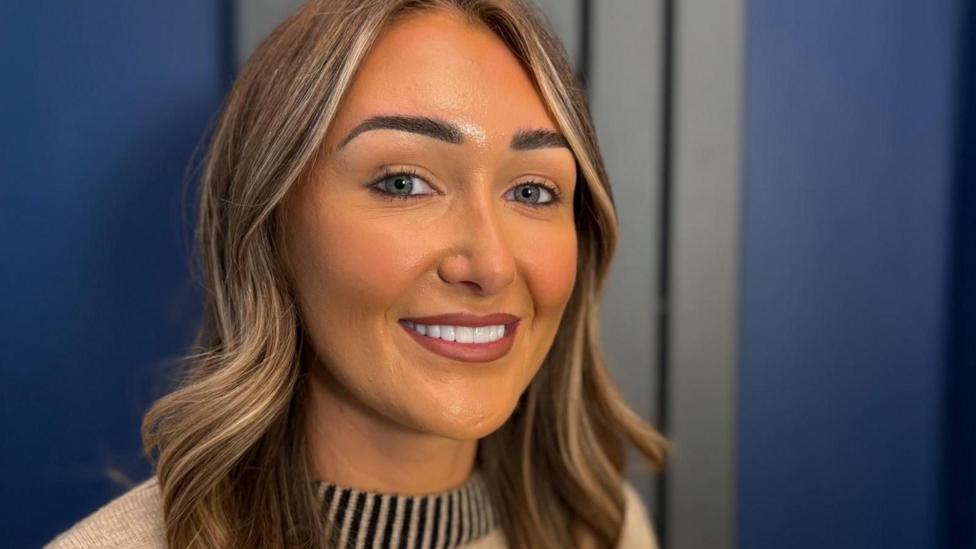
Ashley's research revealed that anti-bullying policy in Scotland is only guidance, not law.
"When I found out that anti-bullying policy is only guidance in Scotland I honestly couldn't believe what I was reading," she said.
She advocates for consistency so that schools and families across Scotland understand how bullying should be addressed, especially regarding consequences.
"We still need to know right from wrong and I feel like children who are getting away with doing stuff like this at school just go on to think that they can do whatever they want and what chance have they got?"
Kirsty's Petition for National Bullying Law
Kirsty's experience with her son's school prompted her to submit a petition to the Scottish Parliament calling for anti-bullying legislation.
Last year, she was informed that her 14-year-old son, Kyle, was hospitalized after being bitten on the knee and kicked in the head by another pupil.
Kyle was treated for a mild concussion, prescribed antibiotics, and missed a week of school.
Kirsty stated that many disciplinary powers previously held by teachers have been removed.
"They can't do after-school detentions anymore," she said.
"They've taken away headteachers' rights to exclude children.
"Everything like that was all taken away."
She believes a national policy would provide headteachers with necessary support.
"Just now if they get it wrong the local authority is not backing them, the government's not backing them, that head teacher's left to stand alone and take the full the full force, if they get it wrong and that's wrong,"
"A bullying policy should be a national one."
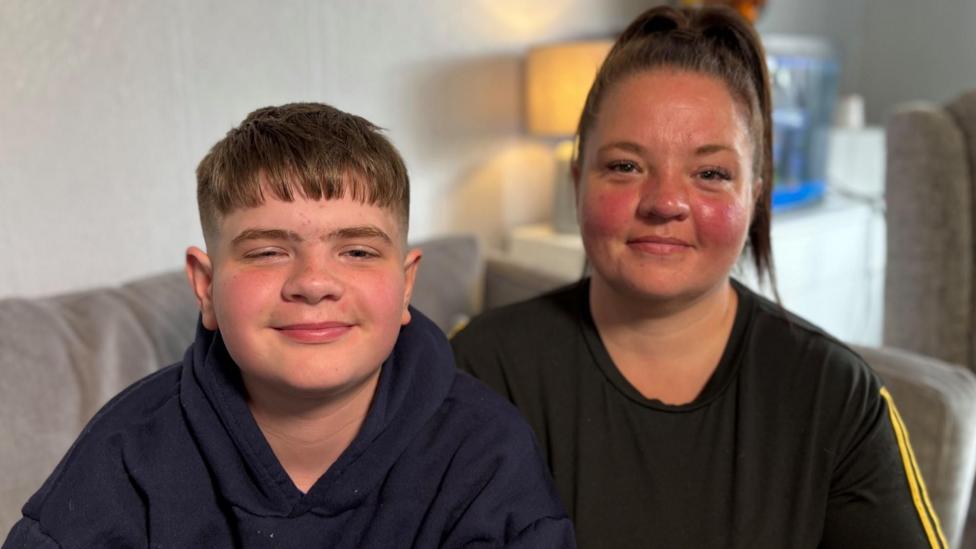
Official Responses from Councils and Government
A spokesperson for Renfrewshire Council, where Lesley's son attended school, said,
"Ensuring the wellbeing of all our pupils in Renfrewshire is a priority for every school and we take all reports of bullying extremely seriously, recognising the impact this has for those involved.
"We have strong support systems in place and provide pupils with a safe, welcoming learning environment."
East Ayrshire Council, where Ashley's son attended school, stated there is a clear process for reporting and addressing bullying, including investigations, sanctions, and restorative discussions.
They confirmed,
"The council can confirm that no form of bullying, whether this be physical, verbal or emotional is accepted under any circumstances within our establishments."
Glasgow City Council commented on Kyle's case,
"This was an isolated incident involving vulnerable pupils and we are sorry that a young person suffered injuries as a result.
"The school is supporting the young person and their family.
"The appropriate action has been taken by school staff and in conjunction with the relevant authorities."
A Scottish government spokesperson said,
"Last year, we published national guidance for education authorities and schools on consequences and risk assessments for violent, aggressive, and dangerous behaviour to support schools in responding to incidents.
"We are taking decisive action to tackle bullying including introducing laws to ban personal mobile phones in learning environments."
- Will new school rules help cut violence in the classroom?
- Council rapped after school bullying 'whitewash' claim
- Bullying in schools under-reported say experts


