

Activists Convicted in UK Terrorism-Linked Case
Four activists from Palestine Action have been convicted of criminal damage at a UK site belonging to an Israel-based defence company and are set to be sentenced under terrorism legislation, marking what is believed to be a legal first in the United Kingdom.
Charlotte Head, aged 30; Samuel Corner, 23; Leona Kamio, 30; and Fatema Rajwani, 21, were found guilty of causing £1.2 million worth of damage at the Elbit Systems factory near Bristol in August 2024.
At Woolwich Crown Court, Mr Justice Johnson stated that the defendants' actions were intended to influence the government and intimidate the company to further their cause.
"I am bound to find that the offence in each case had a terrorist connection and to apply that as an aggravating factor increasing the seriousness of the offence," he said.
Additionally, Samuel Corner was convicted of causing grievous bodily harm after fracturing Sergeant Kate Evans' spine with a sledgehammer during the raid.
Due to the classification of their offences as terrorism-related, the defendants will not be eligible for early release under standard provisions. Instead, the Parole Board will evaluate their risk to the public when determining their release dates.
During sentencing, both Head and Rajwani were seen crying in the dock as the ruling was delivered.
Defense Arguments and Court Proceedings
Rajiv Menon KC, the lead defense barrister representing Head and the other defendants, criticized the prosecution's application to classify the case as terrorism-related. He argued that this approach "undermines the integrity of the criminal justice system and amounts to chilling and creeping authoritarianism."
"It would be wholly wrong and unfair for this court to reach any conclusions as to the reasons or underlying motivations of the defendants in doing what they did given the prosecution applied for that evidence to be excluded," Menon stated.
Menon highlighted that Head had previously been acquitted of aggravated burglary during the initial trial, and that prosecutors dropped a violent disorder charge before the second trial proceeded solely on the criminal damage charge.

The defense emphasized that it would be unprecedented to sentence defendants on the basis of a terrorist connection when convicted of a non-violent offence.
Menon further remarked that it would be "laughable" to suggest that any Palestine Action activist genuinely believed that direct action would achieve the group's stated objective to "shut Elbit down." He explained that the activists involved in the raid sought to destroy equipment they believed would be sent to Israel and subsequently used against Palestinians.
Prosecution's Position and Legal Context
Deanna Heer KC, representing the Crown Prosecution Service, asserted that the criminal damage at the Elbit factory possessed a "terrorism connection."
Under UK law, a standard offence may attract a longer sentence if a court determines that the manner in which the crime was committed meets the definition of terrorism.
The UK's legal definition of terrorism includes acts of serious violence or serious damage to property that are carried out with the intent to influence the government or a section of the public to advance a particular ideological cause.
Public Reaction and Related Events
Outside the court, a large demonstration was held in support of Palestine Action, during which 72 people were arrested.
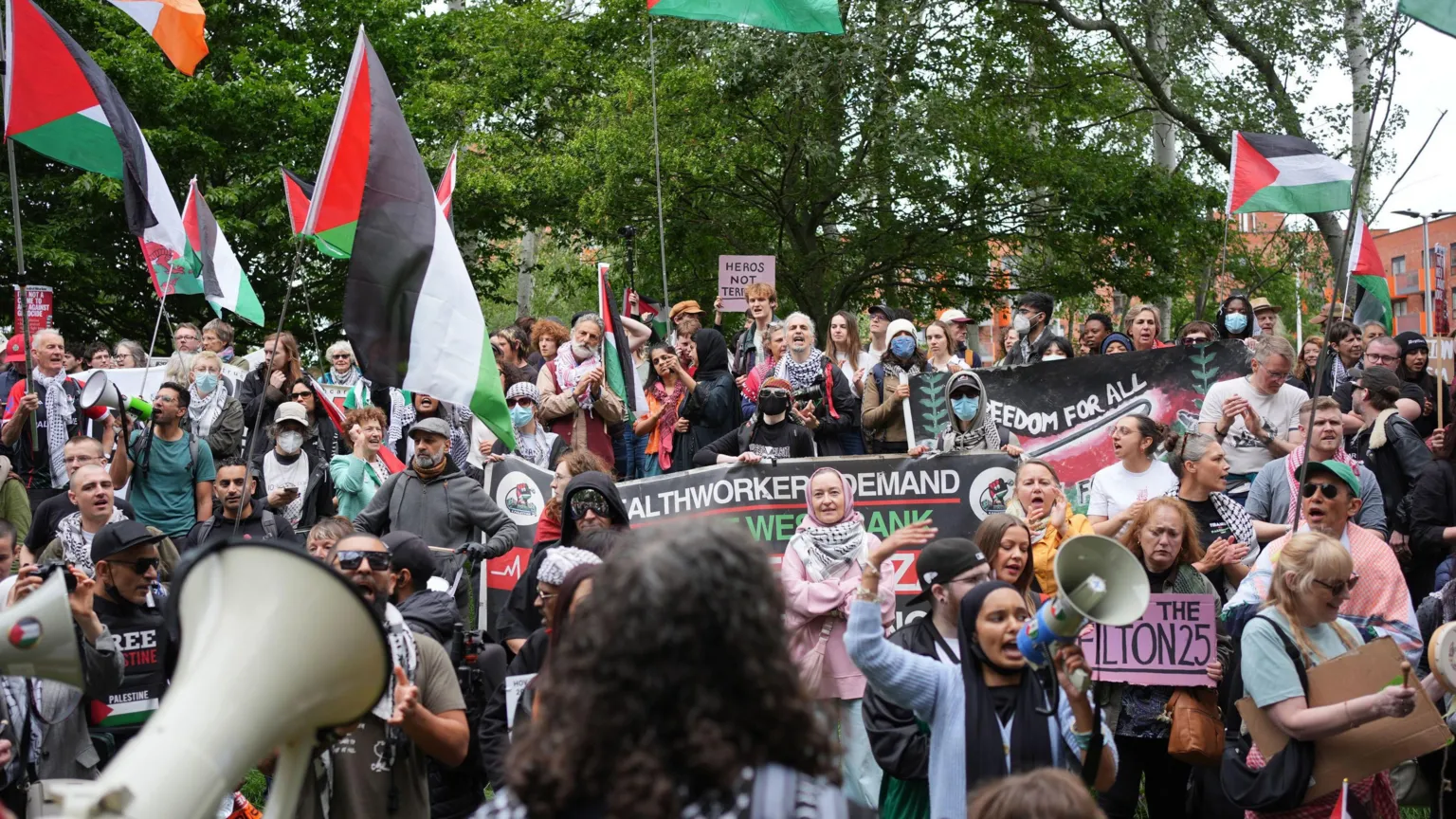
Palestine Action was designated as a terrorist organisation by the UK government in July of the previous year. Although this proscription was declared unlawful by the High Court in February, the group remains proscribed.
Follow BBC Bristol on Facebook, X, and Instagram. Story ideas can be sent via email or WhatsApp at 0800 313 4630.


