Firefighters are continuing their work at the scene
A large wildfire that ignited on Derbyshire's Tintwistle Moor nearly three weeks ago has now been officially declared a major incident.
But what has caused the escalation, and what are the next steps?
When did the fire break out?
Fire crews were initially dispatched to a moorland fire at Tintwistle Moor, located above Woodhead Road in Glossop, shortly after 22:00 BST on 24 June.
The wildfire coincided with a significant heatwave that brought record June temperatures to parts of the UK.
At that time, the fire service reported the fire was impacting an area of approximately 400 square meters, with six fire crews and a water carrier engaged in efforts to control the blaze.
Authorities advised the public to avoid the area, and residents nearby were instructed to keep doors and windows closed.
Watch: Drone footage - filmed last month - showed the scale of the moorland wildfire
What happened next?
Firefighting efforts persisted for over a week, supported by drone assistance from Derby Mountain Rescue Team. Crews left the scene on 2 July while continuing to damp down the affected area.
However, with the arrival of a new heatwave, firefighters returned to the moor on Thursday following reports of "flare-ups within the areas already burnt."
On Sunday, the fire service escalated the situation by declaring the wildfire a "major incident," noting that approximately 260 hectares (642 acres) of moorland and woodland had been affected.
Why was it declared a major incident?
Deputy Chief Fire Officer Clive Stanbrook explained that the declaration followed high winds and extreme heat conditions that caused the fire to spread further.
"The reason we declared a major incident was just the scale of resources this is taking, not only from ourselves - we had 12 fire appliances the other day - but also from smaller partners," he said.
"We've got the RSPB [Royal Society for the Protection of Birds], we've got United Utilities, mountain rescue. We've got an extensive list of partners that we're working with at the moment."
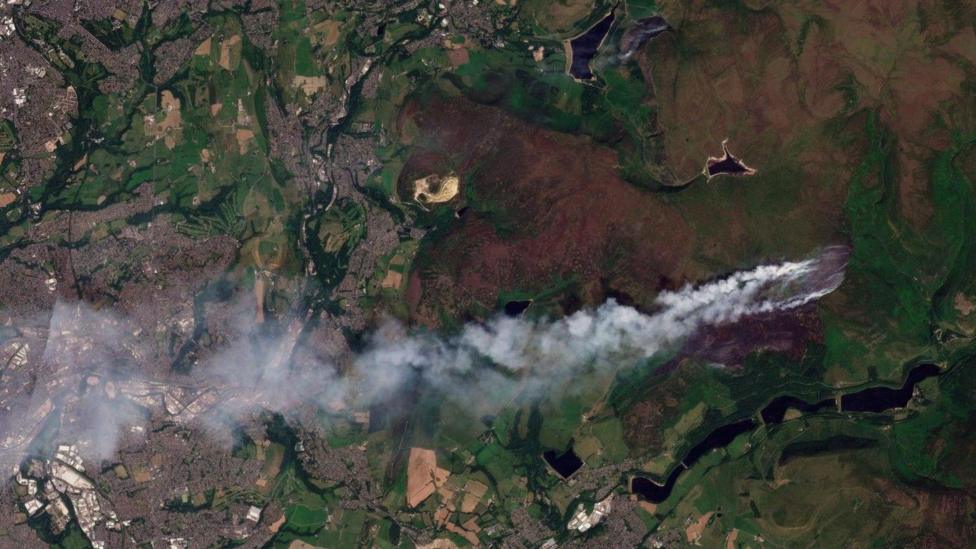
Satellite images captured on Sunday showed smoke from the fire drifting towards Manchester.
What caused the fire?
Stanbrook told the BBC that the cause of the fire remains unknown at this time.

He noted that the service frequently deals with fires in the area that are accidentally started by visitors.
"If people think it's sensible to bring barbecues and put out cigarettes and any sort of naked flame up here, when we haven't had rain for weeks and it's absolutely tinder dry, this is the sort of damage it causes.
"I would implore people not to do anything like that.
"We appreciate it's a beautiful area, it really is, however any fires like this cause generational damage to the rare wildlife and the habitats around," Stanbrook added.
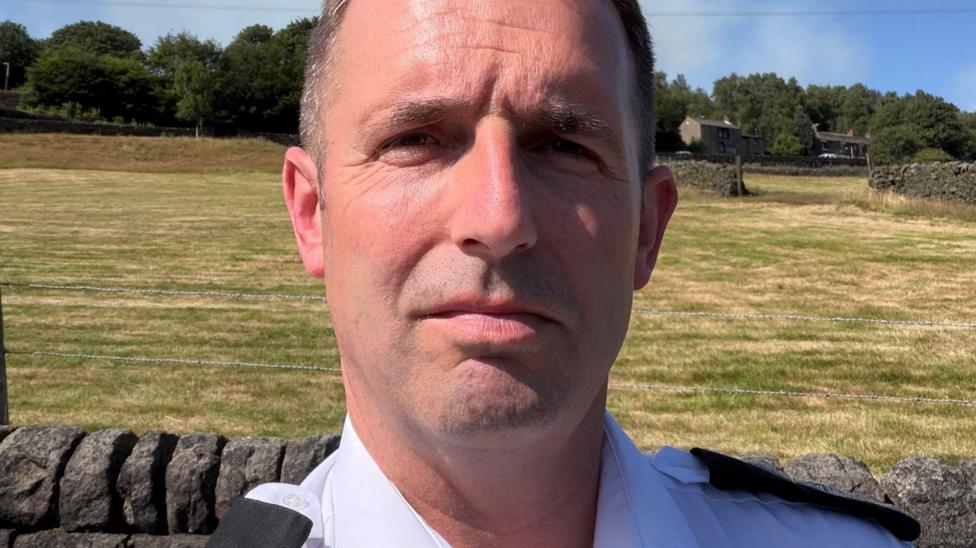
Clive Stanbrook said he had dealt with a number of wildfires.
Is it unusual for wildfires to burn this long?
Stanbrook stated that while the service did not anticipate this particular wildfire to last so long, it is not uncommon for wildfires to persist for several weeks.
"This is not unusual by any means," he said. "I remember being here in 2018 and that was exactly 28 days from start to finish at Tintwistle.
"When we get a large-scale wildfire like this, we expect to be here for the long run."
He added that he did not know how much longer they would be managing the current fire.
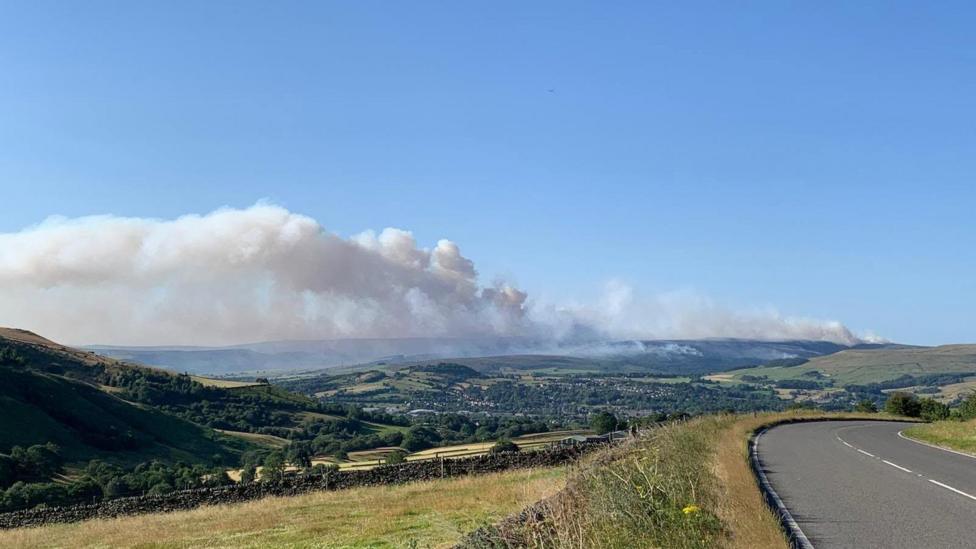
The blaze on Tintwistle Moor in Glossop started on 24 June.
What about other areas of the UK?
Tintwistle is one of three major wildfires currently engaging crews following the recent UK heatwave.
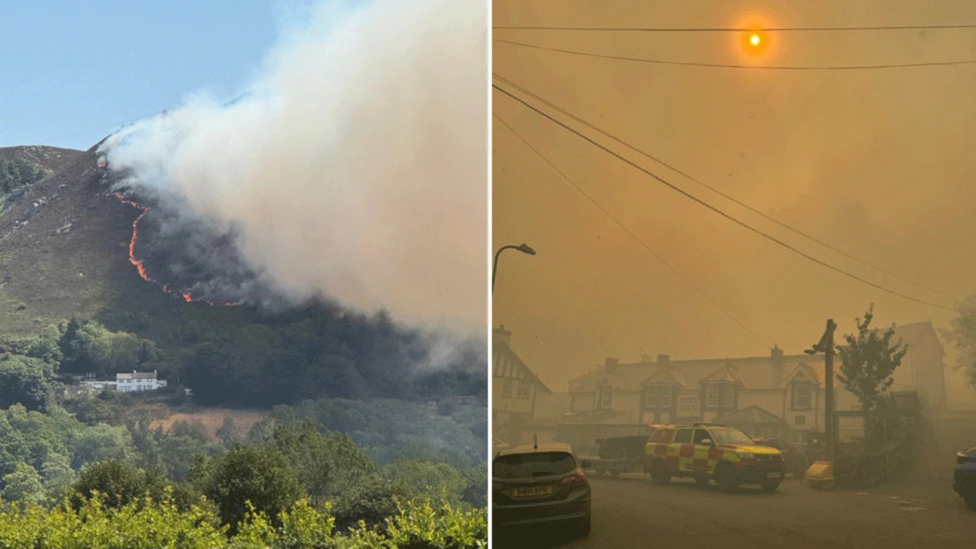
In Conwy, north Wales, a mountain wildfire that began on Sunday forced evacuations in a rural community, while a moorland fire near Dovestone Reservoir in Greater Manchester resulted in a woman being arrested on suspicion of arson.
Additional wildfires over the weekend affected Hampshire, Durham, West Sussex, East Sussex, Devon, and Somerset.
A major incident has also been declared in north Wales.
What happens now?
With 10 fire engines present at Tintwistle Moor on Monday afternoon, crews are actively working to prevent the wildfire from expanding.
"The wind is ever-changing, so there's no let-up from some of the fire spread.
"We're cutting away and putting two firebreaks into the west to make sure it doesn't spread any more overnight and we're doing the same to the east just so it doesn't get to the Pennine Way.
"We've had reports of some of the fire fronts spreading at about 10 metres a minute."
Stanbrook added that they have a resourcing plan in place through Sunday but will assess the situation on a day-to-day basis.
"Hopefully the weather will be kind, the wind will be kind and we can get on top of it," Stanbrook added.
Get in touch
Tell us which stories we should cover in Derby.
Listen to BBC Radio Derby on Sounds and follow BBC Derby on Facebook, on X, or on Instagram. Send your story ideas to eastmidsnews@bbc.co.uk or via WhatsApp on 0808 100 2210.
- Major incident declared over large moorland wildfire
- Wildfire expected to spread due to heatwave as 36 homes evacuated
- Firefighters continue to battle moorland blazes
- Walkers warned as firefighters return to moorland
- Crews tackle flare-up of wildfire in woodland
- Crews return to moorland wildfire two weeks on
- Firefighters leave scene of major moorland wildfire
- Crews tackle moorland wildfire for seventh day
Related internet links
Derbyshire Fire and Rescue Service