

Londoners Disproportionately Affected by Fraud
London residents are "disproportionately" impacted by increasingly sophisticated fraud schemes, senior police officials have cautioned.
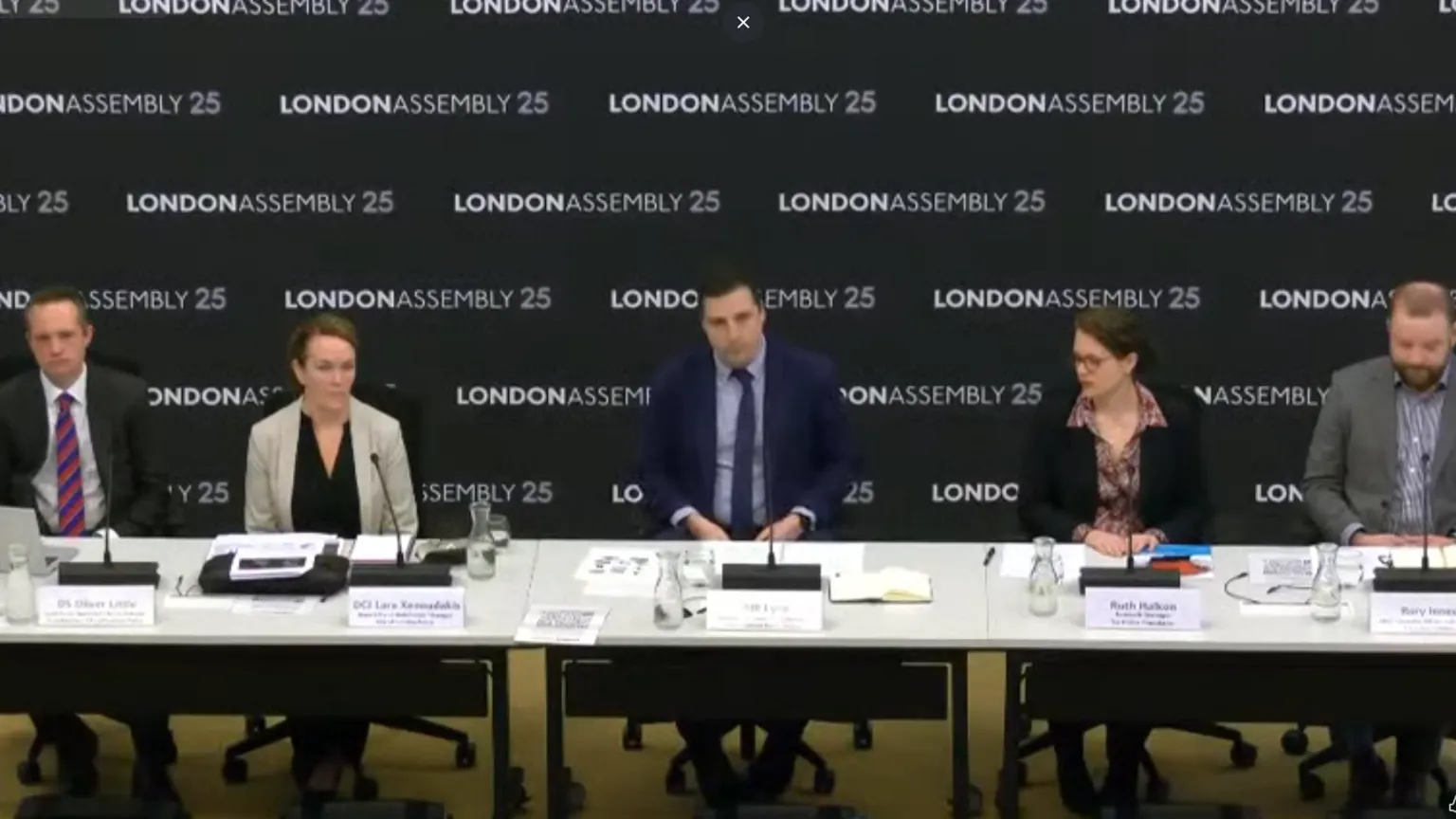
During a police and crime committee meeting at City Hall this week, authorities reported a rise in fraud cases, which now constitute 41% of all crimes across England and Wales, with online scams being especially prevalent in London.
The City of London Police informed the London Assembly that approximately 40% of fraud victims nationally reside in the capital, with the Metropolitan Police indicating that this figure includes 60% of all courier fraud incidents.
Officials further warned that the growing use of artificial intelligence (AI) in scams enables criminals to stay ahead of public awareness and legal measures.
Oliver Little from the City of London Police told the committee: "We've seen an acceleration in people using technology to enable fraud – it allows [them] to target a much wider number of people, and then it's a numbers game. It also puts more barriers between us and them and obfuscates who they really are. [With] the 'Hi Mum' scams over text message, there's the potential to use technology to turn that into a realistic voice, so people will be more easily manipulated," he added.
The scam involves fraudsters texting victims, pretending to be their child who has lost their phone and now has a new number, in order to deceive them into sending money.
Little noted that many "basic frauds" remain effective, but fraudsters increasingly "use systems to increase the surface area of their attack." He described the situation as a "fraud arms race," emphasizing its constantly evolving nature.
Will Lyne, head of economic and cybercrime at the Metropolitan Police, stated:
"London, we think, is disproportionately affected by [cyber crime]."
Lyne also discussed the possibility that future scams may not require human operators to manually execute fraud once victims engage with mass phishing or fraudulent messages.
Lyne told assembly members: "We are not seeing AI run end-to-end fraud models, but we are seeing it used as a tool that optimises the scale and sophistication of steps within the fraud business model. This includes fraud models that require access to victims' machines, for example. We're not saying AI is out there running fraud operations on behalf of criminals – but there is a realistic probability we're going to get there in the future."

Currently, however, Londoners are falling victim to more rudimentary scams at an alarming rate, according to Rory Innes, chief executive of The Cyber Helpline.
Challenges in Combating Fraud
Innes emphasized that criminals currently require only a phone, an email account, and a social media presence to inflict significant harm, including financial loss, mental health impacts, and even loss of life.
He said: "All criminals need at the moment is a 'phone, an email account and a social media account – that is enough to cause devastating impacts, including loss of life, loss of finances, mental health."
He also echoed concerns about the increasing sophistication of scams in the future, noting:
"If you think about how easy it is to get a clip of someone, and create a voice, an identity – there are scary threats coming down the line, but there's already threats now which are devastating and victims need more support."
Lyne outlined six "priority fraud types" that pose the greatest risk to Londoners: romance fraud, courier fraud, investment fraud, abuse of position fraud, payment diversion, and card and payment fraud.
He explained: "It can be very unclear about what type of scam someone is falling victim to until it has happened."
Lyne also highlighted the increasing use of cryptocurrency by criminals, noting that digital payment systems are involved in at least a third of investment fraud reports in London.
When questioned about police responses to the growing sophistication of fraud, Lyne acknowledged that law enforcement will "always be playing catch up" and emphasized that "education" about various online scams remains the most effective strategy to protect potential victims.
This report was compiled by the Local Democracy Reporting Service, which monitors councils and other public service organizations.
Listeners can access the best of BBC Radio London on Sounds and follow BBC London on Facebook, X, and Instagram. Story ideas can be sent to hello.bbclondon@bbc.co.uk.


