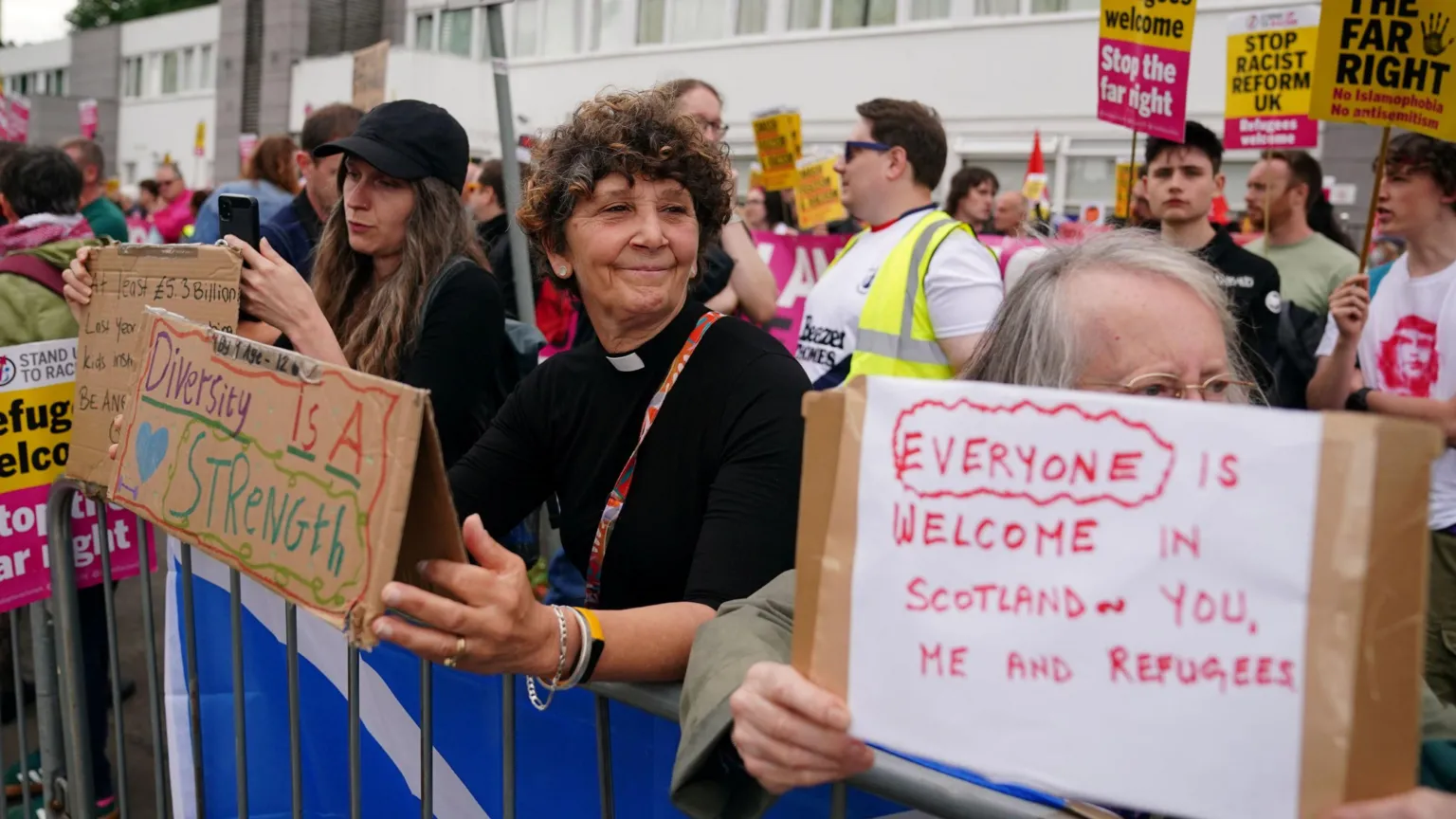
Immigration and the Scottish Parliament Election
Immigration is not a direct responsibility of the Scottish Parliament, yet it has emerged as one of the most debated topics during the election campaign. The Members of the Scottish Parliament (MSPs) elected on 7 May will not influence immigration policy, which remains under the jurisdiction of Westminster. Nonetheless, all political parties have articulated their positions on immigration, and a BBC poll identified it as a key concern among voters.
BBC Verify is investigating assertions made by political leaders regarding the effects of asylum seekers and migration on housing availability.
Scotland, similar to the rest of the UK, has witnessed a significant increase in immigration in recent years. The majority of this rise is attributed to official channels such as international student visas. However, the smaller group arriving through unofficial means, including small boat crossings of the English Channel, often dominates political discussions about immigration.
Glasgow, Scotland's largest city, has been at the center of controversy. The city has long struggled with a housing shortage and was the first in Scotland to declare a housing emergency in 2023. A recent factor complicating the situation is the interaction between the Home Office's efforts to reduce the backlog of asylum applications and Scotland's policies addressing homelessness.

Why Are There So Many Asylum Seekers in Glasgow?
Currently, over 6,500 individuals in Scotland are seeking asylum and receiving housing support from the Home Office, representing 6% of the UK total. These individuals reside in a mix of hotels and social housing while awaiting decisions on their asylum claims.
More than half of these asylum seekers are located in Glasgow, which hosts the highest number of asylum seekers among all UK local authorities. Specifically, 3,683 receive housing support, with an additional 152 receiving financial support without accommodation.
Glasgow has been part of the Home Office's dispersal scheme since 1999, making it a central location for housing asylum seekers arriving in the UK. In 2022, the Home Office adopted a "full dispersal" policy, allowing asylum seekers to be sent to any council area.
Data indicates that Glasgow's proportion of Scotland's asylum seeker population receiving Home Office support has gradually decreased. Nevertheless, many refugees tend to move to Glasgow even if initially housed elsewhere, due to established communities, charities, and faith centers providing support.
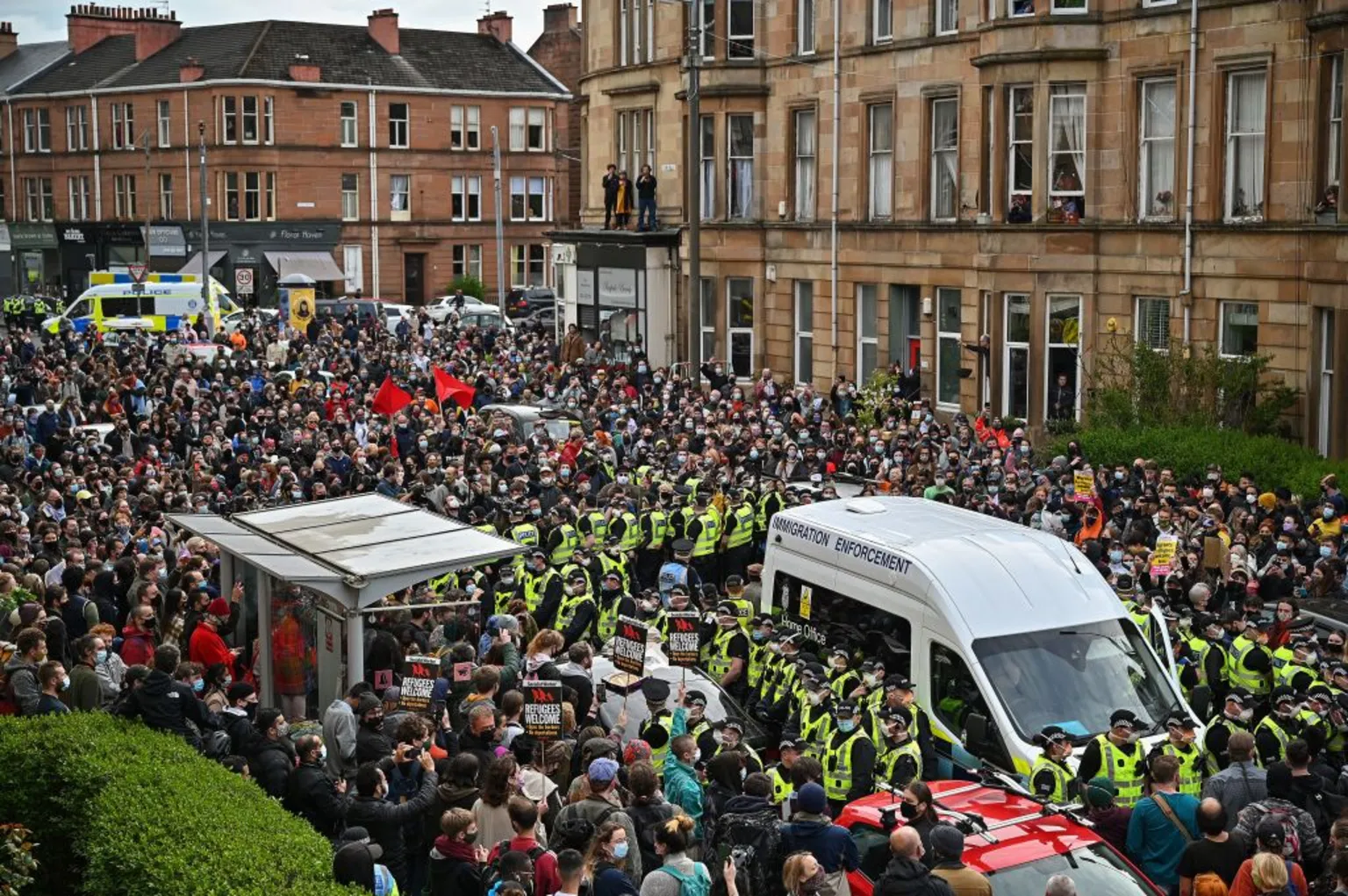
The city has experienced protests related to immigration, including a notable 2021 event where a Home Office van was surrounded by demonstrators on Kenmure Street.
Why Are Former Asylum Seekers Claiming Homelessness?
Asylum seekers receiving Home Office support in Glasgow are currently housed in long-term accommodations, unlike some other regions where former hotels are used. They receive free meals, housing, and a daily allowance of £1.42 but are generally not permitted to work while their claims are processed.
Once asylum claims are approved, individuals must vacate Home Office accommodation. Many then apply for homelessness support, which falls under the responsibility of Glasgow City Council.
Organizations such as Shelter Scotland and the Scottish Refugee Council have criticized this system, describing it as "homelessness by design," arguing that the time allowed to secure employment or housing after asylum approval is insufficient.
Between April and September 2025, Glasgow received 3,895 homelessness support applications, with 43% (1,685) from individuals with refugee status or leave to remain, excluding Ukrainian nationals. This proportion is significantly higher than the Scottish average of 15%, though other cities like Edinburgh also report elevated rates (29%).
Due to limited housing stock, the council often resorts to placing homeless individuals in hotels or bed and breakfasts. Glasgow City Council reported that the cost of addressing refugee-related applications was £38 million in 2025-26, with projections of £56 million for the following year and £74 million in 2027-28.
Do Refugees Get 'Priority' for Housing?
During BBC Scotland's election debate, Reform UK's Scottish leader Malcolm Offord claimed that "people arriving immediately to Glasgow, the asylum city of the UK, are given priority, they are jumping the queue" for services such as housing.
The Scottish Conservatives have also argued that the influx of asylum seekers to Glasgow reduces accommodation availability for local residents.
The issue, however, is not that refugees receive special priority, but that homeless individuals seeking temporary accommodation may be prioritized over those who are not homeless but awaiting permanent housing.
Scottish councils are legally obligated to house everyone who is "unintentionally homeless." Legislative changes enacted by MSPs since 2003 have removed many barriers to accessing support, strengthening homeless individuals' rights and compelling councils to provide assistance.
Consequently, when a flat becomes available, the council may allocate it as temporary housing to a homeless family, which could include refugees. This approach is both a legal requirement and a cost-effective alternative to hotel or bed and breakfast placements.
Currently, Glasgow has over 6,000 live applications awaiting permanent housing and more than 4,200 households in temporary accommodation, with no defined waiting list timelines. This situation can lead to frustration among families who have waited months or years for permanent housing and observe homeless individuals moving into available flats.

What Can Be Done About This?
This issue is particularly acute at present due to the Home Office addressing a historic backlog of unresolved asylum claims. There is optimism that once this backlog is cleared, the number of individuals leaving Home Office accommodation will stabilize at manageable levels.
Glasgow City Council has requested additional support during this period. The Home Office has introduced Asylum Move-On Liaison Officers to assist individuals transitioning out of Home Office housing.
Additionally, the period granted to individuals with asylum approval to vacate Home Office accommodation has been extended from 28 to 42 days as of March.
Both Reform UK and the Scottish Conservatives advocate reinstating a "local connection" rule, removed from the homelessness system in 2022. Previously, this rule allowed councils to refer homeless applicants without local ties back to areas where they had connections, such as family or work history.
Housing Secretary Mairi McAllan explained to BBC Scotland that the rule was suspended to allow individuals fleeing situations like domestic abuse to choose their residence without being redirected to their original area for housing support.
However, both the Scottish Government and Shelter Scotland maintain that reinstating the local connection rule would not affect refugees, as it never applied to them. Unlike England and Wales, asylum seekers awaiting Home Office decisions in Scotland are not considered to have a connection to the area where they are housed, since they have no choice in their placement.
What some parties propose is essentially a system prioritizing longer-term local residents awaiting permanent housing.
Asked about where this would leave homeless refugees, Malcolm Offord told BBC Scotland: "They were allowed into England through the Home Office, they have to go back to England and the Home Office has to work out what to do with them."
Where Do the Main Parties Stand on Immigration?
BBC Scotland has produced a concise summary of the main parties' positions on immigration and other key campaign issues, based on their campaign promises.
The Scottish National Party (SNP) seeks UK government implementation of a Scottish visa scheme and devolved migration policy tailored to Scotland's workforce needs.
The Scottish Greens also support devolving immigration powers to the Scottish Parliament and propose funding councils and registered social landlords to provide asylum housing, aiming to end the routine use of hotels and barracks.
The Scottish Conservatives oppose asylum claims from individuals entering the UK illegally, plan to withdraw from the European Convention on Human Rights (ECHR), and intend to close all asylum hotels.
Scottish Labour advocates for a managed and controlled migration system that ensures Scotland acquires necessary skills and talent while maintaining secure UK borders.
The Scottish Liberal Democrats intend to declare the asylum claim backlog a national emergency, employ 2,000 additional caseworkers to expedite processing, and close asylum hotels.
Reform UK calls for the removal of immigrants entering Scotland illegally and the abolition of Glasgow's role as Scotland's primary dispersal city for successful asylum seekers.
What About the Wider Housing Crisis?
Beyond immigration-related issues, Glasgow and Scotland face a broader housing crisis. All parties agree that increasing housing supply is the ultimate solution.
However, recent Scottish Government data reveals a decline in housing construction: 17,336 new homes were built in 2025, a 13% decrease from the previous year, and 14,999 new builds were started, down 6%.
Shelter Scotland warns that the government is on track to miss its target of building 110,000 new affordable homes by 2032. Homes for Scotland, representing 200 industry firms, cautions that new housing starts are on a "catastrophic trajectory" and may decline further due to a "chronic shortage" of available land for development.