
Lyra McKee's Life and Death
Lyra McKee, a journalist, writer, and campaigner, was shot and killed while observing rioting in Londonderry on 18 April 2019.
She was eight years old when the Good Friday Agreement was signed, belonging to a generation that grew up in a more peaceful Northern Ireland. Throughout her career, McKee often wrote about Northern Ireland's transition from the Troubles, a 30-year conflict that claimed over 3,500 lives, to a society seeking peace.
On 18 April 2019, at age 29, she was fatally shot by a dissident republican gunman during rioting in Londonderry. Her death caused widespread shock and anger. Her funeral was attended by then UK Prime Minister Theresa May and Irish President Michael D Higgins.
On Friday, three men—Paul McIntyre, Peter Cavanagh, and Jordan Devine—were found not guilty of her murder.
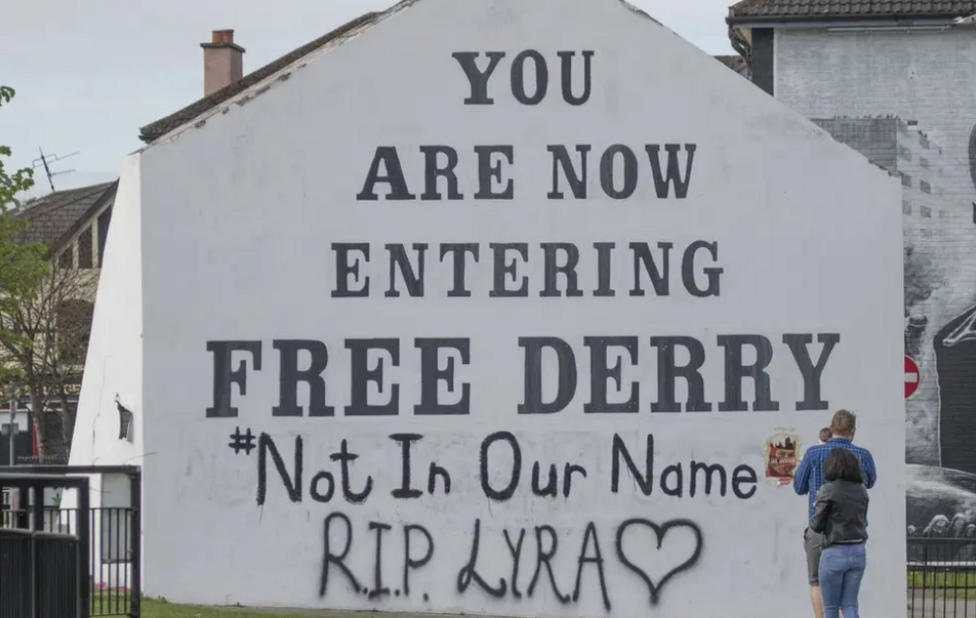
A message of condolence was added to the mural at Free Derry corner in the Bogside in 2019
Lyra was a daughter, sister, friend, and partner. At a vigil in Derry the day after her death, Sara Canning expressed the loss she felt, stating she had been left without "the woman I was planning to grow old with."
"The senseless murder of Lyra McKee has left a family without a beloved daughter, a sister, an aunt and a great-aunt; so many friends without their confidante," her partner added.
"We are all poorer for the loss of Lyra."
Recognised as a rising star in journalism, McKee was named Young Journalist of the Year in 2006 at age 16. She wrote for publications including Private Eye, The Atlantic, Mosaic Science, and Mediagazer. At the time of her death, she had a two-book deal with Faber and Faber.
A posthumous collection of her articles, letters, and essays titled Lost, Found, Remembered was published in 2020.
Her writing was deeply personal. In "A Letter to My 14-Year-Old Self," McKee addressed her teenage self about growing up gay in Northern Ireland. The letter was adapted into a short film and reflected on her experiences with bullying, concealing her sexuality, and religious guilt that eventually faded.
Several lines from the letter have become enduring messages of hope for young LGBTQ+ individuals, including:
"Kid, it's gonna be okay."Another line,
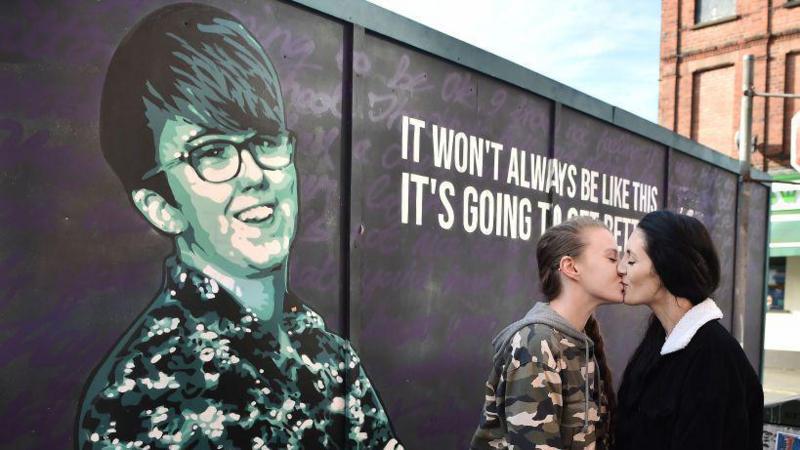
"it won't always be like this. It's going to get better,"is displayed on a mural dedicated to her.
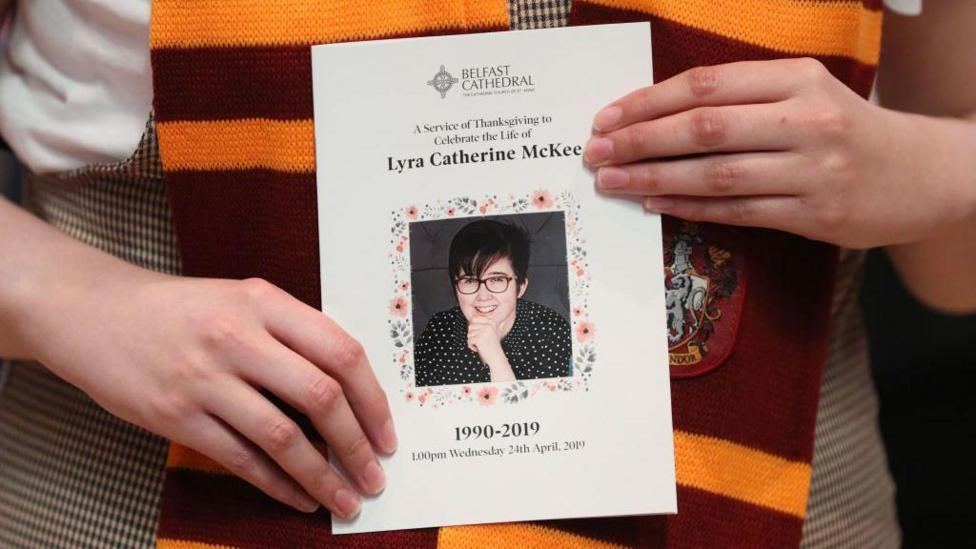
Several friends of Lyra McKee wore Harry Potter-themed T-shirts, scarves, and badges to the funeral service because she was an avid fan of the series
The Night of the Shooting and Trial Details
On the night McKee was killed, an MTV crew was filming a documentary in Derry. During the trial, the court heard that the disorder had been "set up" for the camera and that rioters were "entirely at ease" with the presence of television cameras recording their actions.
Footage played in court included TV presenter Reggie Yates saying:
"If people are saying we're inciting it, then maybe we should call it a night."As he confirmed the crew was leaving, Yates added:
"This feels like it could go in so many different directions."
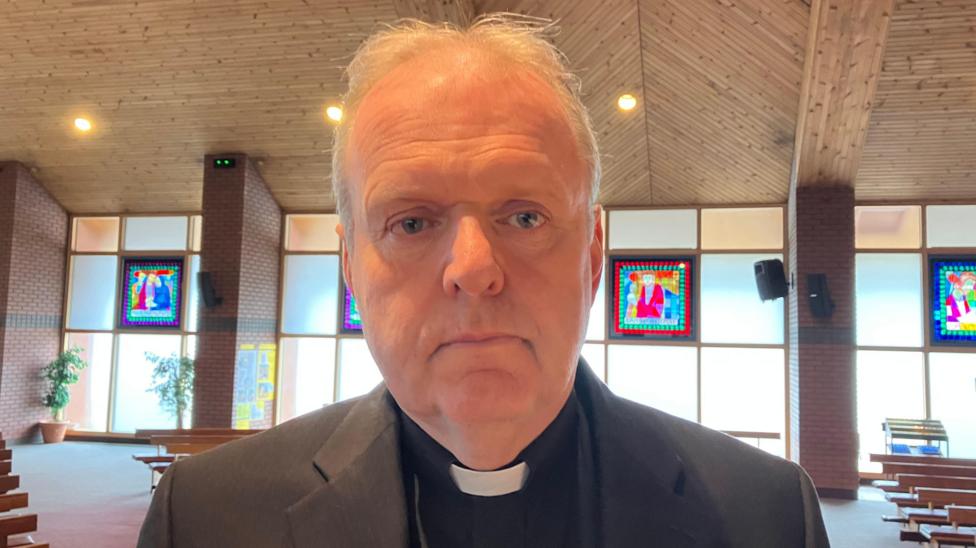
Fr Joe Gormley administered the last rites to Lyra McKee at Altnagelvin Hospital
A police camera captured the moment Lyra was shot while standing near officers observing the rioting. The footage played during the trial showed four gunshots fired, followed by screams after she was hit by a bullet.
She was transported to hospital in the back of an armoured police Land Rover. At Altnagelvin Hospital, family and friends gathered, and Fr Joe Gormley administered the last rites.
"I remember seeing this face, this beautiful young face, I will never forget that," he said.
Fr Gormley recalled the heartbreaking moment Lyra's mother arrived from Belfast to see her in the hospital room.
"We thought we had left all that behind," Fr Gormley said.
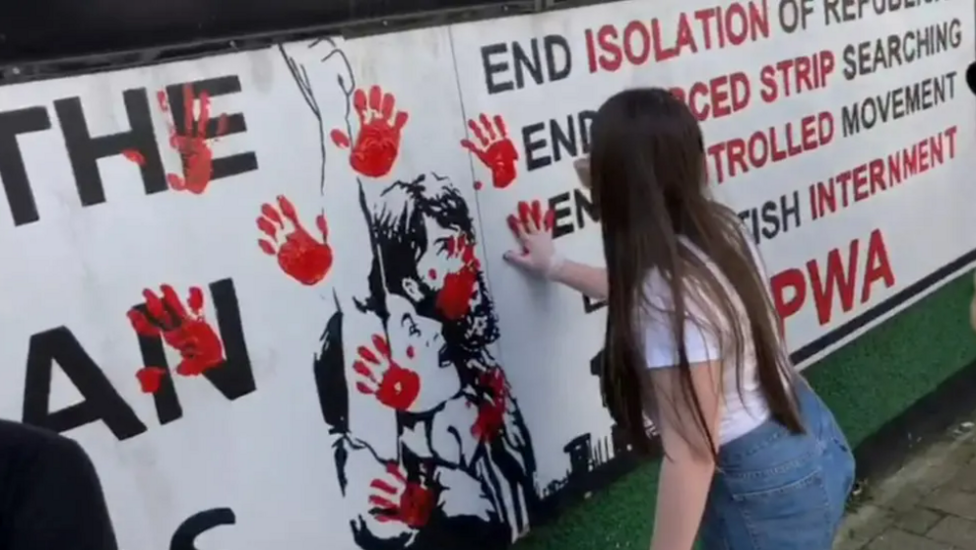
In the days following her shooting, protesters placed red handprints on the headquarters of Saoradh, a political party linked by police to the New IRA.
The dissident republican paramilitary group New IRA claimed responsibility for the shooting. Saoradh became a focus of public anger over her death.
After Lyra died, protesters placed red handprints on the walls of its office in Derry in response to the killing.
Friends and Community Reactions
Pictured in 2005, Robyn Edwards-Peoples (left) and Sharni Edwards-Peoples (right), Northern Ireland's first same-sex couple to be legally married, pose in front of the Lyra McKee mural in Belfast
Friends said her death remains deeply painful. Cali Morrow was about to go to bed when she received news and went to the hospital to support Lyra's partner Sara Canning and their wider family circle.
"I remember we got a phone call from our friend," said Cali.
"I just remember her saying: 'Lyra's been hurt. I'm not quite sure, but I think she's been shot.'"
"Getting to the door of the hospital and then being told she was gone was absolutely unbelievable."
Cali Morrow said the manner of Lyra McKee's death felt like something from Northern Ireland's past.
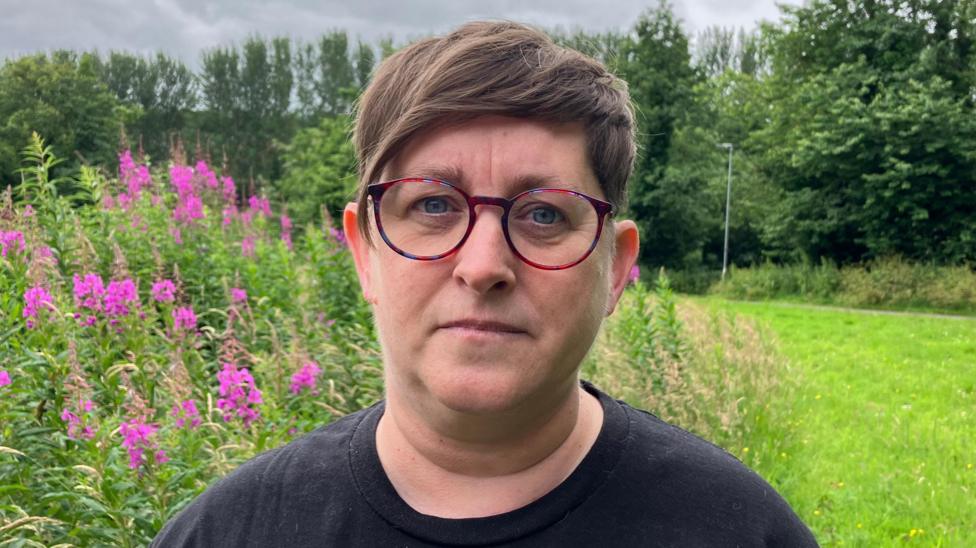
"It was 2019 and I thought that that's from the past.
How did it happen and why did it happen?"
Cali said she will always remember her friend as "incredibly funny and absolutely fearless."
Friend Julie McCloskey described Lyra as a lovely, intelligent, and brilliant friend.
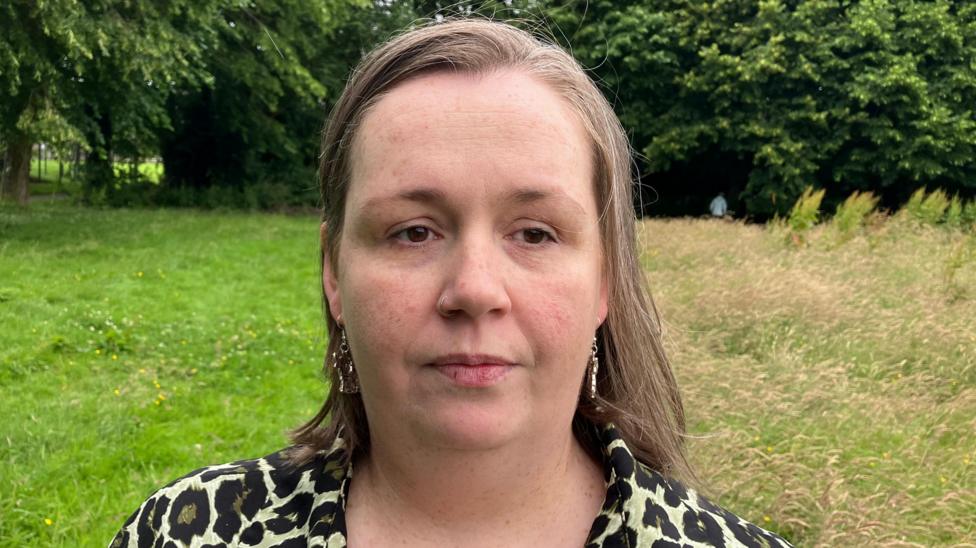
"We spent the whole night in the hospital. It was just a surreal experience," she said.
"Nobody knew how to act or what we were supposed to do.
She was just an innocent soul who would try to get on with everybody. She was a force to be reckoned with."
What is Lyra McKee's Lasting Legacy?
Hundreds of mourners attended Lyra's funeral, including Theresa May, Michael D Higgins, Jeremy Corbyn, and Leo Varadkar.
Her family chose St Anne's Cathedral in Belfast for the service because of its reputation as a "shared space" in a divided city—a Catholic funeral held in a Protestant cathedral.
Arlene Foster, then leader of the Democratic Unionist Party (DUP), Mary Lou McDonald, leader of Sinn Féin, and Michelle O'Neill, deputy leader of Sinn Féin and now First Minister of Northern Ireland, sat together during Lyra McKee's funeral
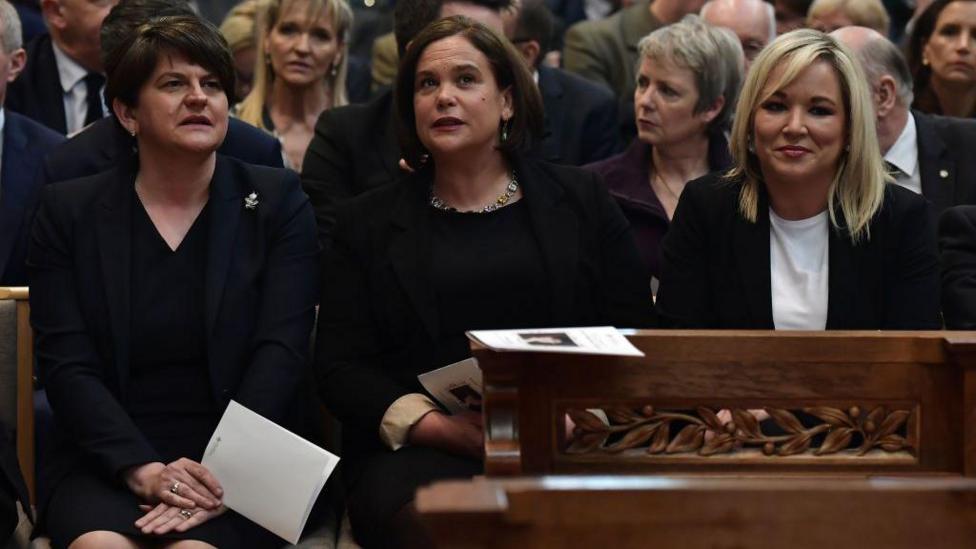
The funeral brought together politicians from both nationalist and unionist backgrounds who sat side-by-side during a period of political deadlock in Northern Ireland.
At the time of Lyra's death, Northern Ireland had been without a functioning devolved government since January 2017, following a split between the Democratic Unionist Party and Sinn Féin.
A priest at the service received a standing ovation after challenging the politicians present about why it took her death to unite them.
"Why in God's name does it take the death of a 29-year-old woman with her whole life in front of her to get to this point?" Father Martin Magill asked.
Following her death, the Lyra McKee Award for Bravery was created by One Young World and first awarded at the 2023 Summit in Belfast. It recognises journalists who are leading voices for truth, justice, and free speech, even in hostile environments or under threat.
The 2025 recipient, Salma Niazi, recognised for reporting on women's rights in Afghanistan, said:
"Lyra McKee stood for truth and fearlessness, and receiving an award in her name reminds me that journalism can offer hope even in the darkest moments."
The Lyra McKee Bursary Scheme was also established by the Centre for Investigative Journalism (CIJ) to provide training for aspiring reporters from underprivileged backgrounds.
Through these initiatives, Lyra's dedication to journalism and storytelling continues to inspire and support new generations of young reporters nearly seven years after her untimely death.


