Analysis: Results Set to Transform British Politics
On Thursday, my colleague Andrew Sparrow provided an insightful guide explaining why these elections could significantly reshape British politics.
Earlier, I described today’s elections as potentially seismic. Although no results have been announced yet, if the opinion polls, parliamentary by-elections since the general election, and other indicators are reliable, we already have a preliminary understanding of the likely outcome. This outcome is expected to alter the British political landscape in at least seven key ways.
1) The Full Emergence of Five-Party Politics in England
Two-party dominance has been declining in British politics for over fifty years. Its peak was in 1951 when 97% of voters chose either the Conservative or Labour parties. Previously, the Liberal Democrats were considered a half-party, leading to the notion of a two-and-a-half party system. However, England and Wales have long had strong nationalist parties, and Reform UK won the English local elections last year decisively. Under Zack Polanski’s leadership, the Greens have surged in the polls. This election marks the first time in England where distinguishing between “main” and “minor” parties is no longer meaningful. Notably, Reform UK and the Greens, despite limited parliamentary representation, have been the top performers in some polls. These labels reflect parliamentary presence but not the broader political competition, where five parties are competitive across England. It is more accurate to consider legacy parties and disruptor parties.
2) Reform UK’s Rise as a Great Britain-Wide Party
Under Nigel Farage, Ukip was seen as an English nationalist party. Scotland showed resistance to Farage’s politics, exemplified in 2013 when he was notably rejected. The Brexit Party also struggled in Scotland, though it made some gains in Wales. Now rebranded as Reform UK, the party is competing with Plaid Cymru for first place in Wales and with Labour for second place in Scotland. It is expected to win the English local elections easily, making it the only party with a realistic chance of finishing first or second in England, Scotland, and Wales. This is why Farage is boasting about his party’s reach.
3) Plaid Cymru’s Expected Dominance in Wales
Plaid Cymru is widely anticipated to be the largest party in the Senedd following these elections. Unless Labour and Reform UK form an unlikely alliance, Plaid is the only party realistically able to form a government. Rhun ap Iorwerth, Plaid’s leader, would become the first non-Labour first minister of Wales since devolution. Assuming the SNP retains power in Scotland and Sinn Féin remains the largest party at Stormont, nationalists would lead the three non-English UK nations.
This does not imply Welsh independence is imminent. Although Plaid formally supports independence, it has never seriously planned how to achieve it. A government pursuing independence would face complexities and less public support than Scotland experienced, where independence was rejected in a 2014 referendum. Following that vote, the Scottish parliament gained new powers and began diverging from UK government tax policy. The Welsh government has fewer devolved powers, but Plaid’s leadership in Cardiff may gradually change this.
4) Labour Support Declining, Especially in London
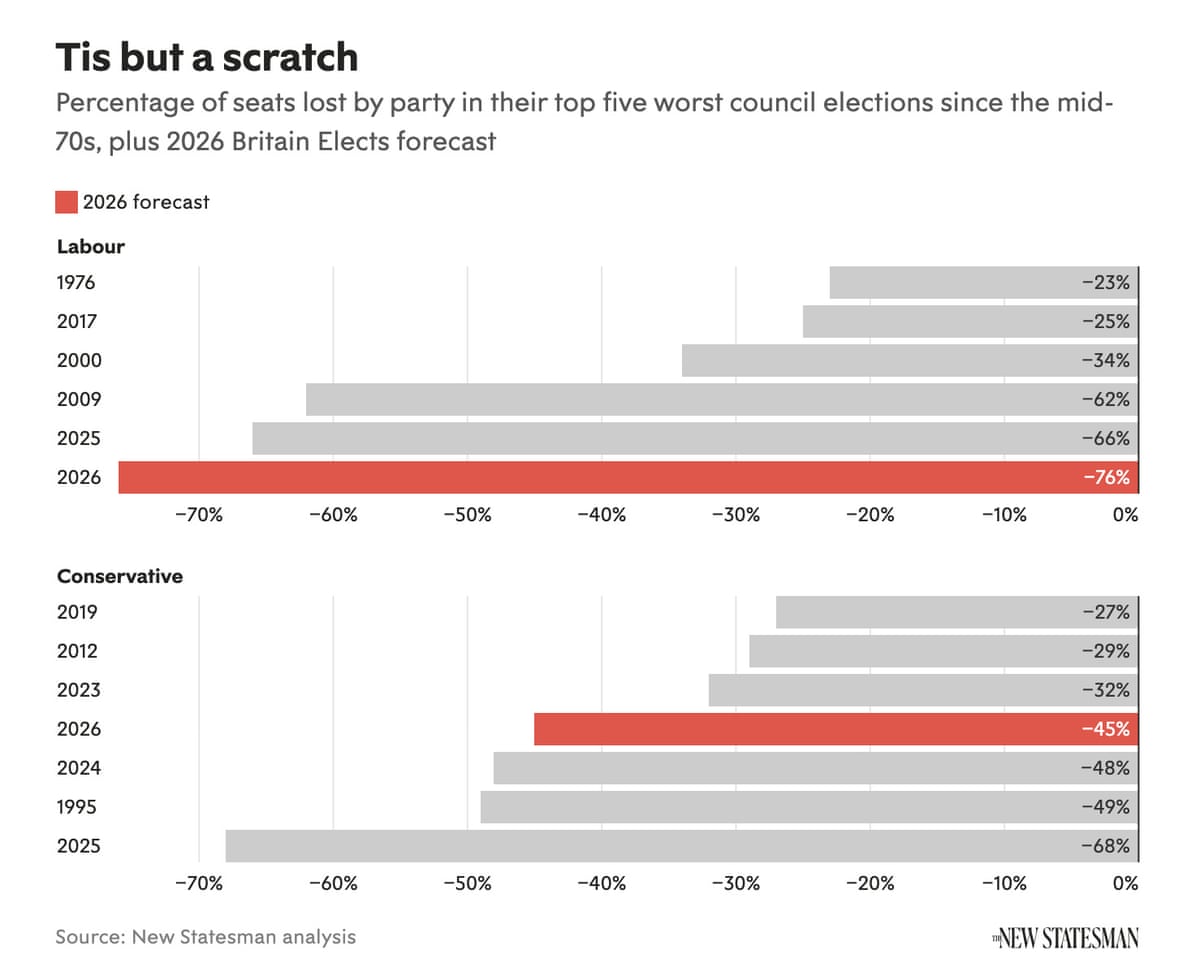
If Plaid wins in Wales, it will mark the first significant Labour defeat there in over a century. Labour is also expected to suffer substantial losses in London, where it currently dominates local government and held 59 of 75 parliamentary seats in the last election. Overall, Labour is on course for its worst result since at least the 1970s. Britain Elects, which produces election forecasts for the New Statesman and has a strong track record, supports this outlook.
Labour figures may reference the 1968 London local elections, which followed the 1967 devaluation and were disastrous for Labour, losing 17 of 20 boroughs, mostly to the Conservatives. Labour later recovered and Harold Wilson called a general election, which he lost. However, Wilson did not face Reform UK, the Greens, five-party politics, prolonged austerity, or social media challenges that complicate Starmer’s current situation.
5) Increasing Pluralism in Local Government
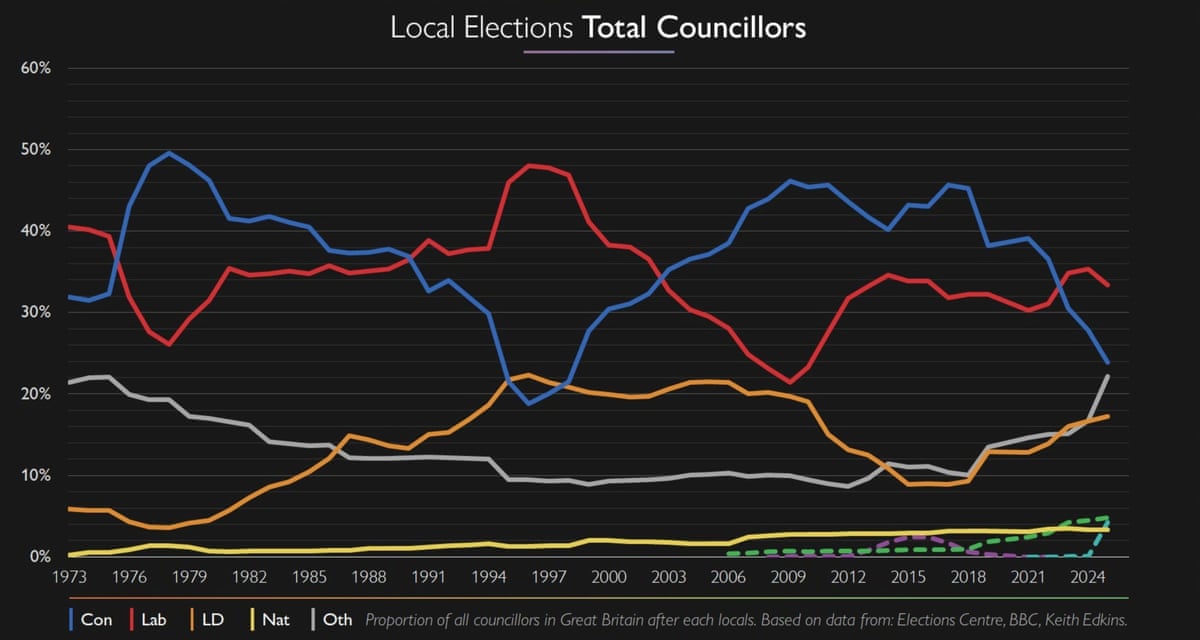
Historically, local government in Britain was dominated by the two main legacy parties, Conservatives and Labour. This weekend’s elections are expected to disrupt that pattern significantly. The Liberal Democrats anticipate becoming at least the second-largest party in local government by the next election in terms of councillor numbers, possibly the largest. Reform UK and the Greens are also expected to expand their presence considerably. A chart by Dylan Difford on Substack illustrates how councillor numbers have evolved over recent years.
6) The Limitations of First Past the Post
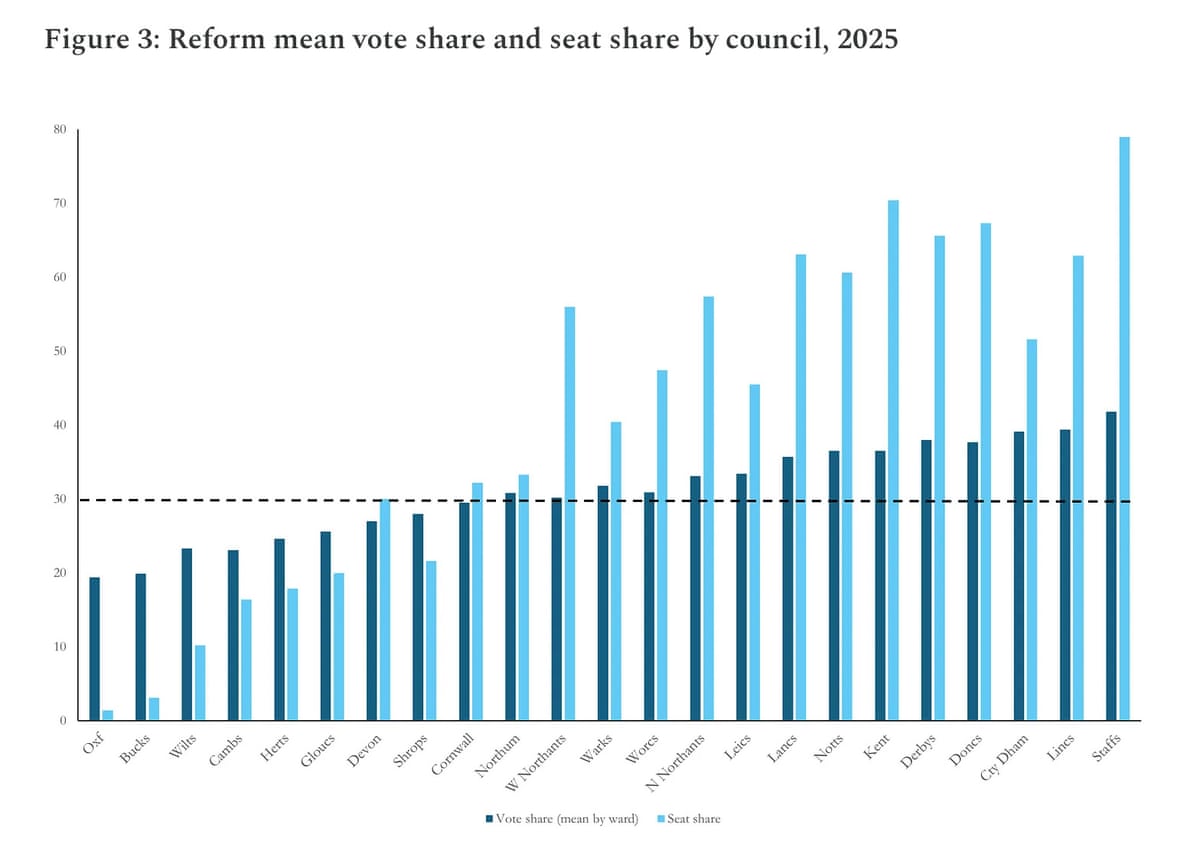
It is increasingly evident that the first-past-the-post electoral system, used in UK parliamentary and local elections in England and Wales, is ill-suited to five-party politics. While effective for two-party systems, it can result in disproportionate seat allocations relative to vote shares in multi-party contexts. For example, in the last general election, Labour secured 34% of the vote but 63% of the seats. This phenomenon is also occurring at the local authority level. Rob Ford has analyzed this and included a chart showing that in some councils last year, Reform UK won three-quarters of the seats with less than half the vote.
"The crucial question for the Greens this year, as for Reform last year, is whether they can push their support in target areas above the ‘tipping point’ where first past the post goes from sandbag to springboard. For Reform last year, as the graph below illustrates, that tipping point came around 30% – in councils where Reform won above 30% they were generally over-represented in seats, often taking huge majorities."
editorial today advocates for changing this electoral system.
7) Labour’s Challenge to Respond
Labour’s reaction to the results remains uncertain. Keir Starmer may face a leadership challenge. Regardless, the party will need a response beyond maintaining the status quo. Elections serve as blunt communication tools to governments, and unless polls are entirely inaccurate, the message tonight will be that change is necessary.
Party Statements as Counting Begins
Statements from political parties are emerging as results are awaited.
Conservative Party chairman Kevin Hollinrake said:
"We have run an energetic and positive campaign, showcasing that we have a clear plan to get Britain working again and that we have the team to deliver it... We know that so soon after a historic general election defeat and contesting wards won during the Party’s polling highs, that this will be a difficult set of elections for us. But we will continue to rebuild and to show the public that we have changed, to demonstrate that only this new Conservative party is a credible alternative."
Liberal Democrat leader Ed Davey stated:
"People are deeply disappointed with a Labour government that has been too timid to fix the country, but they are also appalled by the rise of Reform and Nigel Farage’s Trump-style politics. While those on the extremes of the right and the left want to burn everything down, Liberal Democrats want to fix what’s broken. Every Liberal Democrat local champion elected today will fight tirelessly for the communities they serve."
Green Party leader Zack Polanski commented:
"I’ve travelled across England and Wales and I’m hearing the same everywhere I go – confidence that we will win more councillors than ever before. The news from the doorstep is that we will be taking seats from not just Labour but the Tories and Lib Dems too, from all across the country. Voters are responding to the fact that Greens are the only party taking the cost-of-living crisis seriously, with real plans to cut bills, reduce rents and provide genuinely affordable homes, as well as tackling the climate and nature crisis."
A Plaid Cymru spokesperson said:
"Throughout this election, we have heard a clear appetite for change. People want a government that will stand up for Wales and focus relentlessly on the key issues affecting their lives. People have told us they have been inspired by Rhun ap Iorwerth’s leadership and driven by a desire for a positive alternative to Reform UK’s chaos and division."
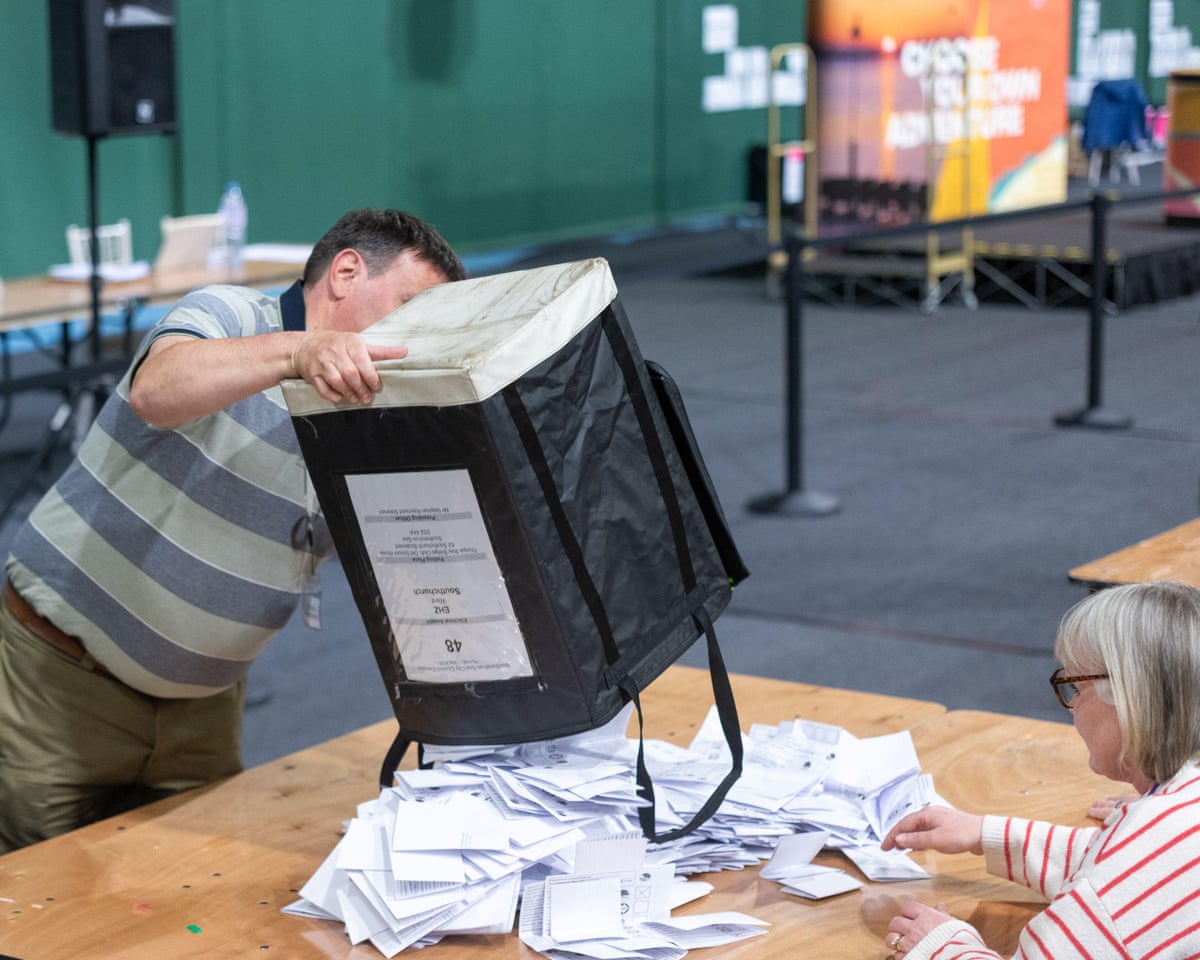
Here are some of the latest images from vote counts in England:
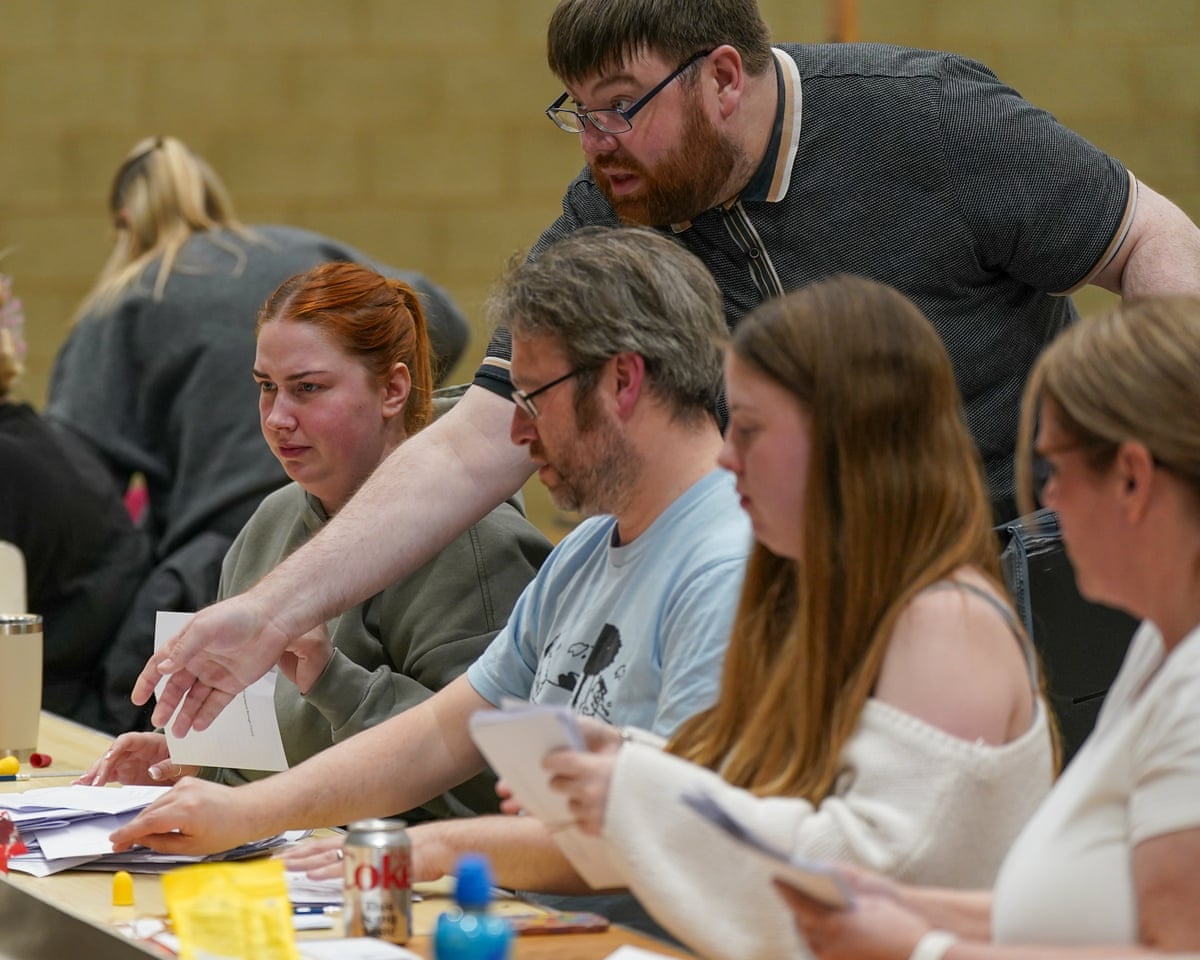
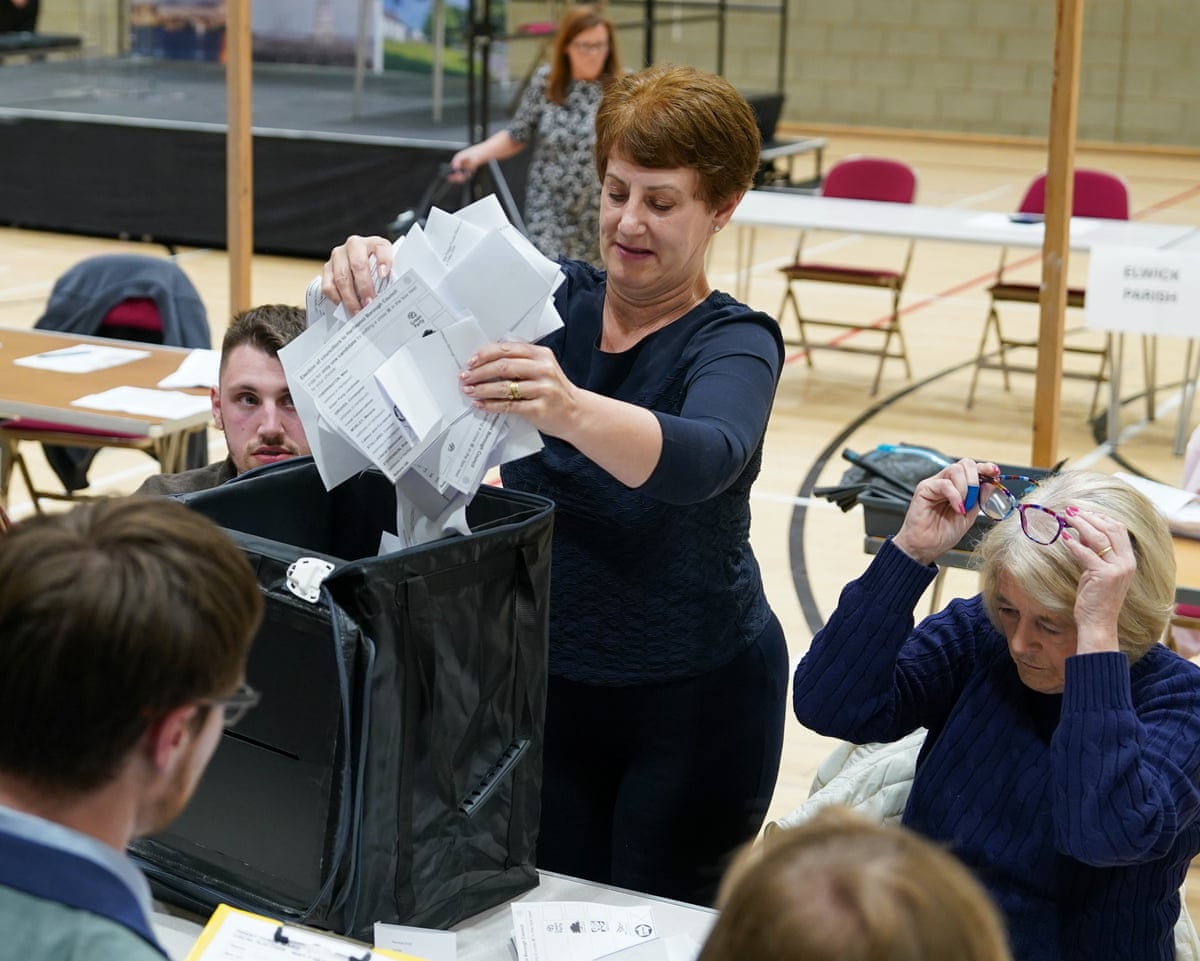
As polls closed, Deputy Prime Minister David Lammy described the elections as “tough.”
"I don’t want to sugarcoat it, the message from the doorstep is this is a tough election cycle.
This is a mid-term set of elections with people concerned about the cost of living and wanting to see the government go faster with quicker pace."
Lammy added that although Labour ran a “positive campaign,” the party’s “message of delivery” was “drowned out by the politics of grievance.”
Deputy Labour leader Lucy Powell said:
"These elections are tough and took place in a difficult context. After over a decade of Britain being held back, working people up and down the country rightly want to see the whole of our United Kingdom firing on all cylinders in their interests. Labour has started to deliver on that promise and we are determined to make it happen everywhere for everyone."
Keir Starmer thanked party activists after polls closed. In a post on X, the prime minister said:
"To all the Labour members and volunteers who have supported local campaigns across the country: thank you. Together we will build a stronger and fairer Britain."
These elections are widely regarded as the most significant test of Starmer’s leadership since the general election.
What to Watch for in Scotland
Libby Brooks, ’s Scotland correspondent, reports:
Although the incumbent Scottish National Party (SNP) is poised for a remarkable fifth term, the detailed results and the composition of the Holyrood chamber remain highly uncertain.
Recent polls indicate Reform UK, which has gained momentum in Scotland over the past 18 months, is neck and neck with Scottish Labour for second place. Labour’s ratings have declined amid public dissatisfaction with the UK Labour government, despite leader Anas Sarwar’s notable call for Starmer to step down in February.
Many constituency seats remain competitive, and the SNP is not guaranteed a majority. It may seek support from the Scottish Greens, who anticipate a strong performance partly due to a Polanski effect, although the Green Party of England and Wales is a separate entity. Such support could help create a pro-independence majority at Holyrood.
SNP leader John Swinney has pledged to hold a vote on the first day of the new parliament seeking powers to hold a second independence referendum, despite the UK government’s consistent refusal of such demands and the absence of an alternative plan.
The first full council result in Scotland is not expected until 2am, though some smaller results may be available from midnight.
Updates will be provided here, and full results for England, Scotland, and Wales can be found on ’s results tracker.
What to Watch for in Wales
Bethan McKernan, ’s Wales correspondent, notes:
This week, the Welsh parliament will expand from 60 to 96 members under a new, more proportional electoral system. Labour is expected to lose control of the Senedd for the first time since devolution in 1999, with Plaid Cymru’s Rhun ap Iorwerth anticipated to become the new first minister, bringing Welsh independence into focus.
Coalition mathematics make it unlikely that Reform UK will form a government even if it wins the most seats. Plaid Cymru is expected to form a minority government without formal coalitions with Labour or the Greens.
Labour’s losses are predicted to be severe; some polls place the party in fourth position, behind the Greens. Several polls suggest that Eluned Morgan, the Labour first minister, may lose her seat.
The Senedd’s new list system has very narrow margins, making predictions difficult. Pollsters More in Common estimate that as little as 0.06% of the vote could determine the final seat in each constituency.
Which Results to Expect First?
Aletha Adu, political correspondent, reports:
The early hours of Friday will yield only a few declarations, but these could influence the overall election mood.
Hartlepool is a key test of whether Reform UK can translate polling momentum into council gains. The declaration guide highlights the possibility of significant Reform advances there as a major storyline.
If Reform performs well, Labour strategists will be more concerned about the emergence of a lasting anti-establishment challenger capable of eroding Labour’s traditional support in formerly safe towns.
Oxford may provide an early indication of how fragmented progressive and anti-Tory voters have become, with Labour, the Greens, and Liberal Democrats competing for similar voters. The declaration guide describes the situation as “a mess of different liberal winners in Oxford.”
Dudley is significant as it lies in politically volatile Midlands territory where Labour faces pressure from Reform amid concerns about immigration, living standards, and distrust of Westminster politics.
A full election results timeline is available for reference.
Polls Closed in England, Scotland, and Wales
Welcome to ’s live coverage of election results across England, Scotland, and Wales.
Thursday’s voting involved the Scottish and Welsh parliaments and 136 local councils in England, where 5,014 seats were contested. This included all seats on London’s 32 borough councils, over a dozen borough councils, six unitary councils, six county councils, and three district councils. Additionally, 73 councils held elections for half or a third of their seats.
Six mayoral contests took place in Croydon, Hackney, Lewisham, Newham, Tower Hamlets, and Watford.
First results in England are expected between midnight and 2am, while counting in Scotland and Wales will begin around 9am, so those results will be delayed.
We will provide continuous updates, analysis, and reactions throughout the night.
For corrections or tips, please contact hamish.mackay@the.com. Andrew Sparrow will take over coverage at 6am, with comments opening from 8am.