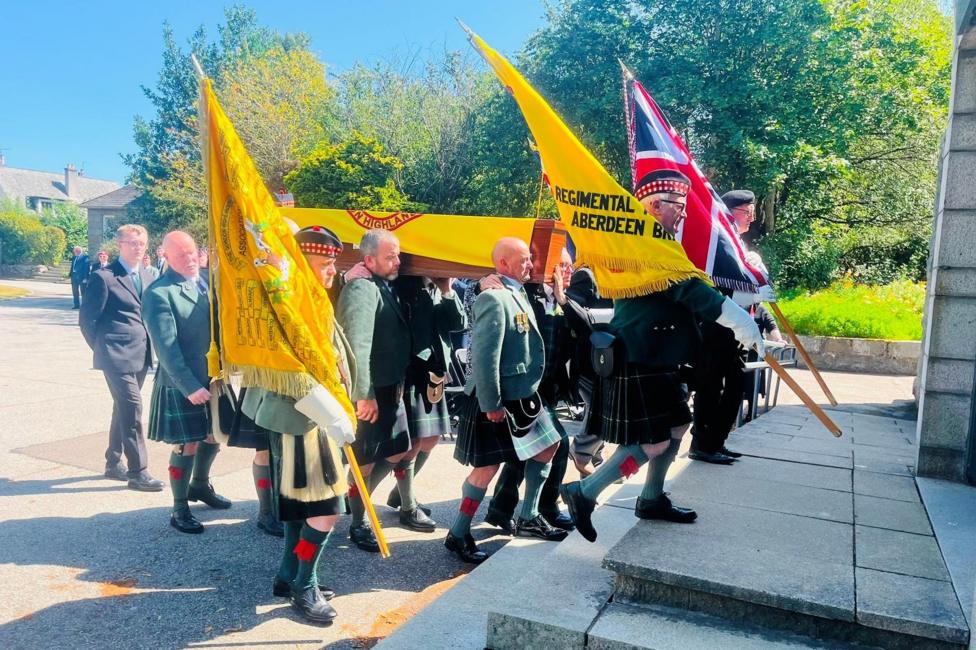
Mourners gathered in Aberdeen on Monday afternoon for the funeral of Jim Glennie, who was one of Scotland's last surviving veterans of the D-Day landings. He died earlier this month at the age of 100 after living through Operation Overlord, the largest air and sea invasion in history, on 6 June 1944.
Mr Glennie, from Turriff in Aberdeenshire, took part in the attack as an 18-year-old soldier serving with the Gordon Highlanders. His family described him as a
hero, and he had said on his 100th birthday in August last year that he owed his survival to
sheer luck.
The service was held in Aberdeen, with the hearse setting off from the Gordon Highlanders Museum for Kaimhill Chapel. Pipers, flag bearers and a guard of honour followed the coffin into the chapel.
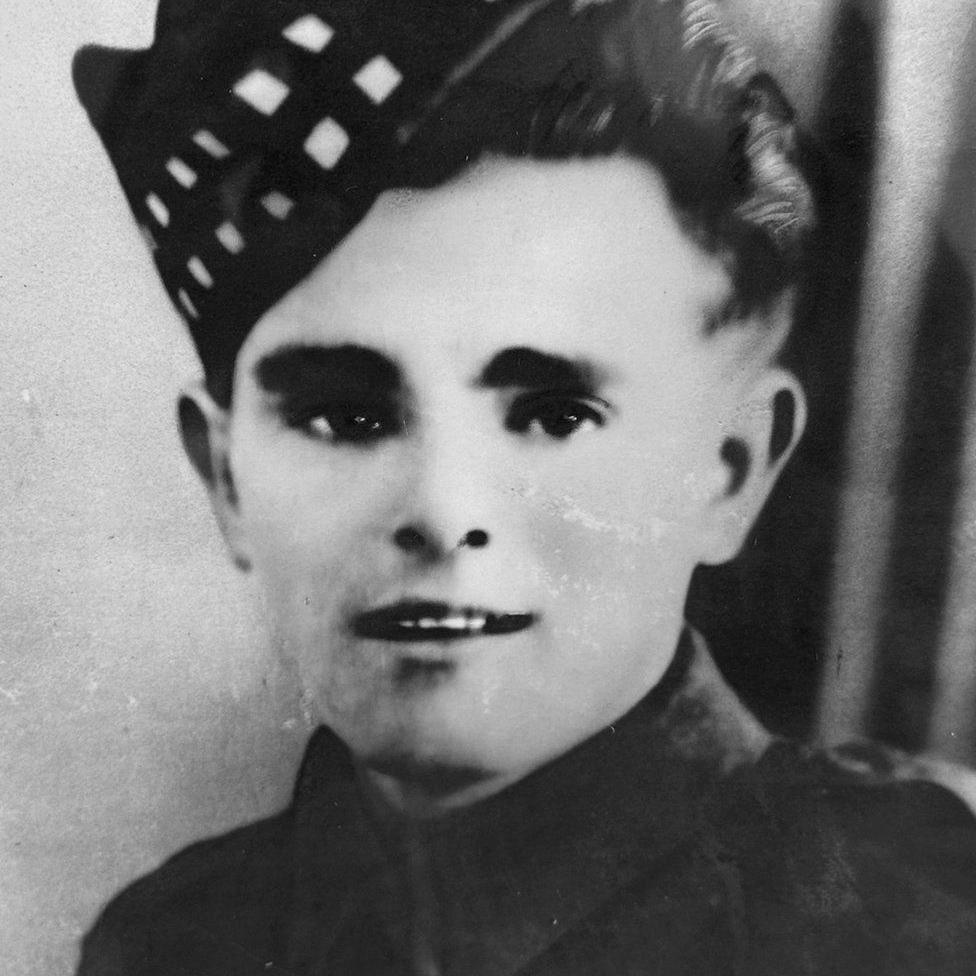
Pte Glennie began his military service at Aberdeen's Bridge of Don Barracks, before going on to fight with allied forces as they began landing on the beaches of Northern France on 6 June 1944.
What did Jim Glennie experience on D-Day?
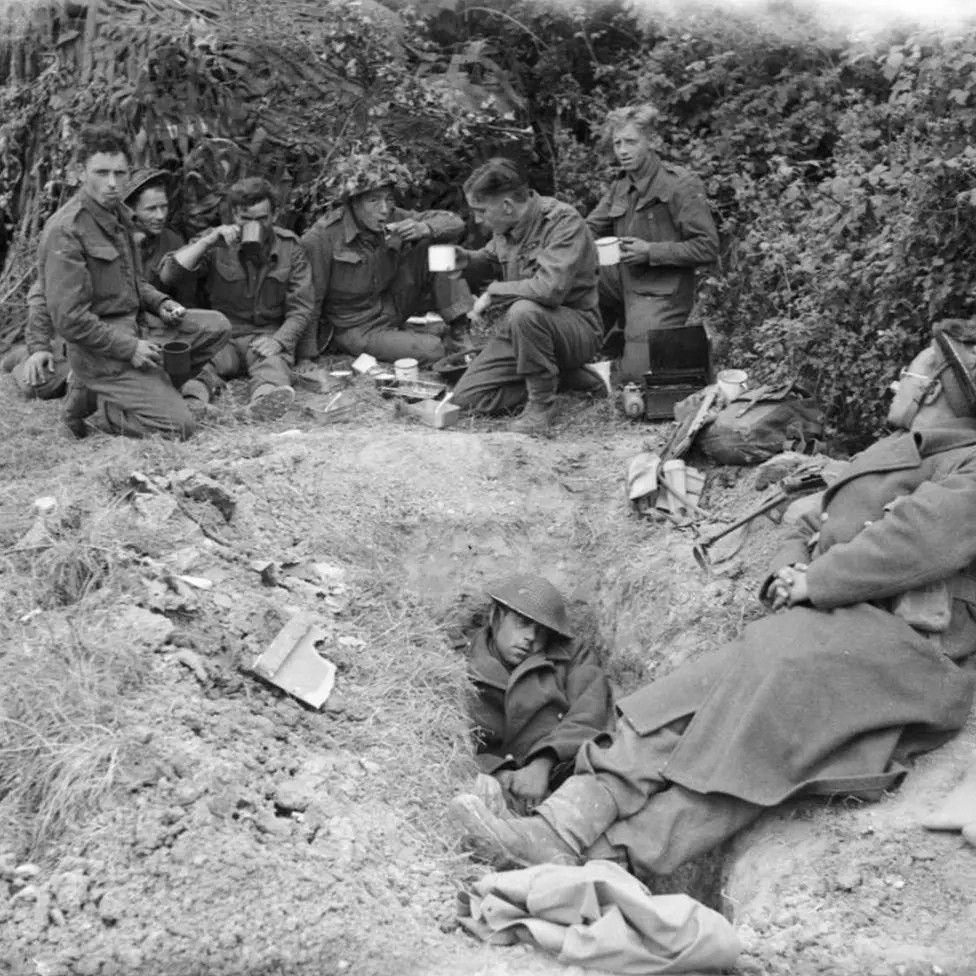
He saw the body of a fallen soldier as he entered the water from a landing craft, but knew he had to carry on. Amid heavy German resistance, Glennie and his comrades managed to advance inland, before he was shot in the arm and captured.
Glennie was later taken to one of Germany's largest prisoner of war camps, Stalag IV-B, where he said food was scarce and they were always hungry. He was filling bomb holes as part of his prisoner duties when his German captors vanished in early 1945.
The camp was liberated and he made his way to American forces before being taken home to his family. Once Europe was liberated he was due to deploy to Japan, but the war ended before he was sent.
What did he do after the war?
He went on to become a welder. He and his wife Winifred were married for more than 40 years before her death about 15 years ago, and the couple had two children and one grandchild.

A portrait of Glennie hangs in the Gordon Highlanders Museum, where he was a volunteer for 30 years. On his 100th birthday he received a British Empire Medal to recognise that volunteering.
The museum tells the story of the British Army regiment, which was originally raised by the 5th Duke of Gordon in 1784.
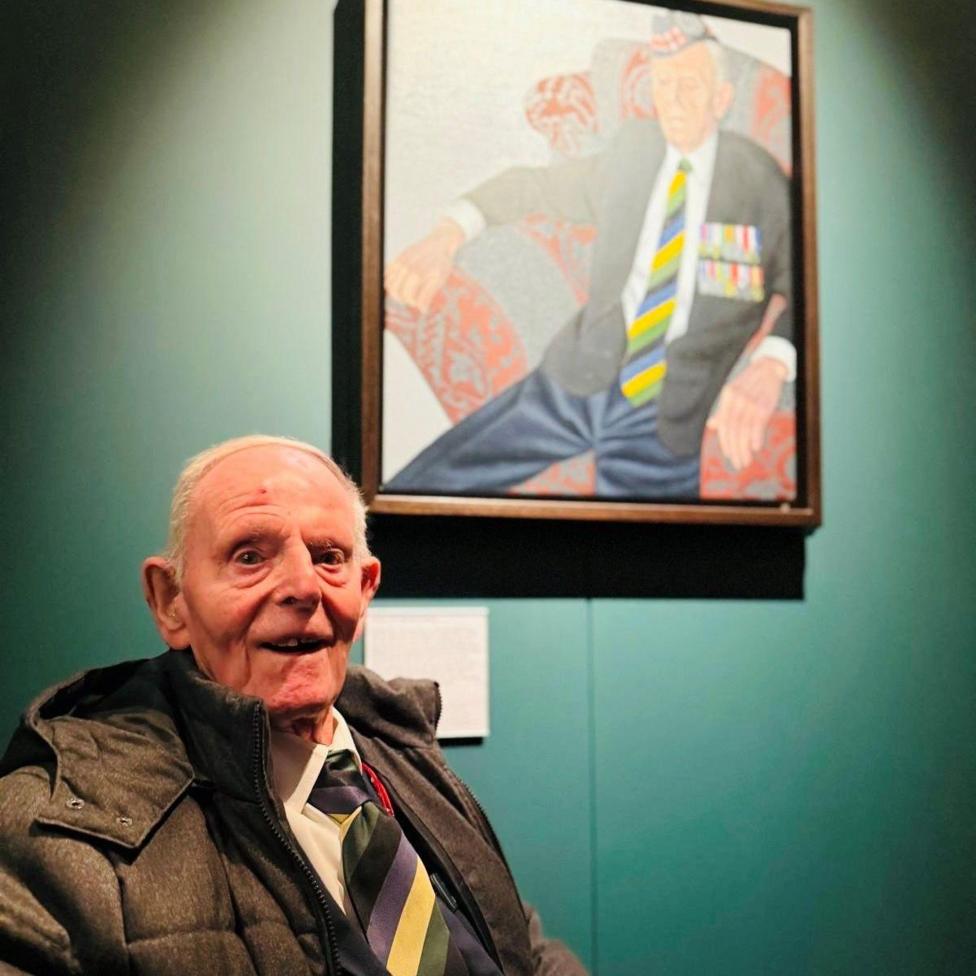
How has his family and the museum remembered him?
In a statement after his death, relatives said:
He was our hero as well as a great dad, granddad and father-in-law.
There is a hole in our life now without him.
He is finally getting to be with our mum again after so long apart.
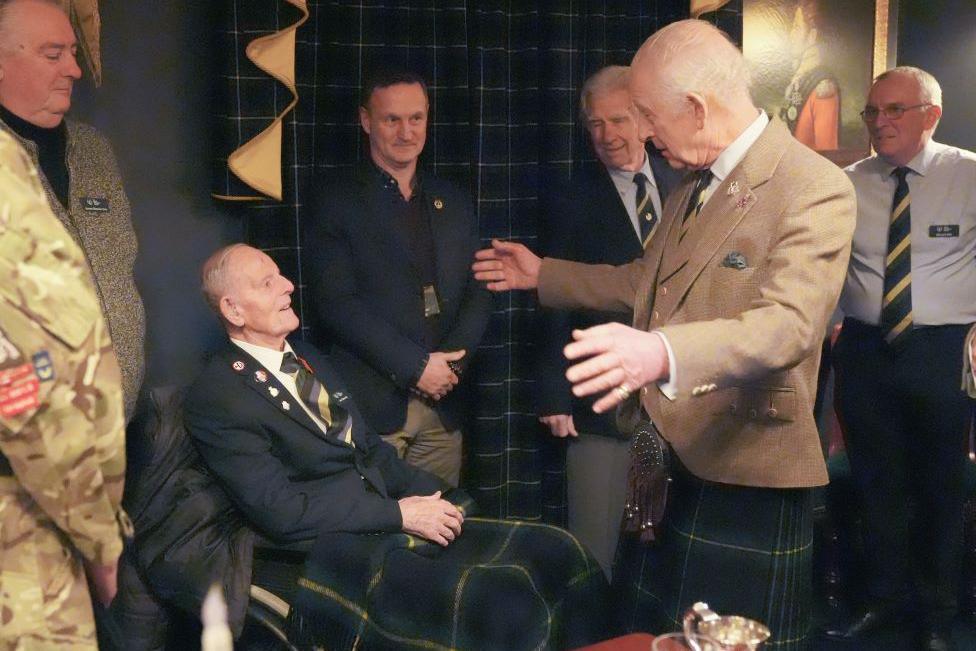
John McLeish, chief executive of the Gordon Highlanders Museum, recalled a favourite memory of Glennie meeting King Charles at the museum in 2025.
For Jim that wasn't the first time that he met His Majesty,he said.
But I will never ever forget him meeting the King by saying 'long time no see'.
An absolute Jim classic that none of us will ever forget.