

Minister's Decision on Integrated Education Bids Upheld by Court
Stormont's Education Minister, Paul Givan, acted within the law when he rejected applications from two North Down schools seeking to transition to integrated education, the Court of Appeal has confirmed.
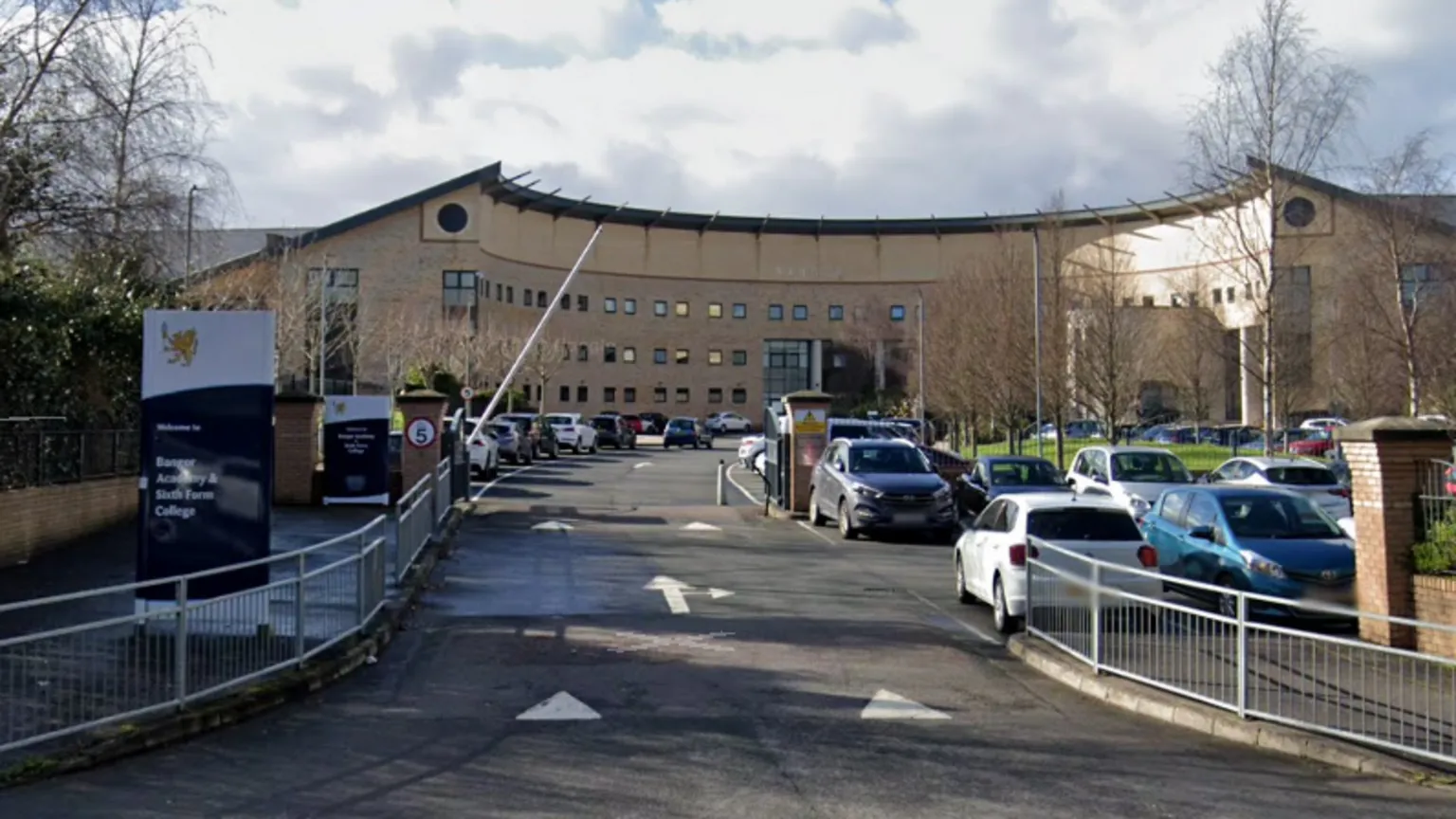
In January 2025, Givan declined the proposals submitted by Bangor Academy and Rathmore Primary School to provide integrated education, a system where children from various religious backgrounds, including none, are educated together.
The minister's decisions were legally challenged on behalf of pupils from both schools. However, on Tuesday, the Court of Appeal upheld a previous High Court ruling that refused permission to pursue a judicial review.
"The minister's decisions were rational and lawful, and that no ground of challenge disclosed an arguable case with a realistic prospect of success," the court concluded.
In 2023, a significant majority of parents at Bangor Academy, Northern Ireland's largest school with approximately 1,850 pupils, supported the move to integrated education.
In a ballot, nearly 80% of parents and s who voted at Bangor Academy endorsed the change.
Rathmore Primary School's plans to adopt integrated education received comparable parental support.
When rejecting the bids in January 2025, Givan cited insufficient evidence that a sufficient number of Catholic pupils would attend the schools to justify integrated provision.
Legislation requires integrated schools to have reasonable numbers of both Protestant and Catholic children. The minister assessed that these targets were unlikely to be met.
Recent Catholic enrolment levels at both Bangor Academy and Rathmore Primary were reported to be around 3%.
In October of the previous year, the High Court heard claims from pupils' representatives arguing that Givan's decisions violated Article 64 of the Education Reform (Northern Ireland) Order 1989, which mandates encouragement and facilitation of integrated education development.

Mr Justice McAlinden dismissed all grounds of challenge at that time, a decision that was subsequently appealed.
Interpretation of 'Reasonable Numbers' in Legislation
The Court of Appeal's written judgment identified the key issue as the relationship between Article 64 and Article 92 of the Education Reform Order.
Article 92 specifies that the Department of Education shall not approve a bid unless the school "would be likely to provide integrated education including reasonable numbers of both Protestant and Roman Catholic pupils."
The Court of Appeal noted:
"It was accepted that if the Minister lawfully concluded that Article 92(6) was not satisfied, he was obliged to refuse approval.
In short, if there is not a reasonable number of Catholic and Protestant pupils attending a school then it is not an integrated school as defined by the legislation."
Understanding Integrated Education in Northern Ireland
In April 2022, the Northern Ireland Assembly passed legislation requiring the Department of Education to increase support for integrated education.
This law defines an integrated school as one that "intentionally supports, protects and advances an ethos of diversity, respect and understanding between those of different cultures and religious beliefs and of none."
However, the commitments in this legislation prompted concerns from some schools, educational bodies, and church representatives, who argued it could "elevate integrated schools" above other school types.
Currently, approximately 70 out of over 1,000 primary and post-primary schools in Northern Ireland are integrated.
These schools aim to mix pupils from diverse cultures, socio-economic backgrounds, and religious beliefs, including "reasonable" numbers of both Protestant and Roman Catholic children and young people.
The first integrated school in Northern Ireland, Lagan College, opened in 1981.
Despite growth in the number of integrated schools in recent years, only about 8% of pupils attend formally integrated schools.


