

Volunteer Coastguard Callouts No Longer Paid
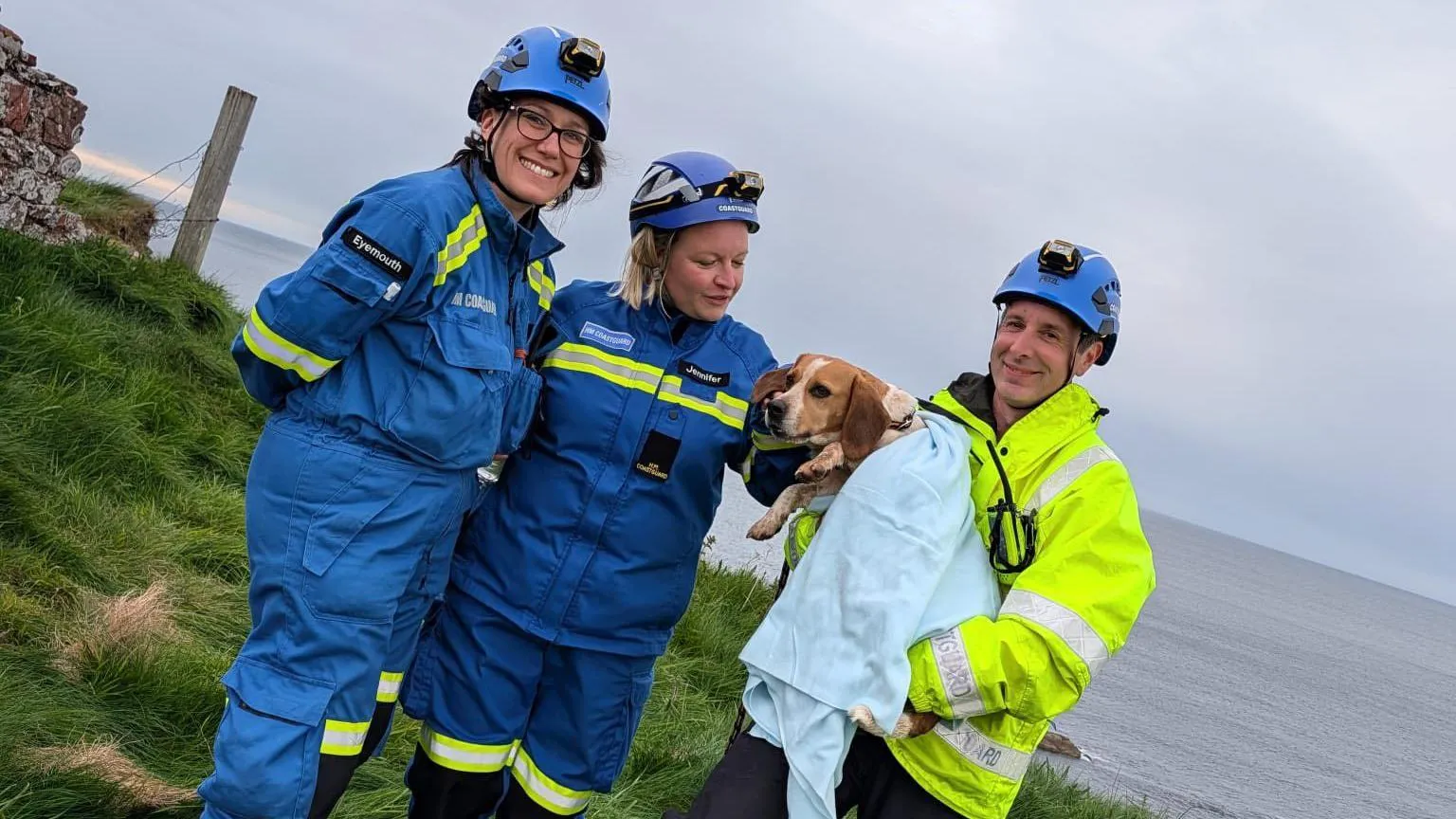
Dr Kelly Stockdale promptly responds to emergency callouts by heading directly to the coastguard station on the Berwickshire coast. She has volunteered in Eyemouth for two years after relocating to the area and wanting to contribute to the local community.
However, she, along with thousands of other Coastguard Rescue Officers (CROs), has been impacted by recent news that payment for responding to emergency callouts will cease following a court ruling.
The Maritime and Coastguard Agency (MCA) explained that changes were necessary after the Court of Appeal upheld a judgment classifying responders as "workers" during their duties.
Numerous volunteers from across the UK contacted BBC Your Voice to share concerns about this development. Many preferred to remain anonymous but described the decision as "unfair" and "absolutely disgraceful".
Stockdale, a university lecturer, said the proposed changes had
"hit people quite hard."
"We are very happy with the models that we had, given we had some remuneration for our time,"she added.
"We are emergency responders, we work for an emergency service the same as other emergency responders do.
None of us do it for the money - the main thing is the money allows us to do what we do."
CROs like Stockdale constitute the majority of the Coastguard Rescue Service (CRS), the volunteer division of HM Coastguard.
There are over 3,500 CROs who are officially volunteers but can claim approximately £11 per hour for attending callouts or training exercises. A minimum payment equivalent to three hours—around £33—is payable even if an incident is resolved sooner.
However, the MCA plans to remove this payment later in the year following the Court of Appeal ruling in January.
The court determined that although CROs are described as "volunteers," a contract is formed whenever they attend callouts or training sessions for which payment is claimable.
Stockdale noted that remuneration was not a motivating factor for her or her colleagues in taking up the role.

"I just moved to a coastal community two years ago and as part of being part of the community I wanted to give back,"she said.
"I think that's what most CROs want to do.
We see what it is like along our coastlines and we want to be able to help and support our communities."
The role can be demanding, especially during training, and volunteers must be prepared to respond at any time.
"I can be in the middle of cooking dinner, I can be in the middle of work and you drop everything,"Stockdale explained.
"I turn the stove off and shout instructions to the children.
Within seconds we have our kit on and we are in the car driving up to the station ready to respond.
It is something we all take really seriously - we are all committed, we are all dedicated, we are all really proud of what we do."
Calls for the MCA to Listen to Volunteers
Stockdale expressed hope that amendments or adjustments might be made and that the MCA would "listen to its workers."
She acknowledged that many volunteers were considering the impact of the changes and warned that if some CROs chose to leave, it would affect the service.
"If people do leave, it is the knowledge they take with them,"she said.
"Many of our team have been doing this role for a long time, they have the local knowledge of the area."
The MCA stated that the court decision necessitated a move to a "revised volunteer model" to safeguard the future of the service.
It emphasized that the new model would still preserve "choice, flexibility and the ability for people to volunteer alongside their primary employment."
"We deeply value and recognise the significant service CROs provide along our coastline, and we will be supporting them during this transition,"the MCA added.
"The CROs will continue to maintain a robust, effective search and rescue response, ensuring the highest quality of service and levels of safety."



