
1. Household energy bills
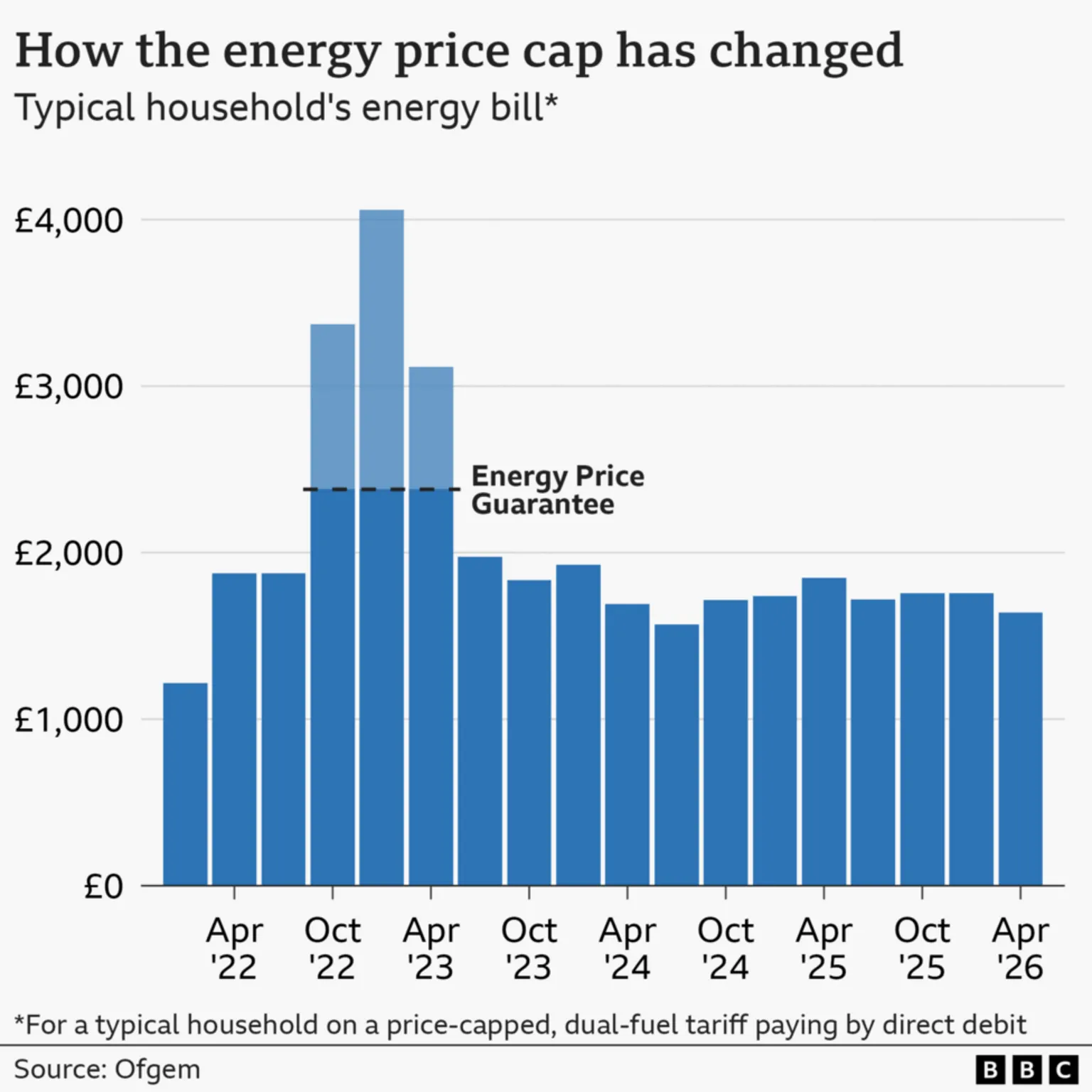
Typical household energy bills have decreased by 7% between April and July due to government adjustments in charges.
Nearly all households in England, Wales, and Scotland benefit from this reduction regardless of their tariff, though the exact savings vary.
For a household on a tariff regulated by Ofgem's price cap using average gas and electricity consumption, the annual bill will reduce to £1,641.
The reduction is temporary; the ongoing conflict in Iran is expected to cause a sharp price increase in July.
Energy consultancy Cornwall Insight forecasts that a household with typical energy use will face an annual bill of £1,929 from July, representing an 18% rise.
2. Council tax
Council tax, a mandatory property charge in England, Scotland, and Wales, is increasing by an average of 4.9% for households in England.
This means the average council tax for a Band D property in England will rise by £111 to £2,392 annually.
While many councils can raise bills by up to 5%, seven councils have received government approval to implement larger increases to address financial challenges.
Exemptions and discounts exist, such as for individuals living alone or properties occupied solely by students, which reduce costs for some households.
Several local authorities in Scotland have implemented significant council tax hikes.
Wales is also experiencing an average council tax increase of 4.9%.
Northern Ireland operates a domestic rates system instead of council tax, with all councils reporting increases in district rates.
3. Water bills
The average annual water bill in England and Wales has risen by £33 to £639, according to Water UK, the industry trade body.
Water bills vary considerably by region and follow substantial increases in many areas last year.
In Scotland, water bills have increased by an average of £42 annually (an 8.7% rise), bringing the average bill to £532.
Consumer organizations recommend that individuals check eligibility for discounted tariffs, consider installing water meters, and conserve water—for example, by limiting shower times—to reduce bills.
4. Internet and TV
Broadband providers BT, EE, Plusnet, and Virgin Media are increasing prices by £4 per month, Sky by £3, and Vodafone by £3.50, adding nearly £50 annually to bills.
Additionally, 25% of broadband customers are out of contract and may pay up to £9 more per month than those with active contracts.
Mobile phone providers often include mid-contract price increases, resulting in higher bills for many users.
The cost of a TV licence has risen from £174.50 to £180 per year.
5. Car tax
Standard Vehicle Excise Duty (VED) for cars registered after April 2017 has increased from £195 to £200.
The exact VED amount depends on the vehicle's registration year.
This tax applies to all fuel types, including electric vehicles, which lost their tax-exempt status last year.
Additionally, an annual supplement of £440 applies to cars with a list price exceeding £40,000, or £50,000 for electric vehicles.
6. Air passenger duty
Air Passenger Duty, a tax on flights departing the UK paid by aircraft operators and typically passed on to passengers, is increasing across most fare bands.
The amount charged varies depending on the flight distance.
7. Hidden tax rises
The government has maintained the freeze on income tax thresholds.
This results in more individuals becoming liable for tax or moving into higher tax brackets as wages increase.
The Conservative government initially froze thresholds until 2028-29, and in November, Labour extended this freeze until 2031.
"The move raises additional revenue to pay for public services but is often called a stealth tax by economists because it increases the tax take without a government having to put up rates."
The BBC has developed a calculator to help individuals assess how their pay could be affected.
The calculator applies to employees in England, Wales, and Northern Ireland; tax bands in Scotland differ, and self-employed individuals are subject to different taxation rules.


