

Initial reports suggest that the pilot of a US F-15 fighter jet shot down over Iran has been rescued. If verified, this would add to the extensive history of US combat search-and-rescue (CSAR) missions conducted over many decades.
The search continues deep within Iranian territory for a second crew member, according to CBS, the BBC's US partner.
CSAR missions are among the most complex and time-critical operations that US and allied forces train for. In the United States, elite Air Force units receive specialized training for these missions and are often deployed preemptively near conflict zones where aircraft losses are possible.
What is Combat Search and Rescue?
Combat Search and Rescue (CSAR) refers to military operations designed to locate, assist, and potentially recover personnel in distress, including downed pilots and isolated troops.
Unlike conventional search-and-rescue efforts, which may occur during humanitarian missions or disaster responses, CSAR operations take place in hostile or contested environments. In some instances, such as the reported recovery efforts in Iran, these missions occur deep inside enemy territory.
CSAR missions typically involve helicopters supported by refueling aircraft and other military planes tasked with conducting strikes and area patrols.
A former commander of a pararescue jumpers squadron explained to CBS News that a rescue operation like the one reported in Iran would deploy at least 24 pararescue jumpers searching the area in Black Hawk helicopters.
They noted that the team would be prepared to parachute from aircraft if necessary. Once on the ground, their primary objective would be to establish contact with the missing crew member.
After locating the individual, pararescue jumpers would provide medical aid if needed, evade enemy forces, and move to a location where extraction is possible, according to CBS News.
"Harrowing and massively dangerous is an understatement," the former commander told CBS News.
"This is what they train to do, all over the world. They are known as the Swiss Army knives of the Air Force."
Verified footage released from Iran on Friday appeared to show US military helicopters and at least one refueling aircraft operating over Khuzestan province.
These missions are extremely time-sensitive because opposing forces are likely deployed in the same area, attempting to locate the same US personnel the CSAR teams are trying to recover.
Jonathan Hackett, a former US Marine Corps Special Operations specialist, told the BBC's World Tonight program that a rescue team’s priority would be to search for signs of life.
"They're trying to work backwards from the last point they knew that person was, and fan out based on the speed that person could move under different circumstances in this really difficult terrain," Hackett said.
Hackett described this type of reported rescue as a "non-standard assisted recovery mission," where local indigenous groups may have been contacted beforehand to establish contingency plans that could be activated to assist in rescues.
The history of CSAR missions
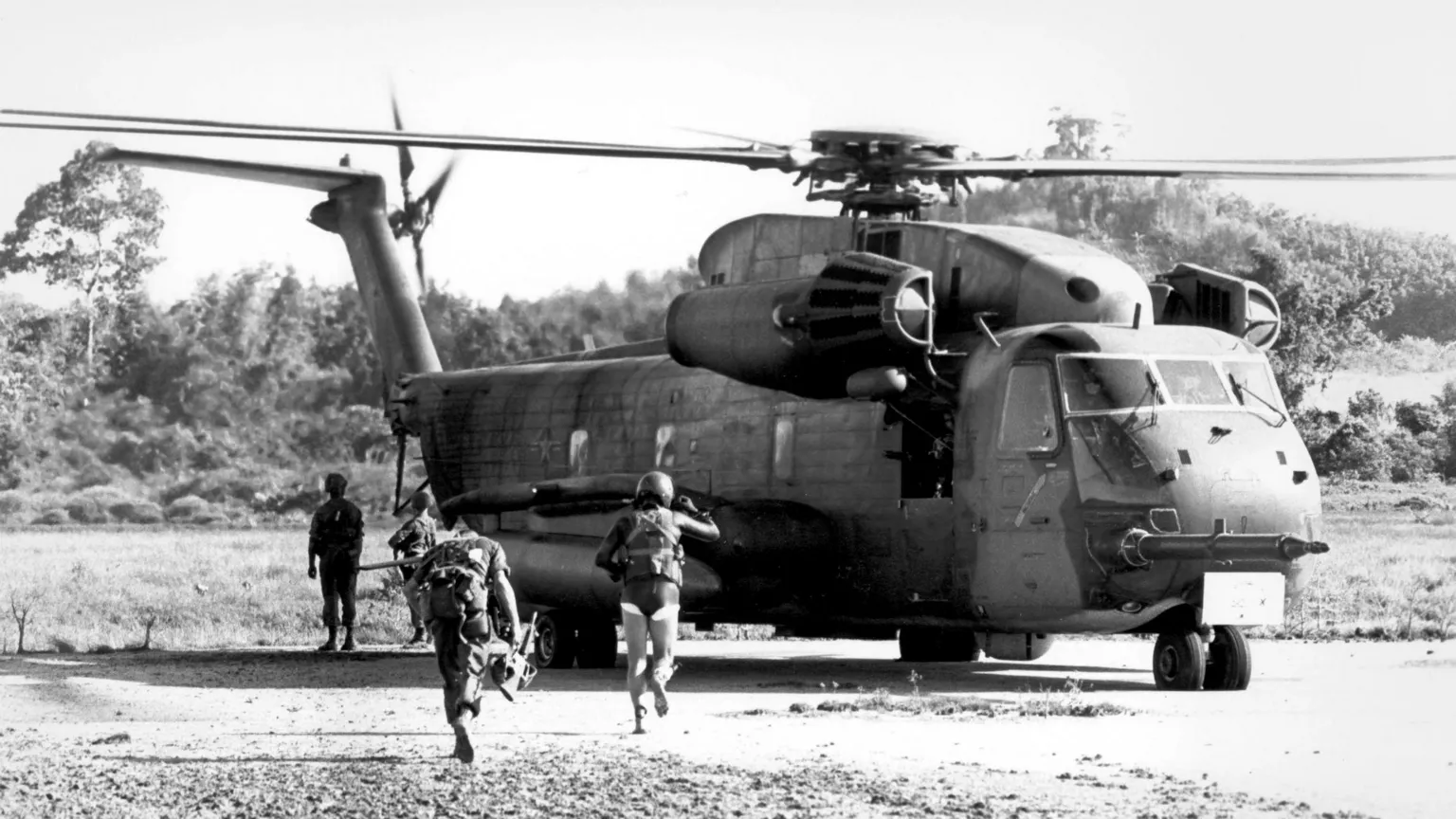
Airborne wartime rescue missions have a long history, dating back to World War One when pilots conducted impromptu landings in France to rescue downed comrades.
The US military’s pararescue units trace their origins to a 1943 mission in which two combat surgeons parachuted into then-Burma (now Myanmar) to aid wounded soldiers.

The world’s first helicopter rescue occurred a year later when a US lieutenant rescued four soldiers from behind Japanese lines, marking the first operational use of a helicopter in combat, according to Smithsonian's Air & Space Magazine.
Formal search-and-rescue units were established in the US shortly after World War II. However, modern CSAR developed during the Vietnam War.
One notable mission, known as Bat 21, resulted in the loss of several aircraft and multiple US casualties while attempting to recover a pilot shot down behind North Vietnamese lines.
The Vietnam War necessitated a significant expansion of CSAR missions in both scope and complexity. The experience gained helped refine tactics and procedures that now form the foundation of current rescue operations.
The US Air Force's pararescue teams
While each branch of the US military maintains limited CSAR capabilities, the US Air Force holds primary responsibility for locating and rescuing military personnel.
This mission is chiefly carried out by pararescue jumpers, who are part of the broader special operations community.
The official motto of pararescue is "These Things We Do, That Others May Live," reflecting their commitment to ensuring no service member is left behind.
Pararescue personnel are highly trained both as combatants and paramedics, undergoing one of the most rigorous selection and training pipelines in the US military.
The selection and training process spans approximately two years and includes parachute and dive training, basic underwater demolition, survival, resistance and escape training, and a comprehensive civilian paramedic course.
They also receive specialized instruction in battlefield medicine, complex recovery operations, and weapons handling.
On the ground, these teams are led by Combat Rescue Officers, who are responsible for planning, coordinating, and executing recovery missions.
Recent US rescue missions
Pararescue teams were extensively deployed during the wars in Iraq and Afghanistan, conducting thousands of missions to rescue wounded or isolated US and allied troops.
In 2005, Air Force pararescue teams recovered a US Navy SEAL who was wounded and seeking shelter in an Afghan village after his team was ambushed and three other members were killed. This incident was later depicted in the film "Lone Survivor."
Rescue missions for downed US pilots have been rare in recent decades.
In 1999, pararescuemen located and recovered the pilot of an F-117 stealth fighter shot down over Serbia.
In a highly publicized 1995 incident in Bosnia, US pilot Scott O'Grady was rescued in a joint Air Force and Marine Corps CSAR mission after evading capture for six days following his aircraft being shot down.


