

US Military Presence and Diplomatic Efforts
The United States has deployed sufficient military assets in the Middle East to initiate airstrikes against Iran, though the precise objectives of such a campaign remain uncertain.
President Donald Trump stated that within "10 days" it would become clear whether a nuclear agreement with Iran could be reached, as the US military buildup in the region intensifies with the imminent arrival of a second carrier strike group.
Speaking at the inaugural meeting of a national security forum in Washington DC, Trump emphasized that Iran must not acquire nuclear weapons and warned that
"bad things will happen"if Iran continues to threaten regional stability.
Regarding the timeline, Trump said,
"maybe we’re going to make a deal, but you’re going to be finding out over the next probably 10 days"as the US awaits Iran's response following recent diplomatic engagements.
White House envoys Steve Witkoff and Jared Kushner met with Iranian officials in Geneva to discuss Iran’s nuclear enrichment program, following US and Israeli airstrikes during the 12-day conflict last June.
After the diplomatic meeting, Iran committed to responding within two weeks to US demands to cease uranium enrichment entirely in exchange for sanctions relief—aligning roughly with Trump’s suggested timeframe.
However, last summer Trump gave himself two weeks to decide whether to bomb Iran’s underground nuclear enrichment facility at Fordow, potentially within days.
Military Assets and Capabilities
Experts indicate that the US already has sufficient military assets in the Middle East to commence an aerial bombing campaign against Iran, possibly in coordination with Israel, although the strategic outcomes of such an operation are unclear.
The USS Abraham Lincoln aircraft carrier and accompanying warships have been stationed in the Arabian Sea for nearly a month, comprising nine squadrons of aircraft including F-35 Lightning IIs and F/A-18 Super Hornets.
A second carrier strike group, led by the USS Gerald R Ford, was last confirmed in the Atlantic Ocean, west of Morocco as of Tuesday. It is expected to transit through the Strait of Gibraltar en route to the eastern Mediterranean, a journey requiring several days.
The USS Gerald R Ford, the world’s largest aircraft carrier, departed from the Caribbean Sea, where last month it participated in a night raid on a fortified compound.
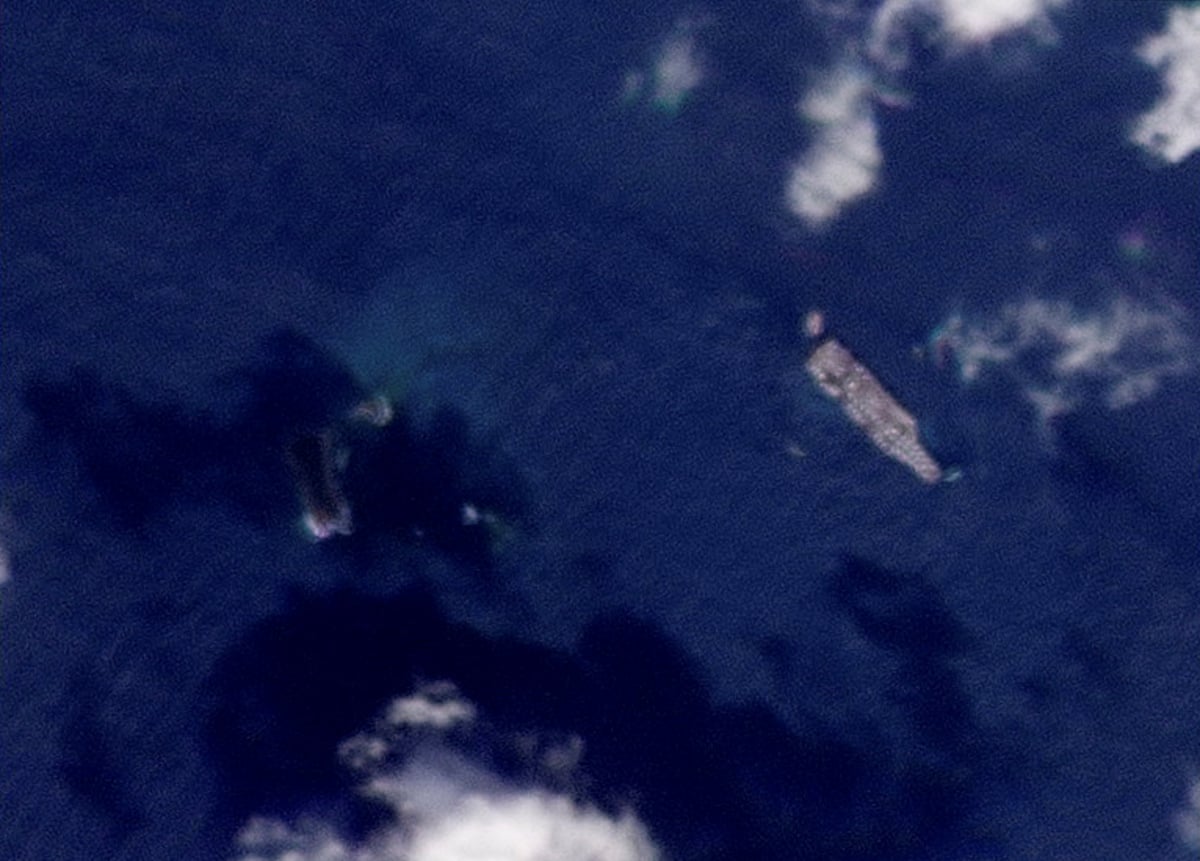
Combined, these carrier strike groups could generate
"several hundred strike sorties a day for a few weeks, an intensity greater than during the 12-days war", according to Matthew Savill, director of military sciences at the Royal United Services Institute.
Even without the Gerald R Ford, aircraft operating from the Abraham Lincoln could conduct 125 or more bombing missions daily, providing the US with the capability to initiate attacks on Iranian government and military targets if authorized by President Trump.

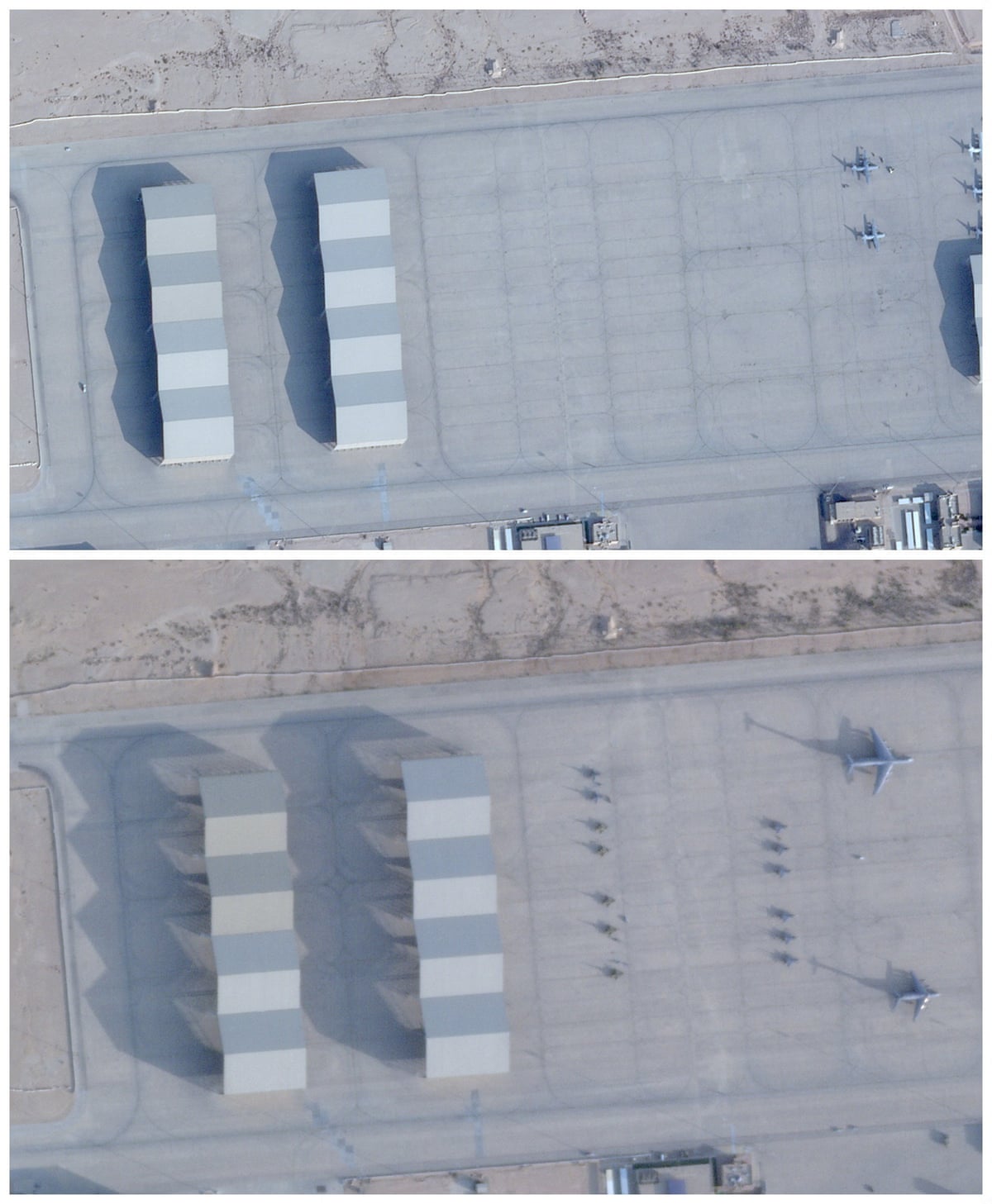
Aviation analysts have also observed significant movements of military aircraft to the Middle East as US pressure on Iran escalates. Critical command and control aircraft have been deployed to Prince Sultan Airbase in Saudi Arabia, having been withdrawn from the US and Japan.
Strategic Considerations and Potential Targets
Matthew Savill questioned the purpose of the buildup, stating,
"The question, however, is: what is all this buildup for?"The extensive deployment of air and naval assets suggests that the US military is preparing options for a broad bombing campaign, potentially extending beyond strikes targeting Iran’s supreme leader, Ali Khamenei, and other senior officials.
Last month, President Trump promised Iranian protesters that
"help is on its way", although at that time the US military presence was limited. With the current availability of warships and fighter jets, and ongoing diplomatic efforts, the US focus has shifted toward Iran’s nuclear ambitions.
Possible military options include further airstrikes against Iran’s already degraded nuclear weapons program. Potential targets could include the Pickaxe Mountain complex near Natanz and the Taleghan 2 site at Parchin, two nuclear facilities not struck during the 12-day conflict.
In November, experts from the International Atomic Energy Agency concluded that
"Iran does not appear able to enrich uranium in any significant manner or make gas centrifuges in significant numbers"following the conflict.
However, the location and status of 440 kilograms of 60% enriched uranium held by Iran remain uncertain. Theoretically, Iran possesses sufficient uranium to produce approximately 10 nuclear weapons if further enriched above 90% and weaponized.
Ballistic Missile Threat and Regional Defense
Israel has urged the US to address Iran’s ballistic missile program, considered the most significant military threat posed by the country. Iran is estimated to possess around 2,000 ballistic missiles with up to 25 launch bases nationwide, six of which were not targeted by Israel in June.
Iran lacks advanced air defense systems, which were effectively suppressed by the Israeli military during the summer conflict, suggesting that Iran’s primary defense would be retaliatory missile attacks. On Tuesday, Supreme Leader Ali Khamenei threatened to send US warships
"to the bottom of the sea".
Intercepting a volley of ballistic missiles is challenging even with sophisticated air defense systems employed by the US and Israel. Evidence indicates that Iran improved its missile strike accuracy during the summer conflict.
At the outset of the 12-day war, only 8% of Iranian missiles penetrated defenses, but on 22 June, two days before the conflict ended, 10 out of 27 missiles successfully hit Israeli targets, according to the Jewish Institute for National Security of America.
The US has increased air defense deployments in the region to prepare for potential Iranian retaliation against Israel, other Middle Eastern allies, or US regional bases.
Satellite imagery reveals a Patriot air defense system has been installed at Al-Udeid Airbase in Qatar, the regional headquarters of US Central Command. Additionally, US destroyers near Cyprus are equipped to intercept ballistic missiles targeting Israel.
Allied Positions and Regional Military Posture
The United Kingdom has informed the US that it will not permit the use of its airbases, such as RAF Fairford in Gloucestershire or Diego Garcia in the Indian Ocean, for B-2 bomber operations. However, the UK and other Western nations maintain military forces in the Middle East. Last month, the Royal Air Force’s 12 Squadron redeployed to Qatar, with Typhoon jets prepared to operate in self-defense should the Gulf country be attacked.


