

Second Israeli-US Attack During Nuclear Talks Threatens Agreement Prospects
The joint military strike by the United States and Israel on Iran, planned over several months, took place amid ongoing nuclear negotiations between Iran and the US. This timing has reignited skepticism regarding Washington's commitment to reaching a diplomatic agreement with Tehran.
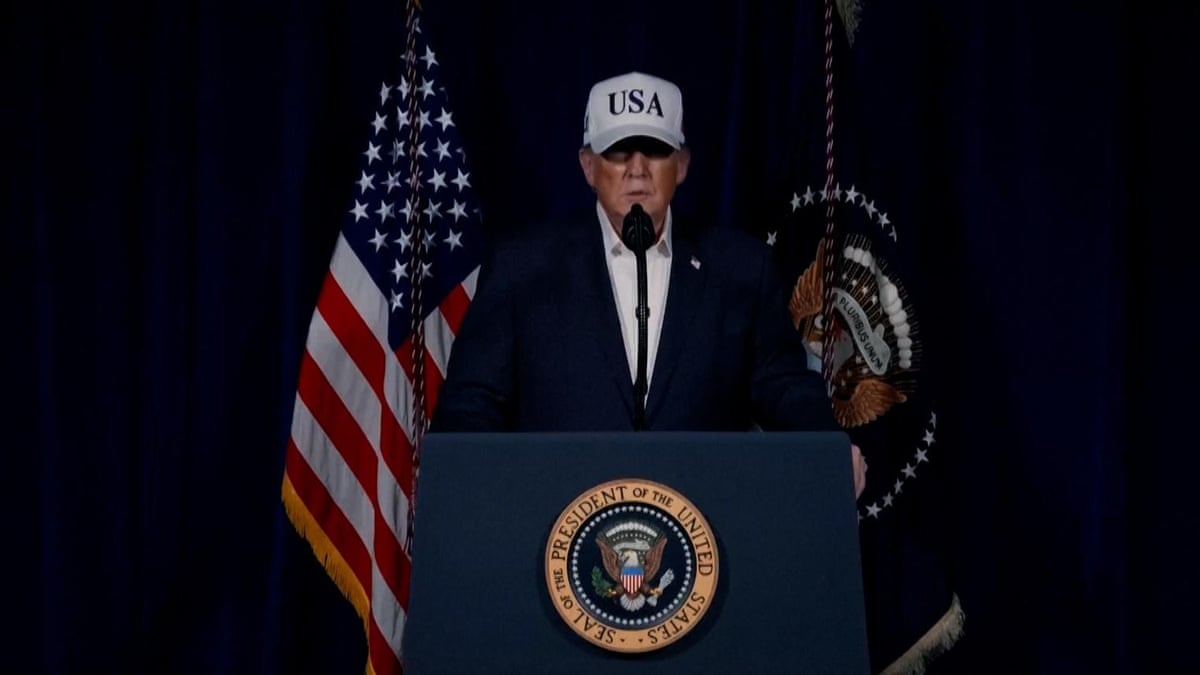
Donald Trump’s announcement of the military action made clear that the US was not pursuing a nuanced strategy to prevent Iran from accumulating highly enriched uranium. Instead, Trump expressed a desire to remove the entire Iranian regime, describing it as
“a vicious group of very hard, terrible people”.
In June of the previous year, Israel initiated a 10-day offensive against Iran just three days before the sixth round of talks between Iran and the US was scheduled to begin. This prior attack, followed by the recent strike during a second negotiation phase, severely undermines the likelihood that Iran will take any US diplomatic overtures seriously, having been subjected to military actions twice during talks.
Reflecting this sentiment, an Iranian Telegram channel stated:
“Once again the US attacked while Iran was pursuing diplomacy. Once again diplomacy does not work with the terrorist state of the US.”
Iranian Foreign Minister Abbas Araghchi was aware of the risk that Trump might abandon diplomacy but judged that resuming talks was a risk worth taking. He also worked to secure the endorsement of Iran’s Supreme Leader, Ali Khamenei, for this approach.
Anticipating the imminent US military action by the end of the previous week, Badr Albusaidi, the Foreign Minister of Oman and mediator in the talks, made an urgent trip to Washington. His mission was to present a positive outlook on the negotiations despite the looming strike.
Albusaidi took the unusual step of appearing on CBS to disclose details of the emerging deal, asserting that a peace agreement was close. However, his access in Washington was limited; he was only able to meet with Vice President JD Vance to argue that the talks were nearing a breakthrough. Albusaidi emphasized that the prospective deal would surpass the 2015 agreement, which Trump had abandoned in 2018.
According to Albusaidi, Iran had agreed to eliminate all stockpiles of highly enriched uranium, to down-blend its existing stockpile within Iran, and to provide full verification access to the International Atomic Energy Agency (IAEA). He suggested that US weapons inspectors might even be allowed to operate inside Iran alongside IAEA personnel.
Iran would limit uranium enrichment strictly to levels necessary for its civilian nuclear program. Albusaidi indicated that a final agreement on key principles could be signed within the week, with detailed arrangements for verification potentially taking an additional three months.

However, the deal reportedly offered little progress on human rights issues, Iran’s ballistic missile program, or its support for proxy groups in the region.
From Iran’s perspective, the range of its ballistic missiles, approximately 1,250 miles (2,000 km), could be addressed in separate discussions with the Gulf Cooperation Council. Iran views these missiles as integral to its national defense, a point underscored by the recent US-Israeli attack.
Former Iranian Foreign Minister Javad Zarif had previously defended the missile program by highlighting Iran’s vulnerability during the Iran-Iraq war and suggesting that a halt to US arms sales in the Gulf would reduce Iran’s need for such missiles.
Nonetheless, these issues were not aligned with Trump’s agenda. His special envoy, Steve Witkoff, hinted at the president’s expectations by expressing surprise that Iran had not yet capitulated. Albusaidi found the US decision to attack deeply disappointing.
Trump offered a legal justification for the strike, claiming that Iran posed an imminent threat to the US, its forces, and allies worldwide. However, he provided no evidence to support these assertions, which have not been corroborated by senior United Nations officials or European leaders.
In explaining the attack, Trump did not address the progress or remaining differences in the negotiations. Instead, he stated:
“Iran’s threatening activities put the US, its forces and bases abroad and our allies around the world at risk.”
Within the US, debate is expected to arise regarding Albusaidi’s optimistic assessment of the talks. If Iran indeed offered to limit uranium enrichment to civilian needs, eliminate highly enriched uranium stockpiles, and allow comprehensive verification, this would significantly reduce Iran’s capability to develop a nuclear weapon.
In this scenario, Trump, encouraged by Israel and Republican hawks, could face criticism for rejecting a diplomatic solution that might have peacefully resolved the nuclear threat posed by Iran over the past three decades.
Conversely, some argue that the continued existence of Iran’s repressive regime itself constitutes a global security threat.
What remains remarkable is that prior to the attacks, Trump made minimal disclosures to Congress or US allies regarding his intentions or objectives.


