

Diplomatic Talks on Iran’s Nuclear Programme Show Positive Start
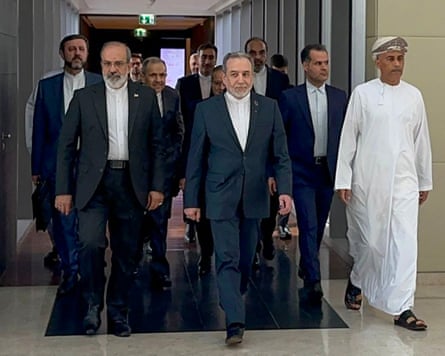
Indirect negotiations between the United States and Iran concerning the future of Iran’s nuclear programme concluded on Friday with both parties agreeing to continue pursuing a diplomatic path. Statements from Iran and the Omani hosts indicated that further discussions may take place in the coming days.
Iranian Foreign Minister Abbas Araghchi, who appeared relieved after the eight-hour meeting, described the talks as a
“good start”held in a constructive atmosphere. He noted that the continuation of the dialogue depended on consultations in Washington and Tehran, emphasizing that any further discussions must be conducted without threats.
US President Donald Trump characterized the talks as
“very good”and announced that another meeting was scheduled for early next week. However, speaking aboard Air Force One, Trump also cautioned that
“If they don’t make a deal, the consequences are very steep.”
The discussions marked the first engagement between Iran and the US since Washington and Israel launched significant military strikes on Iranian nuclear sites and political leadership last June.
In recent weeks, Trump has increased US military presence in the region, centered around the USS Abraham Lincoln aircraft carrier group. This deployment followed Trump’s January remarks encouraging Iranian protesters during widespread anti-government demonstrations.
Iran, which has faced severe internal unrest resulting in thousands of deaths during a harsh crackdown, insisted that the talks focus solely on guarantees regarding the civilian nature of its nuclear programme. Tehran rejected expanding the agenda to include human rights, missile development, or support for proxy groups such as Hamas, Hezbollah, and the Houthi rebels in Yemen. Araghchi stated,
“Our talks are solely nuclear and we do not discuss any other issues with the Americans.”
Mediation and Participants in the Talks
The indirect negotiations held in Muscat were mediated by Oman’s Foreign Minister, Badr al-Busaidi, who conducted separate discussions with each side. The US delegation was led by President Trump’s envoy, Steve Witkoff, alongside Trump’s son-in-law, Jared Kushner.
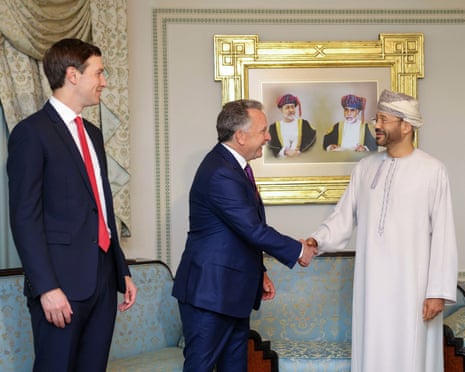
Admiral Brad Cooper, commander of US Central Command, was also present, highlighting the integration of US military leverage into the diplomatic process under Trump’s administration.

Al-Busaidi issued a statement emphasizing the focus of the consultations:
“These consultations focused on creating suitable conditions for the resumption of diplomatic and technical negotiations emphasising the importance of these talks and parties’ determination to succeed in achieving lasting security and stability.”
Challenges of Trust and Negotiation Scope
Trust between Iran and the US has been minimal since the US-backed Israeli military strikes on Iran in June, which occurred just days before a planned sixth round of talks. Araghchi acknowledged the difficulties, stating,
“After eight turbulent months during which we went through a war, resuming a process of dialogue is not simple. The deep mistrust that has developed on top of previous mistrust is a serious challenge. First we must overcome the prevailing atmosphere of distrust … If this trend continues, I think we can reach a good framework for an agreement.”
Washington sought to broaden the scope of the talks to include Iran’s ballistic missile programme, support for armed groups in the region, and its treatment of its own people, as noted by US Secretary of State Marco Rubio on Wednesday. However, after days of speculation, Iranian negotiators were satisfied that the initial discussions would be limited to the nuclear dispute.
Iran is seeking assurances that the US is not using the talks as a pretext for regime change.
Preconditions and Negotiation Dynamics
Prior to the talks, Tehran demanded that the US abandon its request to hold negotiations in Turkey with the presence of foreign ministers from Qatar, Turkey, the United Arab Emirates, Egypt, and Saudi Arabia.
Iran maintains that its right to enrich uranium on its own soil—a right granted under the now-defunct 2015 nuclear deal negotiated by former President Barack Obama—is non-negotiable. A potential compromise discussed involves Iran suspending uranium enrichment plans for a fixed period while establishing a regional consortium to manage enrichment, moving toward an integrated civil nuclear programme in the region.
Additionally, Iran seeks sanctions relief in exchange for implementing a new inspection regime at its nuclear sites. The Iranian rial’s value against the US dollar has halved since the Israeli strikes in June, and the country’s declining standard of living, exacerbated by food inflation nearing 100%, triggered the demonstrations that began in late December.
Military Tensions and Regional Security Concerns
The talks occurred amid repeated warnings from President Trump that the US would take military action against Iran from the USS Abraham Lincoln aircraft carrier group if no progress was made. The US has increased its naval presence in the region following the Iranian government’s crackdown on protests, intensifying tensions between Washington and Tehran.
Tehran has declared it will not hesitate to attack Israel or US military bases in the region if it is attacked. Last month, Washington refrained from striking Iran partly because Israeli and US military officials felt unprepared to withstand probable Iranian retaliations.


