

UK's Efforts to Reopen Strait of Hormuz
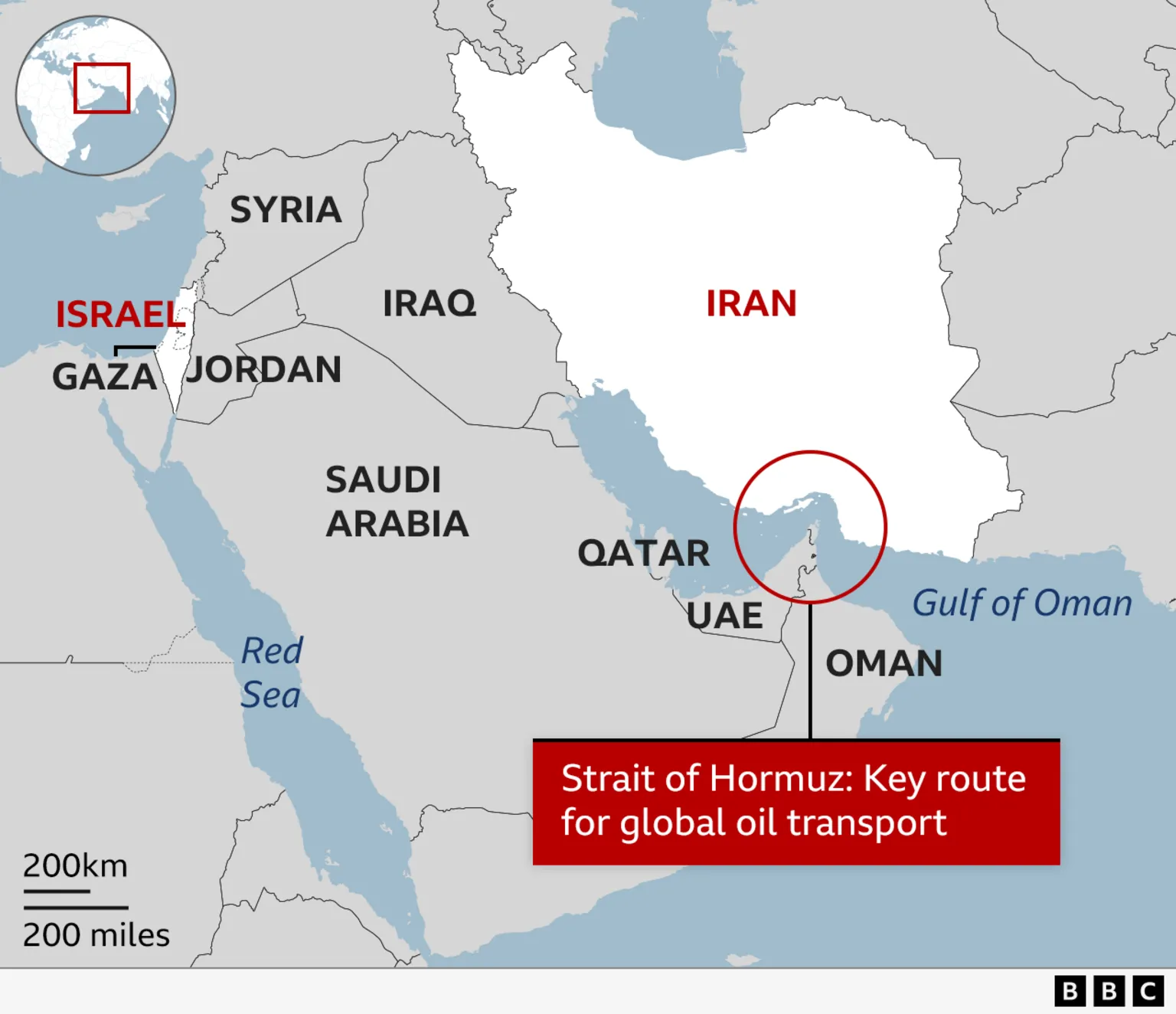
Prime Minister Sir Keir Starmer has announced that the United Kingdom is collaborating with international allies to develop a "viable, collective plan" aimed at reopening the Strait of Hormuz.
This announcement follows calls from former US President Donald Trump, who urged Britain and other nations to deploy warships to the Gulf region to safeguard the critical shipping channel, essential for global oil transportation.
Sir Keir stated during a news conference that the UK already has minehunters deployed in the area, but no final decisions have been made regarding further actions.
The Strait of Hormuz has been effectively closed to oil tankers since the escalation of conflict with Iran, causing a significant rise in oil prices worldwide.
Iran has issued threats to attack any vessels it identifies as linked to the United States, and there is an ongoing risk posed by sea mines in the region.
"Ultimately, we have to reopen the Strait of Hormuz to ensure stability on the market.
So we're working with all of our allies, including our European partners, to bring together a viable, collective plan that can restore the freedom of navigation in the region as quickly as possible and ease economic impact."
Sir Keir also mentioned that he has been in discussions with the US and Gulf states, emphasizing that any measures taken must be agreed upon by as many partners as possible.
Support for Vulnerable Households Amid Rising Heating Oil Prices
In addition to addressing the Strait of Hormuz situation, the Prime Minister announced £53 million in support for vulnerable households affected by the sharp increase in heating oil prices.
Unlike consumers who rely on gas and electricity for heating and hot water—whose prices are capped until the end of June—those using heating oil are not regulated by Ofgem.
Trump’s Position on NATO and Strait Security
In an interview with the Financial Times, Donald Trump warned that NATO faces a "very bad" future if member countries fail to contribute to protecting the Strait of Hormuz.
He reiterated his call for allies to assist in securing the strait, stating:
"It's only appropriate that people who are the beneficiaries of the strait will help to make sure that nothing bad happens there."
Trump has previously urged the UK, China, France, Japan, and South Korea to send naval vessels to secure this vital route.
UK's Response and NATO Clarifications
Sir Keir emphasized that any action taken would not be a NATO mission but rather "an alliance of partners."

When questioned about whether he was declining Trump's request to commit the Royal Navy to protecting the strait, Sir Keir responded that the UK is "looking through the options" and highlighted the existing minehunting capabilities already present in the region.
Regarding the state of UK-US relations, Sir Keir affirmed that the two nations remain "strong allies," but added:
"It is for me to act in what I consider to be the best interests of Britain."
A German government spokesperson stated that the conflict "has nothing to do with NATO," describing the alliance as a defensive organization focused on territorial protection.
German Defence Minister Boris Pistorius confirmed that Germany would not participate militarily but is prepared to support diplomatic efforts to safeguard the strait.
"What does Donald Trump expect from a handful of European frigates in the Strait of Hormuz that the mighty US navy cannot manage alone?"
UK-US Military Base Usage and Political Reactions
The Prime Minister previously angered Trump by refusing to permit the US to use UK bases for initial offensive strikes against Iran.
However, permission has since been granted for the bases to be used for defensive operations against Iranian missile attacks.
Defending his decisions, Sir Keir stated he would not allow the UK to become involved in "the wider war," contrasting his approach with others who would have "rushed the UK headlong into this war without the full picture of what they were sending our forces into and without a plan to get us out."
"My leadership is about standing firm for the British interest. No matter the pressure."
At the onset of the conflict, the Conservative Party and Reform UK criticized the Prime Minister for denying US use of UK bases for offensive actions.
Conservative leader Kemi Badenoch expressed concerns that "there don't seem to have been plans in place" to protect the strait, noting that minesweepers in the region were withdrawn shortly before the conflict began.
The Liberal Democrats have argued against sending UK ships to secure the strait, advocating instead for efforts to de-escalate the conflict.

for our Politics Essential newsletter to keep up with the inner workings of Westminster and beyond.


