

Drone Attacks on UAE Infrastructure
The United Arab Emirates' (UAE) largest port and oil storage facility, Fujairah, along with Dubai's international airport, have been subjected to additional drone attacks amid ongoing tensions involving Iran targeting Gulf transport and oil infrastructure.
On Monday, flights were temporarily suspended following a fire near Dubai airport caused by a "drone-related incident."
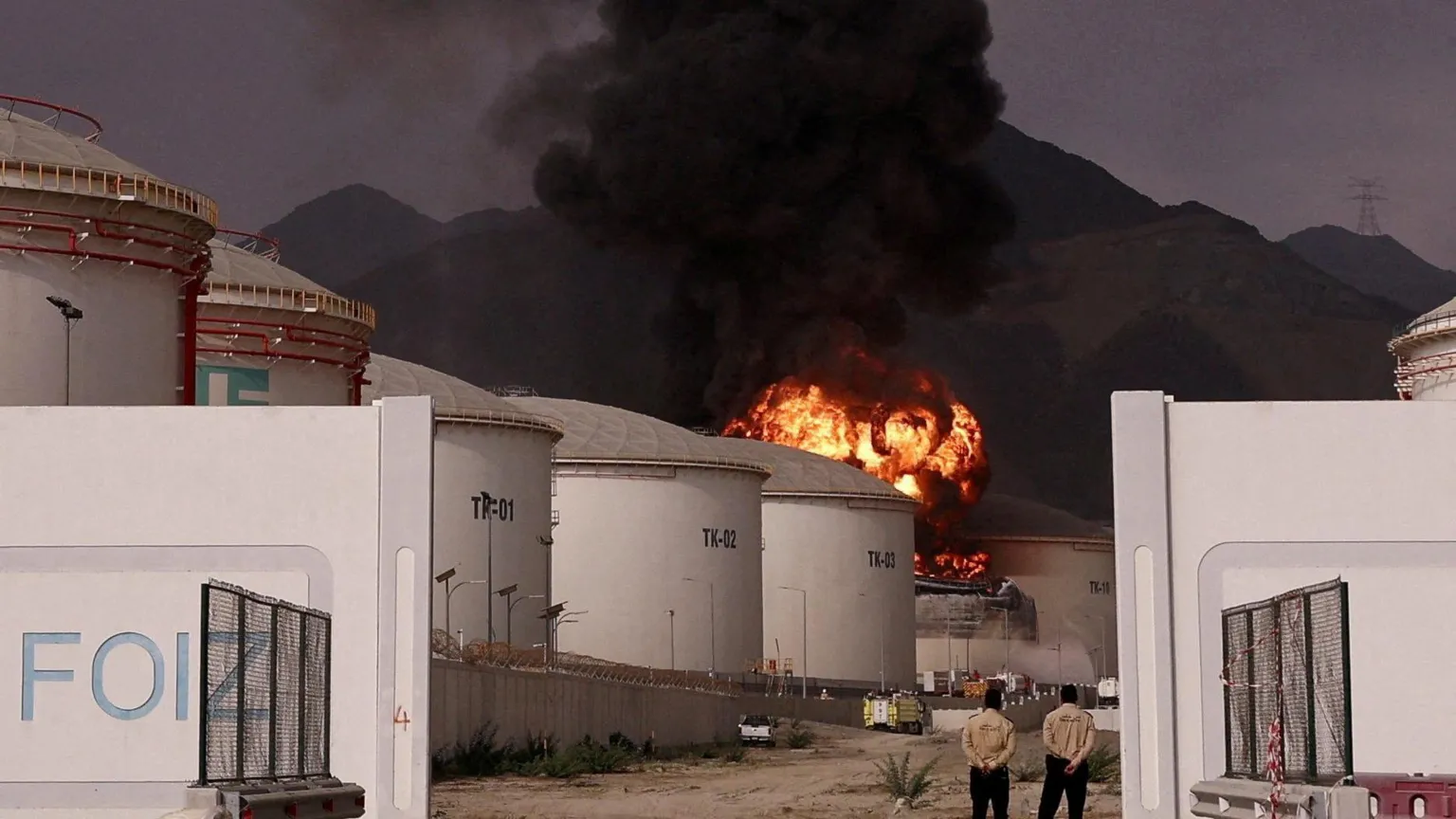
A fire also erupted after a drone strike on the strategically significant port and industrial zone at Fujairah, recognized as one of the region's largest oil storage sites.
Since the outbreak of conflict involving the US, Israel, and Iran, Iran has launched over 1,900 missiles and drones targeting the UAE.
Monday's drone strike marked the third such incident near Dubai's airport since the war began. Dubai airport is the world's busiest for international passengers.
Some flights experienced delays, while others were cancelled, impacting the UAE's reputation for safety and stability.
Impact on Energy Sector
The UAE's energy sector has also been targeted; a drone struck an oil storage tanker on Saturday, followed by another drone attack on oil facilities on Monday, which caused a fire.
Oil loading operations at Fujairah port were temporarily halted as damage assessments were conducted.

Strategic Importance of Fujairah Port
Fujairah is located on the UAE's eastern coast along the Gulf of Oman, rather than the Persian Gulf, allowing vessels to access it without passing through the Strait of Hormuz.
This positioning makes the port vital in maintaining global oil supplies when the Strait of Hormuz is blocked by Iran, according to Justin Harper, editor of CEO Middle East based in Dubai, who regularly consults with Dubai's oil industry executives. He told the BBC:
"If tensions with Iran disrupt the chokepoint, the UAE can still export oil through Fujairah via pipelines from the oilfields in Abu Dhabi."
Dubai-based oil analyst Matt Stanley, who works for commodities data provider Kpler, described the port city as "ideally placed to bypass the Strait of Hormuz." He added:
"The UAE's state oil company Adnoc have their oil tankers there, it is crude grade oil which is what the Asian buyers want."
Stanley also emphasized the vulnerability of Gulf infrastructure, stating:
"Iran hitting a storage tanker and a pipeline at Fujairah shows the vulnerability of Gulf infrastructure. Iran wants to disrupt the flow of energy."
He noted the port's proximity to India and its position as the "first stop out of the Middle East on the way to Singapore and China."
Stanley further explained Fujairah's historical and logistical significance:
"Fujairah is on the old Silk Road, the maritime route, and it picked up a lot of business bunkering - that is providing fuel, food, water - for container ships that have been at sea for 25 or 30 days."
He likened Fujairah to a "huge vending machine" for ships.
Resilience of Dubai's Business Community
Despite the attacks on Dubai, Justin Harper highlighted the resilience of the business community there. He noted that restaurants have been offering promotions to encourage patronage and that "the malls still seem to be busy." He added:
"People underestimate Dubai and its ability to survive a downturn."


