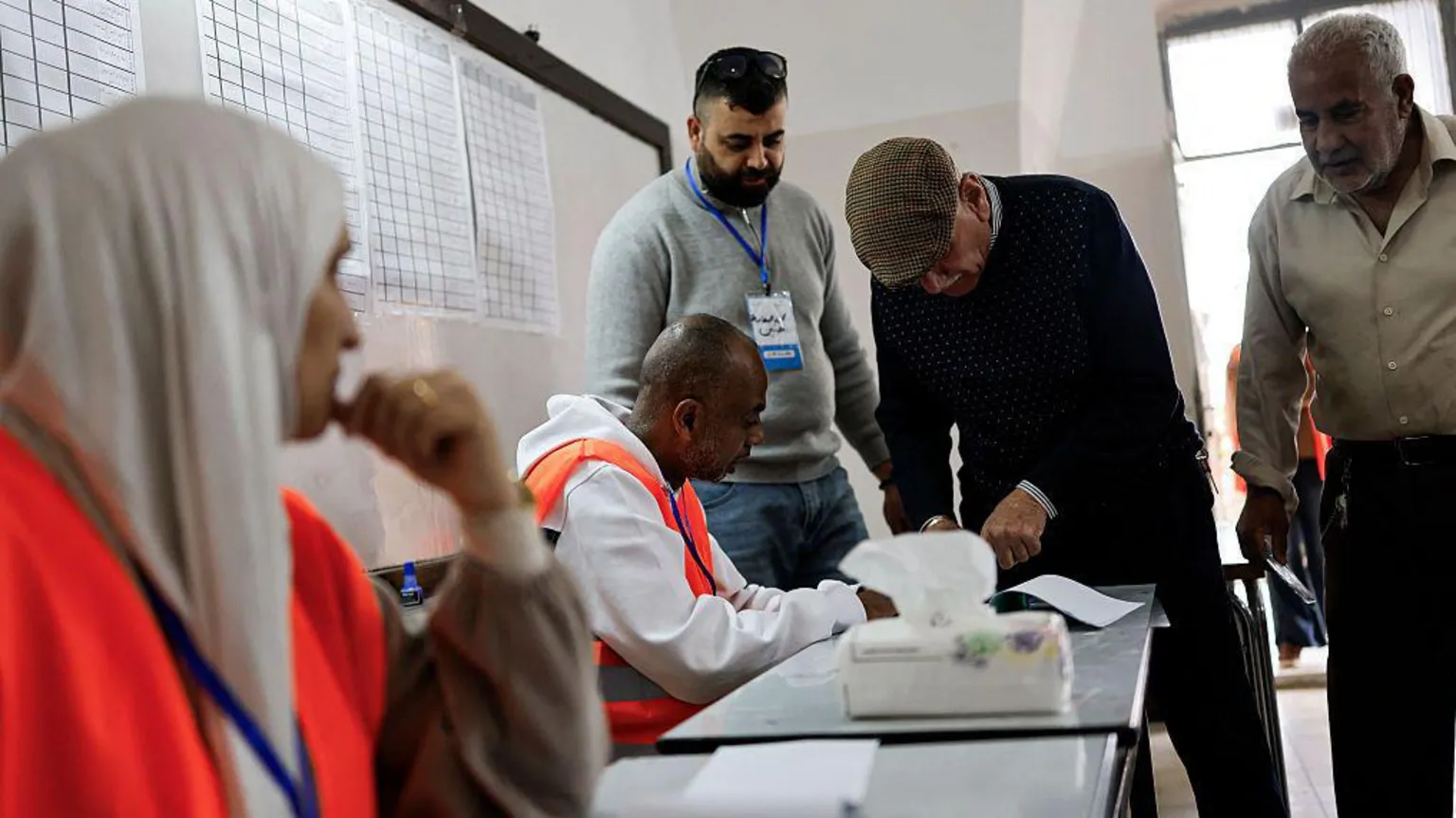
Palestinians Participate in Local Elections Across West Bank and Gaza
On Saturday, Palestinians cast their votes in local elections, marking the first electoral process of any kind in Gaza since 2006.
Elections are being conducted throughout the occupied West Bank and in Deir al-Balah, a central Gaza city where Hamas maintains operations.
Hamas was prohibited from participating, and several other factions boycotted the elections due to a stipulation requiring candidates to acknowledge the authority of the Palestinian Liberation Organisation (PLO), which dominates the Palestinian Authority (PA). The PA governs parts of the occupied West Bank not under Israeli control.
Fatah, led by President Mahmoud Abbas and the dominant faction within the PLO, was forcibly removed from Gaza after the last elections there, which Hamas won, sparking a prolonged power struggle between the two groups.
According to the Ramallah-based Central Elections Commission, over one million voters across the Palestinian territories are eligible to participate, including approximately 70,000 in Deir al-Balah, where 12 polling stations were scheduled to operate. Election results are anticipated late Saturday or on Sunday.
While Hamas was not listed on the ballot in Deir al-Balah, reported that one slate of candidates was widely perceived as aligned with the group.
The central city was selected as the sole Gaza location for elections due to it sustaining less damage during the Israel-Hamas conflict. A fragile ceasefire is currently in place as part of President Trump's 20-point peace plan, which halted hostilities in October 2023.
Hamas continues to operate in parts of Gaza from which Israeli forces have withdrawn. noted that Hamas police were involved in security operations around polling stations.
The group's popularity in Gaza has declined following the war, which some residents partially attribute to Hamas's attack on southern Israel on 7 October 2023, an action that triggered Israeli military retaliation.
However, Hamas's support has increased in the West Bank, where widespread dissatisfaction exists with the PA, led by Abbas and Fatah. Many Palestinians view the PA as corrupt and ineffective, criticizing its failure to improve economic conditions or end Israel's prolonged military occupation.

With Fatah as the only major faction on the ballot across the Palestinian territories—and assured victory in some districts due to lack of opposition candidates—these elections highlight the ongoing division between the two main Palestinian factions.
The candidate field was narrowed after several groups objected to an election law that set conditions for candidacy.
The law required candidates to commit to recognizing "the Palestinian Liberation Organisation (PLO) as the sole legitimate representative of the Palestinian people, its political and national programme, and the relevant decisions of international legitimacy."
The PLO-dominated PA formally claims legitimacy over Gaza despite lacking effective control there.
Hamas and several other Palestinian factions oppose the PLO, particularly regarding its recognition of Israel.
Local elections have not been held in the West Bank since 2022, while the last election of any kind in Gaza occurred two decades ago.
Hamas replaced Fatah as the largest Palestinian faction in the 2006 legislative council election, a result that heightened tensions and led to violent clashes between the rivals.
Fatah was forcibly expelled from Gaza the following year by Hamas, solidifying the political divide between Gaza and the occupied West Bank.
Earlier this week, Dr. Ramiz Alakbarov, the United Nations deputy special coordinator for the Middle East Peace Process, stated that the elections "represent an important opportunity for Palestinians to exercise their democratic rights during an exceptionally challenging period."
Speaking after voting in Deir al-Balah, Mohammed al-Hasayna told AFP that the election symbolized people's "will to live."
"We want the world to help us overcome the catastrophe of war. Enough wars - it is time to work towards rebuilding Gaza," he said.
In the northern West Bank city of Tulkarem, businessman Mahmud Bader expressed skepticism about the elections' impact.
"The [Israeli] occupation is the one that rules Tulkarem. It would only be an image shown to the international media - as if we have elections, a state or independence," he said.